



















Imagine you’re changing your pad on the second day of your period and notice something that stops you mid-reach: a dark, jelly-like clump that’s noticeably larger than anything you’ve seen before. For many people, that moment triggers a quiet spiral of worry. Are menstrual clots something to be concerned about or just a normal part of how the body works?
The short answer is that menstrual clots are extremely common, particularly on heavier flow days. In most cases, they’re simply a result of the body shedding the uterine lining and managing blood loss during menstruation. Small clots are often a normal part of the process and don’t indicate a health problem.
That said, not all clotting patterns are the same. Larger clots, frequent clotting, or clots accompanied by unusually heavy bleeding, severe pain, or other symptoms can sometimes signal an underlying condition affecting the uterus or hormonal balance. Because menstrual changes often happen gradually, it can be difficult to know when a symptom falls within the range of normal and when it deserves medical attention.
Understanding what’s happening inside the body can help take some of the uncertainty out of the experience. This article explains what causes period blood clots, how to distinguish normal clotting from potential warning signs, and when it’s worth speaking with a healthcare provider.
- Menstrual clots are common during heavier flow days and are usually a normal result of blood and uterine tissue passing through the body.
- Clots that are consistently larger than a quarter or occur frequently may indicate conditions like fibroids, endometriosis, adenomyosis, or hormonal imbalances.
- Heavy bleeding that soaks through pads or tampons quickly, especially when paired with large clots, should not be ignored.
- Severe pelvic pain, fatigue, dizziness, or other signs of anemia alongside clotting warrant a medical evaluation to identify the underlying cause.
What Are Menstrual Clots?

Menstrual clots are gel-like masses that form when menstrual blood pools and partially coagulates before leaving the body. They’re a mix of blood, tissue from the uterine lining, and proteins involved in the clotting process.
During menstruation, the uterus sheds its lining. As blood collects in the uterine cavity, the body activates clotting proteins, specifically fibrin and platelets, to slow blood loss. Anticoagulants that the body naturally produces usually break down these clots before they exit. When bleeding is heavy and fast, though, those anticoagulants can’t keep up, and clots pass through intact.
Think of it like a drain that’s working normally until the water flow suddenly doubles. The system gets overwhelmed, and larger chunks get through.
Normal clots are typically dark red or maroon. The darker color results from blood that’s been sitting in the uterus longer and has had time to oxidize before exiting. Bright red clots tend to appear when the flow is faster.
In terms of texture, they’re often described as resembling liver or thick jelly. Size-wise, clots smaller than a quarter are generally considered within the normal range.
The first two days of a period are usually the heaviest, and that’s precisely when clotting tends to be most noticeable. When the uterus contracts more forcefully, blood exits quickly, giving anticoagulants less time to break down, forming clots. This is a physiological response, not a malfunction.
When Are Period Clots Considered Normal?
Passing small clots, those smaller than a quarter, during the peak of your flow is common and considered normal by most clinical guidelines. Many people experience this regularly without any underlying condition driving it.
If you occasionally notice clots but your periods are otherwise manageable, you’re not soaking through protection unusually fast, and you’re not dealing with significant pain, that pattern is likely benign. Cycles also vary month to month based on stress, sleep, dietary shifts, and other factors, so isolated heavy cycles aren’t automatically a red flag.
Clotting patterns shift throughout life. Adolescents, whose hormones haven’t fully regulated, often experience irregular, sometimes heavier periods with more clotting. Postpartum periods can be heavier than pre-pregnancy cycles, at least initially. And during perimenopause, fluctuating estrogen levels can trigger heavier, clotsier periods before menstruation stops altogether. These changes are documented and expected.
Read More: Holistic Menstrual Health: Comprehensive Strategies for Easing Menstrual Discomfort
What Can Cause Large or Frequent Menstrual Clots?
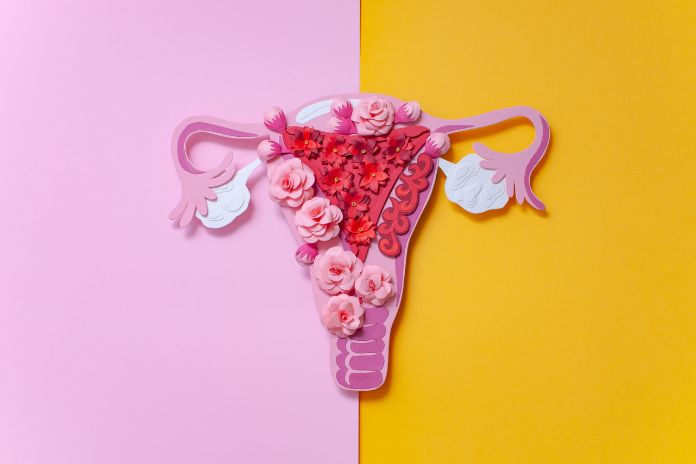
Heavy Menstrual Bleeding (Menorrhagia)
Heavy menstrual bleeding, clinically defined as losing more than 80 milliliters of blood per cycle or bleeding that lasts longer than seven days, creates conditions where larger clots form more frequently. When blood volume is high, the uterus can’t expel it quickly enough, so it pools, and that pooling leads to clotting.
A 2021 multinational survey published in the European Journal of Contraception & Reproductive Health Care found that heavy menstrual bleeding affects up to 30% of women of reproductive age and is frequently underrecognized. Many participants normalized their symptoms or delayed seeking medical care for years, contributing to significant gaps in diagnosis and treatment.
Uterine Fibroids and Polyps
Uterine fibroids are noncancerous growths in or around the uterine wall. They’re remarkably common: research published in the American Journal of Obstetrics and Gynecology estimates that fibroids affect up to 70-80% of women by age 50, though many never cause symptoms.
When fibroids are present, they can distort the uterine cavity, increase the surface area of the lining, and disrupt normal blood flow, all of which contribute to heavier bleeding and, consequently, more pronounced clotting. Polyps, which are smaller tissue growths on the uterine lining, can produce similar effects.
According to Dr. Linda Bradley, Vice Chair of Obstetrics and Gynecology at the Cleveland Clinic and a recognized expert on uterine fibroids, fibroids are a common cause of heavy menstrual bleeding, pelvic pain, and pressure symptoms. She emphasizes that these symptoms are treatable and should not be dismissed as a normal part of menstruation.
Endometriosis and Adenomyosis
Endometriosis occurs when tissue similar to the uterine lining grows outside the uterus, on the ovaries, fallopian tubes, or other pelvic structures. Adenomyosis is a related condition where the same tissue grows into the muscular wall of the uterus itself.
Both conditions can intensify menstrual cramping and contribute to heavier, clottier periods. Research in human reproduction found that adenomyosis is associated with significantly heavier menstrual blood loss and increased clotting compared to unaffected individuals.
Dr. Tamer Seckin, MD, founder of the Endometriosis Foundation of America and a leading specialist in laparoscopic surgery for endometriosis, has emphasized in public-facing educational content that “many women with endometriosis suffer for years before receiving an accurate diagnosis” and that painful, heavy periods with large clots should never be dismissed as just part of being a woman.
Hormonal Imbalances
Estrogen and progesterone regulate how the uterine lining builds up and sheds. When these hormones fall out of balance, which can happen with polycystic ovary syndrome (PCOS), thyroid disorders, or during natural hormonal transitions, the lining can thicken excessively. A thicker lining produces more tissue to shed, which can result in heavier bleeding and larger period blood clots.
Cycles where ovulation doesn’t occur, known as anovulatory cycles, are particularly associated with this pattern. Without ovulation, progesterone levels stay low, allowing estrogen to stimulate continued lining growth unopposed.
Pregnancy-Related Causes That Require Prompt Evaluation
Blood clots during period-like bleeding in someone who is or could be pregnant are a different category entirely and require immediate evaluation. An early miscarriage can look like a very heavy, clotty period. Tissue passed during a miscarriage may include grayish or pale material alongside dark clots.
Ectopic pregnancy, where a fertilized egg implants outside the uterus, is a life-threatening emergency. Vaginal bleeding accompanied by sharp one-sided pelvic pain, shoulder pain, or dizziness in a person who might be pregnant demands emergency care without delay.
Bleeding Disorders and Certain Medications
Von Willebrand disease, the most common inherited bleeding disorder, impairs the blood’s ability to clot properly. One of its most frequent presentations is heavy menstrual bleeding with significant clotting. Many cases go undiagnosed for years because symptoms are attributed to normal variation.
Anticoagulant medications like warfarin, rivaroxaban, and others prescribed to prevent blood clots elsewhere in the body can increase menstrual flow as a side effect. If you’re on blood thinners and noticing heavier periods, that conversation belongs with your prescribing physician.
Read More: Can Heavy Periods Be a Sign of Something Serious?
Signs That Menstrual Clots May Need Medical Attention
Size and consistency are the first benchmarks. Clots that are consistently larger than a quarter, or that appear in multiple consecutive cycles with increasing frequency, fall outside what’s typically considered normal and warrant evaluation.
Needing to change a pad or tampon more than once per hour for two or more consecutive hours is the clinical threshold for heavy menstrual bleeding. This is not something to wait out.
Cramping during menstruation is normal. Pain that interferes with daily functioning, requires prescription pain management, or is dramatically worse than previous cycles is not a normal baseline. It may indicate fibroids, endometriosis, or adenomyosis.
Chronic heavy periods often lead to iron deficiency anemia over time. Warning signs include persistent fatigue, dizziness, brain fog, shortness of breath with minimal exertion, and pallor. A review in Blood Advances found that heavy menstrual bleeding is among the leading causes of iron deficiency anemia in reproductive-age individuals, with many cases going unrecognized.
Spotting or bleeding between cycles, and any bleeding after menopause, requires medical evaluation. These are not normal variations and can indicate endometrial abnormalities that need assessment.
How Doctors Evaluate Heavy Period Clots
A thorough menstrual history is the starting point. Clinicians typically ask about cycle length, flow volume, clot size, how quickly protection is soaked through, and associated symptoms like pain, bloating, or fatigue. Tracking this information before your appointment makes the conversation significantly more efficient.
A pelvic exam allows the clinician to assess the uterus and ovaries. Transvaginal ultrasound is often the next step, offering detailed imaging of the uterine cavity, lining thickness, and any identifiable growths like fibroids or polyps. In some cases, a sonohysterogram, which uses saline to better visualize the uterine cavity, or hysteroscopy may be recommended.
Blood work typically includes a complete blood count to check for anemia, iron studies, thyroid function tests, and sometimes clotting panels if a bleeding disorder is suspected. Hormone levels, including FSH, LH, estrogen, and progesterone, may be checked depending on the clinical picture.
Treatment Options for Abnormal Menstrual Clots

Hormonal contraceptives are often the first-line treatment for heavy periods with abnormal clotting. Combined oral contraceptives, the hormonal IUD (particularly the levonorgestrel-releasing IUD), and hormonal injections can all significantly reduce flow and clot formation by thinning the uterine lining and regulating hormonal fluctuations.
Dr. Alyssa Dweck, MD, a board-certified OB-GYN and author of “The Complete A to Z for Your V,” has highlighted in clinical commentary that hormonal IUDs, in particular, “can reduce menstrual flow by up to 90% in many patients,” making them especially valuable for individuals with heavy bleeding who want both contraception and symptom relief.
NSAIDs like ibuprofen and naproxen, taken at the onset of menstruation, can reduce prostaglandin production, which in turn decreases uterine contractions and blood loss. Tranexamic acid, a non-hormonal prescription medication, works by stabilizing clots within the uterus and is specifically approved for heavy menstrual bleeding.
When an identifiable cause is found, treatment targets the source directly. Fibroids may be managed with medications that shrink them, minimally invasive procedures like uterine fibroid embolization, or surgical removal. Endometriosis treatment typically involves hormonal suppression and, in many cases, surgical excision of affected tissue. Bleeding disorders require management coordinated with a hematologist.
Endometrial ablation, a procedure that destroys the uterine lining, is an option for individuals with heavy bleeding who don’t wish to become pregnant. Hysterectomy, while more significant, is curative for heavy bleeding caused by fibroids or adenomyosis in people who have completed their families and haven’t responded to other interventions.
Ways to Support Menstrual and Reproductive Health
Detailed tracking gives both you and your provider meaningful data. Note the start and end dates of your period, flow intensity on each day, the approximate size and frequency of clots, and any associated symptoms. Period-tracking apps can simplify this, but even a simple written log is valuable.
Heavy periods increase the risk of iron depletion. Prioritizing iron-rich foods like red meat, leafy greens, lentils, and fortified cereals can help offset losses. Pairing iron-rich foods with vitamin C improves absorption. If dietary intake isn’t sufficient, a clinician may recommend supplementation based on lab values.
The most useful thing you can do is understand your personal baseline. Meaningful changes in clot size, frequency, or associated symptoms are more significant than a single heavy cycle. Familiarity with your body’s patterns helps you identify deviations that are worth a conversation with a healthcare provider.
Key Takeaway
Most menstrual clots are simply the body doing what it’s designed to do during heavier flow days. The combination of rapid blood loss and the limits of natural anticoagulants means clotting is a predictable and normal phenomenon for many people who menstruate. Small clots, especially during the first few days of a period, are often a normal part of the menstrual process and don’t usually indicate a health problem.
What changes the picture are size, frequency, and accompanying symptoms. Large period blood clots, particularly those larger than a quarter, combined with soaking through pads or tampons quickly, severe pelvic pain, prolonged bleeding, or symptoms of anemia may suggest an underlying condition.
Fibroids, endometriosis, adenomyosis, hormonal imbalances, and bleeding disorders are among the most common causes and often require medical evaluation. It’s also important to pay attention to changes in your usual pattern. While an occasional heavy cycle may not be cause for concern, persistent or worsening clotting shouldn’t be ignored.
If your periods have shifted in a way that feels significant, a gynecologic evaluation can help identify the cause and guide treatment before symptoms begin to affect your quality of life.
FAQs
What size menstrual clot is considered abnormal?
Clots larger than a quarter (roughly 2.5 cm) are generally considered outside the normal range, particularly if they occur consistently across cycles. Isolated larger clots are less concerning than a recurring pattern.
Can period blood clots indicate a miscarriage?
Yes. An early miscarriage can present as a very heavy, clotty period. If you suspect you may be pregnant and are experiencing heavy bleeding with clots, a healthcare provider should be contacted promptly. Tissue that appears grayish or white alongside clots may indicate pregnancy loss.
Why do my blood clots during my period seem larger some months than others?
Variation between cycles is normal and can be influenced by stress, sleep disruption, changes in body weight, hormonal fluctuations, or skipped ovulation. A single heavier cycle isn’t necessarily cause for concern; a consistent change across multiple cycles is worth discussing with a clinician.
Is it normal to pass large clots with endometriosis?
People with endometriosis or adenomyosis frequently experience heavier periods and more significant clotting. This is considered a hallmark symptom of these conditions, not a normal period variation. Diagnosis and treatment can substantially reduce these symptoms.
Can iron deficiency cause heavier menstrual clots?
Iron deficiency anemia is more often a result of heavy bleeding than a cause of it. However, iron deficiency can affect platelet function over time, which may influence bleeding patterns. The more direct relationship is that ongoing heavy menstrual bleeding depletes iron stores.
References
- American College of Obstetricians and Gynecologists. (2021). Heavy menstrual bleeding.
- Bradley, L. D. (2022). Uterine fibroids: Clinical overview. Cleveland Clinic.
- Bulun, S. E., Yilmaz, B. D., Sison, C., Miyazaki, K., Bernardi, L., Liu, S., Kohlmeier, A., Yin, P., Milad, M., & Wei, J. (2019). Endometriosis. Endocrine Reviews, 40(4), 1048-1079.
- Donnez, J., & Dolmans, M. M. (2016). Uterine fibroid management: From the present to the future. Human Reproduction Update, 22(6), 665-686.
- Farquhar, C., & Brosens, I. (2006). Medical and surgical management of adenomyosis. Best Practice & Research Clinical Obstetrics and Gynaecology, 20(4), 603-616.
- Munro, M. G., Critchley, H. O. D., & Fraser, I. S. (2011). The FIGO classification of causes of abnormal uterine bleeding. International Journal of Gynaecology and Obstetrics, 113(1), 1-2.
- Sekhar, D. L., & Murray-Kolb, L. E. (2019). Iron deficiency as a risk factor for maternal morbidity in women of reproductive age. Blood Advances, 3(21), 3322-3330.
- Shainman, N. R., Garg, A., & James, A. H. (2021). Heavy menstrual bleeding: Prevalence, impact, and evaluation in the United States. JAMA Network Open, 4(2), e2037894.
In this Article