
















Spring pollen, dust on the curtains, the dog on the couch: the things that normally trigger a sneeze can feel relentless once you’re pregnant. Add a stuffy nose that won’t quit, broken sleep, and a medicine cabinet full of pills you’re suddenly unsure about, and managing hay fever during pregnancy becomes its own challenge.
The instinct to reach for whatever worked before now collides with a more careful question: is this safe for the baby? Roughly a third of women of reproductive age live with allergic rhinitis, so this is hardly a fringe concern. Many go through pregnancy unsure whether to keep taking their usual antihistamine, stop everything cold, or improvise with home remedies of unknown safety.
This guide walks through what changes in the body during pregnancy, which treatments have the best safety data, which to skip, when to call your provider, and how to make the medication-versus-symptoms tradeoff in a way that actually reduces risk on both sides. The aim is straightforward, evidence-grounded relief, not guesswork.
- Hay fever during pregnancy can intensify because hormonal shifts swell the nasal lining, and many usual medications now come with extra safety questions.
- Saline rinses, allergen avoidance, and trigger-proofing the home are the safest first steps and can sharply reduce reliance on drugs.
- Second-generation antihistamines like loratadine and cetirizine, plus budesonide nasal spray, have the strongest pregnancy safety record so far.
- Oral pseudoephedrine in the first trimester and combination cold-allergy products deserve real caution and a conversation with your OB-GYN.
Read More: Can Hay Fever Make You Dizzy? Surprising Symptoms of Seasonal Allergies
What Is Hay Fever and How Can Pregnancy Affect It?

Hay fever, the everyday name for allergic rhinitis, is an immune overreaction to inhaled allergens. The body misreads harmless particles like pollen, dust mite waste, animal dander, or mold spores as threats, and mast cells release histamine and other inflammatory chemicals. The result is the familiar lineup: sneezing, congestion, clear nasal discharge, and itchy eyes.
According to a comprehensive review published in Allergy, Asthma & Clinical Immunology, allergic rhinitis affects roughly 10 to 20 percent of the population and frequently overlaps with asthma and conjunctivitis. Pregnancy complicates the picture. Rising estrogen and progesterone increase blood flow to the nasal mucosa, which already swells in response to hormonal change.
Layered on top of an allergic baseline, the swelling intensifies congestion and can make breathing through the nose noticeably harder. Some women find their hay fever worsens during pregnancy; others find it about the same; and a smaller group reports temporary improvement. There’s no reliable way to predict which group you’ll fall into, though women with severe pre-pregnancy allergies tend to notice the biggest swings either way.
Pollen exposure that previously produced mild symptoms may now trigger a noticeable nasal blockage, and indoor allergens like dust mites can feel more aggressive simply because the nasal lining is already swollen. It’s also worth separating two conditions that look alike.
Pregnancy rhinitis is hormone-driven nasal congestion that begins in the second or third trimester, lasts at least six weeks, and resolves within about two weeks of delivery. It can coexist with hay fever and amplify symptoms, but it isn’t allergic in origin and doesn’t respond to antihistamines. Distinguishing the two matters because the treatments differ, and using an antihistamine for what is really pregnancy rhinitis usually disappoints.
Common Hay Fever Symptoms During Pregnancy
The symptoms themselves don’t change in pregnancy, but their impact often does. Constant sneezing, a runny or blocked nose, postnasal drip, and itchy eyes, throat, or ears are the standard list. What shifts is tolerance: sleep is already lighter in pregnancy, and persistent congestion can fragment it further. Daytime fatigue, sinus-pressure headaches, mouth breathing that dries out the throat, and a reduced sense of smell are also common.
Itchy eyes during high-pollen seasons can be particularly stubborn because rubbing them, the natural reflex, only spreads more allergen across the conjunctiva. Some women also notice a low-grade ear pressure or popping as the Eustachian tubes get congested. Postnasal drip deserves a closer look. Mucus draining down the back of the throat can trigger a cough that worsens at night, especially when lying flat.
For a broader context on this pattern, see our piece on how to stop uncontrollable coughing at night. Poor sleep then feeds fatigue, irritability, and stress, all of which can compound the discomfort. There’s often an overlap with pregnancy-related nasal congestion.
As OB-GYN Dr. Jamie Morgan of UT Southwestern Medical Center explains, pregnancy induces swelling of the nasal mucosa, and the resulting inflammation can lead to “pregnancy rhinitis, or nasal congestion and a runny nose during pregnancy”, which may make pre-existing seasonal allergy symptoms worse.
The clearest tell: hay fever almost always brings itching and sneezing, while pregnancy rhinitis usually doesn’t. If symptoms appear for the first time only in the late second or third trimester, with no obvious allergic trigger, pregnancy rhinitis is the more likely diagnosis.
First-Line: Non-Medication Ways to Manage Symptoms
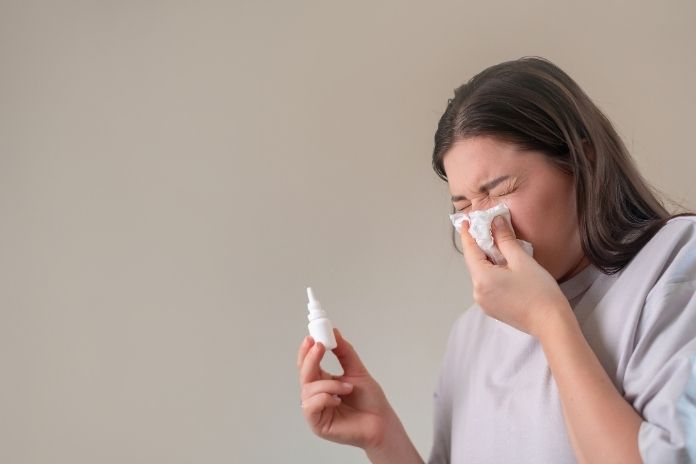
The safest place to start is with strategies that don’t involve a pill or spray. They sound modest, but for many women, they meaningfully reduce how often medication is needed.
Reducing Allergen Exposure
Limiting contact with triggers is the single most effective drug-free intervention. Keep windows closed during peak pollen times, particularly mid-morning, and rely on air conditioning instead. Shower and change clothes after spending time outside so pollen doesn’t follow you to bed.
Wash sheets and pillowcases weekly in hot water, encase mattresses and pillows in dust-mite-proof covers, and keep pets out of the bedroom if dander is a trigger. A HEPA filter in the bedroom can also reduce the airborne particle load. For more detailed strategies for indoor cleaning and dietary support, see our guide to home remedies for hay fever.
Saline Nasal Irrigation and Sprays
Saline rinses are arguably the most underused tool in pregnancy. They physically wash pollen, dust, and excess mucus out of the nasal passages without any drug entering the body. A neti pot, squeeze bottle, or simple saline spray all work, but the water must be distilled, sterile, or previously boiled and cooled to avoid rare but serious infections.
Saline irrigation is genuinely first-line. A 2025 randomized controlled trial published in Frontiers in Allergy found that adding nasal saline irrigation to standard intranasal corticosteroid and antihistamine therapy improved symptom control in patients with moderate-to-severe persistent allergic rhinitis. For pregnant women, the appeal is even stronger: real relief without systemic exposure.
Lifestyle Adjustments
Small habits add up. Drink water steadily throughout the day to thin mucus. Elevate the head of the bed slightly, or use an extra pillow, to make sleep easier when congestion peaks at night.
Avoid known irritants like cigarette smoke and strong fragrances, which can worsen nasal inflammation independently of allergens.
Read More: It’s Not Just “Stress”: How Menopause and Pregnancy Rewrite Your Sleep Biology
Safe Medications for Hay Fever During Pregnancy
When non-drug measures aren’t enough, several medications have an established or reasonably reassuring safety record in pregnancy. The key is to use the lowest effective dose, ideally after the first trimester, and always after talking to your OB-GYN.
Antihistamines Considered Low Risk
Second-generation antihistamines, particularly loratadine (Claritin) and cetirizine (Zyrtec), are the most commonly recommended options. They’re less sedating than older drugs and have more pregnancy data behind them.
According to Cleveland Clinic obstetrician-gynecologist Dr. Salena Zanotti, “antihistamine tablets are typically the first-line medication option for treating allergy symptoms in pregnancy”, though she also notes that no medication is universally safe and individual context matters.
The data backs this up. A prospective observational cohort study published in Reproductive Toxicology followed 196 women exposed to cetirizine during the first trimester and found no increase in major birth defects, spontaneous abortions, or preterm deliveries compared with a control group of 1,686 unexposed pregnancies.
Read More: Is It Safe to Take Allergy Medicine Every Day? What Experts Want You to Know
Intranasal Corticosteroid Sprays
Steroid nasal sprays are often the next step when antihistamines alone don’t control symptoms. They’re considered the most effective single class for allergic rhinitis because they target nasal inflammation directly, with very little of the drug reaching the bloodstream.
Budesonide (Rhinocort) has the strongest pregnancy safety profile, and the FDA historically rated it Category B, the most favorable rating available at the time.
A systematic review in the International Journal of Pediatric Otorhinolaryngology concluded that intranasal fluticasone furoate, mometasone, and budesonide appear safe in pregnancy at recommended doses, while intranasal triamcinolone showed a significant association with respiratory tract defects and is best avoided.
Eye Drops for Allergy Relief
For itchy, watery eyes that don’t quiet down with the steps above, lubricating drops are the safest starting point because they contain no active medication. They flush pollen and irritants off the ocular surface and soothe the dryness that often accompanies allergic conjunctivitis.
If a stronger option is needed, prescription antihistamine or mast-cell stabilizer eye drops can be discussed with your provider. Cromolyn-based drops in particular have a long track record and minimal systemic absorption.
Cool compresses applied for a few minutes at a time can also help calm eye inflammation and are completely drug-free. Wraparound sunglasses outdoors physically block pollen from reaching the eyes during peak season.
Medications and Treatments to Avoid or Use With Caution

Some options that seem routine outside of pregnancy carry real concerns once you’re expecting.
Oral pseudoephedrine, the active ingredient in many decongestant brands, has been linked to a small increased risk of abdominal wall birth defects when used in the first trimester. The American College of Obstetricians and Gynecologists recommends avoiding it in the first three months, and many providers suggest avoiding it for the entire pregnancy when alternatives exist.
Phenylephrine, the other common over-the-counter oral decongestant, has less safety data, and recent reviews have also questioned how effective it really is, even outside of pregnancy.
Topical decongestant sprays like oxymetazoline are sometimes considered for limited use later in pregnancy, but they carry a separate risk: prolonged use can lead to rebound congestion that worsens after you stop, sometimes lingering for weeks after delivery.
Multi-symptom products are convenient but often contain a decongestant alongside the antihistamine. Brand names ending in “D,” such as Claritin-D or Zyrtec-D, indicate the addition of pseudoephedrine. Read labels carefully, and when in doubt, stick to single-ingredient antihistamines that you and your provider have already discussed.
Butterbur, stinging nettle, quercetin, and various herbal allergy blends are widely marketed, but most lack the controlled pregnancy data needed to call them safe. Butterbur in particular can contain compounds that are potentially harmful to the liver. “Natural” doesn’t equal safe in pregnancy, and any supplement deserves a conversation with your obstetrician first.
When Symptoms May Need Medical Attention
Most hay fever can be managed at home. Some signs, though, warrant a call to your provider: facial pain or pressure that doesn’t resolve, thick yellow or green nasal discharge, a fever, wheezing or shortness of breath, or symptoms severe enough to disrupt eating, sleeping, or normal daily function.
These can indicate a sinus infection, an asthma flare, or another complication that requires targeted treatment. Untreated severe rhinitis can also predispose to sinusitis, which in pregnancy may require antibiotics.
Women with a history of asthma should be especially alert to any increase in wheezing or breathlessness, since poorly controlled asthma during pregnancy is associated with worse outcomes for both mother and baby.
Sudden, severe symptoms like swelling of the lips or tongue, hives, or trouble breathing point toward anaphylaxis rather than ordinary hay fever and require emergency care regardless of pregnancy status. Save any new or unusual reactions for prompt discussion with your provider rather than waiting for the next routine visit.
How to Talk to Your Doctor About Allergy Treatment
A short list of focused questions helps you get more out of a prenatal visit.
Questions to Ask
Ask which medications you currently take are considered safe to continue, and at what dose. Ask about evidence-based alternatives if your usual product isn’t recommended. Ask about non-drug strategies that fit your specific triggers, and ask what symptoms should prompt a follow-up call.
If you already have an allergist, looping them into the conversation alongside your obstetrician usually produces the most coordinated plan. Pharmacy consultations are another underused resource, especially for sorting through combination products and decoding active-ingredient labels.
Importance of Individual Risk Assessment
Trimester matters. The first trimester is when organ development is most sensitive, so providers are typically most conservative during this window. Personal history matters too: a woman with severe asthma needs different management than someone with mild seasonal sneezing.
As Dr. James Tracy, past president of the American College of Allergy, Asthma and Immunology, has noted, many people with allergies “don’t realize how much better they can feel after receiving appropriate treatment for their condition”, and that principle holds in pregnancy too. The goal isn’t to white-knuckle through the season; it’s to find safe relief.
Can Hay Fever Affect the Baby?
This is the question that keeps many expectant mothers awake at night. The reassuring answer: hay fever itself doesn’t appear to directly harm the developing baby. The risks, when they exist, are mostly indirect and stem from poor symptom control rather than the allergic process itself.
A Cochrane Review protocol on non-surgical interventions for nasal congestion during pregnancy notes that disturbed sleep and persistent mouth breathing from severe congestion can reduce oxygen levels and increase maternal stress, and that anxiety and sleep disruption have been linked to adverse fetal outcomes in some studies.
The takeaway is the opposite of what many women assume: under-treating significant allergy symptoms is often the greater risk, not the carefully chosen medication that brings relief. With sensible management, the great majority of pregnancies affected by hay fever progress normally.
Read More: Hay Fever vs. Common Cold: How to Tell the Difference
Key Takeaway
Living through a pregnancy with hay fever during pregnancy doesn’t mean accepting weeks of broken sleep, blocked sinuses, and red eyes. Most women can find meaningful relief by stacking simple, low-risk measures, allergen avoidance, saline irrigation, lifestyle tweaks, before considering medication.
When medication is needed, second-generation antihistamines like loratadine and cetirizine, plus intranasal budesonide, sit at the top of the list of options with strong safety evidence. Oral decongestants in the first trimester, combination cold-allergy products with hidden ingredients, and untested herbal blends are the main pitfalls.
Above all, the conversation with your OB-GYN matters more than the contents of any single article. Bring your medication list, your symptom diary, and your questions. Safe, effective allergy management in pregnancy is the standard of care when treatment is tailored to your trimester, history, and symptom severity.
FAQs
Can I take Claritin or Zyrtec while pregnant?
Loratadine (Claritin) and cetirizine (Zyrtec) are generally considered low-risk during pregnancy and are commonly recommended by OB-GYNs when allergy symptoms need treatment. Avoid the “D” versions, which contain pseudoephedrine. Always confirm with your own provider before starting.
Is hay fever worse during pregnancy?
It can be. Hormonal changes increase blood flow and swelling in the nasal lining, which often amplifies existing allergy symptoms. Some women feel worse, some feel about the same, and a smaller group notices improvement.
Can hay fever harm my baby?
Hay fever itself doesn’t appear to directly harm the baby. The indirect risks come from severe, untreated symptoms that disrupt sleep, breathing, or nutrition, which is why safe treatment is usually preferable to suffering through the season.
References
- American College of Obstetricians and Gynecologists. (2024). What medicine can I take for allergies while I’m pregnant?
- American College of Allergy, Asthma and Immunology. (2022). Pregnancy and allergies.
- Alhussien, A. H., Alhedaithy, R. A., & Alsaleh, S. A. (2018). Safety of intranasal corticosteroid sprays during pregnancy: An updated review. European Archives of Oto-Rhino-Laryngology, 275(2), 325-333.
- Li, S., Xu, R., Yu, S., Wang, M., Fan, J., Chen, M., et al. (2025). Nasal saline irrigation with azelastine-fluticasone nasal spray in moderate-to-severe persistent allergic rhinitis: A randomized controlled trial. Frontiers in Allergy, 6, 1622510.
- Small, P., & Kim, H. (2011). Allergic rhinitis. Allergy, Asthma & Clinical Immunology, 7(Suppl 1), S3.
- Weber-Schoendorfer, C., & Schaefer, C. (2008). The safety of cetirizine during pregnancy: A prospective observational cohort study. Reproductive Toxicology, 26(1), 19-23.
- Zhang, L., Han, D., Huang, D., Wu, Y., Dong, Z., Xu, G., et al. (2017). Non-surgical interventions for nasal congestion during pregnancy. Cochrane Database of Systematic Reviews.
- Zanotti, S. (2025). Allergy relief during pregnancy. Cleveland Clinic Health Essentials.
- Morgan, J., & Feldman, M. (2018). Itchy eyes, sore throat: How to manage allergies and asthma during pregnancy. UT Southwestern MedBlog.
- American College of Allergy, Asthma and Immunology. (2025). Nothing to sneeze at: Expert tips on coping with spring allergies.
In this Article