
















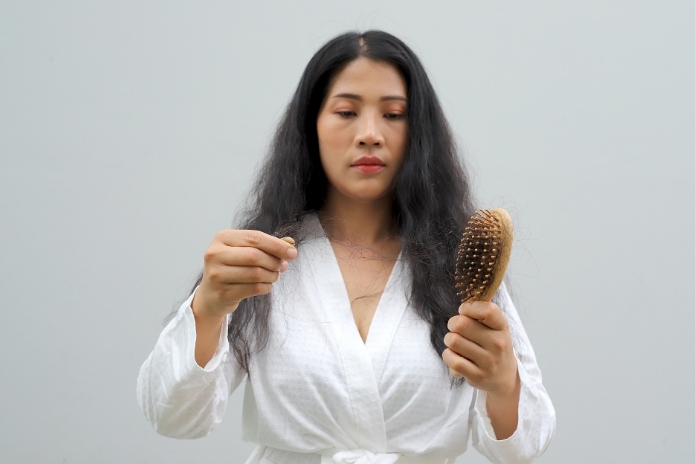
She noticed it first in the shower drain. Then in the brush. Then, in the ponytail that felt noticeably thinner than it did a year ago. For many women in their 40s and 50s, menopause hair loss arrives quietly, without the fanfare of hot flashes or the obvious marker of a missed period. It just shows up, one strand at a time.
Hair thinning is one of the most emotionally loaded yet underacknowledged symptoms of the menopausal transition. According to a 2025 review published in Maturitas, female-pattern hair loss and telogen effluvium are both common in postmenopausal women, with hormonal changes directly altering the hair follicle’s growth cycle, density, and caliber.
Understanding why this happens and what actually helps can make a significant difference in how women approach and manage this transition. This article covers the hormonal and biological reasons behind hair loss during menopause, the patterns to watch for, and a practical breakdown of lifestyle adjustments, treatments, and when it makes sense to see a doctor.
- Menopause hair loss is mainly driven by declining estrogen and relatively higher androgens, which disrupt the hair growth cycle and increase shedding.
- It usually shows up as diffuse thinning and reduced volume, not sudden bald patches, making it easy to miss early. Factors like stress, thyroid issues, nutrient deficiencies, and medications can worsen hair loss beyond hormones.
- The most effective approach combines nutrition, gentle hair care, stress control, and medical treatments when needed.
- Not all hair loss is hormonal, so sudden, patchy, or severe shedding should be evaluated by a medical professional. Early intervention matters because once follicles shrink significantly, regrowth becomes much harder.
How Menopause Affects Hair Growth
Hair does not grow continuously. Each follicle cycles through three phases: anagen (active growth), catagen (transition), and telogen (resting and shedding). In a healthy scalp, roughly 85 to 90 percent of hairs are in the anagen phase at any given time, with growth lasting two to six years before the follicle rests and eventually sheds.
During menopause, that balance shifts. Estrogen and progesterone, which help keep hair anchored in the growth phase for longer, decline significantly. The result is a shorter anagen phase, earlier entry into telogen, and more hairs shedding than regrowing in any given cycle.
Dr. Mary Lupo, a board-certified dermatologist based in New Orleans, explains it plainly: “There are estrogen receptors on the scalp, and estrogen increases the duration of anagen, the growth phase.” When estrogen declines, the growth phase shortens, more hairs switch to the telogen phase, and shedding increases.
This produces two somewhat different experiences. Some women notice acute shedding, a condition called telogen effluvium, where a large number of hairs enter the resting phase simultaneously. Others experience the slower, progressive miniaturization of follicles associated with female pattern hair loss. Both can occur concurrently, and distinguishing between them often requires a dermatologist’s evaluation.
Why Hair Loss Happens During Menopause
Estrogen does not just regulate the reproductive system. It plays a documented role in scalp biology, with receptors located directly in the hair follicle. These receptors help extend the anagen phase, promote thicker strands, and support the collagen layer in the dermis where follicles are housed.
As both estrogen and progesterone fall during the menopausal transition, that support disappears. Isfahan Chambers-Harris, PhD, a biomedical scientist and trichologist, explains the mechanism directly: “Studies have shown that decreases in these two hormones contribute to hair loss because they play a role in hair growth and the duration of time that the hair stays in the growth or anagen phase.”
When the growth phase shortens, individual hairs emerge finer, shorter, and more fragile. Over time, terminal hairs, the long, pigmented ones covering most of the scalp, can miniaturize into fine vellus hairs that are barely visible.
While total hormone levels fall during menopause, the ratio of androgens to estrogen increases. Specifically, dihydrotestosterone (DHT), a potent androgen derived from testosterone, becomes relatively more influential at the follicle level. DHT is the same hormone responsible for male pattern baldness. In women, it triggers a process called follicular miniaturization, which shrinks the follicle and shortens its productive lifespan.
Chambers-Harris notes that declining estrogen “can also cause an increase in androgens,” adding that “androgens can shrink the hair follicle, which can cause hair thinning.” The result is characteristic thinning at the crown and a widening of the central hair part, rather than a receding hairline.
A 2024 review published in Biomedicines confirmed that androgen excess causes miniaturization of hair follicles and that estrogen deficiency, naturally occurring during menopause, is independently linked to hair loss, with both mechanisms often operating simultaneously.
Even setting hormones aside, the follicle itself ages. Follicular stem cell activity declines, blood supply to the scalp decreases, and the anagen phase naturally becomes shorter with advancing age. The result is not dramatic baldness but a gradual reduction in overall density and a change in hair texture, which often becomes drier, finer, and more prone to breakage.
These changes are distinct from hormonal hair loss but typically compound it, making the overall experience more pronounced for women in their 50s and beyond.
Other Factors That Can Worsen Menopausal Hair Loss

Hormones are the primary driver, but they rarely work alone. Several other factors can accelerate shedding or compound follicle stress during the menopausal transition.
Stress and sleep disturbances are among the most significant. Elevated cortisol, the body’s main stress hormone, pushes follicles prematurely into the resting phase. Chronic sleep disruption, which is common during perimenopause due to night sweats and hormonal shifts, amplifies cortisol output and disrupts the repair cycles that normally occur overnight.
Thyroid dysfunction deserves specific mention. Both hypothyroidism and hyperthyroidism are more prevalent in midlife women and produce hair thinning that closely mimics hormonal hair loss. A 2023 review in Cureus confirmed that thyroid hormones regulate hair follicle cycling and that dysfunction in either direction is associated with telogen effluvium and androgenetic alopecia.
Thyroid function should be evaluated in any woman presenting with significant hair loss.
Nutrient deficiencies are another frequently overlooked contributor. Iron and ferritin are particularly critical, as iron is necessary for follicle cell division. A 2022 systematic review published in Skin Appendage Disorders found a meaningful association between iron deficiency and nonscarring alopecia in women, including both telogen effluvium and androgenetic alopecia.
Vitamin D, zinc, and protein are also important; deficiencies in any of these can slow follicle function and weaken strand structure.
Rapid weight changes are an underappreciated trigger. Crash dieting, significant weight loss over a short period, or bariatric surgery can shock the follicle system and precipitate telogen effluvium within two to four months of the triggering event.
Certain medications can also contribute. Beta-blockers, anticoagulants, some antidepressants, and certain cholesterol-lowering drugs have been documented to be associated with hair shedding. Any woman who notices hair loss shortly after starting a new medication should discuss the connection with her prescribing physician.
Read More: 8 Perimenopause Health Mistakes Many Women Don’t Realize They’re Making
What Menopausal Hair Loss Looks Like
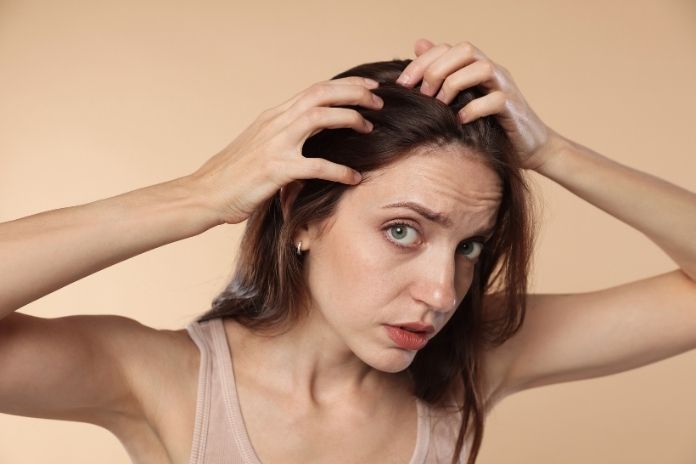
Menopausal hair thinning is gradual, not dramatic, which makes it easy to overlook early. It usually appears as diffuse thinning across the scalp, with reduced density rather than visible bald patches.
A widening part is one of the earliest signs, along with a noticeable drop in ponytail volume. Increased shedding during brushing or washing is also common, and consistently losing more than 100 to 150 hairs a day is worth paying attention to.
When Hair Loss May Signal Another Condition
Not all hair loss during menopause is hormonal. Sudden or patchy loss may point to Alopecia areata, which requires different treatment.
Hair loss with scalp pain, redness, or irritation may indicate inflammatory or scarring conditions, such as frontal fibrosing alopecia.
Rapid shedding with symptoms like fatigue or weight changes may suggest thyroid issues or anemia, while hair loss beyond the scalp, such as eyebrows or body hair, signals a broader systemic problem and needs medical evaluation.
Read More: How Long Does Menopause Last? What to Expect at Each Stage
How to Slow Hair Loss During Menopause
Hair loss during menopause is already driven by hormonal stress, so the focus is on reducing added damage and supporting follicle function.
Gentle hair care comes first. Tight styles can lead to Traction alopecia, while frequent heat styling and chemical treatments weaken fragile strands. Lowering the heat, minimizing styling, and using a mild, sulfate-free shampoo helps protect both scalp and hair.
Nutrition plays a direct role. Adequate protein and iron are essential for hair growth, while omega-3 fatty acids support scalp health. A 2016 study in the Journal of Cosmetic Dermatology found that omega-3 and omega-6 supplementation, combined with antioxidants, reduced hair shedding and improved hair density in women over 24 weeks.
Stress control matters more than most realize. Chronic stress raises cortisol, pushing hair into the shedding phase faster. Managing stress through mindfulness, yoga, and improving sleep quality can help stabilize the hair growth cycle and reduce excess shedding.
Medical and Treatment Options
Minoxidil is the only FDA-approved over-the-counter treatment for female pattern hair loss. It works by prolonging the anagen phase and increasing blood flow to the follicle. The 2% solution and 5% foam formulations are both available without a prescription.
Dr. James Kilgour, a hair loss specialist in the Golden State Dermatology Network, notes that “minoxidil remains the most widely prescribed topical treatment for female pattern hair loss and can be particularly effective when started early in the hair loss process.” Results typically require consistent use for at least three to six months before visible regrowth occurs, and stopping treatment causes previously gained density to reverse over time.
Hormone therapy, specifically systemic estrogen with or without progestogen, remains the most direct way to address the hormonal root cause of menopausal hair loss. Restoring estrogen levels supports the anagen phase and reduces relative androgen excess, which contributes to follicle miniaturization.
That said, hormone therapy is not appropriate for every woman. Decisions about its use involve a careful assessment of individual risk factors, including cardiovascular history, personal and family cancer history, and bone health. The North American Menopause Society recommends individualized decision-making with a qualified clinician rather than a one-size-fits-all approach.
Spironolactone, an androgen blocker, is used off-label for female pattern hair loss and can be particularly helpful when androgenic activity is a dominant driver. A pilot study in the International Journal of Dermatology found that women treated with low-dose oral minoxidil and spironolactone together showed meaningful reductions in shedding score and hair loss severity at both six and twelve months.
Finasteride and dutasteride, both DHT blockers, are sometimes prescribed to postmenopausal women, though they carry a different risk profile and require ongoing monitoring. Any prescription approach for hormonal hair loss in menopause should be supervised by a dermatologist familiar with the condition.
Read More: 10 Healthy Drinks That Can Boost Your Skin and Hair Naturally
Supplements for Menopausal Hair Thinning: What to Know
The hair loss supplement market is crowded, and most products lack evidence to support their claims. That does not mean supplements have no role. It means they work best when they address a confirmed deficiency rather than a presumed one.
Before starting any supplement, a blood panel checking ferritin, vitamin D, zinc, and thyroid function provides the clearest picture of where deficiencies actually exist. Treating a confirmed low ferritin level, for example, can produce meaningful improvements in shedding. Supplementing iron when there is no deficiency offers no benefit and can cause harm.
Biotin is widely marketed for hair growth, but its benefits are largely limited to people with a true biotin deficiency, which is uncommon. Collagen peptides and marine-based supplements have some preliminary evidence for improving hair strand thickness, but results vary. Saw palmetto, which has mild DHT-blocking properties, is sometimes used as a gentler alternative to finasteride, though evidence in women specifically remains limited.
The clearer guidance is this: optimize the basics first. Adequate protein, repleted iron and vitamin D levels, and consistent omega-3 intake form a stronger foundation than any single specialty supplement. Does Soy Really Help With Menopause Symptoms? Here’s What Doctors Say covers related nuance on plant-based hormonal support during this transition.
Lifestyle Habits That Support Hair Health

Regular physical activity improves scalp circulation, reduces cortisol, and supports hormone metabolism. Moderate aerobic exercise and resistance training are both beneficial, and the latter is particularly important during menopause for preserving lean muscle mass alongside follicle function.
Maintaining a stable body weight is also relevant. Significant fluctuations, in either direction, disrupt follicle cycling. Crash diets strip the body of the nutrients follicles depend on, while excess adipose tissue can increase androgen conversion through peripheral aromatization.
Scalp care is often overlooked. A gentle, regular scalp massage, even for just a few minutes during shampooing, increases blood flow to the follicles. Some research suggests that consistent scalp massage over several months may modestly increase hair thickness by stretching follicle cells and stimulating hair growth.
Smoking accelerates hair loss through multiple pathways: it reduces scalp blood flow, increases androgen levels, and promotes oxidative stress that damages follicle DNA. Women who smoke during and after menopause face a compounded risk of hair thinning, and cessation is among the most impactful modifiable factors.
How Long Does Menopausal Hair Loss Last and When to Seek Medical Advice
The timeline depends on the type of hair loss. Telogen effluvium triggered by menopause or stress-related events usually resolves within six to twelve months once the cause is managed. In contrast, female pattern hair loss linked to hormonal changes tends to be more persistent. It may stabilize over time, but lost density does not return on its own without treatment.
This is why early intervention matters. Acting before significant thinning sets in helps preserve follicle function and improves long-term outcomes.
That said, not all hair loss should be monitored passively. See a dermatologist if thinning is rapid, patchy, or asymmetric, or if it does not improve within three to six months despite lifestyle changes. Hair loss extending beyond the scalp, such as eyebrows or body hair, or accompanied by symptoms like fatigue, weight changes, or cold intolerance, may point to underlying issues like thyroid dysfunction or autoimmune conditions.
If there’s uncertainty about the pattern or pace, it’s worth getting evaluated early. A specialist can use tools such as dermoscopy or scalp biopsy to identify the exact cause and guide treatment, rather than relying on guesswork.
Read More: Why Menopause Can Change Body Odor (and How to Manage It)
Key Takeaway
Menopause hair loss is real, common, and driven by a convergence of hormonal, nutritional, and biological factors that interact differently in every woman. The central mechanism, declining estrogen and a relative increase in androgens, disrupts the hair growth cycle in ways that can be partially addressed through both lifestyle and medical intervention.
No single solution fits every case of hormonal hair loss during menopause. What works consistently is a thorough approach: understanding the type of loss, addressing confirmed nutritional gaps, protecting the follicle from additional stress, and pursuing medical treatment when appropriate. Gentle hair care, adequate nutrition, and stress management form the baseline that makes everything else more effective.
Hair changes during and after menopause do not have to be accepted passively. Persistent or rapidly worsening thinning always deserves professional evaluation, and the sooner that evaluation happens, the more options remain available.
References
- Chambers-Harris, I. (2024). Expert commentary on menopause and hair loss. MindBodyGreen.
- Goluch-Koniuszy, Z. S. (2016). Nutrition of women with hair loss problem during the period of menopause. Menopause Review, 15(1), 56-61.
- Hussein, R. S., Atia, T., & Bin Dayel, S. (2023). Impact of thyroid dysfunction on hair disorders. Cureus, 15(8), e43266.
- Kamp, E., Ashraf, M., Musbahi, E., & DeGiovanni, C. (2022). Menopause, skin and common dermatoses. Part 1: Hair disorders. Clinical and Experimental Dermatology, 48(3), 215-223.
- Lupo, M. (2024). Expert commentary on menopause and hair growth cycle. TIME.
- Owecka, B., Tomaszewska, A., Dobrzeniecki, K., & Owecki, M. (2024). The hormonal background of hair loss in non-scarring alopecias. Biomedicines, 12(3), 513.
- Rasheed, H., Mahgoub, D., Hegazy, R., El-Komy, M., Abdel Hay, R., Hamid, M. A., & Hamdy, E. (2013). Serum ferritin and vitamin D in female hair loss: Do they play a role? Skin Pharmacology and Physiology, 26(2), 101-107.
- Sinclair, R. D. (2018). Female pattern hair loss: A pilot study investigating combination therapy with low-dose oral minoxidil and spironolactone. International Journal of Dermatology, 57(1), 104-109.
- Tobias, K., Blume-Peytavi, U., & Hillmann, K. (2022). Menopause and hair loss in women: Exploring the hormonal transition. Maturitas, 108378.
- Trüeb, R. M. (2016). Hormones and clocks: Do they disrupt the locks? International Journal of Trichology, 8(2), 73-76.
- Van Beek, N., Bodó, E., Kromminga, A., Gáspár, E., Meyer, K., Zmijewski, M. A., Slominski, A., Wenzel, B. E., & Paus, R. (2008). Thyroid hormones directly alter human hair follicle functions: Anagen prolongation and stimulation of both hair matrix keratinocyte proliferation and hair pigmentation. Journal of Clinical Endocrinology & Metabolism, 93(11), 4381-4388.
- Kanti, V., Constantinou, A., Reygagne, P., Vogt, A., Kottner, J., & Blume-Peytavi, U. (2023). Menopausal hair changes and contribution of hair care habits: Results from a cross-sectional study in France, Italy, and Spain. (American Psychological Association)
- GoodRx Health. (n.d.). Hair loss in menopause: Causes and treatment options.
- Ducray. (n.d.). Hair loss and menopause.
- Golden State Dermatology. (n.d.). What really causes menopausal hair loss and how to address it.
- Doctronic. (n.d.). Menopause hair loss: Why it happens and what helps.
- Cleveland Clinic. (n.d.). Hair loss in women.
- Hiranandani Hospital. (n.d.). Hair loss in women.
- London Dermatology Centre. (n.d.). Alopecia and menopause hair loss.
In this Article