



















Niacinamide vs. vitamin C for skin is a widely searched-for skincare comparison. But this comparison itself is actually misleading. They behave very differently on the skin; they also target pigmentation through different biological pathways and even interact with the skin barrier very differently.
Most people try just a single ingredient for two weeks, then get mild irritation or even no immediate glow, then assume it “is not suiting” them. The bigger issue here usually is wrong expectations.
Vitamin C is never mainly a calming ingredient. Niacinamide is never mainly a fast-brightening ingredient. They first solve different problems, then overlap. Here is the full evidence-based comparison, mechanism by mechanism, not just marketing claim by marketing claim.
- Vitamin C works faster for pigmentation, collagen support, and antioxidant protection against UV damage.
- Niacinamide is gentler and more stable; it helps barrier repair, oil control, redness, and acne-prone skin.
- Combination routines often perform better than using either ingredient alone.
Read More: It’s Not Just Aging-It’s Lipid Depletion: How to Restore “Young” Moisture to 50+ Skin
What Each Ingredient Actually Does: The Mechanism-Level Comparison
Niacinamide: The Barrier-First Multitasking Ingredient
Niacinamide is the active form of vitamin B3. What makes it unusual in skincare is not that it does one thing extremely aggressively but that it does many things moderately well. It is that it quietly affects multiple biological systems at the same time without creating much irritation.
Most active ingredients push the skin into a controlled stress response. Niacinamide’s skin benefits behave differently. It improves skin function while reducing inflammatory signaling. That is why dermatologists often recommend it for people whose skin “cannot tolerate actives.”
One important point many skincare discussions miss: niacinamide does not simply “brighten.” It changes how pigment physically moves through skin layers. So it reduces visible pigmentation without directly shutting down melanocyte activity itself.
This difference matters clinically. Niacinamide works more gently downstream. Its main mechanisms include:
- Increasing ceramide synthesis
- Improving fatty acid production
- Reducing transepidermal water loss
- Suppressing inflammatory mediators like NF-κB
- Reducing sebum production
- Mildly supporting collagen synthesis
- Interfering with melanosome transfer
Another interesting point: niacinamide performs consistently even in imperfect formulations. It is chemically stable, works across a broader pH range, and tolerates heat and light much better than vitamin C. This makes real-world performance more predictable.
At 4–5%, niacinamide already reaches most of its clinically useful effects. Higher percentages became popular mainly because skincare marketing trained consumers to associate bigger numbers with stronger results.
Vitamin C: The oxidative Stress and Collagen Specialist
Vitamin C skin benefits work differently from niacinamide in almost every way. The most clinically validated form is L-ascorbic acid for skin. It is powerful partly because skin naturally uses vitamin C in collagen synthesis and antioxidant defense. But topical delivery is really difficult because the molecule is very unstable and oxidizes very quickly.
Vitamin C mainly helps skin through three pathways:
- Tyrosinase inhibition
- Antioxidant neutralisation
- Collagen synthesis support
Tyrosinase is the enzyme involved early in melanin production. Vitamin C interferes with this tyrosinase inhibition process upstream, before excess pigment fully forms. This is why vitamin C often works faster than niacinamide for dark spots.
Vitamin C acts as a cofactor in hydroxylation reactions required for stable collagen triple helix formation. Without enough vitamin C availability, collagen fibers become structurally weaker. This is one reason vitamin C has stronger evidence for fine lines and photodamage compared with niacinamide alone.
But vitamin C has limitations. L-ascorbic acid needs acidic conditions, usually a pH below 3.5, for proper skin penetration. That low pH itself can irritate sensitive skin. The molecule also oxidizes with air, heat, and light exposure. So, unlike niacinamide, formulation quality changes result dramatically.
Head-to-Head by Skin Concern
For Hyperpigmentation and Dark Spots
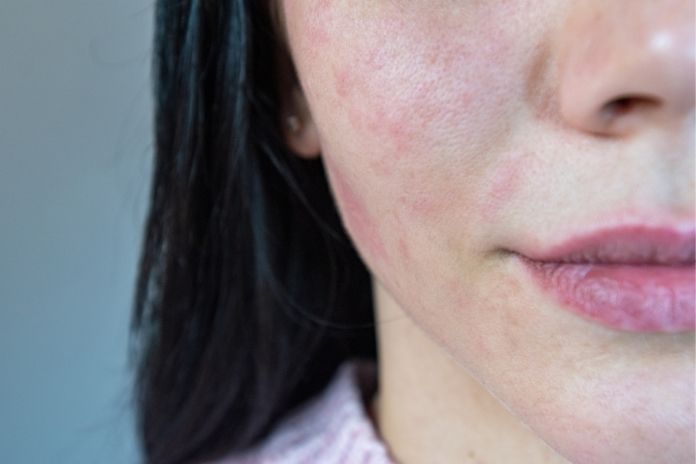
Both ingredients attack pigmentation at different biological stages. Vitamin C blocks pigment formation earlier through tyrosinase inhibition. Niacinamide reduces the transfer of already-produced pigment into visible skin cells. So niacinamide or vitamin C for hyperpigmentation is not redundant. They are complementary.
Vitamin C generally works faster. Many people notice early brightness improvement within 4–6 weeks. Niacinamide often needs 6–10 weeks for visible pigment reduction because it works more gradually. But speed is not the only factor. Vitamin C is often stronger for:
- Solar lentigines
- Sunspots
- Uneven dullness from photodamage
- Oxidative pigmentation
Niacinamide is often better tolerated for:
- Post-inflammatory hyperpigmentation
- Acne-related marks
- Redness-associated discoloration
- Compromised barrier skin
A newer perspective in dermatology is that pigment treatment success depends less on the “strongest ingredient” and more on whether inflammation and barrier instability are also controlled. This is one reason aggressive depigmenting routines sometimes fail despite using powerful ingredients.
For Anti-Aging and Collagen Support
Vitamin C has the strongest direct evidence here. Many anti-aging ingredients indirectly improve skin appearance. Vitamin C actually participates in collagen production chemistry itself. It also reduces oxidative collagen breakdown. So it helps both by supporting new collagen and slowing the destruction of existing collagen.
Niacinamide still helps aging skin, but more indirectly. It improves barrier function, reduces chronic low-grade inflammation, and slightly supports collagen synthesis. An important real-world observation: people often tolerate niacinamide long-term more consistently than strong vitamin C formulations.
For Sensitive, Reactive, or Acne-Prone Skin
Niacinamide clearly wins here. In dermatology clinics, niacinamide is often considered one of the safest active ingredients for compromised skin. It reduces inflammatory signaling while strengthening the barrier at the same time. That combination is rare.
People with rosacea, redness, over-exfoliated skin, or damaged barriers usually tolerate niacinamide better than acidic vitamin C products. L-ascorbic acid formulations can sting because effective penetration requires acidic pH. Even when irritation is mild, repeated inflammation may worsen barrier instability in reactive skin types.
For Oily Skin and Pore Appearance
Niacinamide has much stronger evidence. Niacinamide measurably reduces oil output in many users over time. This often improves shine and makes pores appear less obvious. Vitamin C does not significantly affect oil production.
Many people think pores “shrink” with niacinamide. Anatomically, pores never truly open and close like doors. What usually changes is oil accumulation, inflammation, and skin surface texture around the pore. Niacinamide improves this environment.
For UV damage and Antioxidant Protection
Vitamin C is superior here. This is one of its biggest advantages and one reason dermatologists often prefer morning use. Vitamin C helps neutralize reactive oxygen species generated after UV exposure. It is important to understand that vitamin C works as secondary oxidative protection, not primary UV filtration.
Interestingly, newer research suggests antioxidant depletion in skin begins before visible aging appears. So preventive antioxidant use may matter earlier than most people assume.
Niacinamide and Vitamin C: The Combination Myth
Dr. Daniel Schlessinger, a dermatologist, explains, “There’s a myth that niacinamide and vitamin C cancel each other out, but that comes from outdated information.” These are old studies where niacinamide and ascorbic acid were exposed to sustained high heat for prolonged periods. Under those conditions, nicotinic acid formation could occur, leading to flushing.
Human skin is not a heated industrial reactor. Current skincare formulations do not recreate those conditions. More importantly, clinical outcomes from combination use are often better than either ingredient alone.
A 2025 clinical trial found that a serum combining 5% niacinamide with stabilized vitamin C achieved pigment reduction comparable to 4% hydroquinone while maintaining better hydration and tolerability.
A 2024 study also reported around 13% reduction in dark spot intensity using vitamin C and niacinamide, with high participant satisfaction and minimal irritation using combined formulations.
What changed recently is not only formulation technology but also the understanding of skin biology. Dermatology now increasingly approaches pigmentation as a multipathway process involving inflammation, oxidative stress, melanin synthesis, and pigment transfer together. That makes combination therapy more logical than single-ingredient obsession.
Read More: How to Build a Skincare Routine With Mandelic Acid (For Beginners & Sensitive Skin)
How to Use Both in Your Routine: Practical Application
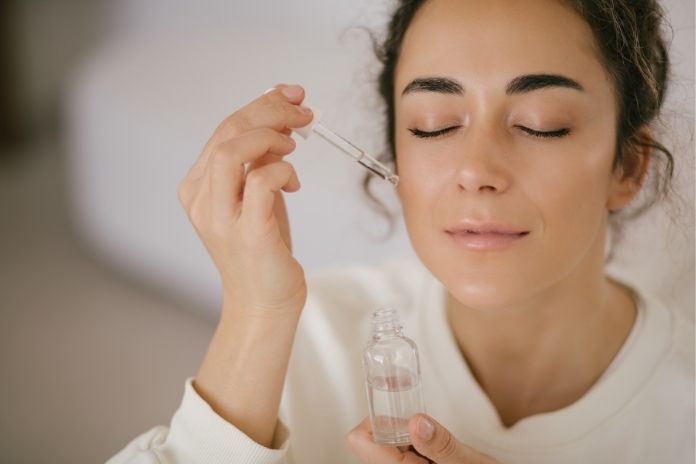
The easiest approach is the following:
- Vitamin C in the morning
- Niacinamide at night
Morning vitamin C makes sense because oxidative stress exposure is highest during daytime UV and pollution exposure. Night-time niacinamide supports barrier recovery during overnight repair cycles. But both can also be layered together. If layering:
- Apply vitamin C first
- Wait around 1–2 minutes
- Apply niacinamide second
Concentration is also important.
Niacinamide
4–5% is the evidence-supported range. Higher concentrations became trendy mainly because consumers assume “10% must be stronger.” But irritation increases disproportionately beyond 5% in some users without a major added benefit.
Vitamin C
10–20% L-ascorbic acid is the clinically effective range. Below 10%, measurable benefits become inconsistent. Above 20%, irritation rises sharply while absorption plateaus. Packaging matters too. Good vitamin C products usually use:
- Opaque bottles
- Airtight pumps
- Stabilising antioxidants
- Low-pH formulation systems
If a vitamin C serum already smells metallic or appears dark orange, efficacy may already be reduced.
The Verdict: Which to Choose if You Can Only Use One
Choose vitamin C if:
- Pigmentation is your main concern
- You have sun damage
- You want stronger antioxidant support
- Anti-aging is a priority
- Your skin tolerates acidic products well
Choose niacinamide if:
- Your skin gets irritated easily
- You have redness or rosacea
- You are acne-prone
- Your barrier feels damaged
- You want one ingredient for multiple concerns with low irritation risk
Use both if:
- Your skin tolerates them
- You want long-term pigment management
- You want both prevention and repair
- You prefer balanced rather than aggressive skincare
Dr. Joel Schlessinger, a dermatologist, adds, “I recommend using both ingredients in your skin care routine. This allows you to get the brightening and protective benefits of vitamin C, plus the soothing and barrier-supporting effects of niacinamide.”
Read More: Do Charcoal Face Masks Work? Benefits, Limits, and What Dermatologists Say
Conclusion
The niacinamide vs vitamin C for skin debate mostly exists because skincare marketing likes ingredient battles. Current research no longer supports separating them. In fact, combination therapy increasingly appears more effective because pigmentation, inflammation, and oxidative stress are interconnected processes rather than isolated problems.
You are not choosing the “best” ingredient universally. You are choosing which mechanism your skin currently needs more of.
- Vitamin C works earlier in the pigmentation pathway by inhibiting tyrosinase, while niacinamide works later by reducing melanosome transfer. Using both targets’ pigmentation from two directions.
- Niacinamide improves skin barrier biology itself. Many visible “glow” effects come not from exfoliation but from reduced inflammation and better barrier structure.
- Vitamin C effectiveness depends heavily on formulation stability. A badly stored or oxidized serum may perform far below its labeled concentration.
- Research still has gaps regarding long-term use of newer vitamin C derivatives compared with traditional L-ascorbic acid. Many derivative products are marketed aggressively despite weaker clinical evidence.
- Higher percentages are not always better. Evidence repeatedly shows moderate concentrations of niacinamide and vitamin C often achieve most benefits with lower irritation risk.
FAQs
1. Can I use niacinamide and vitamin C together?
Yes, niacinamide vs. vitamin C can be used together safely in modern skincare formulations. Earlier concerns were based on outdated conditions, while current evidence shows they work synergistically to improve pigmentation, support skin barrier function, and enhance overall tolerability.
2. Which works faster, niacinamide or vitamin C?
Vitamin C works faster than niacinamide for visible brightening and hyperpigmentation reduction. Improvements may appear within four to six weeks, while niacinamide typically requires longer due to gradual effects on barrier repair and melanosome transfer, but offers better tolerability.
3. Which is better for hyperpigmentation, niacinamide or vitamin C?
Both niacinamide vs. vitamin C are effective for hyperpigmentation, but act through different mechanisms. Vitamin C inhibits melanin production directly, while niacinamide reduces pigment transfer, making vitamin C better for sun damage and niacinamide preferable for sensitive or acne-prone skin.
References
- Hsin, S., Lourenço, K., Porcello, A., Marques, C., Rodriguez, C., Raffoul, W., Scaletta, C., Abdel-Sayed, P., Hadjab, B., Applegate, L. A., & Laurent, A. (2024). Pilot Clinical Safety and Efficacy Evaluation of a Topical 3% Tranexamic Acid Cream and Serum Protocol for Managing Facial Hyperpigmentation in Caucasian Patients. Cosmetics, 11(5), 168.
- Pandel, R., Poljšak, B., Godic, A., & Dahmane, R. (2013). Skin Photoaging and the Role of Antioxidants in Its Prevention. ISRN Dermatology, 2013, 1–11.
- Rocio, J., Pittet, J. C., Sachdev, M., Kovylkina, N., Bensmaine, C. D., & Thierry Passeron. (2025). Evaluation of the Efficacy of a Serum Containing Niacinamide, Tranexamic Acid, Vitamin C, and Hydroxy Acid Compared to 4% Hydroquinone in the Management of Melasma. Journal of Cosmetic Dermatology, 24(3).
- Van den Broeck, I., Ludikhuyze, L., Weemaes, C., Van Loey, A., & Hendrickx, M. (1998). Kinetics for Isobaric−Isothermal Degradation ofl-Ascorbic Acid. Journal of Agricultural and Food Chemistry, 46(5), 2001–2006.
In this Article