













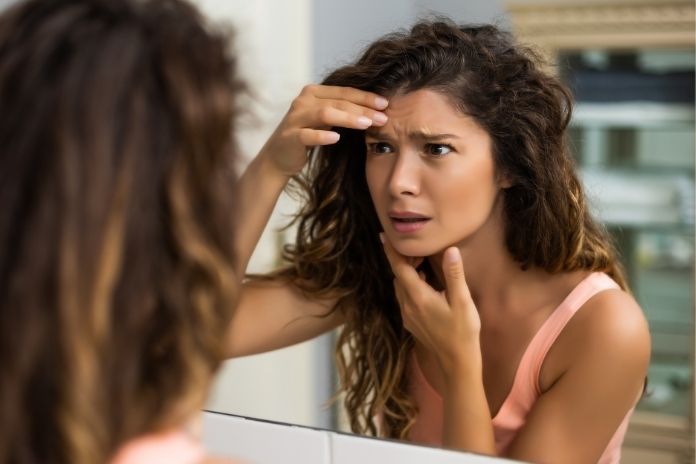
She had used the same moisturizer for three years. It had always worked. Then, somewhere around 47, her skin started feeling perpetually tight by midday, fine lines appeared around her mouth that had not been there the year before, and products she had tolerated for years began stinging her cheeks. Nothing in her routine had changed. Her skin had.
What she was experiencing was not unusual or untreatable. Menopause skin changes are among the most consistent and physically noticeable effects of the hormonal transition, yet they are rarely explained beyond surface-level advice. Most women are told to “hydrate more” or “use anti-aging products,” without understanding what is actually happening at a structural level.
This article breaks that gap. It focuses on the changes in the skin during menopause, why those changes can feel sudden, and which interventions are supported by clinical evidence. The goal is not to overcomplicate skincare, but to separate what works from what is marketed, so decisions are based on biology, not guesswork.
- Menopausal skin changes are driven by declining estrogen levels, which directly affect collagen, hydration, and barrier function.
- Collagen loss accelerates after menopause, leading to dryness, wrinkles, and reduced skin elasticity.
- Skin becomes more sensitive and slower to repair, which is why previously tolerated products may start causing irritation.
- The priority shifts from basic skincare to barrier repair, hydration, and consistent sun protection.
- Evidence-backed ingredients like retinoids, ceramides, and antioxidants help, but consistency matters more than quick fixes.
Why Menopause Affects the Skin
The Role of Declining Estrogen Levels
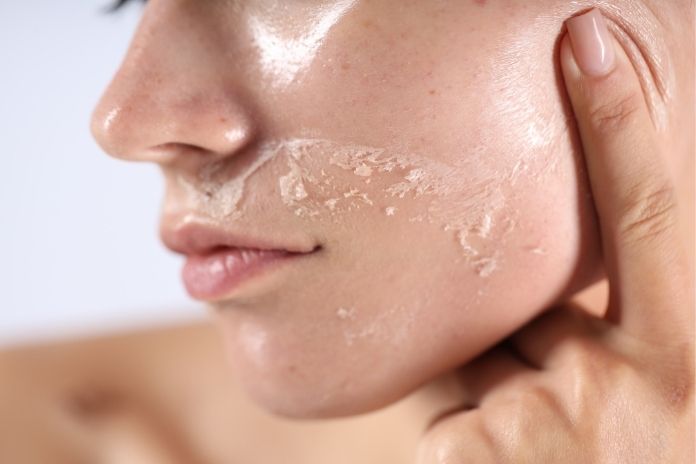
Skin is not simply a passive outer layer. It is an endocrine organ that contains estrogen receptors throughout, in the fibroblasts, keratinocytes, and sebaceous glands. When estrogen levels drop during perimenopause and menopause, the effects are structural, functional, and highly visible.
Dr. Joshua Zeichner, MD, has explained that “estrogen has been shown to play a role in stimulating collagen production and maintaining a healthy skin barrier,” and that as estrogen levels decline during menopause, collagen levels in the skin decrease and the skin becomes dry. That is not a cosmetic observation. It is a direct consequence of losing a hormone that actively maintains skin structure at the cellular level.
Three mechanisms drive this process simultaneously: systemic estrogen production from the ovaries falls sharply, local estrogen production within the skin itself decreases, and the expression of estrogen receptors in the skin declines. All three reinforce each other, which is why the changes can feel sudden even when they have been building quietly for years.
Reduced Collagen and Elastin Production
Collagen loss during menopause is not a gradual, linear process. A narrative review published in the Journal of Cosmetic Dermatology in 2025 found that skin collagen content declines at an average rate of 2.1% per postmenopausal year over the first 15 years following menopause, and that this loss is linked to menopausal age rather than chronological age.
Critically, the review also found that up to 30% of skin collagen can be lost in the first five years after menopause alone. Elastin degrades simultaneously. While collagen provides structural firmness, elastin gives skin the ability to spring back after being stretched. Its breakdown shows up as increased skin laxity, deeper lines, and a general loss of resilience that moisturizer alone cannot address.
Changes in Oil Production and Hydration
Estrogen drives the synthesis of hyaluronic acid in the dermis, a molecule that can hold up to 1,000 times its own weight in water. It also regulates sebum production through the sebaceous glands. When estrogen levels fall, both functions are compromised. The result is reduced natural oils, increased transepidermal water loss, and a skin barrier that retains moisture far less effectively.
This is why dry skin during menopause often feels different from ordinary winter dryness. The problem is not just surface dehydration. It is a structural change in the dermis that affects how skin holds and regulates water from within.
Increased Skin Sensitivity and Slower Repair
Estrogen also supports the skin’s immune and repair functions. After menopause, reduced vascularity means less blood flow and fewer nutrients reaching the basal cell layer, which generates new skin cells. Wound healing slows, the barrier is more easily disrupted, and products that were previously well tolerated can suddenly cause stinging or redness.
Common Menopause Skin Changes
Dryness and Dehydration
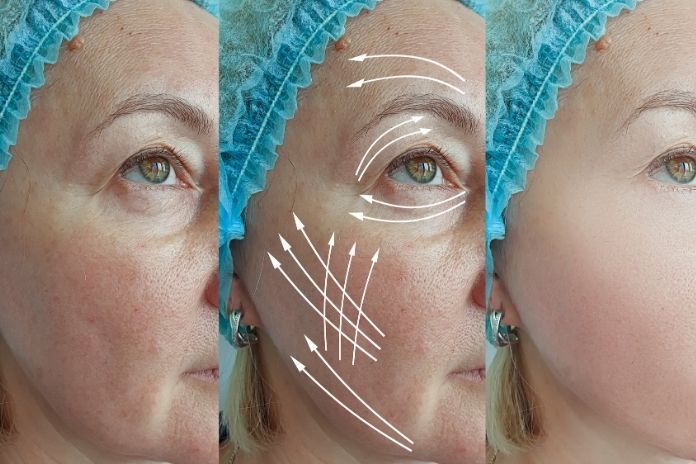
Dryness is typically the first and most consistently reported skin change during menopause. Reduced sebum production, declining hyaluronic acid synthesis, and compromised barrier function all converge to create skin that feels tight, rough, or flaky, particularly around the cheeks, forehead, and under the eyes.
The discomfort is real. Increased transepidermal water loss means moisture evaporates from the skin surface faster than in premenopausal years, and a damaged skin barrier cannot compensate. Barrier repair becomes the primary skincare objective at this stage.
Wrinkles and Fine Lines
Collagen loss and skin thinning drive the development of menopause wrinkles. As dermal collagen decreases, the scaffold supporting the skin’s surface weakens, and lines that were previously faint deepen. The areas most commonly affected are around the mouth, between the brows, and across the forehead, though the neck and chest skin show changes as well.
Skin also becomes more extensible but less elastic, meaning it stretches more easily but no longer bounces back as much as before. This contributes to the sagging and loss of definition that often appear around the jawline and cheeks during this period.
Increased Skin Sensitivity
Many women find that their skin becomes reactive during the menopause transition in ways that feel entirely new. Products tolerated for years, including certain acids, fragrances, and preservatives, can begin causing irritation, redness, or burning. This reflects a genuine change in barrier function, not a sudden allergy.
Dr. Whitney Bowe, MD, has written directly from personal experience at 46 that skin “becomes more reactive to products you previously tolerated, and begins showing signs of aging more quickly than before” during perimenopause. She notes that understanding the biology behind these shifts is what allows women to respond effectively rather than feel overwhelmed by them.
Sagging and Loss of Firmness
Structural changes in the dermis, particularly the loss of type I and type III collagen that provide skin strength and integrity, lead to a gradual softening of facial contours. The jawline may lose definition. The cheeks may appear flatter. These changes reflect not just surface aging but also a reduction in dermal thickness that supports the skin from beneath.
Uneven Tone and Age Spots
Accumulated sun exposure compounds estrogen-related skin changes at this stage. As the barrier’s ability to protect against UV damage weakens, existing hyperpigmentation can deepen, and new spots may appear. Hormonal influences on melanocyte activity also play a role, making pigmentation irregularities a common complaint during and after the menopause transition.
What Actually Helps Dry Menopausal Skin
The most clinically supported first step for dry skin during menopause is consistent use of a barrier-repair moisturizer. Look for formulations containing ceramides, which replenish the lipid layer of the stratum corneum; glycerin, a humectant that draws water to the skin surface; and niacinamide, which supports barrier function and reduces transepidermal water loss.
Application timing matters. Moisturizer applied to slightly damp skin immediately after cleansing seals in residual water before it evaporates. Using a product once a day and expecting results by the end of the week does not reflect how barrier repair actually works. Consistency over several weeks produces meaningful change.
Harsh soaps and foaming cleansers strip the residual oils that menopausal skin is already producing in smaller amounts. Switching to a cream or oil-based, gentle cleanser is a practical, non-negotiable step. If your cleanser leaves skin feeling tight or squeaky, it is removing too much.
Hyaluronic acid serums and glycerin-based products work by pulling moisture into the skin from the environment. They work best when applied to damp skin and then sealed with a moisturizer. On their own, in very dry climates, humectants can occasionally draw water out of the skin rather than into it, so pairing them with an occlusive or emollient moisturizer is advisable.
Read More: Best Hyaluronic Acid Moisturizers: Hydrate and Plump Your Skin for a Youthful Glow
Ingredients That May Help With Wrinkles and Skin Texture
Retinoids Used Carefully
Topical retinoids remain the most evidence-backed ingredient class for stimulating collagen production and improving skin texture.
A 2025 clinical study in the Journal of Drugs in Dermatology, co-authored by Dr. Whitney Bowe, confirmed that retinaldehyde-based serums with firming peptides improved skin texture and reduced visible signs of photoaging in clinical evaluation, supporting retinoid use for aging skin concerns.
For menopausal skin, the critical word is patience. Start with a low concentration of retinol (0.025% to 0.05%) two to three nights per week, and gradually increase the frequency over several months. Jumping straight to prescription-strength tretinoin on sensitive, barrier-compromised menopausal skin can cause significant irritation that sets back progress.
Dr. Jenna Peart, MD, FAAD, has noted in her published clinical writing that there is “much stronger data supporting the use of topical retinoids and peptides for collagen production and texture improvement” than for topical estrogen creams when it comes to treating facial aging, and that she does not routinely recommend topical estrogen creams for this purpose as a result.
Peptides and Growth-Factor-Based Products
Peptides are short amino acid chains that can signal fibroblasts to produce collagen. While the evidence base is not as extensive as for retinoids, peptide-containing serums and moisturizers are well tolerated by sensitive menopausal skin and represent a reasonable addition to a targeted routine, particularly for women who cannot yet tolerate retinoids.
Growth-factor-containing products represent an emerging territory. Some clinical data support their use in improving skin texture and firmness, but formulations and concentrations vary widely across products, and not all are equivalent. A dermatologist can help identify whether a specific product has meaningful clinical data behind it.
Antioxidants
Estrogen is itself an antioxidant. Its decline leaves skin more vulnerable to oxidative damage from UV exposure, pollution, and environmental stressors. Topical vitamin C, particularly in stable L-ascorbic acid formulations at concentrations of 10 to 20%, can partially compensate by neutralizing reactive oxygen species before they degrade collagen. Vitamin C also supports collagen synthesis directly and brightens uneven tone over time.
Sunscreen as Daily Prevention
No ingredient list is complete without daily broad-spectrum SPF. A 2013 review by Dr. M.J. Thornton published in Dermato-Endocrinology confirmed that UV exposure directly accelerates elastin breakdown and compounds estrogen-related collagen loss, meaning sun exposure and hormonal skin aging act simultaneously to worsen the same structural changes.
Wearing SPF 30 or higher every day, including on cloudy days and in winter, is not optional for postmenopausal skin.
Read More: Sunscreen Myths Debunked: Protecting Skin Under Changing Climate
Treatments That May Be Considered
Some dermatologists prescribe topical estriol or estradiol creams for facial skin when medically appropriate. The evidence for their benefit on facial aging is preliminary and not yet robust enough for universal recommendation, but early clinical data are encouraging for skin thickness and hydration.
This is a conversation worth having with a provider who can assess individual risk and suitability. Laser resurfacing, microneedling, radiofrequency treatments, and chemical peels can all address specific postmenopausal skin changes when used by a qualified practitioner.
Microneedling in particular has shown consistent results in stimulating dermal collagen production, which is particularly relevant for this population. Hydrating facials using barrier-focused ingredients are a gentler entry point that can support at-home routines.
No single protocol fits all menopausal skin. What works for someone with mild dryness and minimal sensitivity differs considerably from what is appropriate for someone with significant laxity, deep lines, and a severely compromised barrier. Getting an individualized skin assessment before investing in a full treatment plan is worth the time.
Lifestyle Factors That Influence Menopausal Skin
Adequate hydration supports skin turgor, while a diet rich in antioxidants and omega-3 fatty acids helps counter oxidative stress and maintain the skin barrier. Protein intake is equally important, as collagen synthesis depends on amino acids, and insufficient intake can limit skin repair.
Sleep plays a direct role in regeneration, with growth hormone released during deep sleep supporting overnight repair. Chronic sleep disruption, common during menopause, accelerates visible aging.
Stress also matters. Elevated cortisol degrades collagen and weakens barrier function. Smoking and alcohol further compound this by increasing oxidative stress, impairing circulation, and disrupting hydration, all of which worsen postmenopausal skin changes.
A Simple Skincare Routine for Menopausal Skin
Start with a gentle, non-stripping cleanser. Follow immediately with a hydrating serum containing hyaluronic acid or glycerin while the skin is still slightly damp. Layer a moisturizer containing ceramides, niacinamide, or both. Finish with a broad-spectrum SPF 30 or higher. This four-step routine is the functional minimum for maintaining menopausal skin health.
Cleanse again gently. If retinoids are part of the routine, apply them two to three nights per week on clean, dry skin and allow a few minutes before moisturizing. On non-retinoid nights, a peptide serum or a vitamin C product can be used instead. Finish with a richer moisturizer than you would use in the morning, as the skin barrier repairs itself overnight.
Read More: Top 10 Skincare Ingredients for Radiant and Healthy Skin
What May Not Work as Expected
Menopausal skin has a reduced rate of cell turnover, which can make regular exfoliation tempting. But high-strength acids used too frequently on an already compromised barrier cause more harm than benefit. Gentle chemical exfoliation once or twice a week at most is appropriate. Scrubs with physical abrasives can cause microtears in thinned skin.
Fragrance is the most common cause of contact dermatitis in skincare and is particularly problematic for skin that has already lost barrier integrity. Switching to fragrance-free formulations is one of the easiest ways to reduce unnecessary sensitivity reactions.
The most common reason menopausal skincare fails is impatience. Collagen-stimulating ingredients like retinoids require consistent use over three to six months before the changes they are driving become visible. Switching products every four weeks means never giving anything enough time to work.
No topical product reverses collagen loss at the structural level. Ingredients such as retinoids, peptides, and antioxidants support the skin’s natural processes and help slow further deterioration. Managing expectations honestly is part of building a routine that actually delivers results.
When to Seek Professional Advice
Persistent itching or irritation that does not resolve with barrier-focused moisturizers warrants a dermatology evaluation, as it may indicate conditions such as lichen simplex chronicus or contact dermatitis, which are more common after menopause. Sudden severe dryness, easy bruising, or visible skin thinning can reflect significant barrier compromise and warrant assessment.
Women considering prescription retinoids, hormone-based topical treatments, or professional procedures should consult a board-certified dermatologist who can evaluate their specific skin type, hormonal status, and health history before recommending a treatment plan.
Practical Takeaway: Managing Menopause Skin Changes
Menopause skin changes are not cosmetic inconveniences. They are the direct consequence of losing a hormone that actively maintains skin structure, hydration, and repair capacity throughout adulthood. Understanding that biology reframes the approach entirely: this is not about fighting aging; it is about supporting a skin operating under different hormonal conditions.
The fundamentals hold: barrier repair moisturizers applied consistently, gentle cleansing that preserves natural oils, daily broad-spectrum sunscreen, and evidence-based active ingredients introduced gradually. For women who want to go further, professional procedures and individualized medical care can offer meaningful additional benefits.
Postmenopausal skin care works best when it is realistic, consistent, and tailored. The changes are real. So are the options.
References
- Bowe, W. P. (2025, September 18). What happens to your skin during perimenopause and menopause and what you can do about it, according to a dermatologist. Dr. Whitney Bowe Beauty.
- Konisky, H., Bowe, W. P., Yang, P., & Kobets, K. (2025). The clinical efficacy and tolerability of a novel retinaldehyde serum with firming peptides to improve skin texture and signs of photoaging. Journal of Drugs in Dermatology, 24(3).
- Peart, J. (2026, January 10). Skin changes during perimenopause and menopause. Boulder Medical Center.
- Thornton, M. J. (2013). Estrogens and aging skin. Dermato-Endocrinology, 5(2), 264-270.
- Verdier-Sevrain, S., Bonte, F., & Gilchrest, B. (2006). Biology of estrogens in skin: Implications for skin aging. Experimental Dermatology, 15(2), 83-94.
- Viscomi, B., Muniz, M., & Sattler, S. (2025). Managing menopausal skin changes: A narrative review of skin quality changes, their aesthetic impact, and the actual role of hormone replacement therapy in improvement. Journal of Cosmetic Dermatology, e70393.
- Zeichner, J. A. (2025). Quoted in: Menopause skin is not a vibe. It’s a biological event. AGEIST.
- Zouboulis, C. C., Blume-Peytavi, U., Kosmadaki, M., Roos, T. C., Vexiau-Robert, D., Kerob, D., & Goldstein, S. R. (2022). Skin, hair and beyond: The impact of menopause. Climacteric, 25(5), 434-442.
- American Academy of Dermatology. (n.d.). Skin care during menopause.
- Kamp, E., et al. (2022). Menopause, skin and common dermatoses. Part 2.
- Northwestern Medicine. (n.d.). Menopause and your skin.
- WebMD. (n.d.). Better skin after menopause (Slideshow).
- Columbia Skin Clinic. (n.d.). Menopause and your skin.
- Thornton, M. J. (2022). Estrogens and aging skin. Climacteric.
- Women’s Health Melbourne. (n.d.). Understanding how menopause affects the skin.
- Breastcancer.org. (n.d.). Skin changes during menopause.
- DermNet NZ. (n.d.). Menopause and the skin.
In this Article