



















You have had prostate cancer surgery and expected your PSA to remain undetectable. Now it is rising. Seeing PSA levels after surgery increase can be unsettling, and it is very common to assume this means the cancer has returned or spread. In reality, a rising PSA after prostatectomy is only one part of a much larger clinical picture.
The number itself matters far less than how it changes over time, how quickly it rises, and what your original cancer characteristics were. A slow increase years after surgery represents a very different situation from a rapid rise within months.
This article explains what biochemical recurrence means, why PSA doubling time is often the most important factor, what typically happens over time, and how current guidelines approach imaging and next steps. All decisions should be made in close discussion with a urologist or oncologist who understands your individual case.
- A rising PSA after prostatectomy is not defined by the number alone but by how quickly it rises, with PSA doubling time being the most important predictor of risk.
- Biochemical recurrence often progresses slowly, with many men living for years or even decades without developing metastatic disease.
- Management depends on whether recurrence is local or distant, making imaging, monitoring, and specialist evaluation essential for guiding next steps.
Read More: Prostate Cancer Awareness Month: History, Progress, and Challenges
What Should Your PSA Be After Prostatectomy?

After a radical prostatectomy, the prostate gland has been removed, and with it, the primary source of PSA. As a result, PSA levels are expected to fall to very low or undetectable levels, typically below 0.1 ng/mL, within six to eight weeks. This lowest point is referred to as the PSA nadir.
It is important to understand that “undetectable” is not always absolute. Some men will have very low but measurable PSA levels, especially when ultrasensitive tests are used. This does not automatically indicate recurrence.
Small amounts of benign prostate tissue can remain after surgery, particularly in areas where preserving nerves is necessary, and this tissue can produce a small, stable amount of PSA. Hence, clinicians do not depend on a single PSA reading. What matters is the pattern.
A single detectable result may have no clinical significance, whereas a continuous increase across multiple tests is more meaningful. Current guidance focuses on confirming a rise, usually with at least two consecutive increases, before interpreting PSA as a recurrence.
What Is Biochemical Recurrence and What Does 0.2 ng/mL Mean?

Biochemical recurrence refers to a rise in PSA after prostatectomy. The most common definition is a PSA level of 0.2 ng/mL or higher, confirmed on a second measurement. This threshold is used in major clinical guidelines, but it is not as definitive as it may appear.
The 0.2 cutoff was designed to be sensitive so that potential recurrence is detected early. However, this also means it identifies some men whose disease may never progress in a meaningful way.
Research has shown that a higher threshold, around 0.4 ng/mL, may better predict which patients will go on to develop clinically significant disease. This creates an important difference in how results are interpreted.
A man with a PSA of 0.2 ng/mL that increases very slowly over several years is in a very different clinical situation from someone whose PSA has reached 0.8 ng/mL and is doubling rapidly. The definition of biochemical recurrence is a starting point for evaluation, not a conclusion about prognosis or disease spread.
PSA Doubling Time: The Number That Matters More Than the Number Itself
Among all the factors considered after a rising PSA, PSA doubling time is consistently the most informative. It reflects how long it takes for the PSA level to double and gives insight into how aggressive the underlying disease may be.
This measurement cannot be obtained from a single test. It needs a series of PSA values over time, usually at least three measurements over several months. Once calculated, it becomes one of the strongest predictors of future outcomes.
A very short doubling time, measured in a few months, is associated with a significantly higher risk of disease progression. In contrast, when PSA takes more than a year to double, the disease often behaves in a much slower, more indolent way. This is why two patients with very similar PSA numbers can have entirely different risk profiles depending on how quickly those numbers are changing.
A relatively low PSA that is rising quickly may be more concerning than a higher PSA that has remained stable for a long period. Interpreting PSA doubling time accurately requires ongoing monitoring and specialist input.
The Natural History: What Actually Happens Over Time Without Treatment

One of the most important, and often overlooked, aspects of biochemical recurrence is what tends to happen over time if no immediate treatment is given. A rising PSA does not mean that survival is short. Long-term observational studies provide a clear picture.
On average, the time from biochemical recurrence to the development of detectable metastases is measured in years, not months. From the point at which metastases appear, there is often another several-year interval before prostate cancer becomes life-limiting.
Taken together, these data suggest that the median time from biochemical recurrence to prostate cancer–specific death can extend well beyond a decade in many patients. Some studies have reported even longer timelines. Just as important, not all men with biochemical recurrence go on to develop metastatic disease at all.
This does not reduce the importance of monitoring or treatment when appropriate. What it does mean is that a rising PSA should be approached with careful evaluation rather than immediate alarm. The pace of disease, rather than the mere presence of recurrence, is what determines urgency.
Local vs Distant Recurrence: Why Where Matters Everything
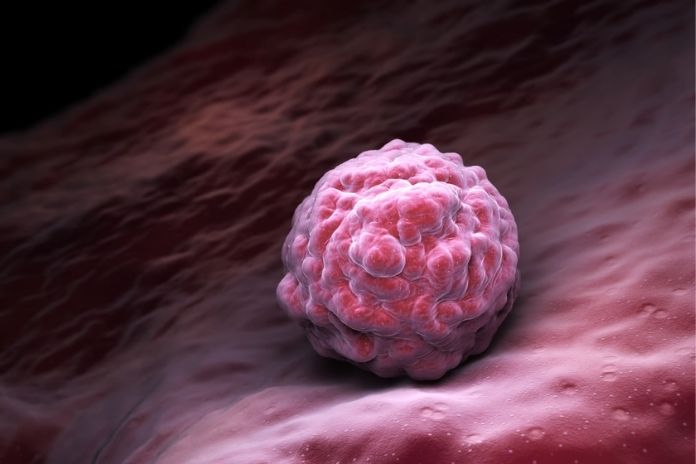
Local Recurrence When The Cancer Returns Near The Prostate Bed
When PSA rises after surgery, one of the most important questions is where the cancer is located. If recurrence is confined to the prostate bed or nearby pelvic lymph nodes, it is considered local or regional recurrence. In this setting, salvage radiotherapy directed at the prostate bed can offer long-term disease control and, in some cases, cure.
The chances of success are higher when treatment is given at lower PSA levels and when the disease remains confined to the local area. This is why early identification of recurrence can influence outcomes in a meaningful way.
Distant Recurrence When Cancer Has Spread Further
If the cancer has spread beyond the pelvis to distant lymph nodes, bones, or other organs, it is considered a metastatic recurrence. In this situation, treatment shifts away from localized approaches and toward systemic therapy.
Metastatic prostate cancer is increasingly treated as a chronic illness, although it is typically thought to be incurable. Improvements in hormonal therapies and other treatments have significantly improved outcomes, allowing many patients to live for extended periods with controlled disease. Determining whether recurrence is local or distant is central to choosing the appropriate management strategy.
Read More: Think You’re Too Young for Cancer? 75% of Patients Thought So Too
What Is PSMA PET and Why Has It Changed the Picture?
PSMA PET CT is a newer imaging technique that has significantly improved the ability to detect prostate cancer recurrence. It works by targeting a protein that is commonly overexpressed on prostate cancer cells, allowing small areas of disease to be identified at much lower PSA levels than was previously possible.
Detection rates increase as PSA rises, but importantly, PSMA PET can identify disease even when PSA is still relatively low. This has made it essential to evaluate biochemical recurrence. Its clinical value lies in answering a critical question: is the recurrence confined to the pelvis, or has it spread elsewhere? The answer directly influences treatment decisions.
It is important to understand that a negative scan does not rule out microscopic disease. Imaging findings must always be interpreted in the context of PSA trends, doubling time, and pathology. In some situations, treatment may still be recommended even if imaging does not show a clear site of recurrence.
What Happens Next: Monitoring, Imaging, and Treatment Options

The Monitoring Schedule And When To Act
After prostatectomy, PSA is typically monitored every three to six months during the first two years, followed by annual testing. If PSA begins to rise, the frequency of testing may increase to better define the trend and calculate doubling time.
Management decisions are based on a combination of factors rather than a single PSA value. Continuous monitoring for a period of time may be the management strategy for patients with slower PSA doubling times and lower-risk disease characteristics. In contrast, those with faster doubling times or higher-grade disease are more likely to undergo imaging and consideration of earlier treatment.
Treatment options vary depending on the location and behavior of the recurrence. Salvage radiotherapy is commonly used when the disease appears confined to the prostate bed or pelvis and is given with curative intent in that setting.
When the disease is more widespread or higher risk, systemic therapies such as androgen deprivation therapy and newer hormonal agents may be recommended. Clinical trials may also be appropriate in selected cases.
Due to the complexity of these decisions, a multidisciplinary team having a urologist, radiation oncologist, and medical oncologist, should make them. Seeking a second opinion at a specialized cancer center can also be helpful, particularly at the time of biochemical recurrence.
Read More: Lifestyle Habits in Your 40s That Predict Health in Your 70s
Conclusion
A rising PSA after prostatectomy is clinically significant and should not be ignored. At the same time, it is not automatically a worst-case scenario. The PSA value alone does not define what will happen next. The rate of rise, the underlying pathology, and the location of any recurrence together provide a much clearer picture.
Many men live for years, and sometimes decades, with biochemical recurrence and no clinical disease. Others benefit from early treatment based on higher-risk features. The key difference lies in careful, individualized assessment.
The most important next step is to review your results with a urologist or oncologist experienced in prostate cancer. Interpreting PSA trends in the context of your full medical history is essential to making informed decisions about monitoring, imaging, and treatment.
References
- National Cancer Institute. (2020). PSMA PET-CT can detect prostate cancer spread more accurately than conventional imaging.
- Prostate Cancer Research Institute. (2012). Newly diagnosed prostate cancer: Understanding your risk (PCRI insights, Vol. 15, No. 3).
- Moul, J. W. (2015). Prostate-specific antigen only progression of prostate cancer. Journal of Clinical Medicine Research, 7(10), 757–765.
- Prostate Cancer Foundation of Australia. (n.d.). PSA levels after treatment: All you need to know.
In this Article