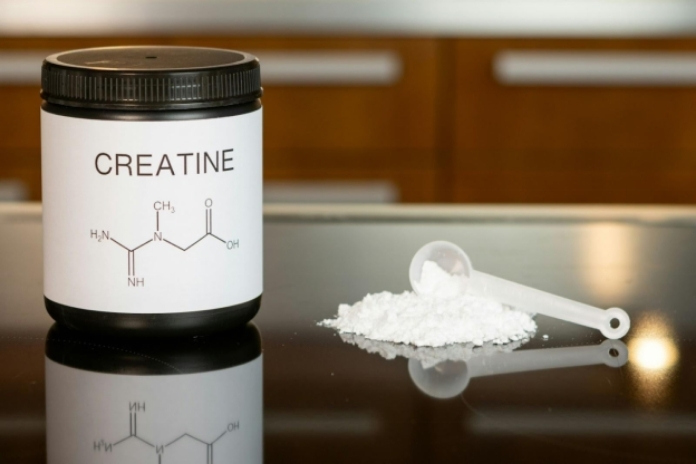



















If you’ve ever searched “does creatine damage liver and kidney,” you’ve landed in a minefield of alarm-driven blog posts, misread lab results, and gym-floor folklore. The concern is real, but the evidence behind it largely is not.
High-quality research, including meta-analyses and position statements from major sports medicine organizations, consistently shows that creatine supplementation is safe for healthy adults at standard doses.
That said, some people do need to be more careful, and this article explains exactly who, why, and how to use creatine responsibly.
What is creatine, exactly?
Before getting into the organ damage debate, it helps to understand what creatine actually is. Creatine is a naturally occurring compound that your body makes on its own, primarily in the liver, kidneys, and pancreas, from the amino acids glycine, arginine, and methionine.
You also get it from food, mainly red meat and fish. About 95% of your body’s creatine is stored in skeletal muscle, where it plays a central role in generating quick bursts of energy during exercise.
The average person produces and consumes roughly 1 to 2 grams per day. Supplementing with creatine monohydrate simply tops up those muscle stores beyond what diet and natural synthesis can provide.
Why Creatine Is Often Linked to Liver and Kidney Damage
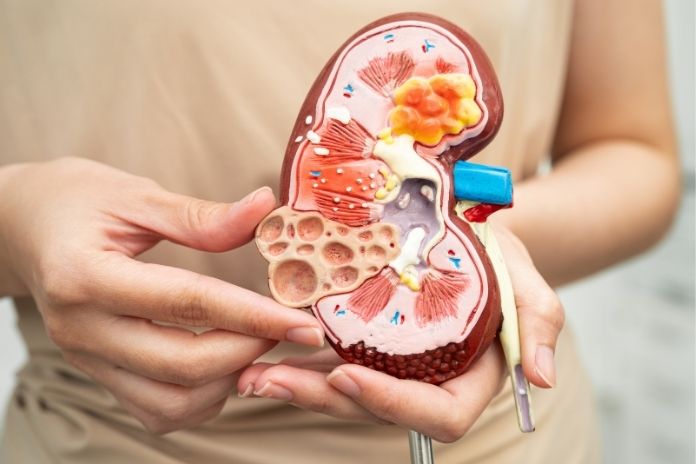
Concerns stem from a fundamental confusion between creatine and creatinine, two chemically related but very different substances. Creatinine is the waste product that the kidneys filter from the blood after creatine breaks down in the muscles.
Supplementing with creatine naturally raises creatinine levels by 15 to 30 percent in studies, which can look alarming on a blood test. In reality, the rise reflects normal metabolism, not organ harm.
Rare case reports, such as one describing rhabdomyolysis in a young athlete, get amplified online, but they lack the controlled evidence that large trials provide and do not establish causation. Supplements often get blamed when dehydration, high protein intake, or other unrelated issues happen to appear at the same time as a routine checkup.
High-protein diets are another factor worth flagging here. Protein metabolism also produces nitrogenous waste that the kidneys must clear. When someone combines a high-protein diet with creatine supplementation, both can push creatinine and blood urea nitrogen readings higher simultaneously, compounding the confusion.
A randomized controlled trial of resistance-trained men on high-protein diets found that adding creatine caused no significant change in glomerular filtration rate, confirming that the elevated lab values were benign.
Read More: Does Taking Creatine Make You Gain Weight? What Science Really Says
How Creatine Is Processed in the Body
Creatine monohydrate enters the bloodstream through intestinal absorption, then loads into muscles as phosphocreatine, which fuels ATP energy production during high-intensity exercise.
A portion converts daily to creatinine through normal metabolic breakdown, which healthy kidneys excrete without effort. The process gets misunderstood because serum creatinine rises predictably with creatine use, but true markers of kidney function like eGFR (estimated glomerular filtration rate) and creatinine clearance stay stable, confirming no filtration problems.
To put creatinine in context for your next doctor’s visit: if you take creatine and your creatinine level comes back slightly elevated, let your doctor know about your supplement use before any conclusions are drawn.
A better kidney marker to discuss is eGFR, which measures how well the kidneys are actually filtering. Studies consistently show eGFR remains unchanged with creatine use in healthy people.
Does Creatine Damage the Kidneys? What Research Shows

Studies across thousands of healthy adults reveal no kidney damage from creatine supplementation. A key meta-analysis reviewing 290 studies found only benign creatinine spikes with no drops in eGFR or other renal markers.
The 2025 meta-analysis published in BMC Nephrology confirmed these findings across 21 studies: creatine supplementation produced a small, transient increase in serum creatinine but caused no significant change in glomerular filtration rate, indicating preserved kidney function.
Longer trials, including one tracking college athletes for up to 21 months, reported steady kidney function and no progression toward disease across all creatine dosing durations.
Even in higher-risk groups like older adults with type 2 diabetes, short-term supplementation preserved renal health without complications.
After more than two decades of controlled research, the scientific consensus is clear: creatine supplementation at recommended doses (3–5 g/day) does not cause kidney damage or renal dysfunction in healthy individuals.
A comprehensive evidence-based review by Antonio et al. concluded that concerns linking creatine to kidney harm largely stem from a misunderstanding of creatine and creatinine metabolism, and that the controlled trial data consistently show no adverse effects on kidney function at recommended dosages.
Does Creatine Harm the Liver? What the Evidence Says
The liver naturally produces creatine from amino acids, including glycine, so supplementing with creatine actually reduces the liver’s workload rather than increasing it. Trials measuring liver enzymes such as ALT and AST show no clinically significant elevations in healthy users, even at doses up to 20 grams daily for short-term use.
Liver toxicity claims largely fall apart under scrutiny. A large cross-sectional study using U.S. NHANES data found no association between higher dietary creatine intake and liver fibrosis, cirrhosis, or hepatic steatosis at the population level.
Some animal data even suggests that creatine may protect against diet-induced liver fat accumulation in metabolic stress conditions. The important caveat: the same animal research found that creatine may worsen liver outcomes when combined with heavy alcohol use. This nuance matters for anyone who drinks regularly.
Any rare enzyme elevations in human case reports typically relate to impurities in low-quality supplements, other substances taken simultaneously, or underlying lifestyle factors like excess alcohol, not to creatine itself.
Read More: Creatine vs. Pre-Workout: Key Differences, Benefits, and Which One You Should Choose
Who Should Be Careful With Creatine Supplementation
People with pre-existing kidney disease carry a real risk. Rodent studies suggest additional strain on already-compromised kidney models, and the human trial data in this population are limited. Those managing liver conditions, including fatty liver disease, should seek a doctor’s input, though low doses can sometimes support muscle maintenance safely when monitored.
Medications that stress the kidneys or liver, including NSAIDs and diuretics, call for monitoring to avoid interactions. Baseline lab tests and follow-up bloodwork are sensible in these situations.
Common Myths About Creatine and Organ Damage, Debunked
Even with solid data, myths persist. Here are the most common ones, addressed directly.
Myth: Creatine raises creatinine, so it must damage the kidneys
Serum creatinine climbs from creatine intake alone, completely unrelated to filtration failure. Kidney function tests, such as eGFR, confirm that the organs are functioning well.
Muscle-heavy athletes already have higher creatinine baseline levels, which makes context essential when a doctor interprets results. If you supplement with creatine, always mention it before any blood test.
Myth: Long-term creatine use is dangerous
Years of data, including those reviewed in the ISSN position stand, confirm that creatine is safe for long-term use in healthy individuals. Studies tracking daily use show sustained benefits and no cumulative renal or liver harm.
Read More: Can You Mix Creatine with Coffee? What Happens When You Combine Them
Signs That Warrant Medical Evaluation (Regardless of Creatine Use)
Persistent exhaustion, ankle swelling, reduced urine output, or foamy urine all warrant medical attention, regardless of whether you take any supplements. Sustained high ALT, AST, or protein in urine signals a real problem that deserves investigation.
Never self-diagnose elevated enzyme or creatinine readings as mere “creatine effects.” Doing so delays appropriate care.
Symptoms like mild fatigue or occasional digestive upset after starting creatine are common and usually resolve with hydration.
However, symptoms like severe fatigue, significant swelling, dark or dramatically reduced urine output, or upper right abdominal pain deserve a same-day call to a doctor or, if severe, an urgent care or ER visit. These are not creatine symptoms. They are organ symptoms.
How to Use Creatine in a Kidney- and Liver-Safe Way
Standard dosing means 3 to 5 grams of creatine monohydrate daily for maintenance. Loading phases, typically 20 grams per day split into four doses over five to seven days, can accelerate muscle saturation but carry no proven organ risk in healthy people.
That said, skipping loading and going straight to a maintenance dose achieves the same muscle saturation over three to four weeks with fewer potential digestive side effects.
Hydration is the most practical protective measure, with a daily intake of 3 to 4 liters of water supporting smooth creatinine clearance. Choose NSF-certified or Informed Sport-certified brands to avoid contaminants found in poorly manufactured products, and avoid stacking creatine with unknown or unregulated formulas.
Creatine monohydrate has by far the most research behind it. Alternatives like creatine HCl and buffered creatine are marketed as easier on digestion or more effective at lower doses, but the safety data for these variants is thin by comparison. For organ safety specifically, the evidence applies to creatine monohydrate. Stick with what is studied.
Practical usage tips:
- Time doses post-workout with carbohydrates for better uptake.
- Periodic cycling off is a personal preference; continuous use is well-supported by the evidence.
- Track your personal response with bloodwork every six to twelve months, especially if you use any medications.
Read More: Do You Need Creatine Even If You Don’t Lift Heavy? Benefits Explained
What Major Health and Sports Medicine Organizations Agree On
The International Society of Sports Nutrition (ISSN) calls creatine the most researched supplement in sports nutrition and considers doses up to 30 grams per day safe short-term, and 3 to 5 grams safe long-term for healthy adults, with no kidney or liver risks substantiated.
The American College of Sports Medicine similarly supports creatine use for performance and recovery. Where both organizations draw the line is clear: individualized medical advice applies to anyone with pre-existing kidney disease, liver conditions, or medications that affect organ function.
The Bottom Line on Creatine, Liver, and Kidney Health
Safe for Healthy Users: Standard creatine use shows no liver or kidney damage in robust studies. Fears about whether creatine damages the liver and kidneys stem largely from misread lab values, not actual organ harm.
Proven Long-Term Record: Daily maintenance dosing over years keeps organ health intact when combined with adequate hydration.
Consult for Risks: Pre-existing conditions or certain medications require professional clearance before starting. This is not a formality — it is genuinely important for those groups.
Final Takeaway
Healthy individuals face no evidence-based risk from creatine at recommended doses, making the question of whether creatine damages the liver or kidneys one with a well-established answer: it does not, for people without pre-existing conditions. Myths arise from the creatinine confusion, not from actual organ harm.
If you have kidney or liver conditions, or take medications that affect those organs, consult a healthcare professional before supplementing. For everyone else, creatine monohydrate remains one of the safest and most effective supplements in sports nutrition.
FAQ
Can Creatine Cause Kidney Failure? No cases of kidney failure caused by creatine have been proven in healthy people. In those with advanced existing kidney disease, creatine is contraindicated without physician supervision.
Is Creatine Safe If My Creatinine Levels Are High? Pause use and confirm kidney function via eGFR with your doctor. In most cases, elevated creatinine from creatine use reverses after stopping the supplement, but only a physician can confirm whether something else is going on.
Does Creatine Affect Liver Enzymes? Minimal to no effect in healthy users at recommended doses. Monitor if you have a history of liver conditions or drink alcohol regularly.
Should I Stop Creatine Before a Blood Test? Yes, stopping four to six weeks before routine bloodwork provides more accurate baseline readings and avoids false elevations in creatinine.
References
- Gualano, B., et al. (2011). Creatine supplementation does not impair kidney function in type 2 diabetic patients. European Journal of Applied Physiology, 111(5), 749–756.
- Poortmans, J. R., & Francaux, M. (1999). Long-term oral creatine supplementation does not impair renal function in healthy athletes. Medicine & Science in Sports & Exercise, 31(8), 1108–1110.
- Naeini, M. B., et al. (2025). Effect of creatine supplementation on kidney function: a systematic review and meta-analysis. BMC Nephrology, 26, 622.
- Kreider, R. B., et al. (2017). International Society of Sports Nutrition position stand: safety and efficacy of creatine supplementation in exercise, sport, and medicine. Journal of the International Society of Sports Nutrition, 14, 18.
- Ostojic, S. M., et al. (2023). Creatine consumption and liver disease manifestations in individuals aged 12 years and over. Food Science & Nutrition.
- Jäger, R., et al. (2011). Analysis of the efficacy, safety, and regulatory status of novel forms of creatine. Amino Acids, 40(5), 1369–1383.
- ClinicalTrials.gov. Effect of creatine on serum and urine creatinine (NCT01367717).
- da Silva, R. P., et al. (2020). Novel renal biomarkers show that creatine supplementation is safe for healthy athletes. Toxicology Research, 9(3), 263–271.
- Gualano, B., et al. (2011). Does long-term creatine supplementation impair kidney function in resistance-trained individuals consuming a high-protein diet? Clinical Journal of the American Society of Nephrology.
- Poortmans, J. R., & Francaux, M. (2000). Effects of creatine supplementation on renal function. Medicine & Science in Sports & Exercise.
- Juhn, M. S., & Tarnopolsky, M. (2009). Effects of high-dose creatine supplementation on kidney and liver responses in sedentary and exercised rats. PMC3761536.
- Gualano, B., et al. (2011). Creatine in type 2 diabetes. Science & Sports.
- Wu, S. H., et al. (2022). Dietary creatine and kidney function in adult population: NHANES 2017–2018. Food Science & Nutrition, 10(9), 2997–3008.
- Poortmans, J. R., et al. (2011). Effects of the recommended dose of creatine monohydrate on kidney function. Clinical Kidney Journal, 4(1), 23–29.
- Ostojic, S. M., et al. (2023). Creatine consumption and liver disease. Food Science & Nutrition.
- Earnest, C. P., et al. (1996). Dietary creatine supplementation does not affect haematological indices or indices of muscle damage and hepatic and renal function. British Journal of Sports Medicine, 30(4), 336–339.
- de Souza E Silva, A., et al. (2019). Effects of creatine supplementation on renal function. Revista Brasileira de Medicina do Esporte, 25(3), 238–243.
In this Article