













- Having a first-degree relative with endometriosis increases your risk by 7–10x, but genetics explains only about half of that risk.
- The remaining risk is influenced by lifestyle and environmental factors like diet, stress, sleep, exercise, and chemical exposure.
- Lifestyle changes don’t guarantee prevention, but they target key drivers like inflammation, estrogen imbalance, oxidative stress, and immune dysfunction.
- You can’t change your genetics, but you can influence how those genes express and impact your health.
There is a phrase that comes up in genetics that is worth applying here: “Genes load the gun, but environment pulls the trigger.” For hereditary endometriosis, that framework is not just poetic. It reflects the actual research. Twin studies have consistently found that approximately 50% of endometriosis risk is attributable to genetic factors.
The remaining 50% is influenced by environmental, hormonal, and lifestyle variables that vary between individuals with identical genetic backgrounds. Identical twins, sharing 100% of their DNA, do not develop endometriosis at the same rate.
That gap is the environment doing its work, and it is the gap where personal choices have real leverage. This matters because hereditary endometriosis risk is already known to be high. If a mother, sister, or daughter has been diagnosed, your risk increases 7 to 10 times compared to the general population.
Familial cases tend to present earlier in life and often with greater severity. But that elevated risk is not a fixed outcome. Understanding what is driving the 50% that is not genetic, and what you can do about it, is what this article focuses on.
This article breaks down how genetics and lifestyle together shape your endometriosis risk, and where you actually have control. We’ll look at hereditary factors, environmental triggers, and the science behind how daily habits influence gene expression. Most importantly, you’ll get clear, practical steps to reduce risk through changes that actually matter.
Read More: Natural Remedies for Endometriosis: Evidence-Based Approaches for Pain Relief
Nature vs. Nurture: What Really Drives Endometriosis Risk?

How Genetics Contributes
Hereditary endometriosis does not follow a simple inheritance pattern. It is polygenic, meaning multiple genes interact with each other and with external triggers to determine whether, when, and how severely the condition develops.
No single “endometriosis gene” has been confirmed. What has been confirmed is that genetic predisposition creates a vulnerability, particularly in genes related to inflammation, immune response, and estrogen metabolism, that environmental factors can either activate or leave dormant.
The 2023 genome-wide association study published in Nature Genetics, co-authored by over 100 researchers across international endometriosis consortia, identified 42 genetic risk loci associated with the condition, many overlapping with inflammatory pathways and hormonal signaling.
The finding reinforces that endometriosis is an inflammatory disease as much as a hormonal one and that the genetic architecture reflects both. Familial cases specifically tend to show earlier symptom onset and higher rates of deep infiltrating disease.
A first-degree family history is among the strongest known risk factors in the entire epidemiology of endometriosis, stronger than most hormonal or dietary variables in isolation.
Why Heredity Doesn’t Mean Inevitable
The concept of epigenetics and endometriosis describes how external factors alter gene expression without changing the underlying DNA sequence.
Lifestyle, toxin exposure, inflammation levels, and nutritional status all leave chemical marks on genes that can switch them toward expression or away from it. This is not theoretical. It is a well-documented mechanism operating across virtually every complex disease.
Dr. Stacey Missmer, ScD, has made this point directly in her research presentations: ” Epigenomics, transcriptomics, that change over time and are influenced by age, by external factors… by exogenous environmental factors, by lifestyle and changes.”
Genetic predisposition establishes a threshold. Endometriosis environmental factors determine whether that threshold is crossed. The practical takeaway is that modifying your environment is a legitimate, evidence-supported strategy for lowering your lifetime risk, even if your family history is significant.
The “Nurture” Side: Environmental and Lifestyle Factors You Can Control
Adopt an Anti-Inflammatory Diet
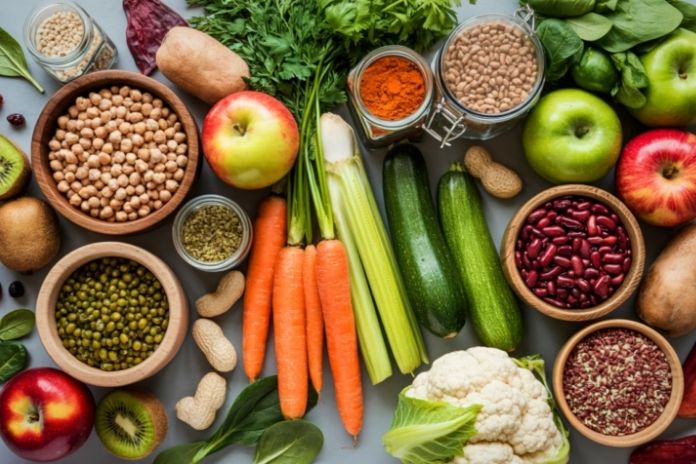
Endometriosis and diet have a well-studied relationship. The disease is fundamentally inflammatory, and dietary patterns that reduce systemic inflammation directly address one of the core mechanisms that allow endometriotic lesions to establish and persist.
A landmark prospective cohort study published in Human Reproduction and following over 70,000 premenopausal women for more than 20 years found that women consuming one or more servings of citrus fruit daily had a 22% lower risk of laparoscopically confirmed endometriosis compared to those consuming less than one serving per week.
The protective mechanism is thought to involve beta-cryptoxanthin and other carotenoids that modulate inflammation and immune function. Higher total fruit intake showed a consistent inverse association with endometriosis risk across the cohort. Omega-3 fatty acids from oily fish, flaxseed, and walnuts reduce prostaglandin E2 production and systemic inflammatory markers.
Endometriosis and diet research consistently points toward diets rich in fiber, colorful vegetables, legumes, and anti-inflammatory fats as protective patterns. Red and processed meats, trans fats, and refined sugars all promote the inflammatory environment that endometriosis depends on to progress.
Estrogen dominance is another dietary target. Fiber supports estrogen clearance by promoting healthy gut bacteria that prevent estrogen from being reabsorbed in the colon. Cruciferous vegetables such as broccoli, cabbage, and Brussels sprouts support the liver’s estrogen metabolism pathways.
Reducing alcohol, which impairs liver clearance of estrogen, directly reduces estrogen dominance that fuels endometriotic tissue growth.
Dr. Iris Kerin Orbuch, MD, puts the dietary approach at the center of her clinical protocol: “I always recommend good gut health, including auto-immune, organic, low-inflammatory eating, healthy mind-body lifestyle habits.”
Limit Exposure to Endocrine-Disrupting Chemicals
Endocrine-disrupting chemicals and endometriosis is one of the most actively researched areas in the environmental epidemiology of the disease. Phthalates and BPA are both xenoestrogens, chemicals that mimic or enhance estrogen activity in the body by binding to estrogen receptors. They are found in plastic food containers, canned foods, personal care products, fragrance formulations, and flexible plastics of every kind.
A 2021 PMC review of environmental factors and endometriosis concluded that phthalates and BPA can interfere with endometrial cellular processes through multiple signaling pathways, promoting inflammation, invasion, and lesion growth.
The review identified exposure to endocrine-disrupting chemicals as a significant modifiable contributor to endometriosis environmental factors, particularly during vulnerable developmental windows.
A 2024 PubMed review specifically examining phthalate exposure and endometriosis risk found a clear association between phthalate exposure and endometriosis across multiple epidemiological datasets, noting that phthalates bind to estrogen receptors and activate TGF-beta pathways that promote lesion formation.
The evidence base is not yet definitive for causation, but the biological plausibility and the consistency of association justify precautionary action.
A PMC review on endocrine-disrupting chemicals and reproductive health argued that when the health of humans is at stake, clinicians should educate women and advocate for safer chemical policies without waiting for scientific certainty. The precautionary principle applies here.
Practical Steps: Switch from plastic to glass or stainless steel food containers. Avoid microwaving food in plastic. Reduce consumption of canned goods, which are frequently lined with BPA-containing resins.
Choose fragrance-free personal care products, as “fragrance” on an ingredient list often designates undisclosed phthalate compounds. Wash produce thoroughly, and choose organic for the most pesticide-intensive crops where budget allows.
Dr. Shirisha Avadhanula, MD, an endocrinologist at the Cleveland Clinic, frames the consumer’s role clearly: “We can’t underestimate the power of the single consumer. I’m happy that, as a society, we’re becoming a lot more cognizant of what we’re consuming, what we’re exposing our bodies to, and the effects of our environment on our bodies.”
Read More: Can Your Shampoo Mess With Your Hormones? Endocrine Disruptors Explained
Exercise and Body Composition

Exercise and endometriosis have a well-documented relationship through three mechanisms: estrogen regulation, reduction of inflammation, and improvement of immune function. Adipose tissue is a site of peripheral estrogen synthesis, and moderate to vigorous exercise reduces body fat, directly lowering circulating estrogen and reducing estrogen dominance in the pelvic environment.
Research from the Nurses’ Health Study II found that women who exercised more than four hours per week had a significantly lower incidence of endometriosis than sedentary women, with the protective effect strongest for vigorous activity.
Exercise also reduces prostaglandin levels, systemic inflammatory markers, and cortisol, all of which contribute to the inflammatory milieu that endometriosis requires to progress. The type and intensity of exercise matter.
Moderate aerobic activity, brisk walking, cycling, swimming, and yoga provide anti-inflammatory benefits without the oxidative stress load that comes with extreme training. For women already experiencing pain, working with a pelvic floor physical therapist to develop a movement program that does not aggravate symptoms is a practical starting point.
Stress Management and Sleep
Chronic stress and hormone balance are tightly linked through the HPA axis. Elevated cortisol suppresses progesterone production, creating a relative estrogen dominance that favors endometriotic tissue growth.
Cortisol also directly promotes systemic inflammation through NF-kB signaling pathways, feeding the same inflammatory environment that endometriosis depends on. Sleep deprivation compounds the problem.
Poor sleep elevates cortisol, increases inflammatory cytokines, and impairs immune surveillance, all three of which are relevant to endometriosis environmental factors. Women with hereditary endometriosis risk who also carry chronic stress and disrupted sleep are simultaneously activating multiple pro-inflammatory pathways.
Actionable approaches include consistent sleep timing, seven to nine hours per night in a dark, cool environment; daily mindfulness practice, with even 10 minutes of breath-focused meditation showing measurable cortisol-lowering effects in clinical studies; and stress-reduction techniques that address the nervous system directly, including yoga, gentle movement, and regular time in natural settings.
Considering Supplements With Caution
Oxidative stress is elevated in women with endometriosis, and antioxidant supplementation has been studied as a way to address this. Vitamins C and E together have shown modest reductions in inflammatory markers in small endometriosis trials.
Vitamin D deficiency is common in women with the condition, and low vitamin D is associated with increased inflammatory activity and impaired immune function. These are reasonable areas to discuss with a healthcare provider, but no supplement protocol has yet been shown to prevent endometriosis development in at-risk populations.
The evidence supports dietary optimization first, targeted supplementation second, and always with physician guidance before adding to a regimen.
How Environment Interacts With Genes

Epigenetics and endometriosis describe a mechanism that is genuinely important to understand because it bridges the gap between the genetic and environmental sides of risk. Epigenetic modifications, including DNA methylation and histone modification, alter whether genes are expressed without altering the underlying sequence.
These modifications are influenced by diet, chemical exposure, inflammation levels, and stress, and they can accumulate or reverse over time in response to lifestyle changes. This means that the dietary and environmental choices you make today are not neutral with respect to your genetic expression.
A consistently anti-inflammatory diet, reduced toxic burden, regular movement, and adequate sleep create an epigenetic environment that suppresses the expression of pro-inflammatory and pro-estrogenic gene variants.
Conversely, chronic inflammation, high chemical exposure, poor sleep, and sedentary behavior create conditions where those same variants are more likely to be activated. Small daily habits have cumulative molecular effects. That is not a motivational statement. It is a biological reality with growing research support.
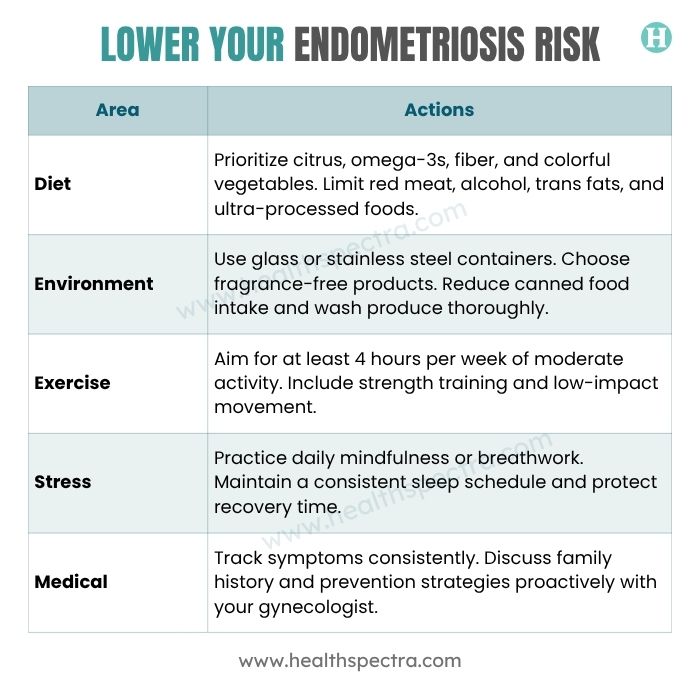
Realistic Steps to Lower Your Lifetime Endometriosis Risk
Lowering your risk of endometriosis isn’t about one big change. It’s about small, consistent shifts that influence how your body functions over time. While genetics may set the stage, your daily habits shape the outcome. These practical steps focus on areas you can actually control without overwhelm.
 Read More: Diet for Endometriosis: Foods That Help and Foods to Avoid
Key Takeaway
Your genes may load the gun, but your environment pulls the trigger. Hereditary endometriosis risk is real, and a positive family history deserves to be taken seriously, documented, and discussed with a gynecologist, ideally before symptoms become severe. But genetic predisposition is not the whole story, and it is not the end of the story.
The other half of risk is shaped by endometriosis environmental factors that you can influence: the food on your plate, the chemicals in your kitchen, your relationship with movement, the quality of your sleep, and how you manage chronic stress.
Each of these operates on the inflammatory, hormonal, and immune pathways that determine whether genetically vulnerable tissue behaves like normal tissue or begins to act like endometriosis. Endometriosis prevention lifestyle changes will not provide a guarantee. Nothing in medicine does. But they give you leverage over half of this equation that is yours to affect.
Medical Disclaimer: This article is for informational purposes only and is not a substitute for professional medical or gynecological advice. Always consult a qualified healthcare provider regarding personal risk assessment and any symptoms related to endometriosis.
Frequently Asked Questions
1. If endometriosis runs in my family, should I be doing anything differently right now, even if I have no symptoms?
Yes, and earlier is better. If you have a first-degree relative with endometriosis, bring it up with your gynecologist instead of waiting for symptoms. At the same time, start prevention-focused habits like an anti-inflammatory diet, reducing BPA and phthalate exposure, and staying physically active. These steps give you control over the modifiable part of your risk.
2. Can changing my diet and lifestyle actually prevent endometriosis from developing?
No, lifestyle changes can’t guarantee prevention. But they do influence inflammation, hormone balance, and other pathways that affect how the disease develops. Research shows that factors like diet and stress can shift overall risk, so the goal is to reduce the chances, not eliminate them.
3. How do endocrine-disrupting chemicals specifically connect to hereditary endometriosis risk?
Chemicals like BPA and phthalates act like estrogen in the body, increasing overall hormonal load. If you already have a genetic predisposition, this extra estrogen-like activity can push your body toward conditions that favor endometriosis. Reducing exposure won’t remove the genetic risk, but it helps prevent it from being amplified.
References
- Avadhanula, S. (2023). What are hormone-disrupting chemicals? Cleveland Clinic Health Essentials.
- Guidone, H. (2024). From silence to strength: Endometriosis advocacy beyond gaslighting. Living Well Institute Podcast.
- Harris, H. R., Eke, A. C., Chavarro, J. E., & Missmer, S. A. (2018). Fruit and vegetable consumption and risk of endometriosis. Human Reproduction, 33(4), 715-727.
- Karin Orbuch, I. (2022). Understanding a mysterious disease: Interview with Dr. Iris Orbuch. Jewish Journal.
- Missmer, S. A. (2019). Critical issues in endometriosis incidence and risk. EndoFound Medical Conference 2019.
- Peinado-Molina, R. A., et al. (2023). Endometriosis and environmental factors: A systematic review. PMC.
- Rahmioglu, N., et al. (2023). The genetic basis of endometriosis. Nature Genetics.
- Simoes, M. J., et al. (2024). Association between the exposure to phthalates and the risk of endometriosis: An updated review.
- Zlatnik, M. G. (2019). Endocrine-disrupting chemicals and reproductive health. PMC.
- National Human Genome Research Institute. (2026). Gene–environment interaction.
- National Institute of Environmental Health Sciences. (n.d.). Gene and environment interaction.
- Virolainen, S. J., et al. (2023). Gene–environment interactions and their impact on human health.
- Herrera-Luis, E., et al. (2024). Gene–environment interactions in human health.
- Wikipedia contributors. (n.d.). Gene–environment interaction.
- Down To Earth. (n.d.). How your genes interact with your environment changes your disease risk.
- Lumen Learning. (n.d.). Gene–environment interactions.
- Study.com. (n.d.). How genetics and the environment interact in human development.
In this Article