













- The first 72 hours after an ankle sprain are critical. The R.I.C.E. Method for recovery from ankle sprains remains the foundation of effective management.
- Ankle Sprain Recovery improves with controlled early movement, proper bracing, good nutrition, and avoiding common mistakes.
- Complete immobilization is not recommended, especially in the long term, as it can lead to stiffness and muscle shutdown. So, rest should be relative rather than complete inactivity.
An ankle sprain looks small. Many people even walk it off. Just a twist. Some swelling. Little pain. Many people say, “It’s fine, just apply ice.”
But the first 72 hours after an ankle sprain are very important. During this period, your body decides how you will recover, whether you return to walking normally in just 2 weeks or struggle with stiffness and even repeat sprains for many months.
Most online advice stops at R.I.C.E. Rest, Ice, Compression, Elevation. But this is not always effective. The science behind ankle sprain recovery has advanced. Absolute may not always work. Too much icing may also slow some natural repair signals. And ignoring nutrition in the early phase is a big mistake.
This article will break down how to heal a sprained ankle fast, what truly helps in those first 3 days, and clear the myths surrounding the healing process.
Why the First 72 Hours Matter Most for Ankle Sprain Recovery
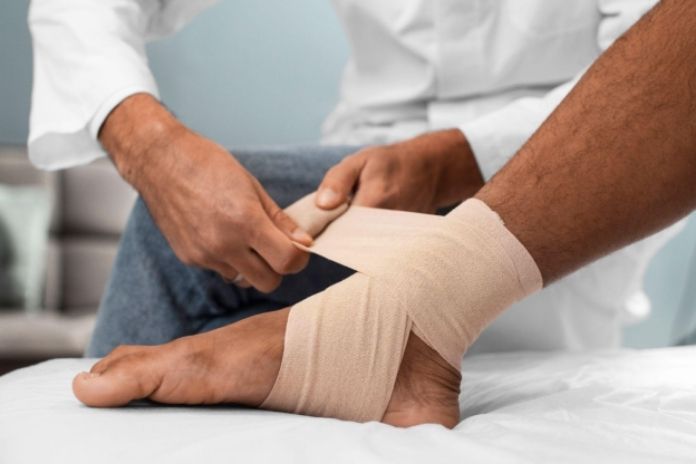
When you sprain your ankle, it is a ligament injury. Usually, it happens due to ligament overuse or an inversion injury, your foot suddenly rolls inward, stretching or partially tearing the outer ankle ligaments.
“Many people may think, ‘It’s just an ankle sprain,” Dr. Gregory Waryasz, an orthopedic surgeon, says. “Many sprains can lead to chronic instability and problems down the road.”
Immediately after injury, three things start:
- Inflammation
- Swelling
- Pain response
Many people think inflammation is bad. But actually, inflammation is the first repair signal. Blood brings immune cells. These cells remove damaged tissue and release growth factors. Without this stage, proper healing cannot take place.
But the problem is not inflammation. The problem is excessive swelling and uncontrolled bleeding inside the joint. Excessive fluid pressure can delay healing and reduce ankle mobility later.
So the first 72 hours are a game of balance. The goal is not to stop inflammation completely, but to keep swelling under control. How you manage these 3 days affects:
- Scar tissue quality
- Ligament strength
- Future ankle stability
- Risk of repeat sprain
That is why careful early care is not optional.
The R.I.C.E. Method for Ankle Sprain – Still the Foundation of Early Care

The R.I.C.E. method for ankle sprain recovery is basic, but it remains important. However, it should be done properly, not casually.
1. Rest
Rest does not mean complete bed rest for 3 days. It means:
- Avoid weight-bearing if painful
- Avoid sports or running
- Use crutches if walking causes a limp
Long-term immobilization can cause stiffness and muscle shutdown. So rest must be relative rest, not complete inactivity.
2. Ice Therapy
Ice therapy reduces pain and slows excessive swelling. Best way:
- 15–20 minutes
- Every 2–3 hours
- Thin cloth between ice and skin
Do not keep ice for 40–60 minutes continuously. It can reduce blood flow significantly and delay the transmission of tissue repair signals. Ice is for swelling control, not to “freeze healing.”
3. Compression
Elastic crepe bandage is a compression bandage that helps reduce swelling accumulation.
Important points:
- Wrap from toes upward
- Snug, but not tight
- Toes should not become numb or blue
A compression bandage should be used properly and carefully. Correct compression reduces joint pressure and supports early ligament recovery.
4. Elevation
Keep your ankle elevated above heart level whenever resting. This simple step helps gravity drain extra fluid. Many people elevate only slightly. But proper elevation means the foot supported on a pillow, clearly higher than chest level.
Beyond R.I.C.E. – Updated Recovery Strategies That Help With Ankle Sprain Recovery

Now comes the part that most blogs do not discuss properly. R.I.C.E.method for ankle sprain recovery is a foundation, but not a complete plan.
1. Gentle Range-of-Motion Exercises (After 48 Hours)
Earlier advice was strict rest for many days. Now, evidence shows early controlled movement improves ligament healing alignment.
After 48 hours (if pain is tolerable), start:
- Ankle alphabet (move foot to draw A to Z)
- Gentle plantarflexion and dorsiflexion
- Light towel stretch
Why does this matter? When the ligament heals, collagen fibers must align in the direction of stress. If the ankle is completely still, fibers form a random scar. That increases stiffness and re-injury risk.
But movement must be:
- Pain-free range
- No force
- No bouncing
This early micro-movement sends a signal to the body: “Align tissue correctly.”
2. Use of Supportive Bracing or Taping
Many people only wrap a bandage loosely. But a semi-rigid ankle brace in the first few days provides controlled stability.
Brace helps:
- Limit inversion movement (the most common cause)
- Reduce re-injury during walking
- Give confidence to move safely
Taping is useful if applied correctly. But incorrect taping gives false security. Research shows that functional bracing often leads to a faster return to activity than full cast immobilization.
However, a brace is support, not permission to play sports for 3 days.
3. Optimal Nutrition and Hydration for Tissue Repair
This is rarely discussed in ankle sprain articles. Ligament repair requires:
- Protein
- Vitamin C
- Zinc
- Adequate calories
In the first 72 hours after an ankle sprain, the body is in active repair mode. If the diet is poor, the healing quality reduces. Practical advice:
- Include protein in every meal (dal, eggs, paneer, lean meat, legumes)
- Vitamin C sources like citrus fruits, guava, and amla
- Stay hydrated; dehydration thickens blood and slows nutrient transport
Some early research suggests that collagen supplementation, combined with vitamin C before rehab exercises, may support ligament repair. But strong, large-scale evidence is still limited. So focus on real food first. Supplements only if needed.
4. Over-the-Counter Medications for Pain and Swelling
Anti-inflammatory medications, or non-steroidal anti-inflammatory drugs (NSAIDs), such as ibuprofen, reduce pain and swelling. But there is debate.
High-dose NSAIDs in the early phase may reduce inflammation too much, potentially affecting tissue healing quality. Short-term, low-dose for pain control is generally acceptable. But do not take it unnecessarily for many days.
If pain is manageable, avoid continuous heavy medication. Pain is also a guide. If you fully suppress pain and overload the ankle, the damage increases.
Read More: 8 Best Braces For Achilles Tendonitis – Effective Support!
Common Mistakes to Avoid in the First 72 Hours for Faster Ankle Sprain Recovery
Many delays in ankle sprain healing occur not because of injury severity but because of inappropriate early actions.
- Applying heat immediately: Heat increases blood flow and swelling. Heat is for the later phase, not the first 2–3 days.
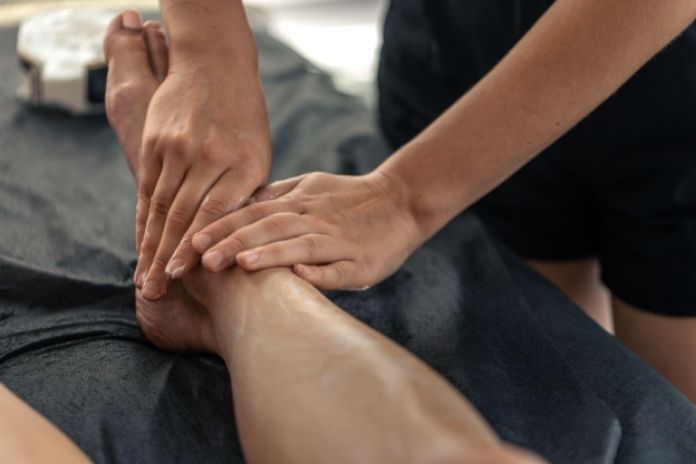
- Massaging deeply on day 1: Deep massage may increase internal bleeding.
- Walking “to test strength” repeatedly: Repeated stress worsens ligament tears.
- Ignoring severe swelling or deformity: Some fractures look like a sprain.
- Stopping compression at night completely: Mild compression, even at night (if comfortable), helps control swelling.
- Returning to sport in one week without rehab: Most repeat sprains happen because early rehabilitation exercise was skipped.
Read More: 12 Best Rated Ankle Braces For Enhanced Support
When to See a Doctor or Get an X-Ray After a Sprained Ankle
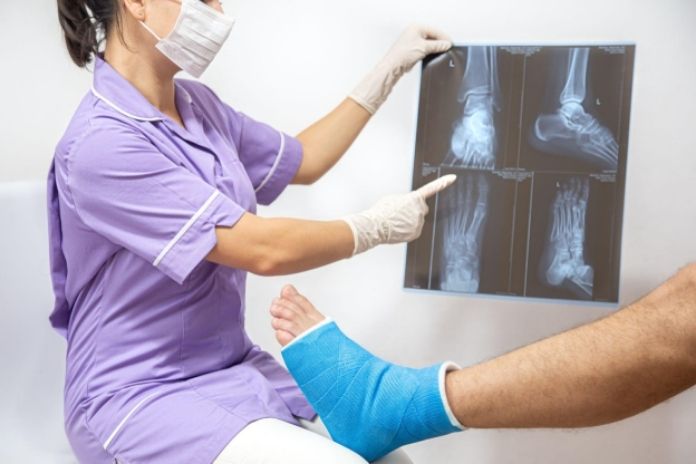
Thinking about when to see a doctor for a sprained ankle? Not all sprains are mild. Seek medical evaluation if:
- Cannot bear weight at all
- Severe swelling within one hour
- Visible deformity
- Pain over the bone (not just the ligament area)
- Numbness or tingling
- No improvement after 3–5 days
Doctors often use the Ottawa Ankle Rules to decide the need for an X-ray. Dr. Aly M. Fayed, an orthopaedic surgeon, notes, “For an ankle sprain, there is the Ottawa Ankle Rules, which is helpful in certain situations to determine if an X-ray is needed for a foot or ankle injury.”
Sometimes severe sprains need structured physiotherapy. Rarely, surgical opinion is required. Better to evaluate early than ignore a fracture.
Read More: Swollen Ankles Worry You? Here’s Why and How to Treat Them
Final Thoughts
An ankle sprain is common. But casual management creates long-term instability. The first 72 hours after an ankle sprain are not about aggressive treatment for ankle sprain swelling. They are about controlled protection and smart activation.
The R.I.C.E. method for ankle sprain recovery is still important. But now we understand healing is an active process, not passive waiting. Protect the ligament. Control swelling. Begin gentle movement at the right time. Support with nutrition. Avoid ego-driven testing.
Take those first 3 days seriously. It saves months later.
- Inflammation is necessary for healing; excessive suppression may not always be beneficial.
- Early controlled movement (after 48 hours) appears to improve collagen alignment.
- Nutrition is an under-researched area in acute ligament healing..
- Functional bracing may support faster recovery from ankle sprains compared to rigid immobilization.
- Many cases of chronic ankle instability stem from poor early management, yet public education on the first 72-hour protocol for healing a sprained ankle fast remains insufficient..
- It’s best to seek medical advice if symptoms persist or worsen despite proper home care for an ankle sprain.
References
- Achten, J., Parsons, N. R., Kearney, R. L., Maia Schlüssel, M., Liew, A. S., Dutton, S., Petrou, S., Ollivere, B., Lamb, S. E., & Costa, M. L. (2017). Cast versus functional brace in the rehabilitation of patients treated non-operatively for a rupture of the Achilles tendon: protocol for the UK study of tendo achilles rehabilitation (UK STAR) multi-centre randomised trial. BMJ Open, 7(10), e019628.
- Shaw, G., Lee-Barthel, A., Ross, M. L., Wang, B., & Baar, K. (2016). Vitamin C–enriched gelatin supplementation before intermittent activity augments collagen synthesis. The American Journal of Clinical Nutrition, 105(1), 136–143.
- Wang, Z.-R., & Ni, G.-X. (2021). Is It Time to Put Traditional Cold Therapy in Rehabilitation of Soft-Tissue Injuries Out to Pasture? World Journal of Clinical Cases, 9(17), 4116–4122.
In this Article