



















- Magnesium citrate is a short-term laxative that works by drawing water into the intestines, making stools softer and easier to pass.
- It should be used occasionally, not daily, and avoided in children, pregnant women, or people with kidney problems, bowel obstruction, or long-term constipation
- Lifestyle habits still matter the most. Fiber, fluids, and movement help prevent constipation, so medicines like magnesium citrate are needed less often.
Constipation is a very common digestive problem that can occur in people of all ages. Although constipation from time to time is not a problem, it can cause discomfort, gas, and a feeling of being sluggish.
For immediate relief, the most commonly used remedy for constipation is magnesium citrate. It is an osmotic laxative that pulls water into the bowel, making the stool soft and triggering bowel movements.
Unlike other supplements, such as fiber supplements and stool softeners, magnesium citrate works quickly, making it an ideal remedy for constipation when traveling or for preparing for a medical procedure.
This article explains how magnesium citrate works, when it should be used, possible side effects, and long-term solutions for maintaining healthy bowel movements.
Read More: Breakfast Foods That Make You Poop: Natural Morning Options for Better Digestion
What Is Magnesium Citrate?

Magnesium citrate is a magnesium salt compound derived from magnesium and citric acid. It is an osmotic laxative, meaning that it draws water into the intestines to help move stool through. It is typically available in liquid form, but you can also find it in tablet form.
Your physician may recommend magnesium citrate as a quick fix for short-term relief from constipation, as a means of emptying the bowels before colonoscopies and other procedures, and as a treatment for occasional constipation due to dietary changes, travel, and stress. Because of its rapid-acting properties, it is a useful remedy when you need a quick fix.
How Magnesium Citrate Relieves Constipation

The primary mechanism of action of magnesium citrate is osmotic. When you take this product, water is attracted to your intestines, making your stool softer and increasing its bulk. This, in turn, stimulates your intestinal muscles to contract, resulting in a bowel movement. The important thing is to stay hydrated.
The mechanism of action of magnesium citrate is simple but very effective. Furthermore, drinking plenty of water will enhance the effects of the laxative and reduce the chances of dehydration and cramps.
Softer stool passes through your intestines more easily, and your bowel is naturally stimulated. Relief is usually experienced within a few hours. This makes magnesium citrate a reliable quick fix for constipation, but not a preventive or regular medication.
How Long Does Magnesium Citrate Take to Work?
The time of onset can vary slightly with a few different factors, but for most people, a bowel movement can be expected within 30 minutes to 6 hours of taking magnesium citrate. The rate at which it will work depends on your hydration levels, the severity of your constipation, and whether you take it in liquid (faster) or tablet form.
It also depends on whether you take it on an empty stomach or with food. It is helpful to time it when you have easy access to a restroom to avoid any discomfort.
Read More: What Is a Lazy Colon? Causes, Symptoms, and How to Fix It
When Magnesium Citrate May Be Helpful
Magnesium citrate is most effective for short-term constipation. It is most effective for short-term constipation that may be caused by a change in diet, stress, or travel. It is also commonly used before a medical procedure in which the bowel needs to be cleansed, such as a colonoscopy.
In these situations, magnesium citrate offers a predictable and effective solution, making it a suitable choice for those seeking a rapid response.
When It Is Not the Best Option
Magnesium citrate is effective, but it is not the best long-term treatment. For individuals with mild irregular bowel movements, it is best to start with dietary modifications, adequate hydration, and regular exercise.
For people with constipation due to IBS, it is not recommended to take magnesium citrate without consulting a doctor, as it can sometimes worsen symptoms. Those experiencing severe abdominal pain, nausea, and vomiting of unknown origin should consult a doctor before taking the supplement.
In individuals suffering from chronic constipation, it is always best to rely on lifestyle modifications and other laxatives, such as fiber supplements or stool softeners.
Read More: Gentle Relief: The Top 7 Laxative Powders for Effective Constipation Relief
Magnesium Citrate vs. Other Laxatives
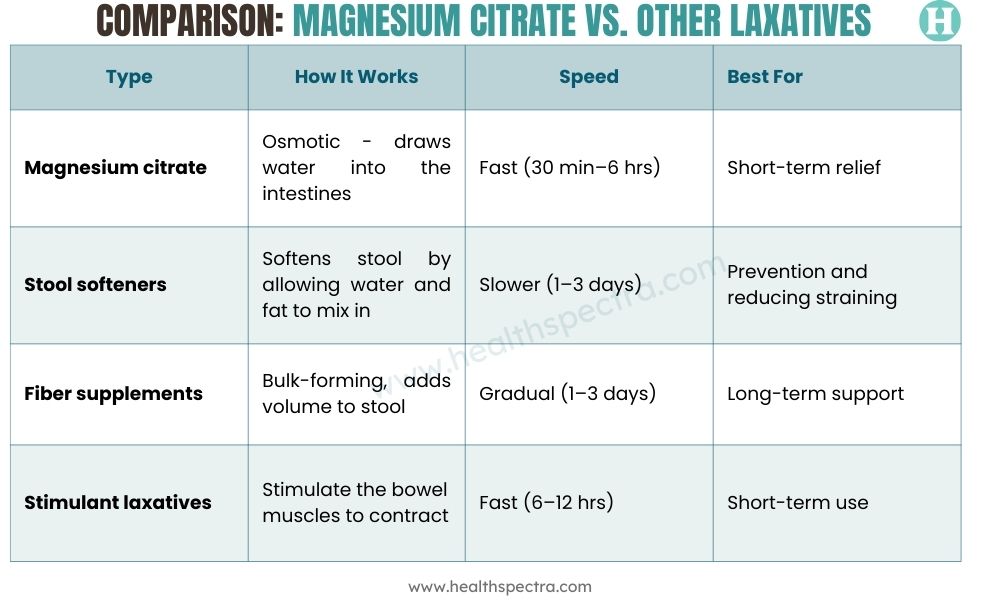 Magnesium citrate is very effective and works quickly due to its osmotic properties, but other laxatives can be used for different purposes. Stool softeners, like docusate, work more slowly to soften the stool, taking about 1 to 3 days, and are best used for gentle prevention against straining.
Bulk-forming products, such as fiber supplements, that increase the size of the stool work slowly and are used for long-term maintenance of regular bowel movements. Stimulant laxatives, such as senna, work quickly (6-12 hours) but are only meant to be used occasionally.
Possible Side Effects
Most people can tolerate magnesium citrate when taken as directed, but a few individuals may experience some side effects. You may observe loose stools, cramps, bloating, vomiting, and mild dehydration if you do not consume adequate fluid intake along with the medication. These symptoms are not usually long-lasting and will resolve once the bowel movement has passed.
Serious Risks to Be Aware Of
Serious complications are not common but can occur, especially if the medication is taken too frequently or by individuals with certain medical conditions. Diarrhea can disrupt electrolyte balances, including sodium, potassium, and magnesium, which may impact the functioning of the heart and muscles.
Dehydration can lead to low blood pressure or lightheadedness. In individuals with weak kidney function, the body may have difficulty eliminating excess magnesium, increasing the risk of magnesium toxicity, which is a potentially life-threatening condition if left untreated.
Who Should Avoid Magnesium Citrate
Some individuals should use magnesium citrate cautiously or avoid it altogether. These include those with kidney problems or impaired kidney function, people with heart arrhythmias, and older patients who are weak or dealing with multiple health issues. Patients taking medications that interact with magnesium, including some antibiotics and heart medications.
If you have severe, inexplicable abdominal pain, do not use magnesium citrate unless a doctor recommends it.
Can You Take Magnesium Citrate Daily?

Magnesium citrate should not be taken regularly. This can cause dependence on the medication. The body becomes accustomed to the laxative to have a bowel movement. It can also increase the risk of having an electrolyte imbalance and may conceal other health problems that require appropriate attention.
For people with chronic constipation, doctors recommend safer long-term solutions, such as supplementing with fiber, using stool softeners, drinking plenty of fluids, and adjusting lifestyle factors.
Signs You Should Seek Medical Care
Although magnesium citrate is generally safe to use, you should see a doctor if you experience any of the following:
- There is no bowel movement after several hours of taking magnesium citrate.
- Abdominal pain is severe and persistent.
- Vomiting or inability to retain fluids.
- There is blood in the stool or black stool.
- Dehydration symptoms, such as dizziness, dry mouth, or dark-colored urine.
These symptoms may indicate complications or underlying conditions that require immediate attention.

Long-Term Strategies for Preventing Constipation
Magnesium citrate may provide temporary relief, but to maintain healthy bowels, one must make healthy lifestyle choices. Eating a diet rich in fiber, such as lots of fruits, vegetables, beans, and whole grains, ensures that the bowel movements remain regular. Drinking plenty of water is essential, and exercising regularly helps move digestion along.
Maintaining regular times for meals and bowel movements can help train the bowel to function regularly. If constipation persists, it is necessary to investigate the underlying causes, such as hypothyroidism, IBS, or medications.
The Bottom Line
Magnesium citrate is a fast-acting osmotic laxative. It draws water into the bowel, softening the stool and stimulating a bowel movement. It is not intended for regular use. It should be used with caution in the elderly and patients with kidney disease and heart arrhythmias.
If constipation is a recurring problem, a medical evaluation and a change in lifestyle habits are recommended. As long as it is used properly, magnesium citrate is a safe and effective short-term treatment option when you need a quick fix.
References
- MedlinePlus. (n.d.). Magnesium citrate: Drug information. U.S. National Library of Medicine.
- Wellbeing Nutrition. (n.d.). How does magnesium citrate relieve constipation?
- Apollo Hospitals. (n.d.). Magnesium citrate: Uses, side effects, dosage & interactions.
- GoodRx. (n.d.). Best medications to treat constipation.
- NHS. (n.d.). About docusate. National Health Service.
- ONUS Health Care Private Limited. (n.d.). Magnesium citrate – medicine.
- Care Hospitals. (n.d.). Magnesium citrate: Uses, side effects, dosage, precautions and more.
In this Article