



















You eat a sandwich and feel uncomfortably full. You cut pasta from your diet for a week and feel a little better. Then, it hits you: gluten is the culprit. This scenario is playing out across North America.
Grocery stores are lined with gluten-free products, social media is flooded with wheat sensitivities, and people who experience bloating after eating bread choose to go gluten-free on their own.
The issue is that going gluten-free before a proper diagnosis of celiac disease can mask a serious autoimmune disorder, and not just a food intolerance. Celiac disease is an autoimmune disorder in which the immune system reacts to gluten by attacking the small intestine, resulting in villous atrophy and lifelong malabsorption of nutrients.
It is not the same thing as gluten intolerance or food preference. That is why groups such as the Celiac Disease Foundation recommend a simple guideline: test before you go gluten-free. The difference between bloating, gluten intolerance, and celiac disease can save your health.
In this article, we will learn more about ‘self-reported’ bloating and how it differs from celiac disease. We will also help you understand the 3-step diagnostic checklist you need before quitting bread or gluten foods.
Read More: 6 Gut Health Mistakes We Made Before Understanding Digestion
Why “Self-Reported” Bloating Isn’t Always Celiac Disease

Bloating is one of the most frequent complaints that doctors receive about the digestive system, but it is also one of the common symptoms.
When a person complains of bloating, they could be referring to gas, a feeling of pressure in the abdomen, a food intolerance, stress-induced sensitivity in the digestive system, or simply the natural sensation of being full after a large meal. This is what doctors refer to as self-reported bloating, a symptom that can be caused by a variety of different ailments.
The truth is that irritable bowel syndrome (IBS), a type of functional gut disorder, is much more prevalent than celiac disease. IBS affects between 10 and 15% of the adult population. The symptoms often include bloating, pain in the abdomen, constipation, or diarrhea. This is why the debate between celiac disease and IBS is so common.
There is also something called non-celiac gluten sensitivity (NCGS). People with NCGS experience relief from symptoms when they stop eating gluten, but there is no damage to the immune system that can be seen in the intestines. Other parts of the wheat, such as fermentable carbohydrates, are thought to be the cause of the symptoms.
Celiac disease, on the other hand, is a completely different condition. It is an immune system reaction that causes damage to the lining of the intestines. The tiny villi, which are responsible for absorbing nutrients, become flat, resulting in a lack of iron, calcium, folate, and vitamins. If it is not treated, the condition can lead to anemia, bone disease, infertility, and neurological disorders.
The 3-Step Diagnostic Checklist Before Quitting Gluten
Doctors follow a structured process for celiac disease diagnosis because accuracy matters. Each step builds on the last.
Step 1—Keep Eating Gluten (The Gluten Challenge)

The shocking first step is this: continue to consume gluten. To get a true result, you must consume gluten daily for several weeks. This is what doctors call a gluten challenge. If you do not consume gluten, your levels of antibodies will decrease, and your test results may appear normal even if you have the disease.
It is important to note that organizations such as Coeliac Australia emphasize the importance of consuming gluten in the diet before undergoing blood tests and a biopsy. If not, the results may not be accurate.
This is a difficult step for those who already believe that certain gluten is damaging their body. However, from a medical perspective, this is a crucial step.
Step 2—Blood Tests (Celiac Serology)
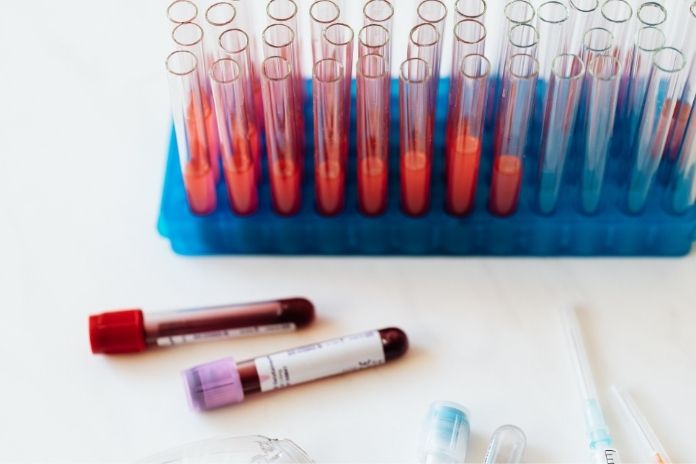
The next step would be the celiac blood test, which is usually the tissue transglutaminase IgA test, or tTG-IgA test. This test looks for the presence of antibodies that develop as a result of an autoimmune response triggered by gluten.
In addition, the test also looks at the total IgA levels, as some people may have IgA deficiency. A positive test result is a strong indication of the presence of celiac disease, but it is not a conclusive diagnosis.
It indicates the presence of immune system activity rather than tissue damage. Organizations such as the Celiac Disease Foundation propose tTG-IgA as the first test for patients who are still consuming gluten.
Step 3—Endoscopic Biopsy (Confirmation Stage)

If there is a possible indication of celiac disease from blood work, a gastroenterologist will move forward with an upper endoscopy. During the procedure, biopsies will be taken of the lining of the small intestine to see if there is any villous atrophy.
Experts consider a biopsy the gold standard in proving autoimmune damage to the intestines. This final step is what distinguishes people with celiac disease from those with irritable bowel syndrome or non-celiac gluten sensitivity.
Read More: Is Gluten Bad for Everyone? The Truth Behind the Trend
“Bloating vs. Celiac”—How to Tell the Difference
Symptoms alone cannot diagnose celiac disease, but comparing patterns can help patients understand why testing matters.
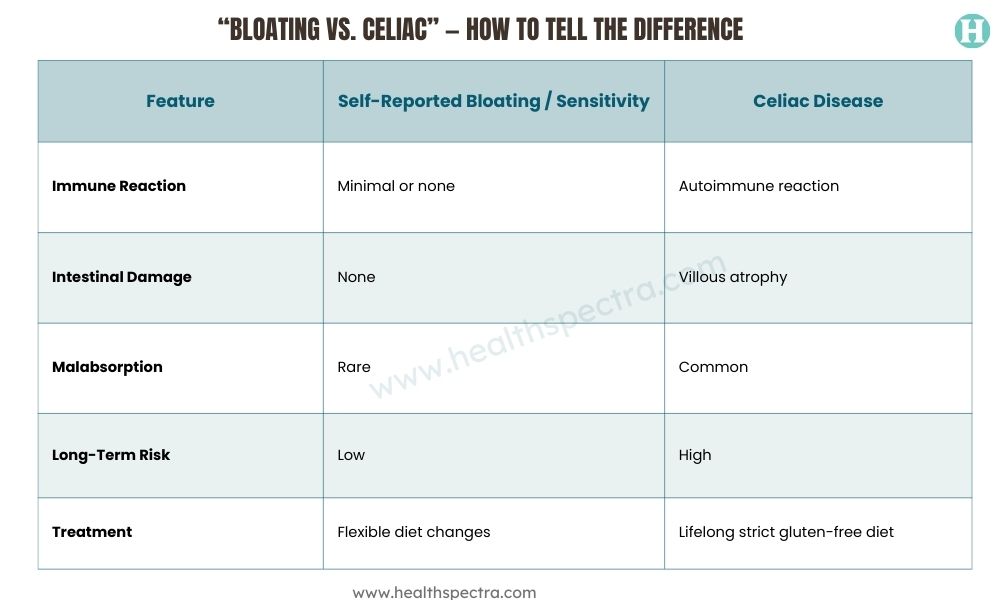 Because symptoms overlap, doctors at Northwestern Medicine emphasize laboratory testing rather than guesswork.
Why Testing First Matters

“There’s a simple blood test for celiac, but it must be done before you change your diet,” Dr. Joseph A. Murray of the Mayo Clinic, an international expert on the disease.
Going for testing before you cut gluten out of your diet isn’t just something you need to do from a medical perspective; it will also influence how you’ll be treated in the future. It is important to get tested, as a person who actually has celiac disease might not have their bone density checked, vitamin levels tested, or even see if their intestines are actually healing.
Celiac disease can quietly be eating away at your body for years if it’s not treated. Specialists believe that if celiac disease isn’t treated, the risk of osteoporosis, anemia, infertility, and certain cancers all increases. Since malabsorption is a constant problem in celiac disease, these issues can emerge.
Testing isn’t just good for the patient; it’s also good for families. Celiac disease has a strong genetic component, so first-degree relatives are at a higher risk. When we get a diagnosis, we can begin testing and prevention early.
And having the right diagnosis is also important for people who want to avoid putting themselves or their loved ones through unnecessary dietary changes.
A lot of people who cut gluten out of their diet don’t actually have celiac disease. They might have IBS, lactose intolerance, or FODMAP intolerance. Once you know what the actual problem is, you can eat more flexibly and still be healthy.
What If All Tests Are Negative?
A negative test result doesn’t mean your symptoms aren’t real. Many people with negative celiac tests actually have non-celiac gluten sensitivity (NCGS). Some people may find that IBS, food intolerances, or functional bloating are the culprits.
In IBS, the intestines respond to gas and stress stimuli. In FODMAP intolerance, specific carbs are fermented in the intestines, leading to distention. Lactose intolerance, small intestine bacterial overgrowth, thyroid problems, or pancreatic problems can all mimic gluten intolerance symptoms.
Work with a gastroenterologist or a registered dietitian to identify triggers, rather than eliminating entire food groups based on a guess. Often, getting to the root cause of the bloating will help control symptoms better than a guess.
Read More: Planning the Perfect Allergy-Friendly Party: Tips for Hosts and Guests
The Takeaway—Test Before You Restrict
If you think you have a bread-bloat problem, don’t assume it’s the gluten. It’s not possible to tell the difference between gluten sensitivity and celiac disease without medical testing.
For now, just keep eating the gluten and ask your doctor for a celiac blood test and, if necessary, a biopsy. This will ensure that you get the right diagnosis, which will protect your long-term health and save you from years of confusion.
Before you give up bread for good, check with your doctor. The right diagnosis will change your life and your peace of mind forever.
References
- Celiac Disease Foundation. (2019, October 23). Why you should be tested before going gluten-free.
- Celiac Disease Foundation. (n.d.). Screening and diagnosis.
- National Institute of Diabetes and Digestive and Kidney Diseases. (n.d.). Celiac disease: Symptoms & causes. U.S. Department of Health and Human Services.
- Staudacher, H. M., & Whelan, K. (2014). Low-FODMAP diet for treatment of irritable bowel syndrome. ResearchGate
- WebMD. (n.d.). Celiac disease vs. IBS.
- PMC10005679. (2023). [Article title not provided]. PubMed Central.
In this Article