
















You sip your usual morning coffee expecting clarity and momentum. Instead, your chest feels tight. Your hands feel unsteady. Your thoughts start racing ahead of your body. It does not feel like focus. It feels like something is wrong. Most people label this as “too much coffee.” Others assume it is anxiety. In reality, it is often both layered together.
Caffeine stimulates the same stress pathways as anxiety, and in many people, especially women, hormones amplify that response. What once felt energizing can suddenly trigger heart palpitations, nervousness, or panic. This is why coffee jitters vs. anxiety is not a simple either-or question.
Understanding your personal caffeine limit is not about quitting coffee. It is about learning where stimulation turns into stress and why that line changes over time.
This article explains how caffeine interacts with your nervous system, hormones, genetics, and metabolism, how to tell caffeine-induced symptoms from hormonal anxiety, and how to find your personal caffeine ceiling without guessing.
Read More: How Long Does Caffeine Stay in Your System? Timing, Effects, and What to Know
Why Coffee Jitters and Hormonal Anxiety Feel Identical
Caffeine doesn’t just increase alertness. It activates the same stress circuitry involved in anxiety. That shared pathway is why the sensations overlap so closely.
Caffeine triggers fight-or-flight chemistry
By blocking adenosine, caffeine removes the brain’s braking system. The result is increased release of adrenaline, norepinephrine, and cortisol. Heart rate rises. Blood pressure increases. Attention sharpens. Muscles tense.
NIH data shows cortisol increases occur even in regular caffeine users, especially when sleep is short or stress is already present. Cortisol drives the body’s stress response, so caffeine-induced symptoms mirror anxiety at a physiological level.
Estrogen alters how long caffeine stays active
Estrogen slows caffeine metabolism in the liver. When estrogen fluctuates, caffeine clearance becomes unpredictable. Perimenopause and certain menstrual phases involve sharp hormonal shifts rather than gradual change.
Research discussed in Frontiers shows that GABAergic inhibition plays a central role in regulating the HPA axis. GABA neurons normally restrain corticotropin-releasing hormone (CRH), which is the upstream driver of cortisol release.
When this inhibitory control is reduced, cortisol responses become more pronounced. In that state, stimulants trigger stronger physiological reactions because the brain’s primary braking system on stress is already weakened. This is why caffeine sensitivity often appears suddenly during hormonal transitions, even without increased intake.
Stress and aging lower the tolerance threshold
Chronic stress, sleep debt, and aging raise baseline cortisol. In that state, caffeine pushes the nervous system closer to overload instead of providing clean stimulation.
Professor Elissa S. Epel, PhD – a stress researcher at UCSF whose work focuses on how chronic stress affects aging and biology says, “Chronic toxic stress, when we have situations that are ongoing, that we don’t have the resources to cope with or we’re just really wearing down, is what accelerates our biological aging.”
What this really means is that when stress is ongoing, like with sleep debt or aging, the body’s stress systems (including cortisol regulation) become less resilient. That leaves you with higher baseline cortisol and a lower tolerance for additional stressors, so substances like caffeine can push the system closer to overload instead of providing clean stimulation.
What this means in practice
When coffee feels indistinguishable from anxiety, it reflects changes in hormonal balance and nervous system resilience, not a personal failure or imagined intolerance. Caffeine becomes a stress signal when regulatory systems are already strained.
Recognizing that shift allows smarter adjustments instead of unnecessary self-blame.
Read More: What Happens If You Drink 3 Cups of Coffee a Day?
Coffee Jitters vs Hormonal Anxiety: Key Differences

The sensations can look identical on the surface. The difference shows up in timing, pattern, and what reliably sets symptoms off.
Coffee jitters follow caffeine pharmacology
Stimulant-related symptoms usually appear 30 to 60 minutes after intake, as caffeine levels rise in the bloodstream. Intensity tracks dose, speed of consumption, and whether coffee was taken on an empty stomach.
Common signs include hand tremors, accelerated heart rate, muscle tightness, internal buzzing, sweating, and narrowed focus that feels more like agitation than clarity. As caffeine is metabolized, these effects taper off rather than stopping abruptly.
Most adults clear caffeine over five to seven hours, though genetics, liver enzyme activity, medications, and hormone levels can shorten or extend that window. When symptoms fade in step with caffeine’s decline, the trigger is chemical stimulation rather than emotional distress.
Hormonal anxiety follows biological rhythms
Hormone-driven anxiety does not hinge on what you consumed that day. It rises and falls with internal cycles.
Symptoms often cluster during the luteal phase of the menstrual cycle, perimenopause, postpartum recovery, or other endocrine transitions. The experience tends to be more diffuse: persistent unease, chest pressure, racing or looping thoughts, poor sleep quality, and heightened reactivity to minor stressors.
Research published in The Journal of Women’s Health shows that fluctuations in estrogen and progesterone interfere with how the body regulates cortisol and autonomic activity. As hormone levels shift, the stress response loses stability. The result is a nervous system that reacts more strongly, even when there’s no clear external stressor.
Caffeine does not create this state, but it can push an already sensitized system past its tolerance threshold.
Practical ways to distinguish the driver
Stimulant-driven symptoms are predictable. They follow intake, intensify with higher doses, and resolve as caffeine clears. Hormonal anxiety is patterned. It appears during specific phases or life stages, repeats across cycles, and persists regardless of caffeine, though stimulation often worsens it.
Many people experience both at once. When that happens, the goal isn’t elimination but calibration. Identifying a personal caffeine ceiling reduces symptom stacking and prevents coffee from amplifying an already vulnerable nervous system. Understanding the pattern lets you respond to the cause instead of reacting to the sensation.
Understanding Your Caffeine Half-Life

Caffeine half-life describes how quickly your body clears caffeine from circulation. It measures the time required to reduce the active amount by 50 percent, not how long the stimulant feels noticeable.
In most healthy adults, this process takes five to seven hours. For others, clearance stretches far longer. Genetic differences in the CYP1A2 liver enzyme play a central role, but hormones, pregnancy, liver function, smoking status, and certain medications can dramatically slow the process. In some cases, measurable caffeine remains active for ten hours or more.
Slow metabolizers experience extended stimulation rather than a clean rise and fall. Energy lingers, sleep onset is delayed, and the nervous system stays activated well past the point of benefit. This prolonged exposure increases the likelihood of palpitations, restlessness, and anxiety-like symptoms, even at moderate doses.
A large study published in JAMA showed that individuals with slower caffeine metabolism faced a higher risk of cardiovascular events when consuming high amounts of caffeine. Fast metabolizers did not show the same risk profile. The stimulant itself was not the issue. Clearance speed was.
What this really means is that caffeine tolerance is not about willpower or habit. It is largely biological. Two people can drink the same amount and have entirely different physiological outcomes.
This is why one-size-fits-all caffeine recommendations often fail. Effective intake depends on how long caffeine stays in your system, not how common coffee consumption happens to be.
How to Find Your Personal Caffeine Ceiling

Your caffeine ceiling is the highest amount of caffeine you can consume without triggering negative symptoms. Finding it requires intention, not restriction.
Use a caffeine diary
A caffeine diary creates awareness without judgment. Record every source of caffeine, including coffee, tea, energy drinks, soda, chocolate, and supplements. Note the time consumed, estimated caffeine amount, and form.
Over the next eight to twelve hours, record symptoms such as heart rate changes, anxiety levels, digestion, focus, and sleep quality.
A large analysis of self-tracking behavior found that people who monitor health indicators regularly are significantly more likely to change how they manage their health because they become more knowledgeable about their own patterns and responses. This increased awareness and reflection supports stronger self-management skills over time.
Start low and increase gradually
Begin with 50 to 100 milligrams of caffeine, approximately half a cup of brewed coffee.
Maintain that dose for several days. If no symptoms appear, increase by 25 to 50 milligrams. Continue until symptoms emerge.
The point at which symptoms first appear marks your caffeine ceiling.
This dose-response approach mirrors methods used in clinical pharmacology and provides far more accurate insight than guessing.
Account for caffeine metabolism genetics
Caffeine metabolism genetics significantly influence tolerance.
Variants of the CYP1A2 gene determine how quickly caffeine is cleared. Slow metabolizers experience stronger and longer-lasting effects.
You do not need genetic testing to apply this knowledge. If caffeine affects you strongly or disrupts sleep even when consumed early, assume a slower metabolism and adjust intake accordingly.
Adjust the source, not just the dose
Arabica beans contain less caffeine than Robusta beans. Dark roasts generally contain slightly less caffeine by volume than light roasts.
Cold brew often contains more caffeine due to longer extraction times. Espresso contains less caffeine per serving but delivers it quickly.
Half-caf blends or mixing regular coffee with decaf can reduce total caffeine while preserving ritual and taste.
Read More: I Stopped Caffeine After 2 PM — Here’s How It Changed My Sleep
How Hormones Influence Caffeine Tolerance Over Time
Hormonal shifts can lower caffeine tolerance even if intake remains unchanged. Estrogen slows the activity of CYP1A2, the enzyme responsible for caffeine breakdown. When estrogen levels fluctuate, caffeine clearance becomes unpredictable.
This explains why women may suddenly experience caffeine sensitivity during perimenopause, pregnancy, or when starting or stopping hormonal contraceptives. Progesterone has calming effects on the nervous system. When progesterone drops, cortisol sensitivity increases.
During the luteal phase and perimenopause, this shift can make caffeine feel harsher and more anxiety-provoking. Caffeine increases cortisol. Hormonal transitions often raise baseline cortisol levels. Together, they amplify the stress response.
Dr. Lara Briden, a naturopathic doctor and women’s health specialist, emphasizes how hormonal fluctuations, especially during perimenopause and menopause, affect sleep, mood, metabolism, and overall hormone stability. In her guidance around caffeine timing, she notes that delaying caffeine can help align with natural cortisol rhythms and avoid disrupting energy and sleep patterns that are already sensitive during hormonal shifts.
How to Avoid Heart Palpitations and Anxiety from Coffee
Once you know your limit, supporting your nervous system helps caffeine feel smoother. Never consume caffeine on an empty stomach. Protein and fiber slow absorption and reduce adrenaline spikes.
Consume caffeine earlier in the day. Cortisol follows a circadian rhythm, peaking in the morning and declining throughout the day. Late caffeine interferes with sleep and increases the risk. Hydration is essential. Even mild dehydration increases cortisol and intensifies stimulant effects.
The parasympathetic nervous system promotes calm and recovery. L-theanine, found naturally in green tea and matcha, has been shown to increase parasympathetic activity and reduce caffeine-induced anxiety.
A randomized controlled trial in Nutritional Neuroscience found that L-theanine combined with caffeine improved focus while reducing jitteriness and blood pressure spikes.
Sleep quality is equally important. Chronic sleep deprivation increases stress reactivity and lowers caffeine tolerance.
Arabica vs Robusta, Matcha, and Other Caffeine Sources
Not all caffeine behaves the same.
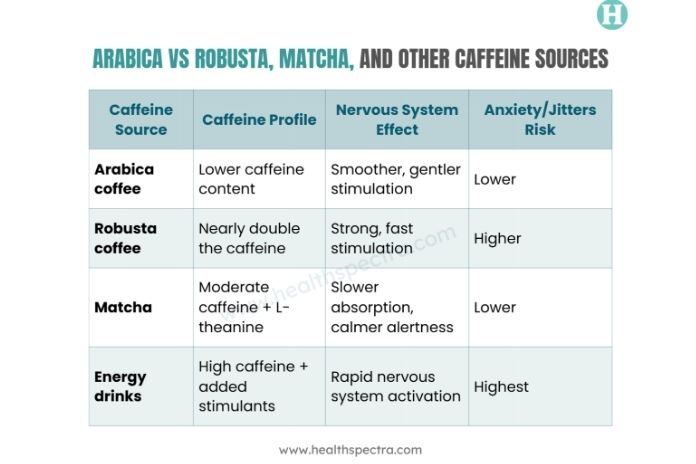 This makes it easier to compare sources without cutting caffeine entirely.
Read More: Foods to Avoid When Drinking Coffee (and Why They Don’t Mix Well)
How to Calm the Jitters After Too Much Caffeine
Once you’ve crossed your personal caffeine threshold, the goal shifts from pushing through to slowing the stress response. Start with hydration. Fluids support circulation and kidney clearance, helping the body move caffeine and stress hormones out more efficiently. Plain water works. You don’t need anything fancy.
Choose light movement, not intensity. A short walk, gentle stretching, or mobility work helps metabolize circulating adrenaline and improves blood flow. High-intensity exercise can amplify stimulation and worsen palpitations in this state.
Use controlled breathing to downshift your nervous system. A 4-4-8 pattern, inhale for four seconds, hold for four, exhale for eight, increases vagal tone and lowers heart rate. Longer exhales matter more than deep inhales here.
Eat a stabilizing snack if you haven’t already. Pair carbohydrates with protein to smooth blood sugar fluctuations. Low blood sugar magnifies shakiness, dizziness, and internal restlessness when caffeine is present.
Reduce incoming stimulation. Skip more caffeine, nicotine, intense screens, loud environments, and emotionally charged tasks until symptoms settle. Give your nervous system fewer signals to process.
When to See a Doctor
Sensitivity after occasional overconsumption is common. Ongoing symptoms are not.
Medical evaluation is appropriate if palpitations occur frequently, persist beyond caffeine’s typical clearance window, or appear on days without stimulant intake.
Anxiety that continues despite caffeine reduction may point to endocrine or cardiovascular contributors, including thyroid dysfunction, hormonal imbalance, or cardiac rhythm irregularities.
Clinical guidance emphasizes ruling out physiological causes before labeling symptoms as anxiety alone. When the body is signaling repeatedly, it’s worth listening with proper assessment rather than assumption.
Takeaway
Your caffeine limit isn’t fixed. It shifts with hormones, stress load, sleep quality, and recovery capacity. What once felt clean and energizing can turn overstimulating when those variables change, even if your habits stay the same. The solution isn’t cutting coffee by default.
It’s awareness. Knowing your personal ceiling lets you adjust before jitters, palpitations, or anxiety show up. Pay attention to dose, timing, and source. Notice how caffeine affects your sleep, mood, and focus at different stages of life. Support your nervous system with rest, food, and stress regulation so that stimulation stays useful rather than overwhelming.
Coffee is a tool. Used well, it sharpens attention and performance. Used past your limit, it takes control. The difference comes down to understanding where that line is for you.
Frequently Asked Questions
How much caffeine causes jitters?
There is no fixed dose that applies to everyone. Some people feel overstimulated at 50 milligrams, while others remain comfortable at much higher amounts. Genetics, hormone levels, sleep quality, and stress load all shape sensitivity. Jitters appear when intake exceeds what your nervous system can regulate.
Can caffeine suddenly start causing anxiety?
Yes, tolerance can change over time. Hormonal shifts, chronic stress, poor sleep, and aging reduce the body’s ability to buffer stimulation. When recovery systems weaken, the same amount of caffeine produces a stronger stress response. The change reflects physiology, not psychological weakness.
Is caffeine sensitivity more common in women?
Sensitivity fluctuates with hormonal patterns rather than sex alone. Estrogen influences how quickly caffeine is metabolized and how reactive the stress system becomes. During menstrual cycle shifts, perimenopause, and postpartum periods, reactions are more likely. Outside those windows, tolerance often improves.
Does decaf still affect sensitive people?
Decaf is not caffeine-free. Small residual amounts can still stimulate a highly reactive nervous system. For sensitive individuals, even low doses may trigger palpitations or unease. Response depends on clearance speed and baseline stress levels.
How long does caffeine stay in your system?
In most adults, caffeine’s half-life ranges from five to seven hours. Genetics, hormones, medications, and liver function can extend this significantly. Slow metabolizers may retain active caffeine for ten hours or longer. This prolonged exposure increases the risk of sleep disruption and anxiety.
References
- Briden, L. (n.d.). Morning hormone reset: Why your first hour matters. Nourish & Power.
- Brighten, J. (n.d.). How coffee affects your health and hormones. Dr. Jolene Brighten.
- Epel, E. S. (2023). Chronic stress and biological aging [Podcast transcript]. Mind & Life Institute.
- Fomat Medical. (n.d.). Caffeine and anxiety: Effects on the nervous system.
- GoodRx Health. (n.d.). Does caffeine cause or worsen anxiety?
- Journal of Nutritional Neuroscience. (2010). The combination of L-theanine and caffeine improves cognitive performance and increases subjective alertness.
- Lizearle Wellbeing. (n.d.). Caffeine during midlife and menopause.
- Mpower Minds. (n.d.). The relationship between caffeine, stress, and mental health.
- Perfect Daily Grind. (n.d.). How caffeine affects stress and anxiety.
- PubMed Central. (n.d.). GABAergic regulation of the HPA axis and stress response.
- PubMed Central. (n.d.). Ovarian hormone fluctuations and stress sensitivity.
- PubMed Central. (n.d.). Self-tracking, self-regulation, and health behavior change.
- PubMed Central. (2024). Cortisol reactivity in habitual caffeine users.
- ScienceDirect. (2024). Caffeine, stress reactivity, and neuroendocrine regulation.
- Strive Health Expert. (n.d.). Caffeine vs anxiety: Understanding the difference.
- The Food Medic. (n.d.). Does coffee disrupt our hormones?
- Times of India. (2024). Does caffeine make anxiety worse? Here’s what research shows.
- Zavida Coffee. (n.d.). 5 ways to get rid of coffee jitters.
In this Article