





















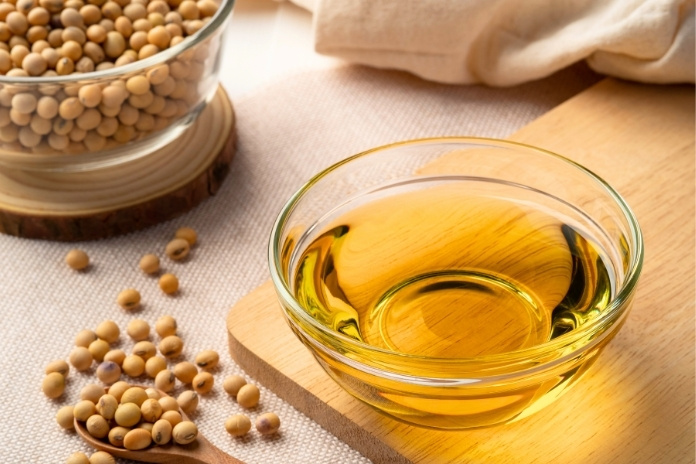
Due to its abundance and low price, it’s no wonder soybean oil is a common choice for frying, dressing, and even baking. However, as discourse around health and nutrition evolves, more individuals are questioning the safety and health effects of this popular seed oil.
People widely consume soybean oil, so it attracts both positive and negative attention. As a result, there has been much online criticism of its toxicity and inflammatory properties and of its ability to cause a myriad of health issues.
This article will examine the uses of soybean oil, its nutritional composition, anticipated advantages and disadvantages, and its proper use as an addition to a balanced diet.
Read More: The Best (and Worst) Cooking Oils for Hormonal Balance and Fertility
What Is Soybean Oil?
Soybeans are cool-season legumes, and many farmers in the eastern half of the United States plant them. Soybeans have a special connection with several bacterial species. The soybean provides the bacteria with nourishment, and the bacteria provide the soybean with nitrogen. This link decreases the requirement for nitrogen fertilizer during production.
Manufacturers make soybean oil from soybean seeds. It has several uses and is one of the most prevalent in the kitchen. Manufacturers dehull and crush soybeans to extract the oil. They then refine and distill it to remove impurities that can affect its color or fragrance.
Nutritional Profile of Soybean Oil
Soybean oil is an oil derived from the soybean plant. Soybean oil is mainly composed of fat, and, like other oils, its nutritional value comes from the fats it contains.
Essential Fatty Acids: Because soybeans contain a high concentration of essential fatty acids, such as omega-3 and omega-6, many people recommend soybean oil. These essential lipids support cells and their membranes and help the body respond to inflammation.
Vitamins and Minerals: Besides fatty acids, soybean oil has many vitamins and minerals, including a sufficient amount of vitamin K, which helps keep your blood clotting and bones healthy.
Why Soybean Oil Is Often Labeled “Unhealthy”
Although soybean oil offers heart-healthy properties, people should consider certain drawbacks. One worry is the high omega-6 fatty acid level in soybean oil.
While the body needs omega-6 fatty acids, excessive intake can lead to an imbalance in the omega-6 to omega-3 ratio, which may increase inflammation and certain health disorders when not balanced with omega-3s.
Soybean Oil and Inflammation: What Does the Evidence Show?

The inflammatory potential of soybean oil mostly depends on its omega-6 fatty acid concentration. Excessive intake of omega-6 fatty acids, as found in soybean oil, may contribute to inflammation when not balanced by sufficient omega-3 intake. It’s vital to maintain a healthy ratio of these fats in your diet to reduce any inflammatory consequences.
A prominent element in the American diet has been linked to ulcerative colitis, a kind of inflammatory bowel disease typified by a chronically inflamed large intestine. The ingredient is soybean oil, which is common in processed foods. In reality, U.S. per capita consumption of soybean oil surged more than 1,000-fold throughout the 20th century.
Mice given a diet high in soybean oil were more likely to develop colitis, according to research from the University of California, Riverside, and UC Davis.
Read More: Is Aluminum Foil Safe for Cooking? Risks and Alternatives
Soybean Oil and Heart Health
Soybean oil includes primarily unsaturated fats, notably polyunsaturated fats. These types of fats enhance heart health when they replace saturated fats in the diet.
One research study followed several subjects for several years to determine whether dietary lipid intake influenced inflammatory markers and cardiovascular health. Diets high in soybean oil, which naturally contains omega-3s and omega-6s, were linked to lower inflammation and heart disease risk markers in the subjects, the researchers found.
This study, among others published in the American Heart Association Journal, underlines soybean oil’s positive function in a balanced diet.
Soybean Oil vs Other Common Cooking Oils

When comparing soybean oil to other types of cooking oils, it generally has a lower saturated fat level than coconut oil but a higher one than olive oil. It also has a higher smoke point, making it well-suited for high-heat cooking methods.
Yet, some research suggests that using oils high in polyunsaturated fats, such as soybean oil, can lead to oxidative stress, which may be hazardous to health.
Does Soybean Oil Become Harmful When Heated?
How you use soybean oil is essential. Because of its high smoke point, it is suitable for frying and sautéing. However, if the oil is heated to extremely high temperatures regularly, it can oxidize and form harmful byproducts.
To get the most out of soybean oil, use it only for cooking at moderate temperatures, avoid reusing it more than once, and store it in a cold, dark place to keep it fresh.
Soybean Oil in Ultra-Processed Foods

Manufacturers often use soybean oil in packaged and processed products because it is cheap, tasteless, and has a high smoke point. It’s usually more affordable than avocado or olive oil, and also one of the most produced vegetable oils on the planet. It makes it a convenient answer for companies wanting to cut costs or for large-scale food production.
It readily mingles with chips, baked goods, dressings, frozen dinners, and fast food. There are many lovely things about soybean oil despite its failings. Soybean oil works well as a frying medium for high-temperature frying. Its smoke or burning point is about 453°F, or 234°C, so that the crispiest crisp you ever bit into may have been swimming in soybean oil.
However, it is vital to isolate the oil itself from the entire food product. Ultra-processed food are often contain excessive amounts of added sugar, refined flour, salt, and artificial additives, as well as extra calories.
These variables, paired with insufficient nutrient intake, are more strongly associated with poor health outcomes. The oil is merely one component of a much broader nutritional picture.
Read More: High-Oleic vs Regular Sunflower Oil: Which One Should You Use?
Who May Want to Limit Soybean Oil
Soybean oil is likely safe for almost all adults when consumed by mouth at levels commonly found in food. The safety of using soybean oil at the levels seen in medications is unknown due to a lack of reliable information.
Soybean oil allergies can occur in people who are allergic to peanuts or other plants in the Fabaceae/Leguminosae family.
People who eat a lot of fried or packaged foods may benefit from reducing their soybean oil intake. It happens not because soybean oil is dangerous on its own, but because manufacturers often use it in ultra-processed items.
These foods are generally heavy in calories, salt, processed carbs, and unhealthy ingredients. People managing obesity or type 2 diabetes, or those looking to minimize inflammation, should also avoid soybean oil.
When Soybean Oil Can Fit Into a Balanced Diet

Soybean oil and a healthy diet go together if used sparingly throughout your own cooking. Watch the fat portion. It is high in calories, as all cooking oils are. The cooking function requires so much oil to be effective, but not too many calories if only tiny amounts are used for stir-frying, sautéing, and light frying.
A balanced diet includes a mix of different healthful fats rather than relying on a single source. If you use soybean oil in one meal, you can include sources of monounsaturated and omega-3 fats like olive oil, nuts, seeds, or fatty fish in other meals. This variety contributes to the overall diet’s improved fatty acid balance.
Soybean oil fits more easily into a healthy eating plan when used in meals made with whole or minimally processed ingredients. Oil consumption can be reduced by cooking at home with fresh vegetables, lentils, whole grains, and high-quality protein sources.
What Nutrition Science Currently Agrees On
A 2020 study published in the journal Endocrinology linked soybean oil consumption to genetic abnormalities in the brain. However, the male mice used in this investigation were fed soybean oil.
More recent studies have pointed to other potential effects of soybean oil use. For instance, a 2023 study in Gut Microbes found a link between excessive linoleic acid intake, which accounts for about 55% of soybean oil, and inflammatory bowel disease (IBD).
In mice, diets rich in soybean oil caused neuroinflammation and weakened the brain-gut barrier; the inflammation was more severe in the soybean-oil group than in the lard-fed group, according to a 2024 study published in the Journal of Traditional and Complementary Medicine.
Microorganisms also investigated the effects of soybean oil on the human gastrointestinal tract, suggesting that fried soybean oil may damage gut flora. However, it is important to notice that each of these experiments entailed giving mice a diet of soybean oil alone.
“Some researchers have pointed out that it’s important not to directly correlate studies in mice to humans when it comes to fatty acids and inflammation, as there are distinct differences in how mice utilize the fatty acid DHA, which can impact inflammatory markers and response,” said Julie Stefanski, MEd, RD, LDN, FAND, a registered dietitian based in Baltimore, Maryland.
Read More: Is Sunflower Oil Healthy? What the Research Really Says
Conclusion
Soybean oil is the most widely used cooking oil in the world, and its use in contemporary diets is a significant source of concern. Soybean oil alone contains trace amounts of healthy elements like vitamin E and primarily unsaturated lipids.
Current nutrition guidance recommends replacing saturated fats with unsaturated fats, such as those in soybean oil, to enhance heart health. The quality of the food as a whole is more important than any one oil.
In this Article