














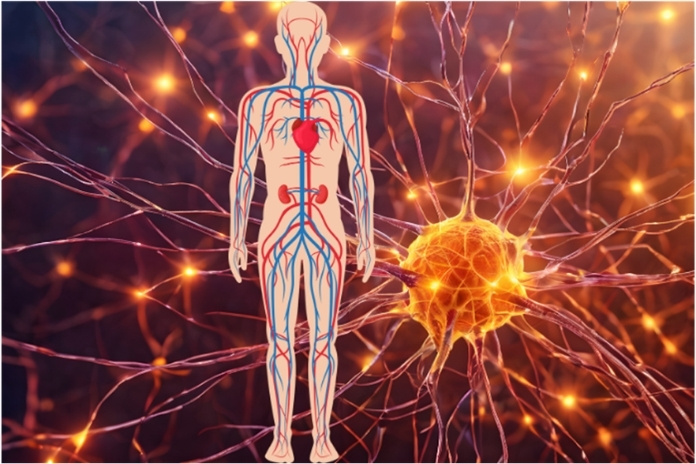
Your body runs two parallel operating systems at once. The parasympathetic nervous system is the one that quietly keeps you alive while you sleep, digest your lunch, and recover from a stressful day.
It is the core of your autonomic nervous system’s “rest and digest” response, and it directly governs your heart rate, immune function, digestion, and reproductive health. Yet most people have never heard of it until something goes wrong.
Here’s the thing: modern life constantly triggers the opposing “fight or flight” system, flooding your body with stress hormones. The parasympathetic system quietly struggles to restore balance. When it can’t keep up, the consequences include poor sleep, chronic gut problems, high blood pressure, and persistent inflammation. Science is only beginning to map just how far that damage reaches.
If you’ve ever wondered why stress seems to wreck everything from your digestion to your mood, the vagus nerve and its parasympathetic signaling are a big part of the answer.
This article breaks down exactly what the parasympathetic nervous system is, what it controls in your body, why chronic stress suppresses it, how to measure its strength, and what the evidence says about restoring it. No jargon, no confusion. Just clear science you can actually use.
- What it is: The parasympathetic nervous system is the “rest and digest” branch of the autonomic nervous system. It supports recovery, digestion, immune regulation, and heart rate control.
- The science: Low parasympathetic tone, often measured via heart rate variability, is strongly associated with increased cardiovascular risk and all-cause mortality in population studies.
- What you can do: Slow diaphragmatic breathing at around five breaths per minute is one of the fastest evidence-based ways to activate parasympathetic tone, with measurable effects within minutes.
Where the Parasympathetic Nervous System Sits in Your Body
Your central nervous system (CNS) is made up of your brain and spinal cord. The nerves arising from the central nervous system (the brain and spinal cord) spread out to carry signals from the brain to the rest of the body.
These nerves spreading out to different body parts, constitute your peripheral nervous system (PNS), which connects the brain to every other part of your body. Within the peripheral nervous system, there are two main divisions:
1) The somatic nervous system handles voluntary movement, the things you consciously decide to do.
2) The autonomic nervous system (ANS) handles everything else: the involuntary functions that run without your conscious input, like your heartbeat, breathing rate, and digestion. The autonomic nervous system has three branches.
- The sympathetic nervous system triggers the fight-or-flight stress response
- The enteric nervous system governs the gut
- And the parasympathetic nervous system is the third branch, the one responsible for rest, repair, and recovery
Most of your internal organs receive signals from both the sympathetic and parasympathetic systems, and the two work in opposition to maintain balance, a process called autonomic balance.
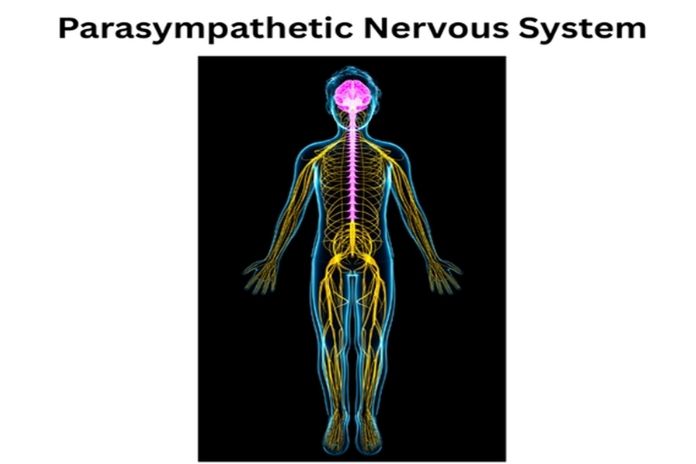
The parasympathetic nervous system’s primary communication highway is the vagus nerve (the longest cranial nerve in your body, running from your brainstem through your neck, chest, and abdomen).
The vagus nerve carries parasympathetic signals to the heart, lungs, liver, kidneys, and digestive tract, while simultaneously sending sensory information from those organs back up to the brain. It is, in the most literal sense, the body’s feedback loop for safety and recovery.
What the Parasympathetic Nervous System Actually Controls
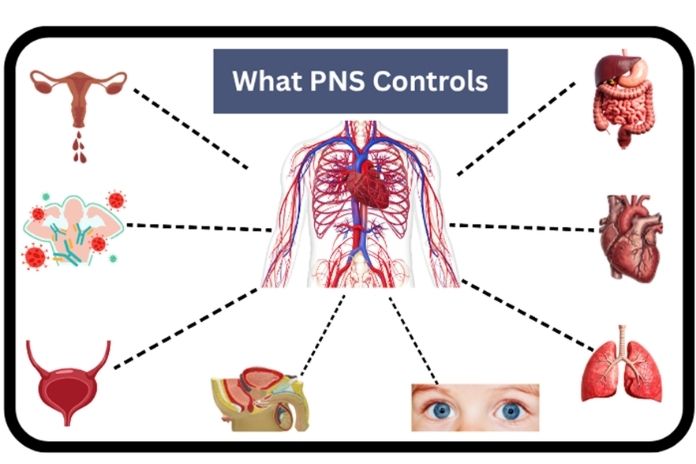
The parasympathetic nervous system’s role is to conserve energy and maintain a stable internal environment. It does this by slowing certain processes down while actively driving others. Here’s what it manages, system by system.
Heart: It slows your heart rate and lowers blood pressure during rest. The strength of this parasympathetic “brake” on your heart is measured by heart rate variability (HRV), which is the variation in time between each heartbeat. Higher HRV means stronger parasympathetic tone and greater cardiovascular resilience.
Digestion: The parasympathetic system stimulates saliva production, stomach acid release, bile flow, pancreatic enzyme secretion, and the wave-like muscle contractions (peristalsis) that move food through your gut. Without adequate parasympathetic tone, digestion becomes sluggish and inefficient.
Lungs: It slightly constricts the bronchioles (small airways in your lungs) and promotes mucus secretion, the opposite of the airway-widening effect you get during a sympathetic stress response.
Eyes: It constricts your pupils in bright light, enables your eye lens to focus on close objects (a process called accommodation), and stimulates tear production.
Immune system: Parasympathetic activation via the vagus nerve exerts powerful anti-inflammatory effects through the cholinergic anti-inflammatory pathway. It suppresses excess cytokine production (the inflammatory signaling molecules linked to chronic disease), making it a key player in immune regulation.
Reproductive system: Sexual arousal and function, including erection, lubrication, and related physiological responses, are all parasympathetically mediated. Chronic stress and poor parasympathetic tone are major contributors to sexual dysfunction.
Bladder: It contracts the detrusor muscle in the bladder wall to enable urination and relaxes the internal urethral sphincter. Parasympathetic dysfunction is one cause of urinary retention and bladder control problems.
Why the Parasympathetic Nervous System Matters for Your Health
Here’s what most articles miss: the parasympathetic nervous system isn’t just the “off switch” for stress. It actively drives critical repair and maintenance functions. Suppress it long enough, and you don’t just feel stressed. You get sick.
Modern life has created a structural imbalance. Psychological stress, poor sleep, ultra-processed food, and sedentary behavior all chronically activate your sympathetic system. Meanwhile, the parasympathetic system gets chronically underactivated. The result is a low-grade state of physiological emergency that your body wasn’t designed to sustain.
Digestion: Chronic sympathetic dominance directly impairs gut motility, reduces digestive enzyme secretion, and contributes to irritable bowel syndrome (IBS), bloating, and constipation. This is why stress wrecks your gut.
Immune regulation: The PNS, particularly through the vagus nerve, has significant immunomodulatory (immune-regulating) effects. Dysregulation of autonomic balance increases long-term vulnerability to chronic inflammatory and degenerative disorders, including arthritis and atherosclerosis (plaque buildup in the arteries).
Cardiovascular health: Heart rate variability (HRV), a proxy for parasympathetic tone, is one of the strongest predictors of cardiovascular disease risk and all-cause mortality in large population studies. Low HRV is not just a fitness metric. It is a clinical warning sign.
Sleep: Parasympathetic dominance is required to initiate and maintain sleep. Chronic sympathetic overactivation is a primary driver of insomnia and poor sleep quality, which in turn further suppresses parasympathetic tone, a self-reinforcing cycle.
Cognitive function: Your brain depends on parasympathetic rest states for memory consolidation, learning, and emotional regulation. Chronic sympathetic dominance is linked to impaired working memory and heightened anxiety responses.
How to Measure Your Parasympathetic Nervous System Activity
You can’t directly observe parasympathetic nerve activity without clinical equipment. But you can measure its effects with surprising accuracy using a metric called heart rate variability (HRV), the variation in time intervals between successive heartbeats.
Higher HRV signals a stronger parasympathetic tone. Lower HRV signals that your ANS is skewed toward the sympathetic side. It’s measurable today with most modern fitness wearables, including the Garmin, Apple Watch, Whoop, and Oura Ring, and it’s increasingly used in clinical cardiovascular risk assessment.
Two other measures appear in research settings. Respiratory sinus arrhythmia (RSA) captures the natural increase in heart rate during inhalation and decrease during exhalation, a pattern entirely driven by vagal parasympathetic activity and considered one of the cleanest non-invasive markers of vagal tone.
Baroreflex sensitivity measures the cardiovascular response to changes in blood pressure and is used in cardiology to assess autonomic function after events like heart attacks. For practical daily use, tracking your morning resting HRV over several weeks gives you a reliable window into the trend of your parasympathetic tone and whether lifestyle interventions are working.
Read More: How to Calm a Dysregulated Nervous System in 5 Minutes: Fast, Science-Backed Methods
Evidence-Based Ways to Strengthen Your Parasympathetic Nervous System
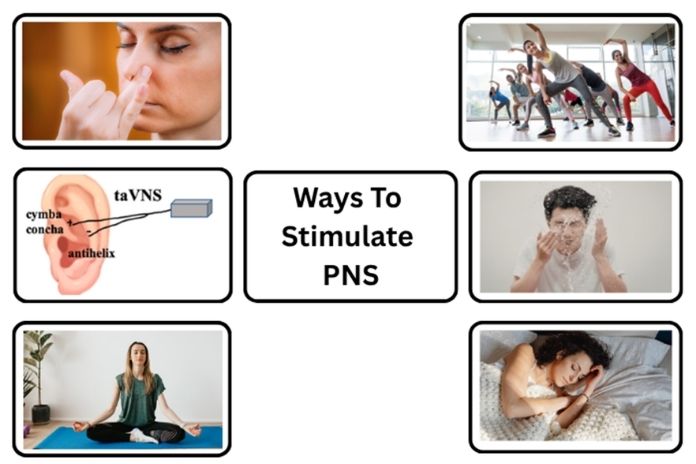
The good news is that parasympathetic tone is trainable. All of the methods below have direct human evidence for increasing parasympathetic activity, as measured by HRV or RSA.
- Slow diaphragmatic breathing: The most immediately effective intervention available. Breathing at 4 to 6 breaths per minute (roughly 5 seconds in, 5 seconds out) maximizes respiratory sinus arrhythmia and directly activates vagal tone. Effects are measurable within minutes and accumulate with consistent daily practice.
- Regular aerobic exercise: The strongest long-term determinant of resting HRV. 150 minutes per week of moderate aerobic activity produces measurable improvements in parasympathetic tone within weeks. This is one of the most well-replicated findings in autonomic research.
- Cold water exposure: Brief cold exposure, such as a cold shower or cold water face immersion, activates the diving reflex, an immediate and powerful parasympathetic response that sharply slows heart rate. It’s increasingly studied for acute anxiety management and HRV improvement.
- Prioritizing sleep: Parasympathetic tone peaks during deep sleep stages. Sleep deprivation both acutely and chronically suppresses HRV and parasympathetic activity. Protecting sleep quality is one of the highest-leverage interventions you can make.
- Meditation and mindfulness: Multiple randomized controlled trials (RCTs) confirm increased HRV following regular meditation practice. The likely mechanism is a sustained reduction in sympathetic activation, which allows parasympathetic tone to rise.
- Transcutaneous vagus nerve stimulation (taVNS): An emerging clinical intervention where low-level electrical signals are delivered to the auricular branch of the vagus nerve at the ear. It has growing evidence for treating inflammatory conditions, depression, and epilepsy and it is being studied for autonomic rehabilitation.
Read More: Stop Migraines Before They Start: The 3-Day Reset That Calms Your Nervous System Naturally
When Does Parasympathetic Nervous System Dysfunction Need Medical Attention?
Lifestyle optimization works well for garden-variety autonomic imbalance caused by stress and poor habits. But sometimes the parasympathetic system’s dysfunction is caused by an underlying medical condition, a state called autonomic neuropathy (nerve damage affecting autonomic function).
Autonomic neuropathy can occur in diabetes (one of the most common causes); Parkinson’s disease; multiple system atrophy (a rare progressive neurological disorder); post-viral syndromes, including Long COVID; and after spinal cord injury. These conditions damage the nerve pathways on which the parasympathetic system depends.
Symptoms that suggest clinical autonomic dysfunction and warrant a medical evaluation include a resting heart rate persistently above 100 beats per minute and an inability to regulate heart rate normally with changes in activity or posture.
Other significant symptoms include severe digestive dysfunction such as gastroparesis (delayed stomach emptying), orthostatic hypotension (significant dizziness or lightheadedness when standing), or persistent inability to sweat normally.
If you’re experiencing any of these, a neurologist or cardiologist with expertise in autonomic disorders is the right starting point.
Read More: Beyond “No Pain, No Gain”: How Physical Eustress Can Help Regulate and Heal Your Nervous System
Final Word
Your parasympathetic nervous system doesn’t ask for much. It doesn’t need a gym membership or an expensive supplement. It needs you to slow down long enough to let it do its job.
Most of us have spent years unknowingly suppressing it: overworking, undersleeping, eating on the run, and scrolling through stress at midnight. The science is clear that the cost of that accumulates quietly and seriously over time.
But the science is equally clear that it responds. Breathe slower. Move more. Sleep as it matters. Your nervous system is listening.
- What the science says:
The parasympathetic nervous system actively drives digestion, immune regulation, cardiovascular recovery, and sleep—it is not passive. - The real risk:
Chronic sympathetic dominance suppresses parasympathetic tone, creating measurable, long-term vulnerability to cardiovascular disease, gut dysfunction, inflammation, and poor mental health. - Act now:
Start with five minutes of slow diaphragmatic breathing today (five seconds in, five seconds out). It’s one of the fastest, most evidence-based ways to restore parasympathetic tone.
References
- Benarroch, E. E. (2022). Autonomic nervous system disorders: Approach to diagnosis and treatment. Mayo Clinic Proceedings, 97(5), 943–959.
- Breit, S., Kupferberg, A., Rogler, G., & Hasler, G. (2018). Vagus nerve as modulator of the brain–gut axis in psychiatric and inflammatory disorders. Frontiers in Psychiatry, 9, 44.
- Capilupi, M. J., Kerath, S. M., & Becker, L. B. (2020). Vagus nerve stimulation and the cardiovascular system. Cold Spring Harbor Perspectives in Medicine, 10(2), a034173.
- Laborde, S., Mosley, E., & Thayer, J. F. (2017). Heart rate variability and cardiac vagal tone in psychophysiological research: Recommendations for experiment planning, data analysis, and data reporting. Frontiers in Psychology, 8, 213.
- Magnon, V., Dutheil, F., & Vallet, G. T. (2021). Benefits from one session of deep and slow breathing on vagal tone and anxiety in young and older adults. Scientific Reports, 11, 19267.
- Pavlov, V. A., & Tracey, K. J. (2022). Bioelectronic medicine: Updates, challenges and paths forward. Bioelectronic Medicine, 8(1), 10.
- Recupero, A., Maracchioni, L., & Recupero, P. R. (2021). Autonomic nervous system dysregulation and chronic inflammatory disease. Journal of Clinical Medicine, 10(9), 1938.
- Shaffer, F., & Ginsberg, J. P. (2017). An overview of heart rate variability metrics and norms. Frontiers in Public Health, 5, 258.
- Suni, E., & Singh, A. (2023). Sleep and the autonomic nervous system. Sleep Foundation.
- Wielgosz, J., Goldberg, S. B., Kral, T. R. A., Dunne, J. D., & Davidson, R. J. (2019). Mindfulness meditation and psychopathology. Annual Review of Clinical Psychology, 15, 285–316.
In this Article