













Low muscle mass is often discussed as if it is an unavoidable part of getting older. That idea sounds reasonable. It is also one of the most damaging things many people over 50 have been told.
Low lean mass is linked with slower walking speed, higher fall risk, poorer recovery from illness, longer hospital stays, and even higher mortality rates. Yet research suggests a large part of late-life strength is shaped by things people can actually influence. Activity levels. Nutrition. Protein intake. Training habits.
- You can build muscle after 50, 60, 70, and beyond.
- The biggest obstacles are often outdated beliefs rather than biology.
- Heavy weights are not mandatory, soreness is not proof of growth, testosterone supplements are not required, and cardio does not ruin muscle gains.
The myths below matter because they affect behavior.
Myth 1: “It’s Just Aging, There’s Nothing I Can Do About It”

This is probably the most expensive fitness myth ever created. Not expensive financially. Expensive physically. Age-related muscle loss is real. Nobody disputes that. The mistake is assuming that muscle loss happens entirely because of age.
Research does not support that conclusion. A lot of what people call “age-related decline” is actually years of reduced muscle use.
The body follows demand. When demand disappears, muscle disappears. When demand returns, the body responds. Even in very old adults. Dr. Jordan D. Metzl, MD, a sports medicine physician, says, “Age-related muscle loss has a medical name: sarcopenia.”
One reason researchers became interested in sarcopenia was that they noticed large differences among people of the same age. One 70-year-old struggles to stand from a chair. Another hikes every weekend. Same age. Very different muscle profile.
That observation alone tells us something important. Chronological age and muscle age are not the same thing.
Studies have shown that older adults can regain measurable muscle size and strength within weeks of starting progressive resistance training. Some studies report nearly 10% increases in thigh muscle area over relatively short periods.
That is not reversing age. That proves that age was never the whole explanation. The uncomfortable truth is that many people blame aging for changes caused by inactivity. The encouraging truth is that inactivity can be changed.
Myth 2: “You Have to Lift Heavy to Build Muscle”
This myth quietly discourages many people from strength training before they even begin. Someone has knee pain. Someone else has osteoporosis concerns. Another person feels intimidated by gyms.
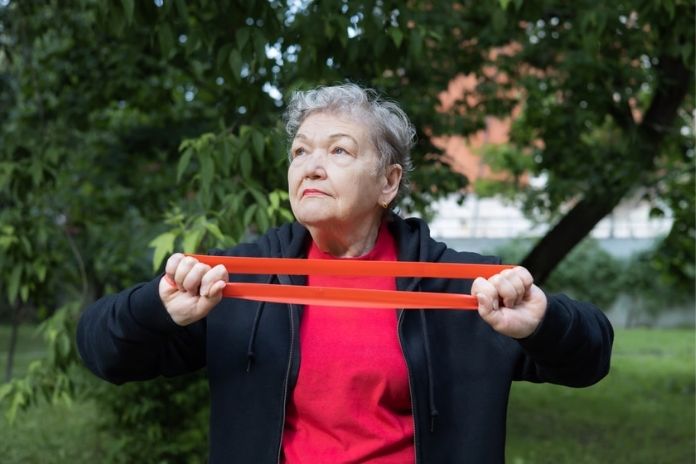
Then they hear muscle growth requires heavy barbells and maximum-effort lifting. So they never start. Science says the story is more complicated. Muscles respond to tension. Not ego. Not plates on a barbell. Tension.
That tension can come from heavy weights. It can also come from lighter weights if the muscle is challenged enough. Researchers have repeatedly compared lighter and heavier loads. When exercises are performed with sufficient effort, muscle growth outcomes are often surprisingly similar.
This is one of those findings that sounds wrong at first. People assume a heavier weight automatically means more growth. But the muscle does not know whether resistance came from a barbell, a resistance band, a machine, or body weight.
It only knows whether it was forced to work. Another thing worth mentioning is failure training. Fitness culture sometimes treats failure as mandatory. Every set must end with complete exhaustion. That idea is losing support.
Particularly for older adults. Evidence suggests stopping a few repetitions before failure often produces similar muscle and strength gains while reducing unnecessary fatigue and recovery demands.
For somebody over 50, this is useful information. The goal is not proving toughness. The goal is to create a training habit that will still exist six months from now.
Myth 3: “Older Adults Need Less Protein”

This myth sounds logical on the surface. People often assume that because older adults move less, they need less protein. The reality is almost the opposite. “Protein plays an important role in maintaining and building muscle mass,” says Katie Dodd, MS, RDN, CSG, LD, FAND, a geriatric dietician. As muscles age, they become less responsive to protein intake.
Researchers call this anabolic resistance. A protein amount that strongly stimulates muscle growth in a younger person produces a weaker response in older muscle.
The solution is not giving up. The solution is usually more protein. Many older adults still use the RDA of 0.8 grams per kilogram as their target. That number was never designed as an ideal muscle-building recommendation.
It was created primarily to prevent deficiency. Those are different goals. Emerging evidence suggests that many adults over 65 benefit from about 1.2 to 1.6 grams per kilogram per day, sometimes higher when actively strength training.
Protein timing matters too. A pattern seen quite often is eating very little protein at breakfast, a moderate amount at lunch, then almost everything at dinner. The body does not necessarily use protein most effectively that way.
Some studies have shown better lean-mass outcomes when protein is distributed more evenly across meals. One thing that becomes obvious when looking at older adults who maintain impressive strength is that very few accidentally eat enough protein.
It usually happens deliberately.
Myth 4: “Strength Training Is Dangerous After 60”
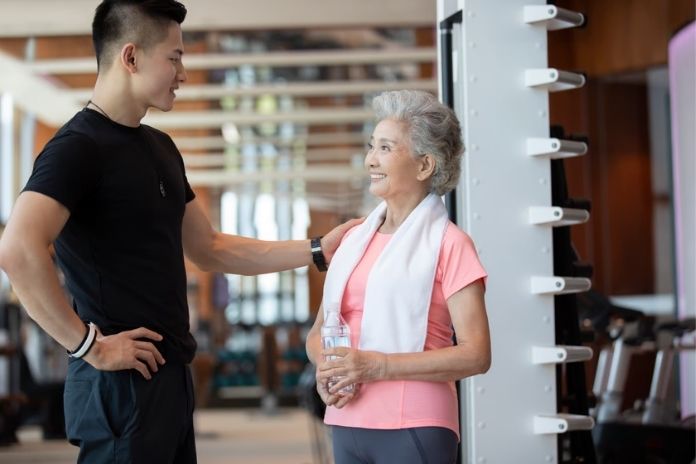
Many people are genuinely more afraid of lifting weights than they are of losing muscle. Which is interesting. Because statistically, the muscle loss creates more problems. Strength training is sometimes seen as risky and something older adults should avoid.
Meanwhile, inactivity is treated as normal. The evidence points in the opposite direction. Meta-analyses examining resistance training in older adults consistently show significant improvements in strength, balance, mobility, and physical function.
Injury rates are not dramatically different from those of many other common physical activities. In some cases, they are comparable to walking programs. That surprises people.
Partly because images associated with strength training often involve young athletes lifting extremely heavy weights. Most older adults are not doing that. Nor do they need to.
The 2015 ACSM guideline update quietly reflected this changing understanding. Blanket recommendations requiring every adult over 50 to obtain physician clearance before starting exercise were removed.
The reason was straightforward. Physical inactivity was causing more harm than appropriately designed exercise programs. Of course, there are exceptions. Someone with significant osteoporosis. Cardiovascular disease. Diabetes complications.
These individuals may need modifications. But that is not evidence that strength training is dangerous. It is evidence that programs should be designed intelligently.
Myth 5: “Muscle Turns to Fat When You Stop Training”

People stop training. Their muscles look smaller. Body fat increases. The visual change looks like one tissue became another.
That is not what happened. When training stops, muscle fibers begin shrinking. That process is called atrophy. At the same time, energy expenditure often falls because muscle tissue is metabolically active. The body now burns slightly fewer calories than before.
The person usually continues eating in a similar way. The math changes. Energy intake stays similar. Energy output drops. Fat gain becomes easier. Three separate things are happening. Muscle loss. Reduced energy expenditure. Fat gain. Because they happen together, people assume one directly caused the other.
Understanding this matters because it changes the solution. You do not need to “convert fat back into muscle.” You need to rebuild muscle while managing energy balance. Those are different goals.
The good news is that muscle memory is real. Somebody returning after a training break often regains lost muscle faster than they built it the first time.
Myth 6: “Soreness After Exercise Means Your Muscles Are Growing”
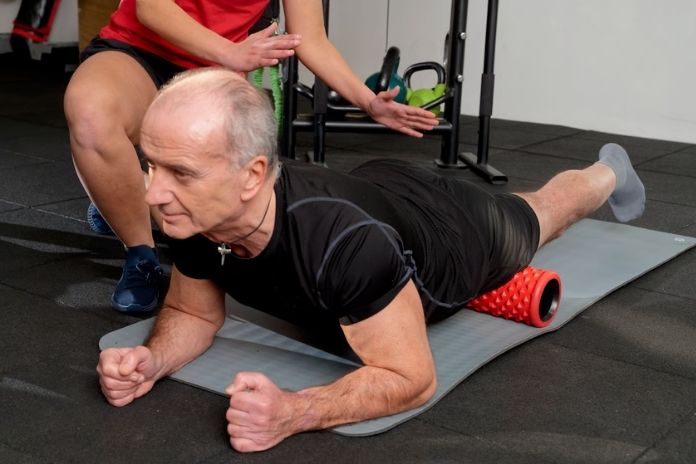
A surprising number of people judge workouts entirely by how sore they feel the next day. No soreness? Bad workout. Can barely sit down? Great workout. The body does not actually keep score that way.
Soreness mainly reflects unfamiliar stress. Particularly exercises involving eccentric loading, where muscles lengthen while producing force. That soreness can happen during a highly productive workout. It can also happen during a completely unproductive one. The two are not automatically connected.
One of the strange things about resistance training is that beginners are often the sorest people in the gym. Experienced lifters are frequently the least sore. Yet experienced lifters are usually the ones who build muscle more consistently.
Why? Because adaptation occurred. The body learned the movement. Less damage happens. Progress continues. For adults over 50, this myth creates problems in both directions. Some people avoid exercise because they fear soreness. Others chase soreness because they think it proves growth.
Neither approach helps much. A good training program is measured by progress over weeks and months. Not by how difficult getting out of a chair feels tomorrow morning.
Read More: Can You Gain Muscle in a Calorie Deficit? What the Research Actually Shows
Myth 7: “You Cannot Build Muscle Without Testosterone Supplements”
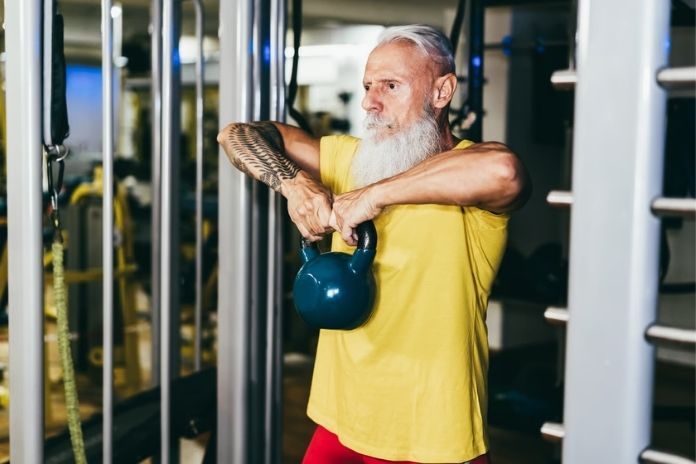
This myth has become much louder over the last decade. Partly because testosterone marketing has become impossible to ignore. Men over 50 hear constant messages suggesting low testosterone is the reason for every problem. Low energy. Poor workouts. Weight gain. Muscle loss.
The message is usually simple. Fix testosterone, and everything improves. Reality is rarely that tidy. Yes, hormone levels change with age. Testosterone gradually declines in men. Women experience major hormonal changes during and after menopause.
What often gets exaggerated is the meaning of those changes. Muscle growth is still possible. Researchers have shown this repeatedly. Men in their seventies and eighties gain muscle. Women in their seventies and eighties gain muscle. Most are not taking testosterone. Most are responding to training.
Mechanical tension remains the primary signal. The muscle experiences resistance. The body adapts. That process does not suddenly stop after age 50. What changes is often the amount of patience required.
Recovery becomes more important. Protein becomes more important. Consistency becomes more important. But the basic biological machinery remains there. Testosterone replacement therapy absolutely has a role for people with diagnosed hypogonadism.
That is a medical decision. It is not a requirement for building muscle. Sometimes the marketing makes it seem as though every older adult needs hormonal intervention before touching a dumbbell. The research says otherwise.
Read More: Over 40 and Ripped: 10 Power-packed Strategies for Building Muscle in Men
Myth 8: “Cardio Kills Muscle Gains After 50”
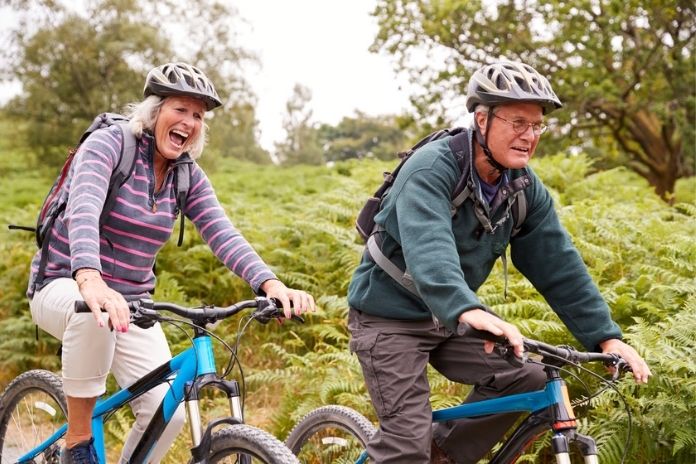
This myth creates a strange situation. People trying to improve their health become afraid of one of the healthiest things they can do. The concern stems from the interference effect.
Researchers have observed that very high volumes of endurance training can slightly reduce muscle-building adaptations under certain circumstances. That finding is real.
The interpretation often becomes ridiculous. A person walks for thirty minutes and worries that they are destroying muscle growth. That is not what the research showed. Most adults over 50 are not training for marathons while trying to maximize bodybuilding results.
They are trying to stay healthy, maintain independence, and preserve physical function. For those goals, cardio is an ally. Not competition. Cardiovascular fitness and muscle mass are both associated with better long-term health outcomes. Having strong legs is valuable. Having a healthy heart is also valuable.
The body does not force you to choose. Research from JAMA Network Open in 2025 found that people who maintained higher physical activity levels in midlife and later life had substantially lower dementia risk than those who remained least active.
That benefit does not come from lifting weights alone. Movement matters broadly. Walking. Cycling. Swimming. Resistance training. The healthiest profile usually contains all of them.
The person doing two strength sessions and several walks each week is often in a much better position than someone obsessively avoiding cardio after reading something on a fitness forum.
Read More: 8 Best Plant-Based Proteins for Muscle Building
Conclusion
Most myths about building muscle after 50 share one thing in common. They make people feel powerless. Aging is inevitable. Muscle loss is inevitable. Heavy weights are mandatory. Hormones are the answer. Soreness is required. Cardio is harmful.
Research suggests that around 70% of late-life strength is shaped by factors people can still influence. Activity levels. Nutrition. Protein intake. Consistent resistance training.
That percentage belongs to behavior. Not birthdays. And that is exactly why these myths matter. They do not just create confusion. They stop people from doing the very things most likely to help. If you are wondering what training actually looks like in practice, the companion guide on exercises to rebuild strength after 50 covers the next step.
Because once the myths are removed, the question becomes much simpler. What do I start doing tomorrow?
- Early improvements often come from the nervous system becoming more efficient rather than dramatic changes in muscle size.
- The best training program is usually the one that survives real life. Research often studies ideal conditions. A sustainable program almost always beats a perfect program that lasts three weeks.
- People who were active earlier in life often regain lost muscle surprisingly quickly after returning to training.
- Researchers understand progressive resistance training well. Two people of the same age can respond very differently to identical programs.
- Researchers are increasingly interested in outcomes people actually notice: balance, independence, mobility, fall prevention, and quality of life.
FAQs
1. Is 50 too old to start lifting weights?
No, 50 is not too old to start lifting weights, and significant strength and muscle gains are still achievable. Research shows that even adults in their eighties improve lean mass and strength with resistance training, highlighting strong adaptability well beyond midlife.
2. How long does it take to build noticeable muscle after 50?
Noticeable muscle building after 50 typically begins with strength gains within four to six weeks. Early improvements are mainly neuromuscular. Visible muscle changes usually take eight to twelve weeks or longer, depending on training consistency, protein intake, sleep, and recovery.
3. Do you need supplements to build muscle after 50?
No, supplements are not required to build muscle after 50 if training and nutrition are adequate. Progressive resistance exercise and sufficient dietary protein are primary drivers. Creatine may support strength gains, but it complements training rather than replacing fundamental lifestyle factors.
References
- Fielding, R. A., Vellas, B., Evans, W. J., Bhasin, S., Morley, J. E., Newman, A. B., Abellan van Kan, G., Andrieu, S., Bauer, J., Breuille, D., Cederholm, T., Chandler, J., De Meynard, C., Donini, L., Harris, T., Kannt, A., Keime Guibert, F., Onder, G., Papanicolaou, D., & Rolland, Y. (2011). Sarcopenia: An Undiagnosed Condition in Older Adults. Current Consensus Definition: Prevalence, Etiology, and Consequences. International Working Group on Sarcopenia. Journal of the American Medical Directors Association, 12(4), 249–256.
- Grgic, J., Garofolini, A., Orazem, J., Sabol, F., Schoenfeld, B. J., & Pedisic, Z. (2020). Effects of Resistance Training on Muscle Size and Strength in Very Elderly Adults: A Systematic Review and Meta-Analysis of Randomized Controlled Trials. Sports Medicine, 50.
- Hudson, J. L., Bergia, R. E., & Campbell, W. W. (2020). Protein Distribution and Muscle-Related Outcomes: Does the Evidence Support the Concept? Nutrients, 12(5), 1441.
- Hughes, D. C., Ellefsen, S., & Baar, K. (2018). Adaptations to endurance and strength training. Cold Spring Harbor Perspectives in Medicine, 8(6).
- Marino, F. R., Lyu, C., Li, Y., Liu, T., Au, R., Hwang, P. H., & Hwang, P. H. (2025). Physical Activity Over the Adult Life Course and Risk of Dementia in the Framingham Heart Study. JAMA Network Open, 8(11), e2544439–e2544439.
- National Institute on Aging. (2022, June 30). How can strength training build healthier bodies as we age?
- Paulussen, K. J. M., McKenna, C. F., Beals, J. W., Wilund, K. R., Salvador, A. F., & Burd, N. A. (2021). Anabolic Resistance of Muscle Protein Turnover Comes in Various Shapes and Sizes. Frontiers in Nutrition, 8.
- Schoenfeld, B. J., Grgic, J., Van Every, D. W., & Plotkin, D. L. (2021). Loading Recommendations for Muscle Strength, Hypertrophy, and Local Endurance: a Re-Examination of the Repetition Continuum. Sports, 9(2), 32.
- Slivka, D., Raue, U., Hollon, C., Minchev, K., & Trappe, S. (2008). Single muscle fiber adaptations to resistance training in old (>80 yr) men: evidence for limited skeletal muscle plasticity. American Journal of Physiology-Regulatory, Integrative and Comparative Physiology, 295(1), R273–R280.
- Voulgaridou, G., Papadopoulou, S. D., Spanoudaki, M., Kondyli, F. S., Alexandropoulou, I., Michailidou, S., Zarogoulidis, P., Matthaios, D., Giannakidis, D., Romanidou, M., & Papadopoulou, S. K. (2023). Increasing Muscle Mass in Elders through Diet and Exercise: A Literature Review of Recent RCTs. Foods, 12(6), 1218.