



















A weight loss plateau can feel very frustrating because you are still doing the same things that were working before, but the scale suddenly stops moving. Many people immediately think they damaged their metabolism or failed somehow.
But research says this happens to most people trying to lose weight. Around 85% of dieters experience some type of weight loss stall during long-term dieting. It is not proof that your plan stopped forever.
It is your body adapting to prolonged energy restriction. Understanding why do weight loss plateaus happen matters because the solution depends on the mechanism, not motivation. This article explains both sides clearly, first the biology behind plateaus, then what evidence actually supports breaking through them without extreme restriction.
- Weight loss plateaus happen because the body adapts to prolonged calorie restriction.
- Some plateaus also involve gradual calorie creep over time.
- Breaking a plateau usually requires strategy adjustments, recalculating calorie needs, increasing protein and resistance training, improving movement, using diet breaks, tightening tracking accuracy, and addressing sleep and stress.
Why do weight loss plateaus happen? A weight loss plateau occurs when the body adapts to a prolonged calorie deficit by reducing resting metabolic rate and increasing hunger hormones, a process called adaptive thermogenesis. Research published in Obesity in 2024 found that metabolism during dieting often slows more than expected from body weight loss alone. At the same time, hormones that regulate appetite shift to increase hunger and conserve energy. This is a normal biological response to sustained dieting, not a failure of willpower.
Read More: Beyond Weight Loss: GLP-1 Benefits for Heart Disease and Diabetes Prevention
Why Your Body Fights Back: The Metabolism Side of Plateaus

When you enter a calorie deficit and begin losing weight, the body does not stay passive. It starts making adjustments designed to conserve energy. This is where many weight loss plateau causes come from.
The first adaptation is lower resting energy expenditure. A smaller body naturally burns fewer calories because there is less tissue to maintain. That part is simple mathematics. But dieting creates another layer called adaptive thermogenesis. This means metabolism slows down more than expected for the amount of weight lost.
The 2024 review in Obesity by Kevin D. Hall found that people in prolonged dieting phases often burn fewer calories than another person of the same body size who never dieted. So metabolic adaptation weight loss is not only about being lighter. The body becomes more efficient with energy use.
Second, NEAT weight loss changes begin happening. NEAT means non-exercise activity thermogenesis, all small unconscious movements through the day. During prolonged calorie restriction, people fidget less, sit longer, walk slower, and move less overall. Studies show this can reduce daily calorie burn by around 100–300 calories without the person noticing.
Third, muscle loss from dieting becomes part of the problem if protein and resistance training are poor. Muscle tissue burns energy continuously. Losing muscle during a deficit lowers total daily expenditure further.
Important Note: These responses happen to almost everyone dieting. They are biological survival mechanisms, not proof that someone lacks willpower.
The Hormone Side: Why Hunger Increases Just When Progress Stops
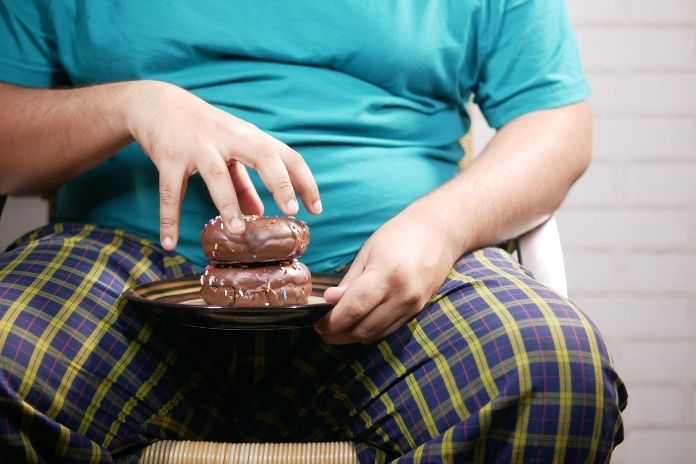
A calorie deficit plateau is not only about slower metabolism. Hormones also begin shifting in ways that make dieting feel much harder than in earlier stages. As body fat decreases, leptin levels fall. Leptin is produced by fat cells and sends “you are fed” signals to the brain. When leptin drops, fullness signals weaken.
The brain starts responding as if food availability became uncertain. At the same time, ghrelin, the hunger hormone, rises during prolonged restriction. So the body creates two changes together: lower calorie burn and stronger appetite.
A 2024 paper in Obesity confirmed these hormonal adaptations are powerful enough to increase food intake and reduce energy expenditure simultaneously. That combination explains why weight loss stalls often feel mentally exhausting. People usually assume motivation has disappeared, but biology is actively pushing against continued loss.
The Calorie Creep Factor: Why Most Plateaus Are Partly Behavioural

Not every plateau is fully metabolic. Sometimes, there is also a slow behavioral drift happening quietly over months. Research consistently shows people underestimate calorie intake over time. Portion sizes become slightly larger.
Small snacks stop feeling important enough to track. Extra bites during cooking get ignored. None of this usually happens deliberately. It happens because routines become automatic and attention decreases.
This is why calorie tracking accuracy matters during a weight loss plateau. Many studies show consistent food logging is linked with better long-term outcomes, mostly because it reduces the gap between estimated intake and actual intake.
Some people genuinely experience adaptive thermogenesis even with highly accurate tracking. Others experience a combination of metabolic adaptation plus calorie creep together. Usually, it is not one single explanation. Tracking is not about proving you cheated. It is about finding where the energy balance changed without noticing.
How to Break Through a Plateau: Six Strategies With Evidence

Recalculate Your Calorie Target
Your current calorie needs are different from when you started. After weight loss, maintenance calories decrease because smaller bodies need less energy. Many people continue eating the same intake that originally created a deficit, but now that intake is much closer to maintenance. Recalculating TDEE using current weight often reveals why progress slowed. Sometimes only a modest adjustment is needed rather than a drastic cut.
Prioritise Protein and Resistance Training
Protein plateau strategies matter because protein protects lean mass during dieting. It also has the highest thermic effect among macronutrients, meaning digestion itself burns more calories. Resistance training helps preserve muscle tissue that would otherwise decline during prolonged deficits.
The International Society of Sports Nutrition recommends roughly 1.6–2.0 g protein per kg body weight for active adults trying to preserve muscle during fat loss. Progressive overload weight loss training, gradually increasing resistance over time, gives the body reason to keep muscle instead of breaking it down.
Increase NEAT Deliberately
The body unconsciously lowers movement during dieting, so increasing NEAT intentionally can offset this adaptation. Structured exercise alone sometimes misses this issue. Walking more, standing more often, pacing during calls, using stairs, and taking movement breaks can restore 100–300 calories of daily expenditure that quietly disappeared during deficit adaptation.
A daily step target of around 7,000-10,000 often helps without creating extra recovery stress.
Try a Structured Diet Break
Diet break weight loss research is becoming stronger. Spending two to four weeks at maintenance calories may partially reverse adaptive thermogenesis and improve leptin signaling.
This is not a “cheat phase.” It is controlled weight stabilization. Studies show metabolic adaptation can improve noticeably after several weeks of maintenance intake. After the break, the same calorie deficit often becomes effective again because the body is not defending energy stores as aggressively.
Audit Food Tracking Accuracy
If food intake is already tracked, spend one or two weeks tightening measurement accuracy. “Do an honest assessment of your habits.
“Review your food and activity records to make sure that you have not become relaxed in your routine or are having larger portion sizes than normal. These are common pitfalls,” says Dr. Alyssa Degnan, an internal medicine doctor. Use a food scale temporarily. Check oils, dressings, beverages, snacks, and restaurant meals.
Research repeatedly shows self-reported intake underestimates true intake. This does not mean someone lied. Human estimation becomes less accurate over time, especially during long dieting phases. Sometimes, small measurement gaps explain why the calorie deficit plateau developed gradually.
Address Sleep and Stress Before Cutting More Calories
The relationship between sleep, cortisol, and weight loss is often underestimated. Chronic sleep deprivation raises cortisol and worsens appetite regulation. Higher cortisol also affects insulin sensitivity and may promote abdominal fat retention.
People under high stress frequently experience stronger cravings and poorer recovery from exercise. If a plateau happens alongside poor sleep, exhaustion, irritability, or high stress, fixing recovery may work better than further calorie restriction. Sometimes the body responds to less pressure, not more.
Read More: GLP-1 for Weight Loss: Injectables vs. Pills – What You Need to Know
When a Plateau Might Signal Something Worth Investigating

Most plateaus are normal metabolic adaptations and improve within four to eight weeks after strategic adjustments. But some situations deserve medical evaluation. Consider speaking with a GP or registered dietitian if the plateau continues beyond eight weeks despite consistent changes in food intake, movement, and resistance training.
“Discuss with your physician or dietitian about other tactics to try and lose weight. If you can’t further decrease the calories you eat, revisit your overall goal and appreciate the weight you’ve already lost,” said pain management physician Dr. Kevin Sigua.
Pay attention if the stall comes with unusual fatigue, cold intolerance, hair loss, mood changes, or worsening concentration. Thyroid dysfunction and other hormonal conditions can sometimes present this way.
If blood sugar, cholesterol, or other health markers worsen despite active weight-loss efforts, professional guidance matters. The same applies if considering GLP-1 medications for weight management. Clinical supervision helps determine whether medication fits the broader metabolic picture safely.
Read More: Low-Carb vs. Low-Fat Diet for Weight Loss: Which One Works Better, and for Whom?
Conclusion
A weight loss plateau is not proof that your body has stopped responding forever. In many cases, it is evidence that the body adapted exactly the way human biology evolved to adapt during prolonged energy restriction. The large majority of people who diet experience this at some point.
Breaking a plateau usually does not require extreme restriction or punishment. It requires a matching strategy to the mechanism, preserving muscle, restoring movement, improving recovery, recalibrating intake, and sometimes temporarily reducing dieting pressure itself. Persistence works better when combined with adjustment instead of simply trying harder.
- Adaptive thermogenesis means metabolism slows more than expected from weight loss alone, not just because body size becomes smaller.
- NEAT decline is one of the least discussed weight loss plateau causes, even though unconscious movement reductions may remove hundreds of calories daily.
- Protein intake and resistance training matter partly because preserving muscle protects resting energy expenditure during dieting.
- Research still does not fully explain why some people experience far larger metabolic adaptations than others under similar calorie deficits.
- Diet breaks may help reverse parts of metabolic adaptation, but scientists are still studying optimal timing and duration for long-term fat loss success.
FAQ
1. How long does a weight loss plateau last?
A weight loss plateau can last from a few weeks to several weeks, depending on metabolic adaptation and adherence. Most plateaus improve within four to eight weeks with structured changes, as the body is adapting rather than permanently stopping fat loss.
2. Should I eat less to break a weight loss plateau?
No, eating less is not always effective for breaking a weight loss plateau. Further calorie restriction may worsen metabolic adaptation and muscle loss, while a temporary diet break at maintenance calories can help restore metabolic function and improve later fat loss response.
3. Does exercise help break a weight loss plateau?
Yes, exercise can help break a weight loss plateau when applied strategically. Resistance training preserves muscle mass and metabolic rate, while increasing daily movement supports energy expenditure, making combined approaches more effective than adding cardio alone.
References
- Dahle, J. H., Ostendorf, D. M., Zaman, A., Pan, Z., Melanson, E. L., & Catenacci, V. A. (2021). Underreporting of energy intake in weight loss maintainers. The American Journal of Clinical Nutrition, 114(1).
- Ingels, J. S., Misra, R., Stewart, J., Lucke-Wold, B., & Shawley-Brzoska, S. (2017). The Effect of Adherence to Dietary Tracking on Weight Loss: Using HLM to Model Weight Loss over Time. Journal of Diabetes Research, 2017, 6951495.
- Kim, J. Y. (2020). Optimal diet strategies for weight loss and weight loss maintenance. Journal of Obesity & Metabolic Syndrome, 30(1), 20–31.
- Levine, J. A. (2004). Non-Exercise Activity Thermogenesis (NEAT). Nutrition Reviews, 62(2), S82–S97
- Lichtman, S. W., Pisarska, K., Berman, E. R., Pestone, M., Dowling, H., Offenbacher, E., Weisel, H., Heshka, S., Matthews, D. E., & Heymsfield, S. B. (1992). Discrepancy between self-reported and actual caloric intake and exercise in obese subjects. The New England Journal of Medicine, 327(27), 1893–1898.
In this Article