
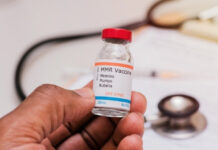















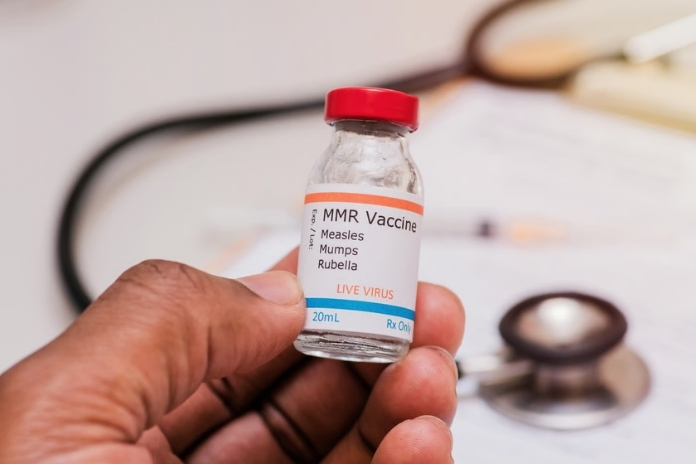
Can you get measles after vaccination? Yes. Vaccines reduce risk very strongly, but not always 100%. During the recent 2025–2026 measles outbreaks, people have been hearing so many stories that vaccinated people are also getting measles.
Social media made this more confusing. One vaccinated case gets shared everywhere, and suddenly people start saying, “See, the vaccine failed.” Two doses of the MMR vaccine are around 97% effective against measles. This means that if exposed to the measles virus, out of 100 vaccinated people, around 97 would be safe, and maybe just 3 can still get infected. This is called a breakthrough measles infection.
What many miss is another thing about measles complications in vaccinated vs unvaccinated people. The vaccinated cases usually look very different from normal measles. Less severe and lower fever. Fewer lung complications and hospital admissions. This article explains why people still get measles after the MMR vaccine and why MMR is still the strongest vaccine.
- Two doses of the MMR vaccine give very strong protection against measles, but never complete protection.
- Around 3 out of 100 fully vaccinated people may still get this infection when exposed during an outbreak.
- Vaccinated measles is usually much milder than measles in unvaccinated people.
Read More: Vaccine Myths vs Facts: What The Science Really Says
How Common Are Breakthrough Measles Infections in Vaccinated People?
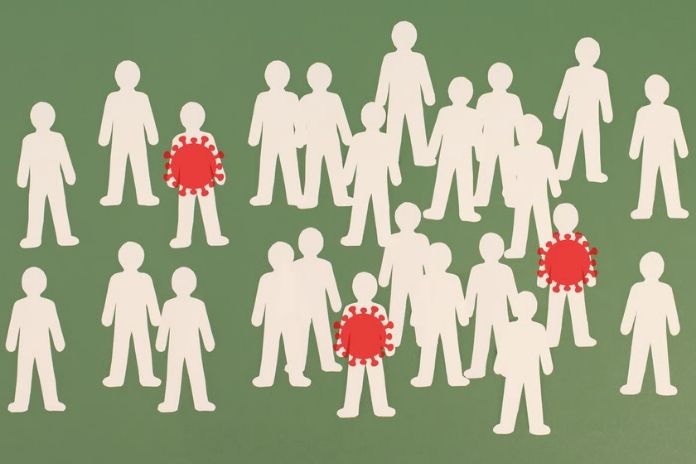
Breakthrough measles after vaccination is rare but still documented. An analysis of measles cases in the United States between 2001 and 2022 found that around 12% of confirmed measles cases happened in vaccinated individuals.
When outbreaks happen, even a small failure percentage can create visible breakthrough numbers. For example, if one lakh vaccinated people get exposed during a large outbreak, even 3% vulnerability can still produce many breakthrough cases. This never means the vaccine suddenly just stopped working. It means exposure became much larger.
Current outbreak data still shows the majority of cases are in unvaccinated people. During the 2025 US outbreak, CDC data showed that around 97% of measles cases were either unvaccinated or of unknown vaccination status. Fully vaccinated cases remained a small minority.
Another reason breakthrough cases are becoming more visible now is testing. Earlier, mild vaccinated measles may never get diagnosed. A person gets a fever, a light rash, and recovers at home. No testing happens. Now, during outbreaks, health departments trace contacts aggressively. Even mild infections get detected.
Measles is also extremely contagious. So during active outbreaks, exposure pressure becomes very high. This part many people miss. The MMR vaccine effectiveness itself may stay the same. But if virus circulation increases in schools, airports, hospitals, and homes, then even vaccinated people get repeated exposure chances. That naturally increases visible breakthrough infections.
Why Breakthrough Infections Happen: Two Different Reasons
Doctors usually divide breakthrough measles into two categories. Primary measles vaccine failure and secondary vaccine failure.
Primary Vaccine Failure: Body Never Responded Properly
Primary vaccine failure means a person got vaccinated properly, but the immune system never created enough protection after vaccination. These people are called non-responders sometimes.
Researchers still do not fully understand why this happens. Genetics is probably involved. Immune signaling may be different in some people. Dr. John Sellick, D.O., an infectious disease expert, points out, “There is always going to be someone who falls through.”
This is why the measles vaccine is not 100 percent effective. This is also why medicine never uses the word “guarantee” with vaccines. Human immune systems are not machine copies. The same vaccine can create very strong antibodies in one person and a weaker response in another.
A 2024 study found that some seronegative vaccine recipients may not benefit much even after additional booster doses. Meaning that in some people, the immune system fundamentally never responds strongly to the measles vaccine. This group is small, but real.
Secondary Vaccine Failure: Immunity Became Weaker Over Time
Here, the vaccine worked initially. A person developed immunity after vaccination. But years later, protection became weaker. Not fully gone, always. Many people still have antibodies in their blood.
But immune memory may not react fast enough when exposed to the real measles virus. Because measles is extremely infectious, even a small decline in protection can matter after decades. This issue is becoming more important now because many adults received the childhood MMR long ago.
Earlier generations naturally encountered the measles virus more often in the community. Those exposures boosted immunity again and again naturally. Now, because measles circulation has become lower for years, adults have stopped getting these natural immune reminders.
A strange thing is that successful vaccination programs may indirectly reduce natural boosting over time. A surveillance study from Milan between 2017 and 2021 found that around 69.4% of breakthrough measles cases were secondary vaccine failure cases.
Around 30.6% were primary non-response cases. This means most vaccinated breakthrough patients had at least some immunity earlier. It just reduced over time. This also explains why many breakthrough infections become milder instead of severe full measles.
Read More: Everything You Want to Know About German Measles or Rubella
What Breakthrough Measles Looks Like Compared to Unvaccinated Measles
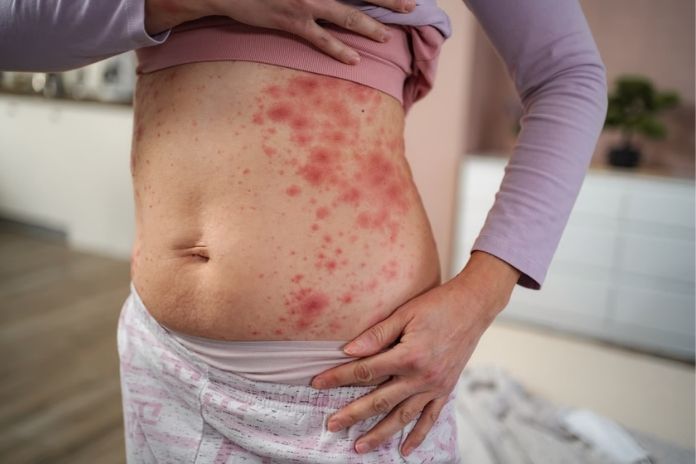
This part may be the most important in the whole discussion. Vaccinated measles and unvaccinated measles often look very different clinically. Online discussions usually focus only on one thing: “Did infection happen or not?” But doctors also look at severity, complications, lung involvement, brain inflammation, and hospitalization risk.
And here the vaccine effect becomes very obvious. Many vaccinated people with breakthrough measles do not get the classic severe presentation. Rash may be lighter. The fever is lower. Illness duration is shorter. Sometimes symptoms become so unusual that the diagnosis gets delayed. Doctors sometimes call this “modified measles.”
A 2024 study found classical measles presentation was absent in nearly two-thirds of vaccinated breakthrough cases. This means many vaccinated patients did not show full textbook disease. This actually creates another issue. During outbreaks, doctors may initially mistake breakthrough measles for some other viral fever because symptoms look incomplete.
Hospitalization numbers show the biggest difference. Among more than 2,400 unvaccinated measles cases in one dataset, around 14.5% developed complications or needed hospitalization. Among people who had received two vaccine doses, none developed hospitalizable complications in the same dataset.
The study showed:
- Complications were reduced by around 60%
- Hospitalization was reduced by around 70%
- Severe disease was reduced by around 50%
This tells something important about vaccines that people often misunderstand. Vaccines are not only infection blockers. They are disease modifiers also. Viral spread becomes more controlled. Inflammation lowered. Organ damage decreased. Recovery was faster. That is why breakthrough measles usually behaves less aggressively.
Why the Current Outbreak Matters Even for Vaccinated People
The 2025–2026 outbreak changed one thing mainly: exposure probability. People often think herd immunity for measles only protects unvaccinated children or medically vulnerable people. But it also protects vaccinated individuals who did not develop strong immunity after vaccination. When vaccination coverage drops, the virus circulates more freely.
Then, exposure opportunities increase for everybody. US kindergarten vaccination coverage reportedly dropped from 95.2% during 2019–2020 to around 92.5% in 2024–2025. That percentage change sounds small. But measles spreads so aggressively that even small coverage declines create outbreak pockets.
This is why breakthrough cases become more visible during large outbreaks. Not because the vaccine suddenly became useless. But because more viruses are circulating in schools, travel hubs, communities, and homes.
Repeated exposure matters too. A vaccinated person exposed once briefly may stay protected. But repeated close exposure inside the household during active infection increases the infection chance even with prior vaccination.
Read More: 10 Most Important Vaccines For Babies – Gift Them A Healthy Future Today!
Who Should Consider a Third MMR Dose?
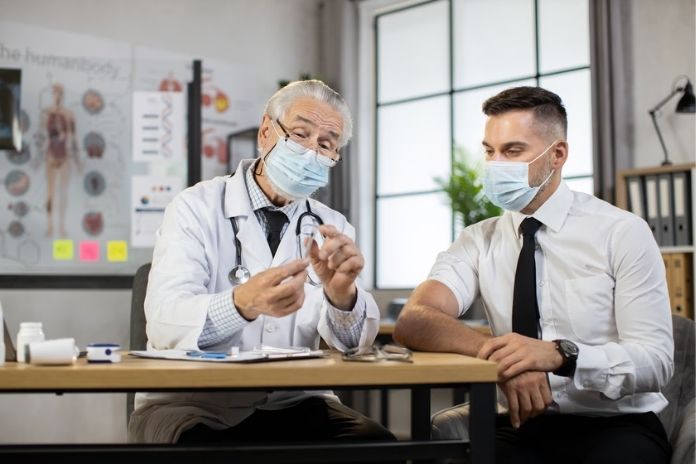
For most adults who have already received two documented MMR doses, no extra dose is recommended currently by CDC or WHO guidance. Adults with only one documented dose may need a second dose if working in healthcare, schools, airports, or outbreak settings.
People with uncertain vaccination histories may benefit from antibody testing instead of guessing. Adults born before 1957 are usually considered naturally immune because measles circulated widely during childhood then. But in outbreak situations or before international travel, some may still choose serology confirmation.
Immunocompromised individuals also sometimes need more careful review because vaccine response may have been weaker originally. A measles IgG antibody test can help check whether protective antibodies are currently present.
“But because the MMR vaccine is a live virus vaccine, people who are severely immunocompromised and those who are currently pregnant should not get it,” Dr. Peter A. Zimmerman, a professor of international health, says.
Read More: What Happens to Your Skin Barrier When You Take High-Dose Vitamin A
Conclusion
So, can you still get measles after vaccination? Yes. But context really matters a lot. Breakthrough infections occur in just a few people because some never developed proper immunity, and some experienced waning protection. Vaccinated measles is usually much milder than measles in people who have never had the vaccination.
The vaccine may never create perfect protection in every single person. Still, this remains the strongest defense against both measles infection and severe disease.
- Around 3% of fully vaccinated people may still remain vulnerable to measles exposure.
- Most breakthrough infections become much milder than measles in unvaccinated people.
- Waning immunity after measles vaccination after many decades is becoming a bigger research topic during current outbreaks.
- Increased outbreak circulation makes rare breakthrough infections more visible now.
- Scientists still do not fully understand why some healthy people never respond properly to measles vaccination.
FAQs
1. How likely is it to get measles if vaccinated?
Getting measles after vaccination is very unlikely but still possible in rare cases. Two doses of the MMR vaccine provide about 97% protection, though breakthrough infections may occur during high exposure situations such as outbreaks or close contact.
2. Is measles milder if you are vaccinated?
Yes, measles is usually milder in vaccinated individuals compared to unvaccinated cases. Symptoms such as rash and fever tend to be less severe, and the risk of complications, hospitalization, and long-term effects is significantly reduced.
3. Can vaccinated people spread measles to others?
Yes, vaccinated people can still spread measles, although transmission is generally less efficient. Breakthrough infections often have lower viral loads and milder symptoms, but isolation and public health precautions remain necessary to prevent further spread.
References
- Anichini, G., Terrosi, C., Alessandri, G., Miceli, G. B., Borrelli, E., Fabrizi, S., Savellini, G. G., & Cusi, M. G. (2024). Seronegative Vaccinees May Not Benefit From Multiple Booster Doses of MMR Vaccine in Restoring Immunity. Journal of Medical Virology, 96(12).
- Bianchi, S., Gori, M., Fappani, C., Ciceri, G., Canuti, M., Colzani, D., Dura, M., Terraneo, M., Lamberti, A., Baggieri, M., Senatore, S., Faccini, M., Magurano, F., Tanzi, E., & Amendola, A. (2022). Characterization of Vaccine Breakthrough Cases during Measles Outbreaks in Milan and Surrounding Areas, Italy, 2017–2021. Viruses, 14(5), 1068.
- Leung, J., Munir, N. A., Mathis, A. D., Filardo, T. D., Rota, P. A., Sugerman, D. E., Sowers, S. B., Mercader, S., Crooke, S. N., & Gastañaduy, P. A. (2024). The Effects of Vaccination Status and Age on Clinical Characteristics and Severity of Measles Cases in the United States in the Postelimination Era, 2001–2022. Clinical Infectious Diseases.
In this Article