













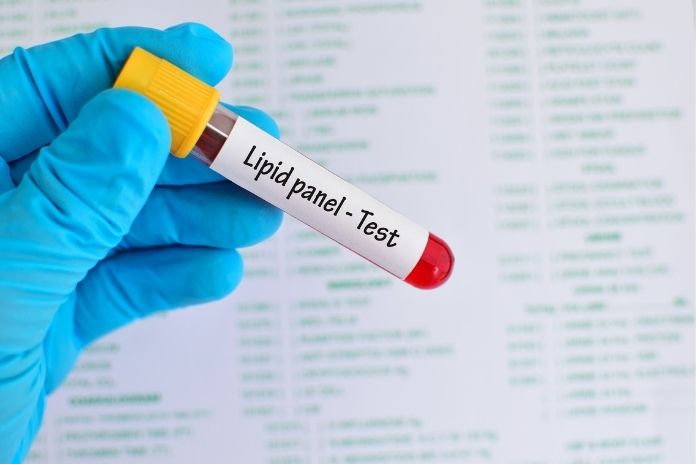
One of the most popular blood tests for assessing heart health is a lipid panel. It helps determine your risk of cardiovascular disease by measuring the various types of lipids in your blood. However, many folks are perplexed when they see numbers like triglycerides, LDL, and HDL in their test results.
Making educated health decisions requires an understanding of the significance of cholesterol test results. In this article, we’ll break down how to read a lipid panel, explain each component, compare values with a normal cholesterol levels chart, and show you how these numbers relate to your overall health.
- A lipid panel measures cholesterol types like LDL, HDL, triglycerides, and total cholesterol.
- High LDL and triglycerides increase heart disease risk, while HDL helps protect your heart.
- Results should always be interpreted as a whole, not based on a single number.
Read More: It’s Not Just Aging-It’s Lipid Depletion: How to Restore “Young” Moisture to 50+ Skin
What Is a Lipid Panel and Why Is It Important?
A lipid panel is a straightforward blood test that quantifies the fats in your blood, including triglycerides and various forms of cholesterol. Particles called lipoproteins transport these fats and carry cholesterol to the body’s essential organs.
A lipid panel consists of:
- Total cholesterol is your blood’s total cholesterol content
- Known as “bad” cholesterol, LDL cholesterol (LDL-C) raises the risk of heart disease
- HDL cholesterol (HDL-C) is referred to as “good” cholesterol because it eliminates bad cholesterol
- Non-HDL cholesterol refers to all “bad” cholesterol that might lead to artery-clogging plaque
- An elevated triglyceride level may increase the risk of heart disease
Physicians can assess a patient’s cardiovascular disease risk using lipid panels. Cardiac attacks, strokes, and other cardiac issues are associated with low HDL cholesterol, high LDL cholesterol, and triglycerides. Your age and risk factors determine which tests doctors recommend. Every 4 to 6 years, healthy people aged 20 and older should have a lipid panel.
“Many people don’t know their cholesterol is high because there are usually no symptoms until a serious health event occurs,” says Nebraska Medicine endocrinologist Clifton Davis, MD. “That’s why routine testing is important, even if you feel healthy,” he adds.
What’s Included in a Standard Lipid Panel?
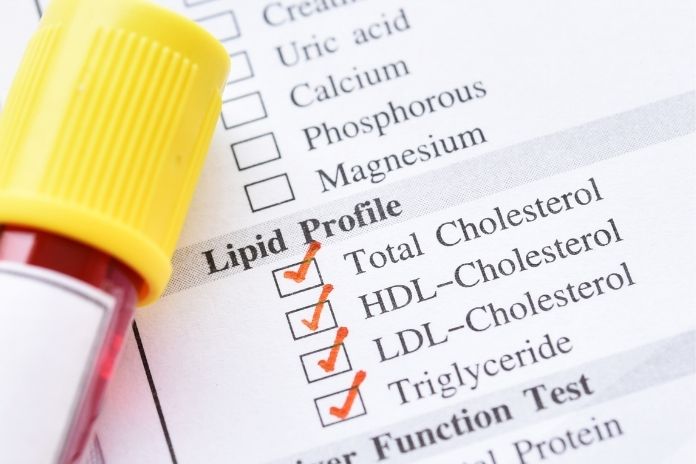
A typical lipid panel evaluates the following lipid particles in your blood:
- Total cholesterol
- LDL cholesterol, or low-density lipoprotein
- HDL cholesterol, or high-density lipoprotein
- Triglycerides
Lipid panels monitor LDL and HDL cholesterol as the two primary forms of cholesterol. The body uses cholesterol to make cell membranes, hormones, and other components involved in development. But if your blood contains too much cholesterol, it may begin to adhere to the walls of your arteries, narrowing or even blocking them.
Apolipoprotein B, carried by LDL cholesterol, can cause plaque to accumulate in blood vessels, raise blood pressure, and put additional strain on the heart. Apolipoprotein A1, which has anti-inflammatory qualities and may help lower total cholesterol production by assisting your body in eliminating excess cholesterol, is carried by HDL cholesterol.
One kind of fat that aids in diet and energy storage is triglycerides. Your body converts excess fats from foods high in butter, oil, and other fats into triglycerides and then stores them in fat cells known as chylomicrons.
Read More: 10 Heart-Healthy Grains That Help Lower Cholesterol Naturally
Normal vs High: Understanding Your Numbers
Normal Cholesterol Levels
Age, sex, and ethnicity all affect normal cholesterol levels. These figures are considered typical for most adults by medical professionals. However, experts generally consider low levels of LDL and total cholesterol preferable:
- Total cholesterol: less than 200
- LDL cholesterol: less than 100
- VLDL cholesterol: less than thirty
- HDL cholesterol: 50–80 for women and 40–80 for men
High Cholesterol Levels
A total cholesterol level of at least 200 mg/dL or higher is considered high cholesterol. However, companies also break down your results using terminology like “borderline high.” Your numbers might be simpler to handle if they are near normal.
The high cholesterol numbers to be aware of are as follows:
Total Cholesterol:
- 200–239 is a borderline high
- High: 240 or more
LDL Cholesterol:
- 100–129 is elevated
- 130–159 is a borderline high
- High: 160–189
- 190 or above is really high
VLDL Cholesterol:
- 30 or more
How to Interpret Your Results as a Whole
It can be deceptive to focus only on one figure. For instance, you may have outstanding HDL levels but slightly elevated total cholesterol, which could lower your overall risk. The ratio of total cholesterol to HDL is one useful measure. Lower ratios typically indicate better cardiac health. It is where understanding LDL vs HDL becomes important.
Among the patterns to look out for are:
- Elevated triglycerides and LDL lead to a higher risk of cardiovascular disease.
- Reduced defense against arterial accumulation due to low HDL.
- Normal LDL and elevated triglycerides could indicate metabolic problems.
What Can Affect Your Lipid Panel Results?

Several variables may temporarily influence your test results:
- The sort of test your doctor has prescribed will determine whether you should eat or drink before a cholesterol blood test. Doctors can order these tests as either a fasting or a non-fasting blood panel.
- Eating a lot of fat might temporarily raise cholesterol.
- Drinking alcohol can raise triglycerides.
- Medication, hormone therapy, birth control pills, and statins can change levels.
- Stress or illness may result in brief variations.
Because of these factors, doctors often recommend repeating the test if results seem unusual. It is an important part of accurately interpreting lipid panel results.
Read More: High Cholesterol but Healthy: When Statins Might Not Be Enough
What to Do If Your Cholesterol Levels Are High
Medication and lifestyle modification can be used to control high triglycerides and cholesterol:
Exercise: Engaging in moderate physical activity may help raise HDL cholesterol and decrease LDL cholesterol. Aim for 150 minutes a week, or about 30 mins a day, of moderate-intensity aerobic activity.
Diet: Reduce your intake of saturated fat from red meat, full-fat dairy products, butter, lard, and shortening, and avoid trans fats (partially hydrogenated oils) found in many packaged and processed foods.
Moderate Alcohol Consumption: Excessive consumption can raise cholesterol. For men and women, the CDC advises consuming no more than two alcoholic beverages daily.
Medicines: Some people can control their increased triglycerides and cholesterol with lifestyle modifications alone, but others require medication to reduce their risk of heart problems.
The first-line treatment for high cholesterol is statins, which work in the liver to reduce cholesterol production. Among the drugs in this class are:
- Atorvastatin (Lipitor®)
- Lescol® (fluvastatin)
- Lovastatin (Mevacor®, Altoprev®)
- Pitavastatin (Zypitamag®, Livalo®)
- Pravastatin (Pravachol®)
- Calcium Rosuvastatin (Crestor®)
- Simvastatin (Zocor®)
How Often Should You Check Your Lipid Panel?
Age, risk factors, and a family history of high blood cholesterol or cardiovascular conditions, including atherosclerosis, heart attacks, or strokes, determine how frequently a healthy person should have a lipid panel.
Here is a broad overview:
Ages 19 or Younger: Doctors should perform screening every five years, starting at ages 9 to 11. If there is a family history of high blood cholesterol, heart attacks, or strokes, screening may begin as early as age 2.
Ages 20 to 65: Younger adults should undergo screening every 5 years. Every one to two years, men and women aged 45 to 65 should be screened.
Over 65: Annual screenings are recommended for older persons.
When to Discuss Your Results With a Doctor

You ought to speak with a medical expert if:
- Your results are either high or borderline
- Heart disease runs in your family
- You don’t know how to understand your numbers
A doctor can provide personalized advice based on your full health profile and accurately explain the results of your lipid panel.
Read More: Cholesterol-Lowering Supplements: Do They Really Work?
Conclusion
Taking charge of your heart health requires knowing how to read a lipid panel. You may make better lifestyle and medical decisions by understanding what each value on your report signifies, even though the numbers may initially seem perplexing. Keep in mind that your overall pattern, risk factors, and medical history are just as important as any one number.
You can lower long-term risks and maintain good cholesterol levels by emphasizing frequent checkups, regular exercise, and a balanced diet.
References
- Nebraska Medicine. (2025, December 16). Understanding your lipid panel: What it is and why it matters.
- Rochester Regional Health. (2026, February 9). Understanding lipid panels.
- Family Heart Foundation. Reading your lipid and lipoprotein(a) test results.
- Quality Care MD. What to eat the night before a cholesterol test.
- Boulder Primary Care & Aesthetics Center. (January 08, 2026). A patient’s guide to understanding your lipid panel results.
- National Heart, Lung, and Blood Institute. (2024, April 18). Blood cholesterol: Diagnosis.
- Mayo Clinic. (January 21, 2026). Top 5 lifestyle changes to improve your cholesterol.
- Cleveland Clinic. (October 13, 2025). Cholesterol Levels.
- Advanced Heart Care. A patient’s guide to understanding lipid panel results.
- Mayo Clinic. (January 21, 2026). Cholesterol medications: Consider the options.
In this Article