


















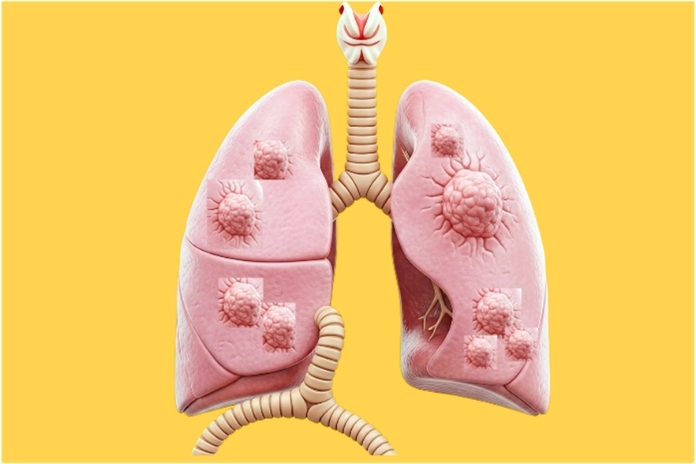
Finding out you have multiple pulmonary nodules on a CT scan is alarming, but the data is reassuring. More than 95% of pulmonary nodules detected by CT are benign, and the most common cause of multiple nodules in the lungs is a healed infection or inflammatory condition.
Multiple lung nodules may be due to granulomatous infections, sarcoidosis, or occupational exposures. Multiple pulmonary nodules are seen in more than 50% of CT scans. Lung nodule follow-up guidelines based on size and CT appearance determine whether benign vs malignant lung nodules require action, and for most people, they don’t.
A scan report is not a diagnosis. It is the start of a clinical process that, for most people, ends with reassurance. Here is what the evidence shows.
- Over 95% of pulmonary nodules on CT are benign — multiple nodules most often reflect past infection, not cancer.
- Multiple nodules are more likely to indicate infection or sarcoidosis than primary lung cancer, which typically starts as a single nodule.
- Nodule size, CT appearance, smoking history, age, and prior cancer history together determine whether follow-up imaging is needed.
What Is a Pulmonary Nodule
A pulmonary nodule (a small, rounded area of increased density in lung tissue is visible on CT) measures 3 cm or less in diameter. Anything larger is classified as a lung mass, which carries a higher risk of malignancy and follows a different evaluation pathway.
Nodules appear in three forms on CT: solid nodules (fully dense), ground glass nodules or GGNs (hazy, semi-transparent appearance), and part-solid nodules (containing both components).
Each type carries different diagnostic implications and management protocols. Multiple nodules simply means two or more are present. Size, bilateral distribution, margin shape, and CT appearance together guide clinical decisions; no single feature determines the outcome.
The Most Common Causes of Multiple Lung Nodules

Infections and inflammatory conditions
The most common cause of multiple pulmonary nodules worldwide is past infection, specifically granulomatous infections (diseases in which the immune system forms granulomas, clusters of inflammatory cells) that leave calcified scars long after the infection resolves.
Histoplasmosis, caused by a fungus endemic to the Ohio and Mississippi River valleys in the US, produces granulomas that calcify permanently. Multiple bilateral calcified nodules in a patient from an endemic region almost always represent this, not cancer.
Tuberculosis (TB) produces identical patterns after primary infection and remains a leading global cause. Coccidioidomycosis (Valley Fever), endemic to the southwestern US and parts of Mexico, creates the same pattern through fungal granulomas.
Sarcoidosis (a systemic inflammatory condition characterized by non-caseating granulomas, i.e., granulomas without central cell death) causes bilateral hilar lymphadenopathy (enlarged lymph nodes near the lung roots) and multiple upper lobe nodules. It affects the lungs in 90% of cases and is a recognized cause of nodules in adults aged 20 to 40.
Rheumatoid arthritis produces rheumatoid lung nodules primarily in men with severe seropositive disease. Septic emboli (infected blood clots reaching the lungs) produce bilateral cavitating nodules in IV drug use or infected cardiac valve contexts.
Environmental and Occupational Causes of Multiple Pulmonary Nodules

Chronic particle inhalation leads to multiple nodules through fibrotic responses that persist for decades after exposure ends. Silicosis (lung disease from inhaling crystalline silica in mining or sandblasting) produces upper lobe nodules with eggshell calcification of hilar lymph nodes, one of the most distinctive occupational CT patterns.
Coal workers’ pneumoconiosis causes similar lung changes from coal dust. Hypersensitivity pneumonitis (immune inflammation from inhaled organic particles, including bird droppings or mold) produces multiple ground-glass nodules.
An occupational history spanning decades is clinically important. Tell your doctor about all past work, not just recent employment.
When Multiple Lung Nodules on CT Scan Are Malignant: Two Distinct Scenarios
Metastatic cancer vs multiple primary lung cancers
Malignant multiple pulmonary nodules fall into two categories with different treatment implications. Metastatic cancer is the most common malignant cause. When cancer spreads from another site via the bloodstream, it produces multiple well-defined bilateral nodules, often concentrated in the lower lobes.
Cancers that frequently metastasize to the lungs include breast, colorectal, kidney, melanoma, thyroid, sarcoma, and testicular cancers. A known primary cancer elsewhere makes multiple nodules substantially more likely to represent metastatic disease than new primary lung cancer.
Multiple primary lung cancers (synchronous primaries) are increasingly recognized as a separate entity. Multiple ground glass nodules at different lung sites may each represent a distinct adenocarcinoma (a lung cancer arising from glandular cells) rather than metastatic spread.
This distinction has major treatment implications: synchronous primaries may each be surgical candidates, whereas metastatic disease typically requires systemic therapy.
The NELSON trial, a landmark randomized controlled trial of CT lung cancer screening, confirmed that multiple nodules warrant systematic risk-based evaluation rather than blanket dismissal or immediate intervention.
How Doctors Evaluate Multiple Nodules: CT Features and Fleischner Society Guidelines

Features suggesting a benign nodule: central, laminar, or diffuse calcification (classic for granuloma); popcorn calcification (pathognomonic, meaning exclusively indicative, for pulmonary hamartoma); smooth, well-defined margins; stable size over two or more years on serial imaging; perifissural location (typically a benign intrapulmonary lymph node).
Features raising concern: spiculated (irregular, spiky) margins; ground-glass opacity with a solid component; growth on follow-up; upper lobe predominance; irregular calcification in a solid nodule.
The Fleischner Society guidelines (the international standard for pulmonary nodule management) stratify follow-up by size and risk profile. Multiple nodules measuring less than 6mm in a low-risk patient require no routine follow-up.
Nodules between 6 and 8mm need CT at 3 to 6 months. Nodules above 8 mm require closer evaluation, including consideration of PET-CT (positron emission tomography combined with CT, which detects metabolically active tissue) or biopsy.
One key reassurance: 20-70% of incidentally detected nodules disappear entirely on 3-month follow-up CT, suggesting resolved infection or inflammation.
Read More: Lung Cancer in Non-Smokers: How It’s Different
Risk Factors That Increase the Probability a Nodule Is Malignant
Most people with multiple lung nodules have none of these. The following factors meaningfully raise the probability that a nodule warrants closer evaluation:
- Current or former smoking history, with a greater pack-year history, proportionally increasing risk
- Age above 50
- Personal history of any prior cancer, particularly cancers that commonly metastasize to the lungs
- Family history of lung cancer in a first-degree relative
- Occupational exposures to asbestos, radon, or silica
- Upper lobe location, spiculated margins, or nodule size above 8mm on CT imaging
By contrast, the malignancy risk for incidentally detected pulmonary nodules in patients aged 15 to 34 is approximately 0.3%, with no malignant nodules found under 10mm in that age group reported in a published cohort.
Read More: Can Lung Cancer Be Silent? What “No Symptoms” Really Means
What to Do Next After a Multiple Lung Nodule Finding

A CT report noting multiple pulmonary nodules does not require immediate action in most cases. Here is how to approach the result systematically:
- Request your full radiology report and ask your doctor to explain the specific size, location, and CT characteristics of each nodule.
- Provide a complete medical history: prior infections, occupational exposures, smoking history, and any personal or family cancer history.
- Ask whether your nodule profile falls within Fleischner Society thresholds for no follow-up, short-interval CT, or further investigation.
- If any nodule exceeds 8mm, ask about referral to a pulmonologist or thoracic radiologist for specialist evaluation.
- Don’t interpret radiology report wording alone. Terms such as ‘nodule,’ ‘opacity,’ and ‘lesion’ are descriptive, not diagnostic.
Read More: Persistent Cough vs. Lung Cancer: When to Worry
Final Word
A CT report showing multiple lung nodules is a common incidental finding, not an automatic diagnosis. The causes are varied and predominantly benign. What matters clinically is the specific characteristics of your nodules applied against an established risk framework.
A finding of multiple nodules marks the beginning of a diagnostic process, not its end. For the vast majority of people, that process ends with reassurance.
- Over 95% of pulmonary nodules on CT are benign. Multiple nodules most commonly reflect past infection, sarcoidosis, or occupational exposure, not cancer.
- Malignant multiple nodules, when they occur, most often represent metastatic spread from a cancer elsewhere, not new primary lung cancer.
- Ask your doctor to match your findings to Fleischner Society size thresholds and your personal risk profile. Most people need only scheduled follow-up imaging, if anything.
FAQs
1. What causes multiple nodules in the lungs?
The most common causes are healed granulomatous infections such as histoplasmosis, tuberculosis, sarcoidosis, rheumatoid arthritis, and occupational exposures. Malignant causes are less common and typically represent metastatic cancer from another site rather than primary lung cancer.
2. I just got a CT showing multiple lung nodules. Should I be worried?
In most cases, no. Over 95% of pulmonary nodules on CT are benign. Multiple nodules more often reflect past infection than cancer. Follow your doctor’s recommended imaging schedule and share your complete medical history.
3. Are multiple lung nodules serious?
Most are not. Seriousness depends on nodule size, CT appearance, age, smoking history, and prior cancer diagnosis. Nodules measuring less than 6mm in low-risk patients typically require no follow-up under current Fleischner Society guidelines.
4. How often do multiple lung nodules turn out to be cancer?
Over 95% of pulmonary nodules are benign. In patients aged 15 to 34, the risk of malignancy is approximately 0.3%. Risk increases with age, smoking, nodule size above 8mm, spiculated margins, and a prior history of cancer.
References
- MacMahon, H., Naidich, D. P., Goo, J. M., Lee, K. S., Leung, A. N. C., Mayo, J. R., & Travis, W. D. (2017). Guidelines for management of incidental pulmonary nodules detected on CT images: From the Fleischner Society 2017. Radiology, 284(1), 228–243.
- de Koning, H. J., van der Aalst, C. M., de Jong, P. A., Scholten, E. T., Nackaerts, K., Heuvelmans, M. A., & Oudkerk, M. (2020). Reduced lung-cancer mortality with volume CT screening in a randomized trial. New England Journal of Medicine, 382(6), 503–513.
- Hammer, M. M., Byrne, S. C., Goldfinger, M., & Hatabu, H. (2024). Risk of malignancy for incidentally detected pulmonary nodules in patients 15–34 years of age. Journal of Computer Assisted Tomography, 48(1), 12–17.
- Schreuder, A., van Ginneken, B., Scholten, E. T., Jacobs, C., Prokop, M., Sverzellati, N., Desai, S. R., Devaraj, A., & Schaefer-Prokop, C. M. (2018). Classification of CT pulmonary opacities as perifissural nodules: Reader variability. Radiology, 288(3), 867–875.
- Prosch, H., Bohm, A., Eisenhuber, E., Schillaci, O., Fuchsjaeger, M., Ebner, L., & Herold, C. J. (2022). CT features differentiating benign from malignant pulmonary nodules: A systematic review. European Radiology, 32(4), 2127–2136.
- Callister, M. E. J., Baldwin, D. R., Akram, A. R., Barnard, S., Cane, P., Draffan, J., & Woolhouse, I. (2015). British Thoracic Society guidelines for the investigation and management of pulmonary nodules. Thorax, 70(Suppl 2), ii1–ii54.
- Detterbeck, F. C., Nicholson, A. G., Franklin, W. A., Marom, E. M., Travis, W. D., Girard, N., & Rami-Porta, R. (2016). The IASLC lung cancer staging project: Classification of lung cancers with multiple pulmonary sites. Journal of Thoracic Oncology, 11(5), 639–650.
- Fernandez-Bussy, S., Labarca, G., Pires, Y., Mehta, H. J., & Jantz, M. (2020). Diagnostic yield of endobronchial ultrasound-guided transbronchial needle aspiration for mediastinal staging. Journal of Thoracic Disease, 12(3), 237–245.
In this Article