

















Picture this: you’ve spent too long in the sun, your shoulders are lobster-red and radiating heat, and you reach for the after-sun spray you’ve used for years. Within minutes, the itch is somehow worse. The burning feels sharper. You wonder if you’re losing your mind or if the product itself is the problem.
You’re not imagining it. For a meaningful subset of people, a benzocaine sunburn allergy and lidocaine sunburn cream reaction are real, documented phenomena.
These two topical anesthetics show up in a wide range of over-the-counter sunburn products, and while they work well for most users, they can trigger contact dermatitis, increased itching, and localized allergic responses, especially on skin that has already been compromised by ultraviolet exposure. If you have ever noticed a sunburn cream making itching worse after application, the ingredient list is where the answer likely lives.
This article covers why benzocaine and lidocaine are included in sunburn products, how allergic reactions to benzocaine and lidocaine skin irritation symptoms develop, what signs to watch for, why dermatologists often advise skipping these ingredients, and which safer alternatives can actually support skin healing without adding new irritants to the equation.
Read More: If Sunscreen Is So Good for Your Skin, Why Do So Many People Still Skip It?
Why Some Sunburn Creams Contain Benzocaine or Lidocaine
What These Ingredients Are Designed to Do
Benzocaine and lidocaine are both topical anesthetics, meaning they work by temporarily blocking sodium channels in peripheral nerve endings. That interruption in nerve signaling is what creates the numbing effect people feel when they apply a sunburn spray or after-sun gel.
Lidocaine, technically lidocaine hydrochloride in most formulations, is also used in dental anesthesia and minor surgical procedures. Benzocaine is an ester-type anesthetic often found in throat sprays, ear drops, and after-sun products. Their mechanisms are similar, but their chemical structures and allergenic profiles differ in ways that matter clinically.
Why They’re Often Marketed for Sunburn Relief
The appeal is straightforward. Sunburn produces a dual sensation: pain from the initial UV damage and itching as the skin begins its inflammatory repair process. Topical anesthetics mute the nerve signals responsible for both, at least temporarily. For mild burns, many people find short-term relief adequate. The products are inexpensive, widely available, and fast-acting, which makes them popular despite the limitations.
The problem is that marketability does not equal safety for every skin type or situation.
Why Sunburn Cream Can Sometimes Make Itching Worse
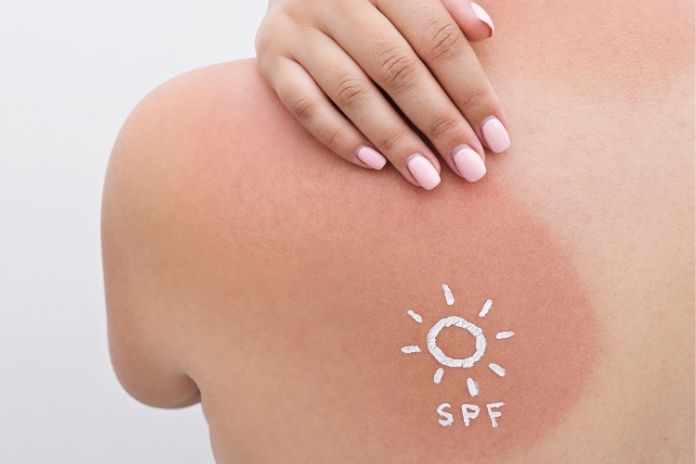
Irritated Skin Is More Sensitive to Ingredients
Sunburned skin is not just red and warm. It is structurally compromised. UV radiation disrupts the stratum corneum, the outermost layer of skin that acts as a protective barrier. When that barrier is weakened, the skin becomes far more permeable to topical substances, meaning ingredients that would normally stay near the surface begin to penetrate more deeply and rapidly.
Dr. Michael C. Cameron, a board-certified dermatologist and assistant clinical professor of dermatology at Mount Sinai’s Icahn School of Medicine, has noted in an NBC News interview on sunburn treatments that address sunburn severity and signs of secondary skin reactions, including increased redness and abnormal swelling, are key factors in determining whether a product is helping or making things worse.
That permeability cuts both ways. More of any given ingredient penetrates more quickly, amplifying both therapeutic and adverse effects. On sunburned skin, benzocaine or lidocaine may absorb at levels and speeds the skin would not normally encounter.
Allergic Reactions to Topical Anesthetics
Benzocaine is an ester-type anesthetic, while lidocaine belongs to the amide class. The ester group, which includes benzocaine, procaine, and tetracaine, has a notably higher rate of allergic sensitization compared to amides. Sensitization can develop with repeated exposure over time, meaning a product you have used before without issue can suddenly trigger a reaction.
A study published in Dermatitis found benzocaine to be among the top allergens identified in patch testing for contact dermatitis, appearing consistently across multiple years in the North American Contact Dermatitis Group’s surveillance data. This is not rare. It is one of the more common topical allergens in clinical practice.
Dr. James S. Taylor, MD, a dermatologist at the Cleveland Clinic Foundation and a leading researcher in contact dermatitis, told Dermatology Times that “lidocaine is a covert allergen that, for the most part, is not identified through the clinical history and, therefore, needs to be investigated as the cause of contact dermatitis reactions through patch testing.”
His retrospective review of over 1,100 patch-tested patients found a 1.4 percent rate of positive lidocaine reactions, a figure that climbed over the study period as use of topical lidocaine increased.
Contact Dermatitis Triggered by These Ingredients
Contact dermatitis from topical anesthetics can be either allergic or irritant in nature. Allergic contact dermatitis involves an immune-mediated response: the body recognizes the chemical as a threat and mounts a delayed reaction, typically appearing 12 to 72 hours after exposure. Irritant contact dermatitis is a non-immune reaction caused by direct cellular damage from the ingredient.
Both types produce overlapping symptoms, including redness, itching, swelling, and, in some cases, small vesicles or papules that can look almost identical to worsening sunburn. That overlap is precisely what makes a sunburn cream, making itching worse, a difficult problem to self-diagnose.
Signs You May Be Reacting to Benzocaine or Lidocaine
Common Skin Symptoms
The clearest signal is a pattern mismatch. Normal sunburn discomfort tends to peak in the first 24 to 48 hours and then gradually improves. If your symptoms worsen or shift after applying a topical product, that temporal relationship is significant.
Watch for:
- Itching that intensifies shortly after applying the cream or spray
- Redness extending beyond the original sunburn boundaries
- A new rash with small raised bumps or hive-like welts
- Warmth or swelling that feels localized to where the product was applied
Symptoms That Suggest an Allergic Reaction
True allergic responses tend to behave differently from standard sunburn irritation. The itch from allergic contact dermatitis is often described as more intense, more superficial, and more uniform across the affected area, with less of the deep aching discomfort associated with UV damage and more of a relentless surface-level irritation.
Dr. Mary Stevenson, MD, has explained in a published NBC News report on sunburn treatment that creams sold in a pot, rather than pump-bottle lotions, are preferable for dry, inflamed skin after sunburn because thicker, fragrance-free formulas minimize the risk of additional irritation to an already reactive skin surface.
A review in the Journal of the American Academy of Dermatology documented patterns of benzocaine sensitization, noting that reactions often spread past the original application zone and can recur with subsequent exposures to chemically related compounds, a phenomenon called cross-reactivity within the ester anesthetic class.
When Symptoms May Be Due to the Sunburn Itself
It is worth acknowledging that sunburn on its own produces significant itching, particularly during the healing phase. As the skin begins to peel and regenerate, nerve endings that were temporarily suppressed by UV damage reactivate. This can produce what some clinicians call “hell’s itch,” a severe, deep itching that emerges days after the burn and has no relation to any topical product.
Mild itching during days two through four, skin peeling after five to seven days, and tight or dry skin throughout recovery are all normal features of the healing process. These do not indicate a product reaction.
Why Dermatologists Often Advise Avoiding Numbing Sunburn Creams
Potential for Skin Sensitization
Each time the immune system encounters benzocaine on sensitized skin, the response can become more pronounced. This is the nature of type IV delayed hypersensitivity: initial exposure may produce no symptoms, but subsequent exposures trigger progressively stronger reactions. Dermatologists who specialize in contact dermatitis frequently see patients who have used benzocaine-containing products for years before developing their first reaction.
Limited Benefit for Healing
Numbing ingredients reduce sensation. That is the entirety of their mechanism. They do not accelerate tissue repair, reduce UV-induced inflammation, restore the skin barrier, or provide any meaningful therapeutic benefit beyond temporary pain reduction.
Dr. Michele Farber, MD, has advised in a published NBC News guide to sunburn treatments that after a sunburn, it is best to apply a thick moisturizer to irritated areas and focus on barrier support rather than numbing. She recommends aloe vera and cool baths to calm sunburned skin, because the primary goal is calming inflammation and supporting healing, not temporarily silencing nerve signals.
Higher Risk of Damaged Skin
Because UV-damaged skin has compromised barrier function, it absorbs topical substances at higher rates and with less of the normal filtration that intact skin provides.
Research published in Contact Dermatitis demonstrated that allergen penetration increases substantially when applied to irritated or compromised skin, raising the effective dose delivered to immune cells in the dermis. This is why a product that causes no reaction on a healthy forearm might cause significant irritation on a sunburned shoulder.
Safer Alternatives for Soothing Sunburned Skin
Cooling and Hydrating Methods
The most effective and lowest-risk approaches to sunburn relief are also the simplest. Cool compresses applied to the affected area reduce surface temperature and calm inflammation without introducing any additional chemicals to sensitized skin. A clean cloth soaked in cool water, applied for 15 to 20 minutes at a time, can provide meaningful comfort.
Hydration matters both internally and externally. Sunburn draws fluid toward the skin surface and away from deeper tissues, contributing to the systemic dehydration that many people experience after significant UV exposure.
Products Commonly Recommended for Sunburn Relief
Dermatologists generally favor a short list of well-tolerated options.
Aloe vera gel remains one of the most evidence-supported choices for soothing sunburn. A meta-analysis published in Burns found that aloe vera preparations accelerated healing in first- and second-degree burns compared to control treatments, with a notably low rate of adverse reactions. Look for products with pure aloe as the primary ingredient, minimal additives, and no alcohol.
Fragrance-free moisturizers help restore the lipid-depleted skin barrier that UV exposure disrupts. Products containing ceramides, hyaluronic acid, or glycerin are particularly useful. Petroleum jelly is an occlusive that creates a physical seal over the skin surface, locking in moisture and protecting against environmental irritants while the skin repairs. It is one of the lowest-allergen topical products available.
Ingredients That May Help Reduce Irritation
Colloidal oatmeal, an FDA-recognized skin protectant, has demonstrated anti-inflammatory and antipruritic effects in multiple clinical studies. It works partly by forming a protective film over the skin and partly through direct interaction with inflammatory pathways. Products containing colloidal oatmeal can meaningfully reduce the itching that accompanies sunburn healing without the sensitization risk that comes with topical anesthetics.
Simple emollients without active ingredients are often sufficient for moderate sunburn discomfort and carry virtually no risk of triggering additional reactions.
How to Tell If a Sunburn Product Is Safe for Sensitive Skin
Ingredients to Look for on Labels
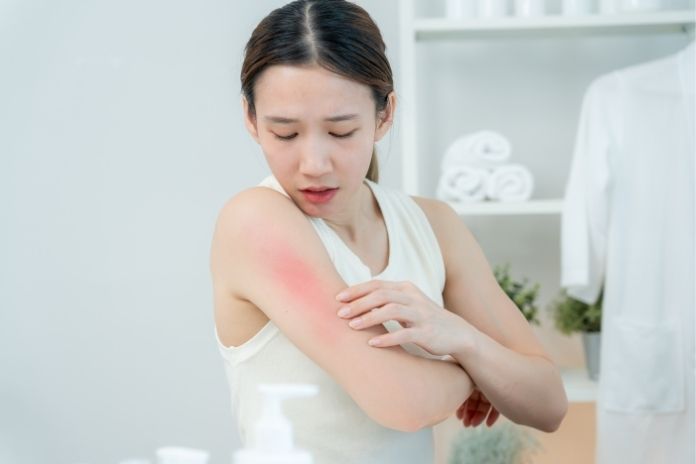
Short ingredient lists are generally a good sign. Look for fragrance-free designations, which are distinct from “unscented,” since unscented products may still contain masking fragrances. Simple humectants like glycerin or hyaluronic acid, ceramides for barrier support, and aloe vera as a primary ingredient rather than a trace additive are all positive signals.
Ingredients Some People May Want to Avoid
Beyond benzocaine and lidocaine, the following commonly appear in sunburn products and have documented potential for skin irritation:
- Alcohol (ethanol or isopropyl alcohol): Provides a brief cooling sensation but dries and further compromises already-damaged skin.
- Heavy synthetic fragrances: Among the most common contact allergens in personal care products.
- Menthol at high concentrations: Can be irritating to sensitized skin despite its cooling perception.
- Preservatives like methylisothiazolinone: Associated with allergic contact dermatitis in multiple surveillance studies.
Patch Testing New Skin Products
Before applying any new product to a significant sunburn, test it on a small patch of unburned skin, ideally on the inner forearm. Apply a small amount, cover loosely with a bandage, and check at 24 and 48 hours for any signs of redness, itching, or rash. This simple precaution takes less than two minutes and can prevent an already uncomfortable situation from getting considerably worse.
Read More: Can You Use Face Sunscreen on Your Body? What Dermatologists Suggest
When Itching After Sunburn Could Signal Something More Serious
Intense Itching Several Days After Sunburn
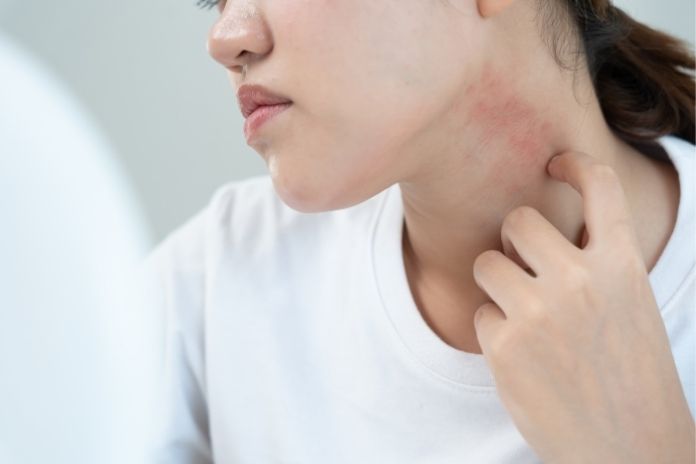
Severe sunburn itch, sometimes called “hell’s itch” in patient communities and occasionally linked to neurogenic inflammation in clinical literature, is a phenomenon that deserves its own mention. Some people experience an extreme, debilitating itch that emerges two to three days after a significant burn and persists regardless of topical treatment.
The exact mechanism is not fully understood, but involvement of the nerve fibers themselves rather than the skin surface appears to play a role. This type of itching generally requires medical evaluation and may benefit from oral antihistamines or short-course systemic anti-inflammatory medications.
Signs of Severe Skin Reaction
Seek medical attention if you experience any of the following after sunburn or product application:
- Rapid or spreading swelling
- Severe pain that is disproportionate to the visible burn
- Fever above 102 degrees Fahrenheit accompanied by skin symptoms
- Blisters covering a large body surface area
- Symptoms of anaphylaxis: throat tightening, difficulty breathing, or a sudden drop in blood pressure
Dr. James S. Taylor, MD, has emphasized in Dermatology Times that patients who develop a positive patch test reaction to a local anesthetic should undergo further patch and intradermal testing to clarify future risk, as delayed hypersensitivity to these ingredients can present in unexpectedly varied ways.
Any patient experiencing rapidly spreading reactions or systemic symptoms after applying a topical product should treat the situation as a medical emergency.
Key Takeaway: Sunburn Relief Should Calm Your Skin, Not Irritate It
When sunburned skin becomes itchier after applying a relief product, the ingredient list is the first place to investigate, and benzocaine or lidocaine is often the answer. A benzocaine sunburn allergy or a lidocaine sunburn cream reaction can develop gradually over time, which is why even long-familiar products can suddenly become a problem.
On UV-damaged skin where the barrier is already compromised, the risk of allergic contact dermatitis from these topical anesthetics is meaningfully elevated. The skin’s job after a sunburn is to repair damaged tissue, restore barrier function, and resolve the inflammatory cascade triggered by UV exposure. Topical anesthetics do none of that.
If you have experienced a sunburn cream making itching worse, or if you have noticed symptoms consistent with lidocaine skin irritation or an allergic reaction to benzocaine, discontinuing the product is the right first move. Switching to simple, fragrance-free, barrier-supportive care gives your skin the environment it needs to recover.
Persistent, spreading, or severe reactions warrant evaluation by a board-certified dermatologist. Patch testing can confirm specific sensitivities and give you a clear, lasting picture of which ingredients your skin cannot tolerate. That knowledge pays dividends every sunburn season after.
References
- American Academy of Dermatology Association. (2023). Sunburn: Diagnosis and treatment.
- Castanedo-Tardan, M. P., & Gonzalez, M. E. (2009). Patch testing. Dermatitis, 20(3), 122–133.
- Fonacier, L., Bernstein, D. I., Pacheco, K., Holness, D. L., Blessing-Moore, J., Khan, D., Lang, D., Nicklas, R., Oppenheimer, J., Portnoy, J., Randolph, C., Schuller, D., Spector, S., Tilles, S., & Wallace, D. (2015). Contact dermatitis: A practice parameter-update 2015. Journal of Allergy and Clinical Immunology: In Practice, 3(3 Suppl), S1–S39.
- Maenthaisong, R., Chaiyakunapruk, N., Niruntraporn, S., & Kongkaew, C. (2007). The efficacy of aloe vera used for burn wound healing: A systematic review. Burns, 33(6), 713–718.
- Mowad, C. M., Anderson, B., Scheinman, P., Pootongkam, S., Nedorost, S., & Brod, B. (2016). Allergic contact dermatitis: Patient management and education. Journal of the American Academy of Dermatology, 74(6), 1043–1054.
- Nguyen, H. L., & Yiannias, J. A. (2019). Contact dermatitis to medications and skin products. Clinics in Reviews in Allergy and Immunology, 56(1), 41–59.
- Warshaw, E. M., Maibach, H. I., Taylor, J. S., Sasseville, D., DeKoven, J. G., Zirwas, M. J., Fransway, A. F., Mathias, C. G., Zug, K. A., DeLeo, V. A., Fowler, J. F., Marks, J. G., Pratt, M. D., Storrs, F. J., & Belsito, D. V. (2015). North American contact dermatitis group patch test results: 2011-2012. Dermatitis, 26(1), 49–59.
- Zhai, H., & Maibach, H. I. (2004). Skin occlusion and irritant and allergic contact dermatitis: An overview. Contact Dermatitis, 50(4), 181–186.
- Mayo Clinic. (n.d.). Benzocaine (topical application route). Mayo Clinic.
- Cleveland Clinic. (n.d.). Topical anesthetics. Cleveland Clinic.
- Marque Medical. (n.d.). Treating sunburns. Marque Medical.
- Northwest Dermatology. (n.d.). How to treat and heal sunburn. Northwest Dermatology.
- Harvard Health Publishing. (2018, July 3). How to treat a child’s sunburn. Harvard Health Publishing.
In this Article