


















Many people think that strenuous, demanding exercise is necessary to improve heart health. Is that really essential, though? In reality, walking for heart health can be highly effective. To get significant results, you don’t need to put in a lot of work. Over time, regular walking can lower health risks, enhance circulation, and improve cardiovascular fitness.
This article will discuss whether walking is sufficient for heart health, how it compares with high-intensity exercise, and why regular, moderate exercise might be the best practical and long-term solution.
- Walking daily at a moderate pace strengthens your heart, improves circulation, and lowers blood pressure.
- Consistency matters more than intensity; regular walking reduces cholesterol and heart disease risk over time.
- For most people, simple, low-impact walking is enough to build lasting cardiovascular fitness.
Read More: How Many Steps Do You Really Need? A Science-Based Guide to Walking for Fitness
What Does “Heart Health” Actually Mean?
In the US, heart disease is one of the main causes of death for both men and women. However, you can take many steps to maintain your health and safeguard your heart. To understand why prevention matters, consider how hard your heart works every day.
Over the course of an average lifespan, the heart beats over 2.5 billion times, pumping millions of gallons of blood to every part of the body. This constant flow delivers oxygen, fuel, hormones, and other essential substances while removing metabolic waste. When the heart stops beating, many vital functions cease almost immediately.
Because of this critical role, protecting your heart should be a priority. Living a heart-healthy lifestyle means being aware of your risk, making smart choices, and taking action to reduce the chance of developing heart disease, especially coronary heart disease, the most common type.
Preventive steps can significantly lower the risk of heart attacks while also improving overall health and well-being. Despite its strength and endurance, the heart is not invincible. It can also weaken over time due to poor diet, inactivity, smoking, infections, genetic factors, and other risks. This is why consistent care and healthy habits are essential.
In this context, heart health goes beyond just avoiding disease; it also includes maintaining good cardiorespiratory fitness, which reflects how efficiently your heart and lungs supply oxygen during physical activity. One simple yet very effective way to support this is through regular movement.
Walking, a form of moderate-intensity exercise, can significantly reduce cardiovascular risk factors without requiring any intense effort. It highlights an important idea: your heart doesn’t always need an extreme type of workout to become stronger and consistent; low-intensity cardio can be just as beneficial.
Can Walking Really Improve Cardiovascular Health?

The short answer is yes, does walking improve cardiovascular health? Absolutely. Regular walking improves heart health and lowers the risk of disease, according to numerous studies.
Effects on Blood Pressure
Your doctor may suggest dietary modifications or medication if you have high blood pressure (hypertension) to maintain your condition within a healthy range. Another useful strategy for lowering blood pressure is exercise.
An aerobic activity that strengthens your heart and cardiovascular system is brisk walking. Your body pumps more blood to your muscles and absorbs more oxygen when your heart beats more quickly. Regular aerobic exercise improves your overall physical fitness and endurance. Walking regularly helps reduce blood pressure, according to research.
Improvements in Circulation and Endothelial Function
Your veins return blood from your legs to your heart by defying gravity. A crucial part of this process is walking. Your calf muscles, which function as a pump to force blood upward via your veins, are activated with each step. It is crucial for good circulation and is sometimes called the “calf muscle pump.”
Frequent walking can be beneficial:
- Boost the legs’ blood flow
- Lower the pressure in the veins
- Encourage normal vein function
- Avoid the accumulation of blood in the lower limbs
Impact on Cholesterol and Metabolic Health
Low-density lipoproteins (LDL), often called “bad” cholesterol, are a waxy substance that accumulates in your arteries.
“Elevated LDL increases the risk of heart attack and stroke by promoting plaque in critical vessels, particularly those of the heart and brain,” explains Alan Rozanski, M.D.
Walking regularly for at least four weeks reduces total cholesterol and “bad” LDL cholesterol by approximately 7 mg/dL in women who are overweight or obese, according to research.
Walking and other aerobic exercises increase HDL (high-density lipoprotein).
Elevated triglyceride levels, a form of blood fat, are another risk factor for cardiovascular disease. The good news? They can be effectively lowered by walking. Your muscles use triglycerides as an energy source while you exercise. Walking and other forms of physical activity lower triglyceride levels.
Reduced Risk of Cardiovascular Disease Over Time
Daily walking is strongly associated with a lower risk of heart disease, according to numerous studies. Who walk regularly are less likely to suffer from heart attacks, strokes, and other cardiovascular diseases. Walking for heart health is, therefore, a straightforward yet effective preventive measure.
Read More: The 6-6-6 Walking Routine: What It Is and How It Boosts Your Health
Why Cardiovascular “Strain” Isn’t Always Necessary
The Role of Moderate-Intensity Exercise: It can be deceptive to assume that tougher is always better. Moderate-intensity exercise, like brisk walking, can effectively stimulate your heart adaptations without excessive strain. Your heart responds to consistent demand, not only for extreme effort.
How the Heart Adapts to Consistent, Lower Stress Activity: Frequent walking enhances your aerobic conditioning, oxygen delivery efficiency, and also stroke volume (the volume of blood pumped every beat). Even without intense exercise, this eventually leads to increased cardiovascular fitness and endurance.
Sustainability and Adherence vs. Short-Term Intensity: Maintaining high-intensity exercises might be challenging. Conversely, walking is more accessible, low-impact, and easier to maintain over time. More important than sporadic, strong effort is consistency.
This is why walking enough for cardiovascular fitness is increasingly being answered with a confident answer, “yes,” for many people.
Understanding Heart Rate Zones and Walking

What Counts as Moderate-Intensity Walking
Generally speaking, moderate walking is between 50 and 70 percent of your maximal heart rate. Walking at around 100 steps per minute is considered “moderate,” while walking at 130 steps per minute is considered “vigorous” or “intense,” according to experts at the University of Massachusetts-Amherst.
The study examined 76 men and women aged 21 to 41 who walked at several speeds on a treadmill. The researchers published it in the International Journal of Behavioral Nutrition and Physical Activity.
The researchers determined that a cadence of 129 steps per minute is sufficient to be considered “intense” activity, while 102 steps per minute is ideal for “moderate” exercise. The study also found that walking an extra 10 steps per minute increases intensity.
The “Talk Test” for Practical Guidance
An easy method to measure intensity:
- Talking is acceptable, but singing is not. Moderate intensity.
- It’s so intense that you can hardly speak.
It eliminates the need for complicated equipment and makes it simple to maintain appropriate heart rate zones.
Zone 2 Walking and Aerobic Base Building
Zone 2 training is an aerobic activity at a moderate intensity that slightly raises your heart rate. It is the second step on a heart rate zone scale that ranges from 1 to 5, indicating how hard your heart is working to keep you going during an exercise session.
Your heart rate is between 60% and 70% of your maximum heart rate during an activity when you are in zone 2. (More on that at a later time.) If you work out in zone 2, you won’t feel like you’re pushing yourself. It should be something you can do for a longer period and feel like a comfortable training effort.
When Walking Alone May Be Enough — and When It Might Not
Beginners and Sedentary Individuals: Walking can significantly improve cardiovascular fitness. Significant advantages can result from even modest increases in activity.
Older Adults and Low-Impact Needs: Walking is great for older adults because it increases mobility, reduces joint stress, and supports heart health. This emphasizes the significance of low-intensity cardio heart benefits for people who require more gentle forms of exercise.
Those Already Highly Active: Walking alone might not be enough for skilled people to keep improving. Walking in conjunction with other endurance training methods can be helpful in certain situations.
Read More: What Your Walking Speed Says About Your Health and Longevity
How Much Walking Supports Heart Health?

One easy strategy to preserve or enhance your cardiovascular health is to walk. It’s cost-free. You don’t require any specialized knowledge or tools. It offers numerous extra psychological and physical advantages and is among the safest forms of physical activity.
Ten thousand steps is equivalent to nearly five miles or eight kilometers, depending on the length of your stride. For most people, walking 10,000 steps in one sitting would take one to two hours. Depending on your height and weight, walking 10,000 steps burns 300–600 calories.
Is this what we should all strive for? Last year, the European Journal of Preventive Cardiology released the most thorough study to date, which examined 17 earlier studies with more than 200,000 participants.
Researchers found that walking at least 3,867 steps per day reduces the risk of dying from any cause, while even 2,337 steps per day lowers the risk of death from heart and circulatory disorders.
Walking vs. High-Intensity Cardio: Key Differences
Risk and Recovery Demands
Exercises with high intensity:
- Need more time to heal.
- Carry a greater risk of damage.
Walking:
- Has little effect.
- You can carry it out every day.
It makes walking vs. intense cardio heart health an important comparison for long-term sustainability.
Cardiovascular Adaptations Over Time
Walking and vigorous exercise both enhance heart health, although they do it in distinct ways:
- Walking strengthens the aerobic foundation.
- Intense cardio enhances peak performance.
Sustainability and Injury Risk
Walking is less likely to result in injury and is easier to sustain. For this reason, many people find that regular walking is more beneficial than occasional, strenuous exercise.
Signs Your Walking Routine Is Supporting Your Heart
It might be difficult to begin and maintain a fitness program. Look for these indicators that your fitness is improving to stay motivated.
More Energy: Feeling less lethargic is one of the first indications that you’re being more active.
More Time to Be Active: Have you noticed that you can exercise more, go on longer walks, or climb stairs more easily without feeling as exhausted? It indicates that your body is becoming more adept at utilizing oxygen and energy, and your heart and other muscles are growing stronger.
Breathing: Your cardiovascular system may be providing your body with the oxygen it needs if you can engage in moderate-intensity physical activity, such as brisk walking, without experiencing chest tightness or soreness.
Better Flexibility: Your flexibility and mobility are improving if you can stretch farther, move more easily, or experience fewer joint aches and pains.
Read More: The Power of “Awe Walks” – How Experiencing Wonder Can Reduce Stress
Ways to Make Walking More Heart-Healthy Without Increasing Strain
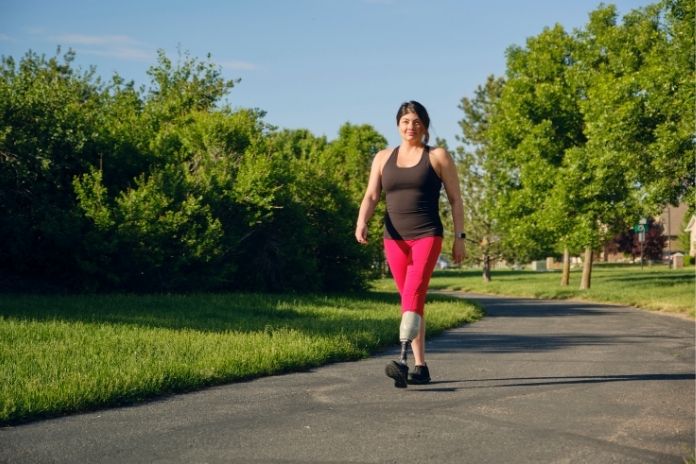
You can prevent pain and damage by taking the time to be ready before you go for a stroll:
Supportive Shoes: Wear running or walking shoes to protect your back and joints. Steer clear of socks made entirely of cotton, as they absorb moisture and may cause blisters. Try socks made of polyester or acrylic instead.
Comfortable Attire: Wear layers and materials that wick away perspiration. It will keep your skin clear of clogged pores and keep you cool.
Stretching: Before and after your workout, stretch your hamstrings, shoulders, calves, chest, and back.
Hydration: Drink a big glass of water both before and after walking to prevent dehydration. Bring water to drink if you plan to walk for longer than thirty minutes.
Focusing on Form: A normal technique helps avoid neck and back pain and maintains normal alignment of bones and joints. Keep your chin parallel to the floor and your head raised when you walk. Step from heel to toe while swinging your arms.
When Higher Intensity May Still Be Helpful
Walking is beneficial, yet there are situations when going faster can be beneficial:
- When advancement reaches a plateau
- When there’s not much time
- When pursuing performance objectives
Even so, a balanced strategy is to mix walking with occasional higher-intensity workouts.
Read More: Color Walk Therapy: How Walking with Colors Can Boost Your Mood and Creativity
Conclusion
To develop a healthier heart, intense exercise is not necessary. Over time, regular walking for heart health can stabilize blood pressure, improve circulation, and increase overall endurance. There are other ways to improve cardiac function, even though high-intensity exercise has its role.
Walking is a viable and efficient way for many people to increase their cardiovascular fitness without putting them under undue stress or risking burnout. The secret is to maintain consistency, gradually increase duration or tempo, and incorporate activity into your routine daily.
References
- Texas Health Resources. What are the signs of a healthy heart?
- National Heart, Lung, and Blood Institute. What Is Heart-Healthy Living?
- Harvard Health Publishing. Heart health.
- Cleveland Clinic. (October 13, 2025). Easy Does It: Why You Should Target Zone 2 Cardio Workouts.
- Tanya Racoobian. (February 13, 2019). How Many Steps Mean ‘Moderate’ Exercise?
- British Heart Foundation. How many steps a day should I walk for my heart health?
- British Heart Foundation. (7 April 2025). Fitness: How to increase your fitness levels.
- Ucla Health. (July 29, 2021). Walk this way: How to make walking all the cardiovascular exercise you need.
- Mass General Brigham. (2025, February 21). Benefits of walking for heart health.
In this Article