










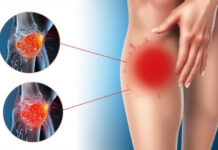






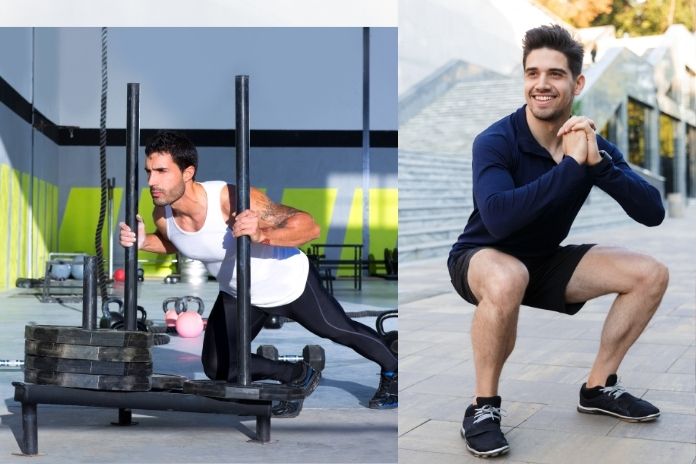
You’ve probably heard it a hundred times: squats are the king of all exercises. And for a long time, that felt like settled gym science. But if you’ve walked out of a squat session with achy knees and wondered whether you’re doing yourself more harm than good, you’re not alone.
The conversation around sled pushes vs. squats has moved well beyond gym forums and into serious sports medicine research, with scientists studying knee joint loading, patellofemoral stress (the pressure your kneecap absorbs during movement), and long-term cartilage health in both exercises.
Low-impact exercises for knee health aren’t just for people recovering from surgery anymore; they’re a smart long-term strategy for anyone who wants functional, pain-free legs well into their 60s and beyond.
This article breaks down the actual biomechanics and muscle activation science and gives you a clear, practical answer on which exercise, or which combination, is best for knee joint longevity.
Whether you’re managing pain right now or simply making proactive choices, here’s what the evidence says.
- Squat exercises mean more complete strength, but they produce significantly higher patellofemoral (knee) joint stress at deeper knee flexion angles compared to lower-demand quad exercises.
- Sled pushes produce far less impact (far less eccentric loading and knee flexion stress), making them a genuinely lower-impact quad-training alternative, joint-friendly, and still effective, not just a lighter version of the same movement.
- If squats are causing knee pain, the answer isn’t necessarily to push through it. It may be time to rethink your exercise selection entirely. The best approach is to use both based on your knee tolerance.
How Knee Stress Differs Between Sled Pushes and Squats
The knee does not only care about how heavy the weight is. It cares about how that weight is applied. Two key forces matter here: compressive and shear forces.
1. Compressive vs Shear Forces
Compressive force is like pressure pushing joint surfaces together. The knee can tolerate this quite well because cartilage is designed for it. But shear force is a sliding force, where one bone tries to move over another. This is where many knee problems start slowly.
In squats, especially when form or fatigue is not ideal, both compressive and shear forces are present. As you go deeper, and especially when knees advance further, patellofemoral stress increases. It is not always dangerous, but it becomes sensitive if the joint is already irritated.
2. Load Distribution
In sled pushes, movement is different. You are not lowering weight under gravity. Instead, you are pushing horizontally. This reduces sudden changes in force and limits shear stress. The load becomes more steady.
3. Low Impact Never Means Easy
Also, “low-impact exercise for knee health” here does not mean low effort. Anyone who has pushed a heavy sled knows it can be brutal. But brutality is in muscles and lungs, not in joint shock.
What Happens to Your Knees During Squats
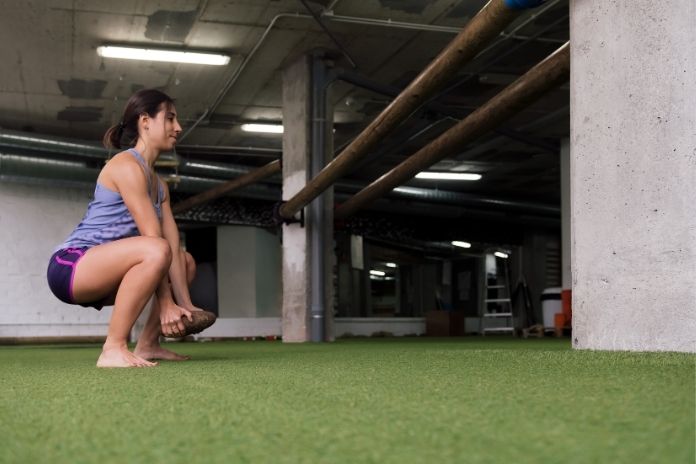
During squats, the knee goes through flexion and extension under load. This is a natural movement, and in healthy joints, it is beneficial. It strengthens quadriceps, improves stability, and even supports cartilage health through movement.
But problems start when a few things combine:
- Deep knee bend with high load
- Poor tracking of the knee over the toes
- Weak hips or poor control
- Fatigue leading to collapse inward
In such cases, stress on the patellofemoral joint increases. That is why some people feel pain in the front of the knee during squats.
Another issue is eccentric loading. When you go down in a squat, the muscles are lengthening while controlling the weight. This creates high tension. It is good for strength but also creates more stress on tissues. If recovery is not proper, irritation builds.
Still, it is important to say squats are not “bad.” Many people train for years without knee issues. The problem is not the squat itself, but the mismatch between load and capacity.
Why Sled Pushes Are Considered More Knee-Friendly
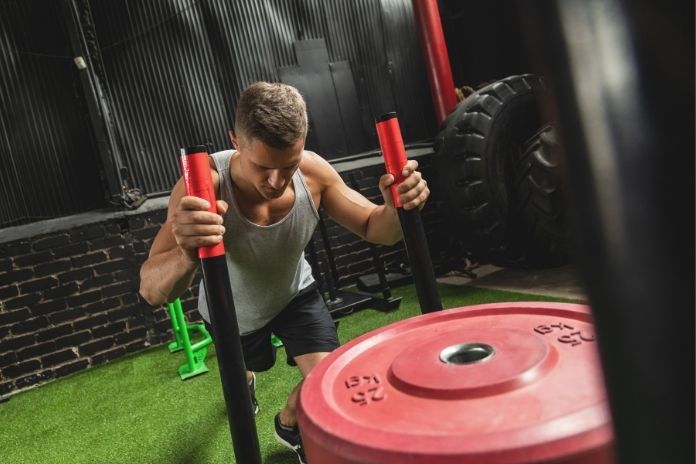
Sled pushes change the entire nature of knee joint loading.
1. Minimal Eccentric Loading
First, there is very little eccentric phase. You are mostly pushing forward, not resisting gravity downward. This reduces muscle damage and also joint stress during the lowering phase.
2. Controlled Joint Stress
Second, movement is continuous. There is no sudden start-stop like in reps. This creates smoother force application on the knee. Fewer spikes in stress mean less irritation.
3. Lower Shear Forces
Third, shear forces are lower. Since movement is horizontal and controlled, the knee is not exposed to the same sliding stress as in loaded squats.
One more underrated point about sled push benefits for the knee joint: the sled is self-limiting. If the load is too heavy, you simply slow down or stop. There is no situation where weight crashes down like in squat failure. This makes it safer for people who don’t have perfect technique yet.
Because of all this, sled pushes feel like “knee-friendly leg exercises,” and not because they are light, but because they are predictable.
Muscle Activation: Do Sled Pushes Replace Squats?
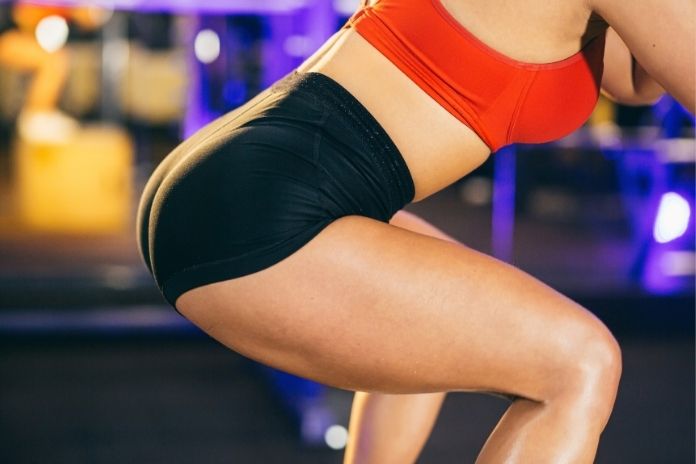
Now, an important question: can sled pushes replace squats fully? Short answer: not exactly.
1. Quadriceps
Both exercises heavily use the quadriceps. In the sled push, quads are working continuously to extend the knee and push the body forward. In squats, the quads work through a full range with changing tension.
2. Glutes and Posterior Chain
But differences come in other areas. Squats involve more: the posterior chain, glutes, hamstrings, and even spinal stabilizers. They also train the coordination of the whole body under vertical load.
3. Strength vs Conditioning
Sled pushes are more like a controlled drive. They build strong quads, improve conditioning, and teach force production. But they don’t challenge balance or full-range strength in the same way.
So, sled pushes are not a replacement. They are complementary to or an alternative to squats for knee pain. If the goal is joint-friendly training with decent strength, the sled can do a lot. If the goal is maximal strength and structural adaptation, squats still have an advantage.
Who Should Consider Sled Pushes Over Squats
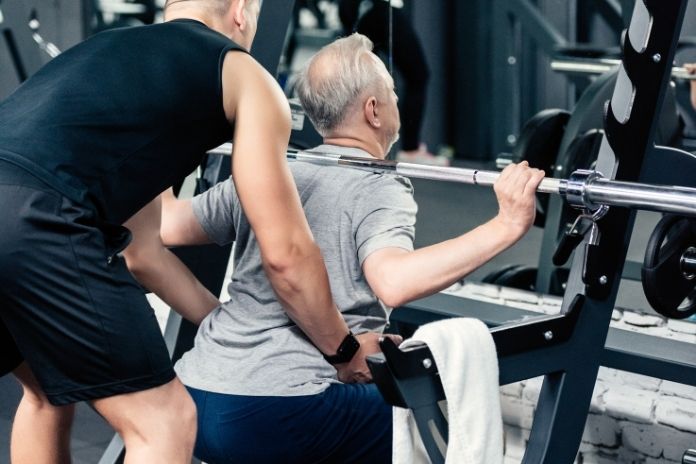
There are some situations where sled pushes make more sense immediately.
1. People with Knee Pain
People with knee pain, especially front knee pain, often tolerate sled pushes much better. Because the movement avoids a deep compressive and shear stress combination that irritates the joint.
2. Beginners
Beginners also benefit. A squat requires coordination: hips, knees, and spine all working together. Many beginners struggle with this and load joints incorrectly. Sled removes complexity and allows safe effort.
3. Older Adults
Older adults also find sled useful. With age, recovery reduces, and joint sensitivity increases. Sled training gives strength stimulus without a heavy joint penalty.
4. Athletes in Recovery
Athletes in the recovery phase use sled pushes a lot. After injury or during deload weeks, it allows training without overloading healing tissues. “By focusing on lower body strength, you also lower your risk of injuries, like hip flexor strains and sports hernias,” says sports medicine physician Dr. Matthew Kampert.
It is not about avoiding hard work. It is about choosing stress that the body can handle at that time.
When Squats Are Still the Better Choice
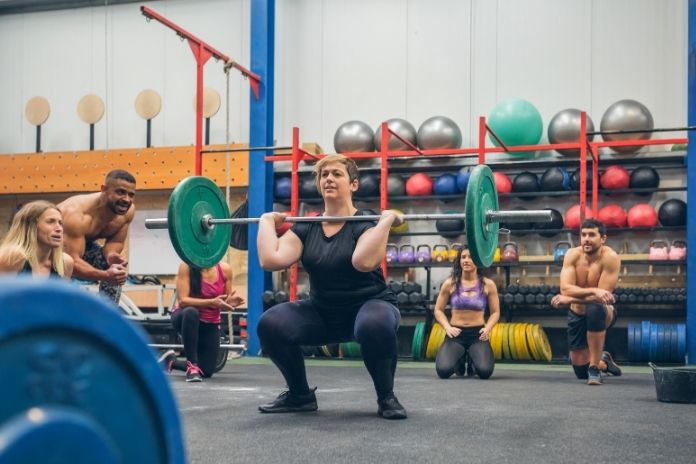
Even with all the advantages of sled pushes, squats still hold an important place.
1. Building Max Strength
If the goal is to build maximum strength, especially in the full range, squats are unmatched. They load the body vertically, stimulate bone density, and improve coordination under load.
2. Training Full Range of Motion
Also, squats train deep knee flexion. This is important for long-term joint capacity. Avoiding this completely can make the knees weaker in certain ranges.
3. When Knees Tolerate Load Well
People who have healthy knees and good technique should not fear squats. In fact, avoiding them without reason can reduce long-term resilience.
So, it is not about replacing squats always. It is about using them when your body is ready and tolerating them well.
How to Use Both for Better Knee Health
The best approach is not choosing one side. It is combining both intelligently. For example, sled pushes can be used as a warm-up. They increase blood flow to the knees and activate muscles without stressing the joints. This can actually improve squat performance later.
They can also be used as a finisher. After squats, instead of adding more heavy sets, sled pushes give additional volume without extra joint stress.
Another method is alternating days. One day focus on squats and another day on sled work. This distributes stress differently across the week.
Also, during periods when knees feel irritated, you can reduce squat volume and increase sled work temporarily. This allows training to continue without a complete break. Think of it like adjusting stress, not stopping training.
Read More: How to Build Muscle Without Going to the Gym (Science-Backed Strategies)
Technique Tips to Protect Your Knees in Both Exercises
For squats, knee tracking is very important. Knees should move in line with toes, not collapse inward. Depth should be controlled, not forced. If a deep squat causes pain, reduce depth and build gradually. “Deep squatting means you’re working with more range of motion in the joints, which means more muscle activation and more strengthening,” says Dr. Vanessa Matos, a physical therapist.
Also, torso position matters when thinking about how to protect the knees during workouts. Excessive forward lean can shift the load in an unwanted way. Keeping a stable posture helps distribute force better. For sled pushes, posture is key. Many people lean too much or round their backs. The body should be in a stable forward angle, pushing through the legs, not just the upper body.
Load selection is also important. Too light and you lose the benefit; too heavy and the form breaks. Footwear and surface also matter. Stable shoes and a good grip reduce unwanted stress on the knees. These small details make a big difference over time.
Read More: 11 Energizing Squat Alternatives for Bad Knees
Signs Your Knees Are Not Tolerating an Exercise Well
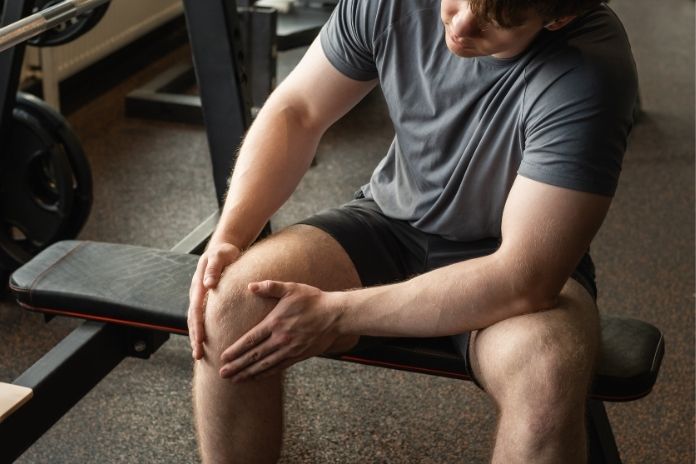
Your body gives signals before a serious problem comes. Persistent pain during or after exercise is the first sign. Not just discomfort, but pain that stays or increases.
Swelling or stiffness around the knee is another indicator. It shows the joint is reacting to stress. If the range of motion reduces, like difficulty bending or straightening the knee, it should not be ignored.
In such cases, reducing load or modifying exercise is better than pushing through. And if symptoms continue, proper evaluation is needed. Ignoring small signals is how long-term problems develop.
Read More: Athlete-Style Full-Body Conditioning for Power and Speed
Final Thoughts: The “Best” Exercise Depends on Your Knees
Sled pushes are not magical, and squats are not dangerous. The real difference is in how your knees experience them.
Sled pushes provide a controlled, lower-shear stress option, which many people tolerate better, especially when joints are sensitive. Squats provide full-range strength and structural adaptation, which is important for long-term resilience.
The smartest approach is not choosing one forever but learning when to use which. Knee health is not about avoiding load. It is about managing load in a way that your joint can adapt to.
- Knee health is more about the type of force than just the amount of weight. Shear forces may play a bigger role in irritation than commonly discussed.
- Sled pushes highlight a gap in training research; most studies focus on vertical knee joint loading, like squats, but horizontal resistance training is still underexplored for joint longevity.
- Avoiding deep knee functional movement patterns completely may reduce pain in the short term but can reduce joint capacity long-term. Balance is necessary.
- Self-limiting exercises like sled pushes may reduce injury risk not because of mechanics alone, but because they naturally prevent overreaching.
- There is limited long-term data comparing cartilage adaptation between eccentric-heavy vs. concentric-dominant exercises; this is an important research gap in joint health science..
FAQs
1. Are sled pushes better than squats for knee pain?
For many people with knee pain, sled pushes feel more comfortable because they reduce shear stress and avoid heavy eccentric loading. But sled pushes vs. squats depend on the individual condition.
2. Can I completely replace squats with sled pushes?
You can do so for some time, especially if managing pain. But for full strength and joint capacity, including some form of squat variation is usually beneficial.
3. Do sled pushes build muscle like squats?
They build strong quadriceps through strengthening and conditioning but may not provide the same full-body strength and muscle development as squats.
4. Why do my knees hurt during squats but not sled pushes?
Squats involve deeper knee flexion and higher shear forces. If your joint is sensitive, this can cause discomfort, while sled pushes keep stress more controlled.
5. How often should I use sled pushes for knee health?
2–3 times per week is common. They can be used as a warm-up, a main exercise, or a finisher depending on your program.
References
- Hody, S., Croisier, J.-L., Bury, T., Rogister, B., & Leprince, P. (2019). Eccentric Muscle Contractions: Risks and Benefits. Front in Physiology.
- Pino-Mulero, V., Soriano, M. A., Giuliano, F., & González-García, J. (2024). Effects of a priming session with heavy sled pushes on neuromuscular performance and perceived recovery in soccer players: a crossover design study during competitive microcycles. Biology of Sports, 42(1), 59–66.
- Torry, M. R., Myers, C., Shelburne, K. B., Peterson, D., Giphart, J. E., Pennington, W. W., Krong, J. P., Woo, S. L.-Y., & Steadman, J. R. (2012). Relationship of Knee Shear Force and Extensor Moment on Knee Translations in Females Performing Drop Landings: A Biplane Fluoroscopy Study. PMC, 26(10), 1019–1024.
In this Article