










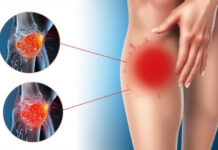








You’ve done the OTC treatment, maybe twice. The symptoms cleared up for a week or two, then came right back. Itching, discharge, and that familiar low-grade pelvic discomfort. You’ve started to think your body just runs this way, that you’re prone to chronic yeast infections.
But persistent vaginal symptoms that keep returning, especially when they shift in character or arrive alongside pelvic pain, are not always a Candida problem. In some cases, they may indicate pelvic inflammatory disease, a serious bacterial infection of the upper reproductive tract that can go undetected for months.
Understanding the difference between a genuine recurrent yeast infection and a possible chronic yeast infection or PID misdiagnosis may protect your long-term reproductive health.
This article covers how PID symptoms can mimic a yeast infection, why undetected STIs are often the hidden driver, what signs should prompt a clinical evaluation, and how doctors sort out what’s actually happening.
- Recurring yeast symptoms that don’t fully clear between treatment cycles may point to something other than Candida overgrowth, including pelvic inflammatory disease.
- PID and yeast infections share surface-level symptoms, particularly changes in discharge and mild pelvic discomfort, making self-diagnosis unreliable.
- Undetected STIs from bacteria like chlamydia, gonorrhea, and Mycoplasma genitalium can trigger PID with minimal early symptoms, delaying proper care.
- Getting tested rather than repeatedly self-treating is the fastest path to the right diagnosis and the right treatment.
Read More: Pain After Sex: Common Causes, What’s Normal and When to See a Doctor
Can Chronic Yeast Infections Be Misdiagnosed?
Self-diagnosis of vaginal infections is extremely common, and for understandable reasons. Yeast infection treatments are cheap, available without a prescription, and work quickly when the problem genuinely is Candida.
But a 2022 study published in PLOS ONE found that among patients seeking care for vulvovaginal candidiasis in the U.S., a significant proportion were treated empirically without laboratory confirmation, raising meaningful concerns about misdiagnosis and inappropriate antifungal treatment.
The overlap in symptoms is the root of the problem. Both yeast infections and PID can produce vaginal discharge, lower pelvic discomfort, and pain during intercourse. When a patient arrives with those complaints and a prior history of yeast infections, both the patient and sometimes the clinician may default to a familiar explanation.
A review published in SAGE Open Medicine noted that symptoms of vaginal infection are largely nonspecific and should not be used in isolation for clinical diagnosis, precisely because this pattern leads to under- and overdiagnosis. Each round of treatment that doesn’t resolve the root cause is time during which an underlying infection may be progressing.
What Counts as a “Chronic” or Recurrent Yeast Infection?
Recurrent vulvovaginal candidiasis is clinically defined as three or more symptomatic episodes within twelve months, each confirmed by laboratory testing. That last part is critical. Frequency alone does not establish a diagnosis. Without testing, what feels like recurring yeast infections may be multiple episodes of a different condition, overlapping infections, or symptoms that never fully resolve.
When Candida is genuinely the issue, recurrence usually has a traceable driver. Antibiotic use disrupts the vaginal microbiome by killing off Lactobacillus bacteria that normally keep yeast in check. Hormonal changes during pregnancy, menopause, or hormonal contraceptive use alter the vaginal environment in ways that favor Candida overgrowth.
Poorly controlled diabetes creates elevated glucose levels in vaginal secretions that feed yeast proliferation. Immune suppression from medications or underlying conditions reduces the body’s ability to limit fungal growth. The infection responds to antifungal treatment, stays away for a predictable period, then recurs when the underlying trigger reasserts itself.
Red flags appear when that cycle breaks down. If symptoms return within days of completing treatment, if they don’t fully resolve during the treatment period, if the discharge looks different from typical yeast infection discharge, or if pelvic pain is deepening rather than staying mild, the picture no longer fits standard RVVC. That’s when the misdiagnosis of recurrent yeast infection becomes clinically relevant.
How PID Symptoms Can Mimic a Yeast Infection
PID begins as an ascending infection of the reproductive tract, but in its earlier stages, it can present with symptoms that look a lot like a vaginal infection. PID can produce a mucopurulent cervical discharge that a patient may describe in terms similar to yeast infection discharge, particularly early on.
Mild pelvic discomfort, a dull ache, or pressure in the lower abdomen is present in both conditions. Painful urination, while more classically associated with UTIs, can appear in either. The differentiating features matter enormously. Deeper pelvic pain that persists throughout the day is more characteristic of PID. Dyspareunia with deep penetration suggests inflammation higher up in the reproductive tract.
Abnormal uterine bleeding, whether spotting between periods or heavier-than-usual flow, indicates the uterus or fallopian tubes may be involved. Low-grade fever and general malaise accompanying persistent vaginal discharge are rarely features of an uncomplicated yeast infection but can appear with PID.
Why Persistent Symptoms Are a Red Flag

Persistence is one of the most clinically meaningful signals in vaginal health. A well-treated yeast infection clears within three to seven days of appropriate antifungal therapy. Symptoms continuing past that window, or returning within a week or two of completing treatment, suggest something other than simple Candida overgrowth.
Recurrence soon after treatment may indicate that the antifungal resolved a yeast component, while a bacterial infection continued driving symptoms. Over time, untreated PID can become subclinical and chronic, producing background pelvic discomfort that patients may normalize.
Systemic symptoms appearing alongside persistent pelvic pain, including increasing fatigue or low-grade fever, narrow the window to prevent long-term reproductive complications.
The Role of Undetected STIs in Ongoing Symptoms
According to StatPearls, PID is typically an ascending infection with the majority of cases linked to sexually transmitted infections. Chlamydia trachomatis and Neisseria gonorrhoeae are the most frequently implicated pathogens, capable of traveling from the cervix into the uterus and fallopian tubes, where they trigger the inflammatory cascade that defines PID.
Mycoplasma genitalium is increasingly recognized as a third major contributor. A 2024 systematic review and meta-analysis in Clinical Infectious Diseases found that M. genitalium was associated with a 67% increase in the odds of PID and was detected in roughly one in ten clinical PID diagnoses. The authors recommended routine testing for M. genitalium at initial PID diagnosis.
Chlamydia is notorious for being asymptomatic or producing only subtle symptoms early on. An infected person may notice nothing or may attribute a slight increase in chronic vaginal discharge to minor irritation.
Gonorrhea and M. genitalium can similarly present with vague or absent symptoms in the lower genital tract, even as the infection ascends. This is precisely how a woman can have an active STI silently fueling PID while attributing her ongoing symptoms to a recurring yeast infection. Without treatment, ascending bacterial infections do not plateau.
Chlamydia and gonorrhea can progress from the cervix to the endometrium, then to the fallopian tubes, and in severe cases to the ovaries and pelvic peritoneum. At each stage, the body’s inflammatory response produces scar tissue that drives PID’s most serious long-term complications, even when symptoms remain mild.
Can You Have Both PID and a Yeast Infection?
Co-infections are more common than most people realize. A bacterial STI that alters vaginal pH and disrupts Lactobacillus populations can create conditions favorable to Candida overgrowth, meaning a patient may genuinely have both PID and a concurrent yeast infection at the same time.
Michael Ingber, MD, has explained that people with a yeast infection alongside a bacterial STI may be more likely to develop PID than those with the STI alone, noting that research has found yeast and bacteria associated with vaginal infections are occasionally detected in the cervix of people with PID.
This is why the presence of yeast on a vaginal swab should not end the diagnostic conversation. Testing for multiple causes simultaneously gives a clearer picture of what is actually driving the symptoms.
Signs Your “Chronic Yeast Infection” Might Be Something More
Certain patterns should prompt clinical evaluation rather than another round of self-treatment. Persistent pelvic pain that doesn’t track with your menstrual cycle and doesn’t resolve after antifungal treatment is one of the clearest signs that something other than yeast is involved.
Pain during intercourse that feels deeper than surface-level vulvar irritation suggests upper tract involvement. Fever above 100.4°F alongside vaginal symptoms is never a feature of an uncomplicated yeast infection.
Abnormal bleeding, particularly mid-cycle spotting, can indicate endometrial inflammation. And the most straightforward signal: no meaningful improvement after completing a full antifungal course.
Read More: Can Heavy Periods Be a Sign of Something Serious?
How Doctors Differentiate Recurrent Yeast Infection From PID
A careful clinical history is the starting point. A provider will ask how frequently symptoms recur, how quickly they return after treatment, whether they fully resolve between episodes, and whether any new features have emerged, including changes in pain location or systemic symptoms. The trajectory of symptoms matters as much as the current presentation.
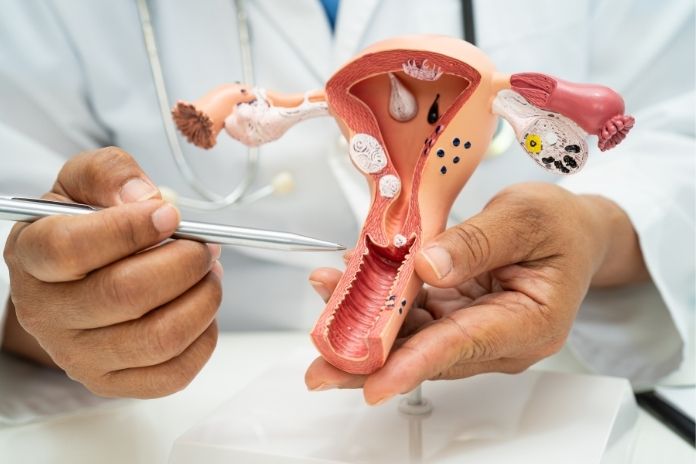
A bimanual pelvic examination is essential. Cervical motion tenderness, uterine tenderness, and adnexal tenderness are the three hallmark clinical findings that support a PID diagnosis. These cannot be assessed without a physical exam, which is one reason repeated self-treatment without professional evaluation carries real clinical risk.
Vaginal and Cervical Testing
A wet prep or swab can confirm or rule out Candida, bacterial vaginosis, and trichomoniasis. Cervical swabs for chlamydia and gonorrhea via nucleic acid amplification testing are standard when PID is suspected. Testing for Mycoplasma genitalium is increasingly recommended given its established association with PID and its detection gap in routine STI screening.
STI Screening and Additional Tests
Sharon L. Hillier, PhD, professor at the University of Pittsburgh School of Medicine and director of reproductive infectious disease research at Magee-Womens Research Institute, has published extensively on PID and the vaginal microbiome.
Her 2021 review in the Journal of Infectious Diseases highlighted that because PID can arise when vaginal microbiome-associated bacteria ascend into the upper genital tract, comprehensive microbiological testing often reveals more than chlamydia and gonorrhea alone. A pelvic ultrasound may be used when a tubo-ovarian abscess is suspected.
Why Early Detection of PID Matters
The consequences of untreated PID are not abstract. A 2024 study in Pakistan Journal of Medical and Health Sciences found that women with a history of PID carried substantially elevated risks for infertility, ectopic pregnancy, and chronic pelvic pain. Each additional PID episode raises the risk of infertility further.
As per the Mayo Clinic, PID is a leading cause of ectopic pregnancy. Scar tissue from fallopian tube inflammation can partially obstruct the tube, creating conditions where a fertilized egg implants outside the uterus, a potentially life-threatening emergency.
The CDC’s STI Treatment Guidelines confirm that PID diagnosed before structural damage occurs can typically be treated on an outpatient basis with oral antibiotics. The opportunity to avoid surgery, chronic pelvic pain, and fertility complications hinges almost entirely on how quickly the diagnosis is made.
Karen Wendel, MD, an infectious disease physician and co-author of a 2024 Medical Clinics of North America review on Mycoplasma genitalium, has noted that FDA-approved nucleic acid amplification testing has significantly improved the ability to diagnose and treat this emerging STI, underscoring the importance of comprehensive testing when PID is suspected.
When to Seek Medical Evaluation
An appointment is warranted without delay if any of the following apply:
- Symptoms lasting longer than seven to ten days despite antifungal treatment
- Repeated episodes within weeks of completing treatment
- New or deepening pelvic pain that doesn’t resolve with over-the-counter treatment
- Fever or chills alongside vaginal symptoms
- Pain during intercourse, particularly deep pelvic pain
- A significant shift in discharge character, including odor or color changes toward yellow or green.
Each of these signals is outside the normal pattern of a yeast infection, and each warrants clinical assessment.
Practical Steps if You Keep Getting “Yeast Infections”

Avoid repeated self-treatment without confirmation. If you have treated two or more episodes without laboratory testing, seek a confirmed diagnosis before treating again. The next antifungal course will not address a bacterial co-infection or STI that may be the actual driver.
Track symptom patterns carefully. Keep notes on when symptoms start, what they feel like, whether they fully resolve between episodes, and whether pelvic pain, spotting, or fever are present. This documentation is useful for your next clinical visit.
Consider STI screening. If you have had more than two yeast infection episodes in a year, a full STI panel, including testing for chlamydia, gonorrhea, and M. genitalium, is a reasonable step that can rule out a hidden bacterial driver. Follow up after treatment rather than retreating empirically if symptoms recur within a few weeks.
Fast recurrence after a completed course is clinically informative and should not be dismissed. Discuss recurrent symptoms with a clinician experienced in vaginal microbiome imbalance and co-infection, particularly if earlier visits have not included a pelvic exam or STI testing.
Key Takeaway: Recurrent Symptoms Deserve a Closer Look
Recurrent yeast infections are real, and they often have clear, treatable causes. But when symptoms keep returning, follow a pattern of pelvic pain, or stop responding to standard antifungal treatment, it is no longer enough to assume the same explanation applies.
At that point, the risk is not just discomfort. It is misdirection. Pelvic inflammatory disease does not always present dramatically. It can develop gradually, with symptoms that overlap with more familiar and less serious conditions. That overlap is where delays happen.
Treating recurring symptoms as routine can allow an underlying infection to persist, increasing the risk of complications that are harder to reverse. The distinction between a chronic yeast infection and something like PID is not something symptoms alone can reliably make.
It requires a clinical evaluation, a pelvic exam, and appropriate diagnostic testing. That step is not excessive. It is necessary when the pattern stops being straightforward. What matters here is not reacting to a single episode but recognizing when the pattern changes. Recurrence, pain, and lack of lasting relief are signals that the situation needs a closer look.
Ignoring those signals or repeatedly self-treating can delay the kind of care that actually addresses the root cause. Persistent symptoms deserve more than temporary fixes. They require clarity. And getting that clarity early can make the difference between a manageable condition and one that carries long-term consequences.
References
- Benedict, K., Lyman, M., & Jackson, B. R. (2022). Possible misdiagnosis, inappropriate empiric treatment, and opportunities for increased diagnostic testing for patients with vulvovaginal candidiasis — United States, 2018. PLOS ONE, 17(4), e0267866.
- Centers for Disease Control and Prevention. (2021). Sexually transmitted infections treatment guidelines, 2021: Pelvic inflammatory disease (PID).
- Hillier, S. L., Bernstein, K. T., & Aral, S. (2021). A review of the challenges and complexities in the diagnosis, etiology, epidemiology, and pathogenesis of pelvic inflammatory disease. The Journal of Infectious Diseases, 224(Supplement_2), S23–S28.
- Htaik, K., Vodstrcil, L. A., Plummer, E. L., Sfameni, A. M., Machalek, D. A., Manhart, L. E., & Bradshaw, C. S. (2024). Systematic review and meta-analysis of the association between Mycoplasma genitalium and pelvic inflammatory disease. Clinical Infectious Diseases.
- Mayo Clinic. (2024). Pelvic inflammatory disease (PID) — Symptoms and causes.
- Neal, C. M., & Martens, M. G. (2022). Clinical challenges in diagnosis and treatment of recurrent vulvovaginal candidiasis. SAGE Open Medicine, 10.
- Obafemi, O. A., Rowan, S. E., Nishiyama, M., & Wendel, K. A. (2024). Mycoplasma genitalium: Key information for the primary care clinician. Medical Clinics of North America, 108(2), 297–310.
- Wazir, N. A., et al. (2024). Long-term reproductive and gynecological outcomes in women with a history of pelvic inflammatory disease. Pakistan Journal of Medical and Health Sciences, 18(1), 409–413.
In this Article