















- Swimming may be one of the most heart-friendly exercises available.
- Swimming aids in reduction of blood pressure. It can improve cholesterol, strengthen the heart muscle, and even reduce long-term mortality risk.
- Swimming places very little stress on joints; many people can continue swimming for decades, making it one of the most sustainable forms of cardiovascular exercise.
For many years, people considered running the gold standard for heart health. But long-term research has quietly revealed something interesting.
In one study of 40,547 men for 32 years, swimmers had 53% less risk of dying instead of sedentary people, 50% lower than walkers, and even 49% lower than runners.
Swimming works differently inside the body. It is the only common cardio exercise done horizontally, inside water, that pushes the body from all sides. Breathing is controlled. Muscles across the whole body are used. These subtle differences influence how swimming’s cardiovascular benefits affect the body.
The result is not just a physical workout; it becomes a very specific training environment for the heart and blood vessels. To understand why, we need to look at what starts happening in your cardiovascular system the moment your body enters the water.
What Does Swimming Do For Your Cardiovascular Health – The Immediate and Long-Term Effects

1. The Hydrostatic Effect – A Cardiovascular Response Unique to Swimming
When your body enters water, something interesting begins immediately. Water pushes gently against the skin from every direction. Scientists call this “hydrostatic cardiovascular pressure.” This pressure pushes blood from the legs and arms toward the chest. Suddenly, the heart receives a greater volume of blood returning with each beat.
Doctors call this increased cardiac preload. Because more blood is entering the heart, the heart pumps more blood per beat. That is known as higher stroke volume. This means the heart does not need to beat extremely fast to deliver oxygen. So while running pushes the heart by making it beat faster, swimming trains the heart by increasing the amount of blood pumped with each beat.
Another factor is body position. When swimming, the body is horizontal. Blood does not need to fight gravity as much compared to standing exercise.
Then there is breathing. Swimming forces a controlled breathing rhythm. The swimmer cannot breathe randomly. This pattern slightly changes the pressure inside the chest and improves circulation between the lungs and the heart.
All these together create a cardiovascular stimulus that is different from land exercise. Not necessarily stronger. But definitely different.
What Long-Term Swimming Does to the Heart Muscle
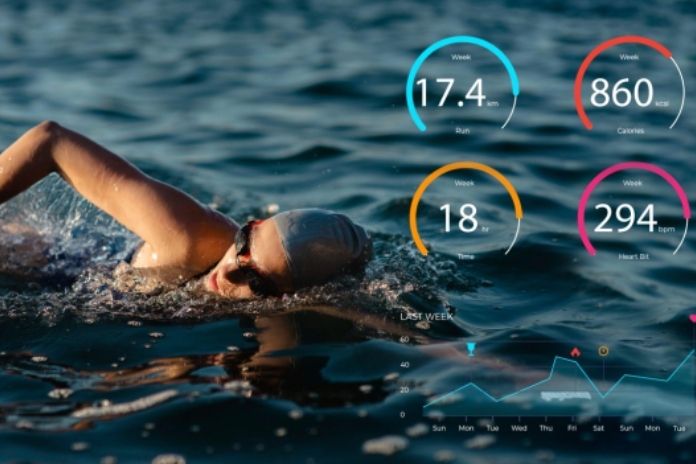
Like any muscle, the heart adapts to training. Regular swimming makes the heart become slightly larger and stronger. Doctors sometimes call this “an athlete’s heart.” But this is not a disease. It is an efficient adaptation.
Over time, the heart pumps more blood with each beat. So it does not need to beat as frequently. That is why swimmers often develop a lower resting heart rate. Instead of beating 75–80 times per minute at rest, trained swimmers may sit around 55–60 beats per minute. This means the heart works less frequently across a lifetime.
Some studies in middle-aged adults with high blood pressure showed that 8 weeks of swimming training improved several risk markers at once:
- Resting heart rate decreased
- LDL cholesterol decreased
- Triglycerides decreased
- Swimming’s blood pressure reduced
- HDL (“good cholesterol”) increased
Few lifestyle changes impact so many cardiovascular markers together. Important point: a stronger heart is not just about athletic performance. A stronger heart needs fewer beats to do the same work. That means less long-term strain on the cardiovascular system.
Quick Fact
A trained swimmer’s heart may pump 20–30% more blood per beat compared to an untrained person. This is one reason resting heart rate falls with training.
Blood Pressure—One of Swimming’s Most Consistent Benefits

1. The Blood Pressure Evidence Is Specific and Replicable
Blood pressure reduction is one of the most consistent cardiovascular benefits of swimming. Several clinical trials found similar results even when populations were different. One study from the University of Texas observed adults who started swimming a few times each week.
Their systolic blood pressure dropped about 9 points on average. For many patients, that drop is similar to what doctors see with low-dose blood pressure medication.
Another controlled trial followed sedentary women with mild hypertension for 15 weeks. Two swimming programs were tested:
- Moderate-intensity swimming
- High-intensity swimming
Both groups improved. Participants showed:
- 4–6 mmHg reduction in systolic blood pressure
- Lower heart rate while resting
- Improved cardiovascular fitness
Interestingly, high-intensity swimmers improved fitness on land tests as well, meaning swimming transferred benefits outside the pool. A newer systematic review in sports science research confirmed the pattern. Across multiple populations, swimming improved:
- Cardiorespiratory fitness
- Body composition
- Blood pressure
Not every exercise shows such consistent results across different studies. Swimming does.
Swimming vs. Running vs. Walking – How It Compares

1. The Mortality Data – A 32-Year Perspective
The most talked about research comes from a long-term study that followed over 40,000 men for 32 years. After adjusting for smoking, age, BMI, alcohol use, and family history of heart disease, researchers found something striking about sedentary people vs walkers’ vs swimmers’ vs runners’ heart health.
Compared with sedentary people:
- Swimmers had 53% lower mortality risk
Compared with walkers:
- Swimmers had 50% lower mortality risk
Compared with runners:
- Swimmers had 49% lower mortality risk
These numbers show that swimming can deliver long-term cardiovascular protection similar to, or sometimes greater than, other common cardio exercises.
Other population studies also show that regular swimmers have:
- 28% lower risk of all-cause mortality
- 41% lower risk of cardiovascular death
Those are strong numbers in public health research.
The Low-Impact Advantage – Why This Matters for Long-Term Adherence
One often overlooked factor in swimming’s heart health benefits is not intensity. It is consistency across decades. Running and high-impact exercise can sometimes lead to:
- Knee injuries
- Hip problems
- Joint pain
When that happens, people stop exercising completely. Swimming avoids much of this problem. Water supports about 90% of body weight. This means joints experience much less impact. But at the same time, water creates resistance. Muscles must push against it with every stroke. So swimming becomes a rare combination:
- Low impact on joints
- High cardiovascular demand
This is why swimming is good for low-impact cardio heart health and works well for people with:
- Arthritis
- Obesity
- Previous joint injury
- Older age
1. The Honest Caveat
“Recreational swimming will burn about – the same calories as brisk walking,” says Dr. I-Min Lee, a professor of medicine. But it is also important not to exaggerate. Swimming is an excellent exercise. But it is not magically better than all other cardio in every situation. Some research suggests that certain coronary heart disease risk markers improve slightly more with land-based exercise like brisk walking or running.
For example, improvements in some metabolic markers or bone density may sometimes be stronger with weight-bearing activity. So the real message is not “swimming beats everything.” The message is this: Swimming is one of the most effective cardiovascular exercises that people can sustain safely for many years. And sustainability matters.
Read More: 5 Effects of Hurting Your Eyes After Swimming
Who Benefits Most From Swimming for Heart Health
1. The Populations Where Swimming’s Low-Impact Nature Has the Most Clinical Value
Swimming is helpful for almost everyone. But some groups benefit even more.
Older adults
In one randomized study of adults aged 60–70, high-intensity interval swimming improved cardiovascular endurance significantly over 16 weeks. For many older adults, high-impact exercise is simply not realistic. Swimming gives them a safe alternative.
People with hypertension
Because swimming consistently lowers blood pressure in trials, it is often recommended as part of lifestyle treatment for hypertension.
Cardiac rehabilitation patients
Swimming is slowly becoming part of some cardiac rehabilitation programs.
Patients recovering from coronary artery disease or heart surgery may use aquatic exercise to rebuild cardiovascular capacity.
People with arthritis or joint conditions
Water buoyancy reduces joint stress while still allowing full cardiovascular stimulation. This makes swimming one of the few exercises that support both joint health and heart health at the same time.
2. Important Medical Note
Anyone with diagnosed cardiovascular disease, a previous heart attack, severe arrhythmia, or advanced heart failure should consult a cardiologist before starting swimming.
Read More: 8 Sleep Essentials for Heart Health: Products to Improve Your Sleep Quality
How to Start – Evidence-Aligned Practical Guidance

1. What a Heart-Healthy Swimming Routine Actually Looks Like
Research protocols that improved cardiovascular health usually followed similar patterns. Here is a simplified version.
For blood pressure reduction
- 3 sessions per week
- 30–45 minutes
- Moderate-intensity swimming
For cardiovascular endurance
- 2–3 sessions weekly
- Gradually increase duration over 8–16 weeks
For long-term mortality reduction
Regular weekly swimming over the years is the key factor.
For cardiac rehabilitation
Exercise must be physician-guided and intensity determined by stress testing.
2. Beginner Advice
If you are really new to swimming, then start small. 10–15 minutes per session. This is completely good at the start. Gradually increase time as endurance improves. “If you’re a bit of a reluctant exerciser – or if you’re just recovering from a heart attack or a heart arrhythmia, then you can start small with something like water walking or water aerobics,” an exercise physiologist, Christopher Travers, suggests.
Mix strokes if possible:
- Freestyle
- Backstroke
- Breaststroke
Different strokes distribute muscular workload and reduce repetitive strain. Stop immediately and seek medical advice if you feel:
- Chest discomfort
- Severe breathlessness
- Dizziness
- Unusual fatigue
Read More: Evidence: How Reversing Prediabetes Affects Heart Health
Conclusion
Swimming does something unusual for the cardiovascular system. It combines aerobic conditioning, full-body muscle engagement, controlled breathing, and water pressure effects that change circulation patterns. Research consistently shows benefits in:
- Blood pressure
- Resting heart rate in swimmers
- Cholesterol levels
- Body composition
- Long-term mortality risk associated with swimming
It is not always superior to every land-based exercise for every cardiovascular marker.
But swimming offers something rare: high cardiovascular benefit with low joint stress, making it easier to continue for decades. And that may be its greatest advantage. Because the best exercise for your heart is not the one that works for three months. It is the one you can keep doing for 30 years.
- When swimming, water pressure shifts blood toward the heart, increasing stroke volume during exercise.
- Long-term swimmers often have improved cardiac efficiency.
- Swimming can reduce systolic blood pressure by 4–9 mmHg.
- Swimmers may have a lower long-term death risk compared with sedentary individuals and even some other exercisers.
- More long-term studies on swimming and mortality, including women and diverse populations, are still required.
References
- Bruning, R. S., & Sturek, M. (2014). Benefits of exercise training on coronary blood flow in coronary artery disease patients. Progress in Cardiovascular Diseases, 57(5), 443–453.
- Chase, N. L., Sui, X., & Blair, S. N. (n.d.). Swimming and All-Cause mortality risk compared with running, walking, and sedentary habits in men. ScholarWorks@BGSU.
- Chelikdani, G. A., & Rezaeeieh, F. D. (2024). Effect of eight weeks of swimming on cardiovascular health: Reduction of risk factors in middle-aged men with hypertension. World Journal of Biology Pharmacy and Health Sciences, 19(2), 050–054.
- Chen, Y., Lan, Y., Zhao, A., Wang, Z., & Yang, L. (2024). High-intensity interval swimming improves cardiovascular endurance, while aquatic resistance training enhances muscular strength in older adults. Scientific Reports, 14(1), 25241.
- Lahart, I. M., & Metsios, G. S. (2017). Chronic Physiological Effects of Swim Training Interventions in Non-Elite Swimmers: A Systematic Review and Meta-Analysis. Sports Medicine, 48(2), 337–359.
- Nualnim, N., Parkhurst, K., Dhindsa, M., Tarumi, T., Vavrek, J., & Tanaka, H. (2012, January 24). Effects of swimming training on blood pressure and vascular function in adults >50 years of age – American College of Cardiology. American College of Cardiology.
- Oja, P., Kelly, P., Pedisic, Z., Titze, S., Bauman, A., Foster, C., Hamer, M., Hillsdon, M., & Stamatakis, E. (n.d.). Associations of specific types of sports and exercise with all-cause and cardiovascular-disease mortality: a cohort study of 80 306 British adults. British Journal of Sports Medicine, 51(10), 812–817.
In this Article