













- Belly fat (visceral fat) is more harmful than overall body weight because it releases inflammatory chemicals that damage blood vessels and the heart.
- BMI alone cannot detect this risk because it measures total weight but does not show where fat is stored in the body.
- A simple waist-to-hip ratio measurement can reveal hidden cardiovascular risk, even in people with a “normal” weight.
For many years, the vast majority of discussions about weight and heart disease have been based on a single criterion: body mass index (BMI). Doctors have been using BMI to determine whether people are of a normal weight, overweight, or obese.
However, recent studies have found that one of the most important risk factors for heart disease has been ignored, raising questions such as “Does BMI predict heart disease accurately?” and highlighting growing concerns about BMI limitations and heart risk.
A 2025 study of 2,244 adults who underwent cardiac MRI found that abdominal obesity, as defined by the ratio of hip to waist circumference, was associated with even more concerning patterns of cardiac remodeling than obesity. The study was done by Dr. Jennifer Erley at University Medical Center Hamburg-Eppendorf.
The study helps to understand the relationship between beer belly and overall weight on heart health. The study found that an individual can have a perfectly normal BMI but still be at great risk for heart disease.
In this article, we will learn how visceral fat differs from normal body fat and why it poses a greater risk to heart health. We will also explore how belly fat changes the structure of the heart compared with general obesity.
Finally, we will look at how to measure your real cardiovascular risk and practical ways to reduce abdominal fat.
Read More: How Regular Pranayama Can Help with Belly Fat & Stress Eating
Two Types of Fat — One Is Far More Dangerous
Subcutaneous Fat vs. Visceral Fat — Not All Fat Is Equal
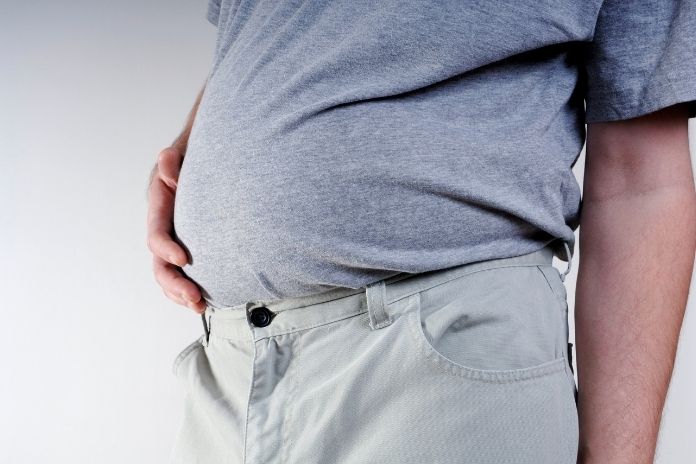
When people think of body fat, they think of that soft tissue just beneath the skin that you can grab around your belly or thighs. This is called subcutaneous fat.
When present in normal amounts, it serves several functions: it stores energy for the body, helps keep us warm, and helps regulate hormone levels. It is relatively inert compared to the fat deeper inside our bodies.
The problem lies in the fat that builds up inside our belly. This is called visceral fat. It does not sit just beneath our skin, as subcutaneous fat does; it surrounds our organs, such as the liver, pancreas, and intestines. It has a direct connection to our bloodstream via the portal vein, which means it can affect our metabolism throughout the body.
Scientists agree that visceral fat behaves differently from subcutaneous fat. It is not just a passive storage place for our body; it is a functioning organ that produces hormones. inflammatory chemicals, and other signals that affect our metabolism.
This is what causes visceral fat inflammation, which disrupts our normal cardiovascular function.
A significant effect of abdominal fat is that it causes insulin resistance, which makes the belly grow. The fat in the belly impairs insulin function by making it harder for the body to absorb glucose from the blood. Eventually, this metabolic stutter causes type 2 diabetes and throws the balance of cholesterol and triglycerides in the blood out of whack.
The pro-inflammatory factors released by abdominal fat can damage the inner lining of blood vessels. This causes a condition known as endothelial dysfunction and makes the arteries less flexible. This combination of factors causes more belly fat and contributes to heart problems, linking abdominal obesity to conditions such as coronary heart disease and stroke, and increasing the risk of belly fat-related heart disease.
The impact that abdominal fat has on the body’s metabolic processes is so great that a scientist can use the visceral adiposity index heart risk measurement, or VAI, as a cardiovascular disease indicator to measure the level of cardiovascular risk.
The distinction between subcutaneous fat vs. visceral fat is therefore crucial. While both contribute to body composition, only visceral fat is strongly associated with the metabolic disturbances and inflammation that drive visceral fat’s cardiovascular damage.
Why BMI Misses This Entirely
It has been a popular choice for health assessment over the years due to its simplicity and low cost, especially for large populations. Nevertheless, this simplicity makes it an unreliable method for determining heart health risks and highlights the limitations of BMI that researchers on heart risk increasingly discuss.
It measures body fat based on height and weight. It does not differentiate between body muscles and fats. Most importantly, it does not reveal the distribution of body fats.
Two people can have similar BMIs but different health risks due to fat distribution. If most of the fat is around the abdomen, the health risks may be higher than in people with fat distributed elsewhere.
This is one of the biggest disadvantages that health experts face in determining heart health risks. The study carried out in Hamburg demonstrates this. In the study, 69% of men and 56% of women were identified as overweight or obese based only on their BMIs.
On the other hand, 91% of the men and 64% of the women were identified as being at risk of high cardiovascular disease based on their waist-to-hip ratio and cardiovascular measurements.
The study revealed that a large number of people at high health risks due to abdominal obesity would be missed if only the BMI method were used. That is why the use of the waist-to-hip ratio and waist measurement is now recognized as a very important component in determining heart health risks.
The body’s weight is compared to height in the calculation of the BMI. The BMI does not reveal the distribution or potential health risks of body fat, which is why researchers ask, “Does BMI predict heart disease accurately?”
What Belly Fat Actually Does to Your Heart

Two Different Types of Heart Damage
The interesting thing to note here is the way overall obesity and abdominal obesity impact the heart. When the body’s overall weight increases, as reflected in an elevated BMI, the heart has to pump more blood to a larger mass.
This increases the overall volume of blood circulating and the workload on the heart. Over time, the heart compensates by enlarging the chambers to accommodate the increased blood volume.
However, abdominal obesity impacts the heart differently. Instead of increasing the size of the heart’s chambers to accommodate the increased blood volume, abdominal obesity affects the heart through concentric hypertrophy and remodeling of visceral fat.
This type of hypertrophy impacts the walls of the heart muscle. The walls of the heart muscle thicken. However, the chambers of the heart decrease in volume.
According to the Hamburg study, MRI scans were performed on the hearts of people with a higher waist-to-hip ratio. The scans showed thicker heart walls and smaller heart chambers. This type of cardiac remodeling in obesity results from increased metabolic stress from abdominal fat.
This affects the heart, making it appear larger and causing it to pump more blood to maintain circulation. However, the chambers of the heart are smaller. This is because the volume of blood the heart pumps between beats is reduced, which helps explain how visceral fat affects your heart.
Why This Pattern Is More Dangerous
The type of remodeling associated with visceral fat accumulation seems to raise more flags than the simple increase in heart size seen with general obesity. When the wall of the heart thickens, the size of the chamber decreases, which can cause the heart to lose the ability to completely relax between beats.
This prevents complete relaxation, which can cause a type of diastolic dysfunction, which is the failure of the heart to completely fill with blood during the relaxation phase. This can lead to a type of heart failure known as heart failure with a preserved ejection fraction.
Large studies conducted on populations have shown that the accumulation of visceral fat can cause a higher risk of cardiovascular disease.
The greater the visceral fat, the higher the risk of coronary heart disease, stroke, and death from cardiovascular disease. This research suggests that whether belly fat is worse than overall obesity is an important clinical question.
Evidence increasingly suggests that belly fat may cause harsher changes to the structure of the heart than general obesity and increase the risk of beer-belly heart disease.
Read More: Why Belly Fat Keeps Coming Back During Menopause (And How to Stop It)
The Alcohol Connection — Does Beer Actually Cause a Beer Belly?

The Science Behind the Name
The popular term “beer belly” is a common expression used to refer to the buildup of belly fat due to excessive consumption of alcoholic drinks. However, when one considers the scientific perspective on the relationship between excessive consumption of alcohol and the buildup of belly fat, the relationship may not be as straightforward as one might think.
According to scientific findings on the relationship between excessive consumption of drinks and the buildup of belly fat, it can contribute to the buildup of belly fat through a number of metabolic pathways.
Firstly, the liver, the primary organ responsible for metabolizing alcohol, slows the metabolism of regular body fats while processing alcohol. This may contribute to the buildup of belly fat.
Additionally, excessive consumption of alcoholic drinks may contribute to the buildup of belly fat by increasing the levels of the stress hormone cortisol. However, the Hamburg cardiac MRI study on the relationship between beer belly, heart disease risk, abdominal fat buildup, and cardiovascular changes did not assess the number of alcoholic drinks consumed by the participants.
Therefore, one may not conclusively say that the relationship between beer belly, risk of heart disease, and abdominal fat buildup is caused by excessive consumption of drinks. This is because the buildup of belly fat may result from several factors.
Some of the factors may include excessive consumption of refined carbs and sugars, stress levels, lack of physical activity, and genetic factors. This may explain why the popular term “beer belly” is commonly used to explain the buildup of belly fat. However, the term “beer belly” may not be accurate.
The Sex Difference — Why Men Are at Greater Risk
The Estrogen Factor
One key finding from the research is that fat affects the heart differently in men and women. Abdominal fat is more strongly linked to harmful changes in the heart in men than in women. This is mainly because men tend to store more fat around the abdomen. This type of fat, called visceral fat, is linked to a higher risk of heart damage.
Women, on the contrary, are likely to accumulate fat under the skin in the hip and thigh area. This type of fat distribution is less risky to the metabolism.
The difference is due to hormones. The hormones push the distribution of fat away from the abdominal area. The hormones also protect the blood vessels and the heart.
However, after menopause, the advantage is no longer there. The level of visceral fat increases. The difference is more noticeable. This suggests that the results of the cardiovascular measurements using the waist-to-hip ratio may differ between men and women.
Note: This does not mean women are protected. Postmenopausal women lose the estrogen advantage, and visceral fat risk rises sharply after menopause
How to Measure Your Real Risk — And What to Do About It

How to Calculate Your Waist-to-Hip Ratio
A simple way to measure your risk of heart problems based on your waist-to-hip ratio is to take a home measurement. To do this, measure your waist at its smallest point just above your belly button, and your hips at their widest point.
According to the World Health Organization, if you are
- A male with a waist-hip measurement of over 0.90 is likely suffering from abdominal obesity and a higher waist-to-hip ratio heart risk.
- Female with a waist-hip measurement of over 0.85, you are likely suffering from abdominal obesity.
A second indicator of possible damage caused by visceral fat is your waist measurement, which is over 102 cm (40 inches) if you are a male or over 88 cm (35 inches) if you are a female.
How to Reduce Visceral Fat Specifically

The key to losing visceral fat is not just about losing weight. It is more about lifestyle changes that target the fat that accumulates in the abdominal region.
Daily aerobic exercises, such as walking, cycling, and swimming, can help significantly reduce abdominal fat. Aerobic exercise helps improve the body’s insulin response and reduce inflammation that tends to occur in people with more visceral fat.
The food people eat can also help them lose abdominal fat. Reducing the consumption of sugar and processed food can help control metabolic processes that add to insulin resistance and belly fat accumulation.
Excessive alcohol consumption can also contribute to losing abdominal fat. Reducing alcohol consumption can help reduce fat storage in the abdominal region.
Stress and sleep can also contribute to the loss of abdominal fat. Stress can increase cortisol levels in the body. Excessive cortisol can contribute to the formation of abdominal fat. Losing even a small amount of abdominal fat can help improve health and reduce the risk of heart disease.
Read More: Low Impact Workouts That Burn Calories: 10 Exercises That Torch Fat
Conclusion
The key to the debate over beer belly vs. overall weight heart health is this: where the fat is located is important. Research has shown that, using cardiac MRI scans, fat in the abdominal region can actually cause changes in the heart that differ from those seen in overall obesity.
Such changes can make the heart less efficient and increase visceral fat vs. BMI, thereby increasing cardiovascular risk. While overall body weight is important, BMI is not a waste of time; your body weight can still affect your heart health.
The key to understanding the importance of your overall body weight and heart health is that while calculating your waist-to-hip ratio takes only a minute, it can provide valuable information that might otherwise be missed, especially when asking, “Is belly fat worse for your heart than being overweight?”
References
- Radiological Society of North America. (2025, December 1). “Beer belly” linked to heart damage in men.
- Bays, H. E. (2017). Adiposopathy, diabetes mellitus, and cardiovascular disease: Translational research and clinical recommendations. Journal of the American Heart Association.
- FirstWord Pharma. (2025, December 3). Abdominal obesity associated with harmful changes in heart structure.
- News-Medical. (2025, December 1). Beer bellies linked to worse heart structure changes, especially in men.
- The Times of India. (2024). Types of belly fat: Differences between subcutaneous and visceral fat, risks and ways to reduce it.
- University of Illinois Chicago. (2023). Why is visceral fat worse than subcutaneous fat?
In this Article