




















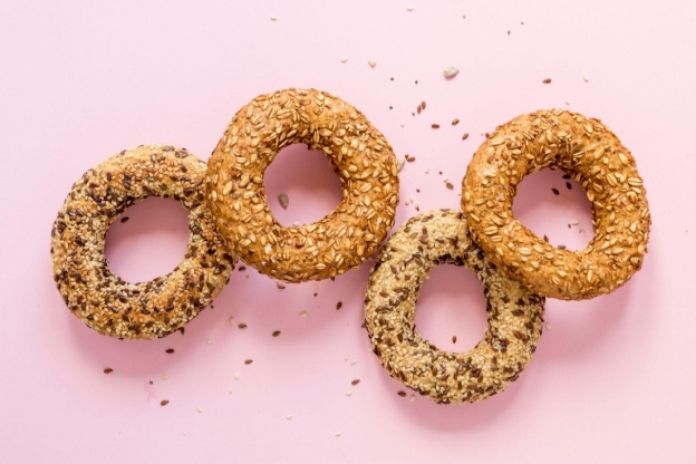
- Small daily breakfast habits, especially repeated exposure to saturated fats with refined carbs, may quietly increase long-term cardiovascular risk.
- Replacing butter or cream spreads with sunflower seeds and other plant-based fats can improve the quality of dietary fats and support LDL cholesterol control and heart health.
- Over time, consistent shifts toward polyunsaturated fats such as linoleic acid may help support cholesterol balance, blood vessel function, and overall cardiovascular health.
Morning food habits rarely look dangerous. That is precisely the problem.
Most people no longer begin the day with obviously greasy food. Instead, mornings now involve items that appear controlled, such as bagels, toast, baked rolls, packaged multigrain breads, and light spreads. Nothing alarming. Nothing excessive.
Yet cardiometabolic (heart-lipids) risk today is not coming from visible indulgence. It is coming from the predictable repetition of small nutritional imbalances.
A buttered bagel eaten once means nothing. A buttered bagel, eaten five mornings a week for ten years, quietly changes lipid exposure in the body.
What matters is not the bagel itself. It is the fat environment accompanying it, usually saturated (unhealthy) fat added to a refined carbohydrate base.
The interesting part is that correcting this pattern does not require abandoning familiar breakfast culture. Sometimes the adjustment is surprisingly modest: changing the type of fat entering circulation each morning.
Small daily diet changes – such as replacing butter with seeds rich in unsaturated fats – can quietly improve sunflower seeds’ heart health outcomes over time.
Sunflower seeds represent one such correction, not trendy, not exotic, but metabolically very different from what commonly lies beside breakfast bread, and their nutrient profile has been increasingly linked with sunflower seeds’ heart health benefits when they replace saturated fat sources.
The Breakfast Problem: Hidden Saturated Fats in Everyday Meals

We argue loudly about sugar and carbs. But the quality of fat slips under the table. People often assume saturated fat intake mainly comes from heavy dinners or fried foods. In practice, breakfast contributes more consistently.
And the base is not neutral. “Eating a bagel causes a rapid and significant rise in blood glucose due to it being a dense, high–glycemic index carbohydrate with very little fiber,” says Dr. Elizabeth Rubin, a board-certified physician. The spike is not dramatic in isolation. It is predictable. When that predictable glucose rise meets saturated fat, morning after morning, the metabolic signal becomes consistent.
Morning meals tend to include:
- Butter applied generously because portions feel small
- Cheese spreads marketed as light
- Bakery fats used during processing
- Cream-based accompaniments
- Commercial spreads containing palm or milk fat
None of these feels excessive individually. But breakfast differs from other meals in one way: it is rarely skipped once adopted.
Human metabolism responds strongly to the composition of the first meal. After overnight fasting, the body is metabolically sensitive. Lipid absorption pathways activate strongly during the first meal. When saturated fats dominate this window:
- LDL (bad cholesterol) particle production increases
- Hepatic cholesterol synthesis rises
- Post-meal inflammation markers elevate
- Endothelial (a thin, smooth, inner lining inside all your blood vessels) flexibility temporarily declines
This early-day lipid response repeats daily. Over the years, it has contributed to the persistent elevation of LDL cholesterol, one of the strongest predictors of cardiovascular disease.
Research consistently shows that fat quality, not only fat quantity, determines long-term heart risk. And breakfast is often the easiest place to change that quality.
The Heart-Healthy Swap: Sunflower Seeds vs. the Bagel Habit

Nutrition advice often fails because it asks people to eliminate entire foods. Removal rarely lasts. Replacement works better.
Sunflower seeds do not function as a “health food substitute.” They change the meal’s fat chemistry without demanding a behavioral overhaul.
A bagel with butter delivers carbohydrates, with saturated fat as the dominant type. A similar breakfast with sunflower seeds shifts the fat profile toward polyunsaturated fatty acids, making them one of the easiest plant-based fats for heart health, to introduce into a daily routine.
1. Comparing Fat Profiles
Saturated fats tend to reduce LDL receptor activity in liver cells. Cholesterol remains circulating longer before clearance.
Polyunsaturated fats behave differently. They promote hepatic uptake of LDL particles, thereby facilitating cholesterol processing rather than accumulation.
This difference becomes clearer when we look at polyunsaturated fats vs saturated fats in everyday diets. Saturated fats, commonly found in butter and cream-based spreads, tend to keep LDL cholesterol circulating longer in the bloodstream.
Polyunsaturated fats, such as the linoleic acid present in sunflower seeds, support more efficient cholesterol handling by the liver when they replace saturated fats in meals.
Sunflower seeds contain high amounts of linoleic acid, an essential omega-6 fatty acid that the body cannot produce on its own. Research exploring the relationship between omega-6 and heart disease increasingly suggests that when omega-6 fats replace saturated fats, cardiovascular risk markers may improve.
This distinction matters because cardiovascular risk is influenced less by total fat intake and more by which fats repeatedly replace others.
Many people unknowingly add healthy foods without removing unhealthy fat sources. In that situation, benefits remain minimal. Replacement, not addition, creates measurable change.
2. Nutrient Density That Outperforms Processed Breakfasts
Processed breakfast foods are efficient sources of calories. Sunflower seeds are a source of calories.
They supply:
- Vitamin E in unusually high concentration
- Magnesium, which supports vascular relaxation
- Plant sterols that influence cholesterol absorption
- Moderate amount of protein and fiber
Vitamin E deserves practical interpretation. Cholesterol becomes harmful mainly after oxidation, which is why vitamin E for cardiovascular support has attracted attention in nutrition research. Sunflower seeds naturally provide this antioxidant, along with beneficial fats, helping protect lipids from oxidative damage.
Cholesterol becomes harmful mainly after oxidation. Sunflower seeds provide antioxidants alongside fats, a nutritional combination that is uncommon.
Most breakfast foods provide neither protection nor balance, only fuel.
How Polyunsaturated Fats Support Cardiovascular Health
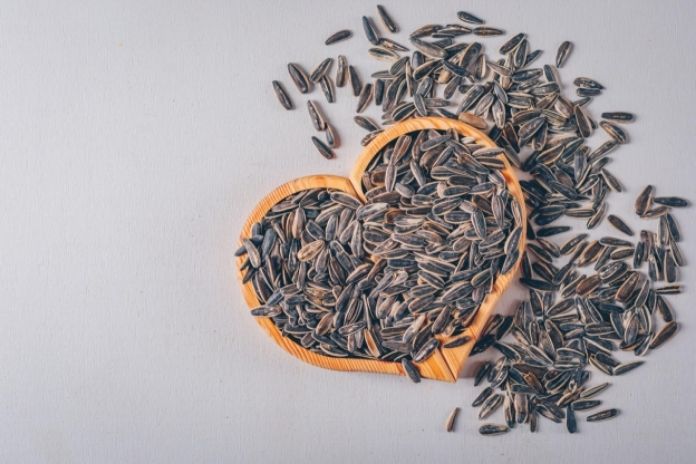
The discussion around fats often becomes ideological, good fats versus bad fats. Biology is less dramatic. Polyunsaturated fats influence cardiovascular health through cumulative, mechanical effects.
1. Lowering LDL and Triglycerides Naturally
When polyunsaturated fats replace saturated fats, especially through foods that help lower LDL cholesterol, such as seeds and nuts, the liver adjusts cholesterol handling in several ways.
- Liver cholesterol synthesis adjusts downward
- LDL clearance improves
- Triglyceride (a fat, mostly stored in the body) formation may decrease
Importantly, this occurs without severe dietary restriction. The body adapts to available fat types rather than reacting to deprivation.
This explains why small daily substitutions sometimes outperform aggressive short-term diets.
2. Blood Pressure Regulation and Vascular Tone
Nowadays, many people eat enough food but still do not get enough magnesium. Modern diets are often high in calories but low in essential minerals.
Sunflower seeds can help fill this gap and support magnesium and vascular health, as magnesium plays an important role in helping blood vessels relax and contract properly.
When the body does not get enough magnesium, blood vessels may gradually stiffen. You will not feel it immediately. After many years, it can turn into high blood pressure. So sunflower seeds are not like medicine. They are more like daily maintenance for the body.
3. Reducing Inflammation and Oxidative Stress
Heart problems today are not only about cholesterol. Many doctors now say long-term low inflammation also plays a big role.
The fats we eat become part of our body cells. Polyunsaturated fats in sunflower seeds gradually alter how inflammatory signals work within the body.
Sunflower seeds also have antioxidant nutrients. These help reduce oxidative stress, which can damage the lining of blood vessels.
You will not see a change in just a single day or even one week. It is a slow process. But over many years, small daily habits can actually make a big difference.
Read More: High-Oleic vs Regular Sunflower Oil: Which One Should You Use?
Practical Ways to Add Sunflower Seeds to Your Diet
Diet changes fail when they demand effort. Success happens when substitutions feel normal.
1. Healthy Breakfast Swaps
Practical adjustments include:
- Replacing butter layers with crushed sunflower seed topping
- Mixing seeds into curd or yogurt instead of sugary granola
- Adding to morning porridge for fat balance
- Blending soaked seeds into spreads instead of cream cheese
- Combining with fruit and whole grains to slow glucose absorption
The idea is not to eliminate cultural foods. It is to adjust the fat profile within them.
Even partial replacement changes fatty acid exposure significantly. Consistency matters more than quantity.
2. Creative Meal Additions
Outside breakfast, sunflower seeds adapt easily:
- Added to vegetable dishes for texture
- Included in homemade spice blends
- Mixed into salads instead of fried toppings
- Used in seed sauces
- Sprinkled over cooked grains
Unlike many “superfoods,” they integrate into ordinary cooking without changing food identity. Small incorporations reduce dependency on processed spreads. The impact accumulates quietly.
Read More: 10 Foods High in Unsaturated Fats That One Needs to Stay Wary Of
Key Considerations for Balance and Moderation
Sunflower seeds are calorie-dense. Health benefits disappear when they become mindless snacks. A handful, or as recommended by a dietician, Rhyan Geiger – “1 ounce at a time” is usually sufficient.
Another consideration rarely discussed: polyunsaturated fats are chemically sensitive. Poor storage or prolonged exposure to heat can cause oxidation. Freshness matters more than branding.
Rotation with other seeds and nuts also prevents excessive reliance on a single fatty acid profile. Nutrition stability comes from diversity, not single-food dependence.
Read More: The Complete Guide to Low-Carb Swaps That Don’t Compromise on Flavor
Final Thoughts
The bagel is not an enemy. Saturated fat is not poison. It fails because risk accumulates through seemingly harmless habits. Daily butter. Daily cream spreads. Breakfast is one of those habits.
The shift from saturated-fat–rich sources to polyunsaturated sources like sunflower seeds should not feel too challenging. Yet this simple change reflects what nutrition research increasingly highlights about sunflower seeds’ heart health benefits over time. No extreme diet needed. No elimination required. Just an adjustment of fat quality. There is no visible transformation. But metabolism responds to repetition (consistency), not intensity.
Health improvements often begin not with removing favourite foods, but gradually adjusting what accompanies them every morning. That is the real power.
- Every day, breakfast contributes significantly to long-term saturated fat exposure.
- Replacing fats, not eliminating foods, produces sustainable cardiovascular benefit.
- Sunflower seeds’ nutritional benefits include polyunsaturated fats alongside antioxidant protection, a rare nutritional combination.
- Current research still underexplores real-world meal substitutions, focusing instead on isolated nutrients, leaving practical dietary models insufficiently studied.
- Current research still underexplores real-world meal substitutions, focusing instead on isolated nutrients, leaving practical dietary models insufficiently studied.
References
- Lawrence, G. D. (2013). Dietary Fats and Health: Dietary Recommendations in the Context of Scientific Evidence. Advances in Nutrition, 4(3), 294–302.
- Ruddick-Collins, L. C., Morgan, P. J., Fyfe, C. L., Filipe, J. A. N., Horgan, G. W., Westerterp, K. R., Johnston, J. D., & Johnstone, A. M. (2022). Timing of daily calorie loading affects appetite and hunger responses without changes in energy metabolism in healthy subjects with obesity. Cell Metabolism, 34(10).
- Vallim, T., & Salter, A. M. (2010). Regulation of hepatic gene expression by saturated fatty acids. Prostaglandins, Leukotrienes and Essential Fatty Acids (PLEFA), 82(4-6), 211–218
In this Article