




















You crawl into bed exhausted, convinced tonight will be different. Your body feels heavy. Muscles sore. Eyes burning from the day. You’re counting on sleep to pull you back together. Then the lights go off, and something flips. Your mind sharpens instead of softening. Thoughts line up one after another. Time stretches. An hour passes. Then two. The tiredness is still there, but sleep is nowhere in sight.
If you’re tired but can’t sleep at night, you’re not imagining it, and you’re far from alone. This is one of the most common complaints clinicians hear in sleep clinics. It’s frustrating precisely because it feels illogical. How can a body this exhausted refuse to shut down? The answer is that feeling worn out during the day and being biologically ready for sleep are not the same thing.
That gap between exhaustion and sleep readiness is where most insomnia lives. Sleep isn’t triggered by fatigue alone. It depends on timing, nervous system state, light exposure, and mental safety signals. When those systems are out of sync, the brain stays alert even as the body begs for rest.
Understanding this disconnect changes the story. The problem isn’t that you’re bad at sleeping. It’s that your sleep systems are misaligned. Once you see why that happens, you can stop fighting sleep and start fixing what’s actually blocking it.
Why Feeling Tired Doesn’t Always Lead to Sleep
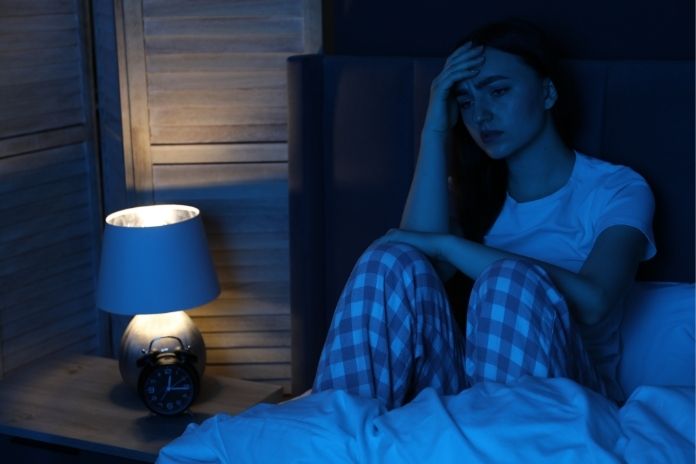
One of the biggest misconceptions about sleep is the idea that being tired guarantees falling asleep. In reality, fatigue and sleepiness are driven by different systems in the body.
Physical fatigue reflects depleted energy, muscle use, and mental effort. Sleep drive, on the other hand, is regulated by a homeostatic process in the brain that builds pressure to sleep the longer you stay awake. This pressure is largely influenced by adenosine, a neurotransmitter that accumulates throughout the day and decreases during sleep.
You can be physically exhausted while your sleep drive remains low or poorly timed. Sleep is not passive. It requires the brain to actively disengage from alertness. The problem is that the brain also has a powerful arousal system that keeps you awake when it senses stress, uncertainty, or threat.
According to research from the National Institutes of Health, chronic insomnia is associated with a state of physiological hyperarousal, meaning the nervous system remains activated even during periods meant for rest. This explains why people often report feeling wired despite being exhausted.
When arousal outweighs sleep drive, the brain stays awake, regardless of how tired the body feels.
Read More: Lying in Bed for Hours and Can’t Sleep? Here’s What Sleep Experts Recommend
Your Circadian Rhythm Is Out of Sync
Your circadian rhythm is your internal 24-hour clock. It governs not just sleep, but hormone release, body temperature, digestion, and alertness.
The brain relies heavily on light signals to determine when to feel awake and when to feel sleepy. Exposure to bright or blue-enriched light in the evening delays the release of melatonin, the hormone that signals to the brain that it is nighttime.
Researchers at Harvard Medical School have shown that even modest nighttime indoor light exposure can suppress melatonin and shift circadian timing later, making it harder to fall asleep at bedtime.
Inconsistent bedtimes, sleeping in on weekends, and fluctuating wake times create what sleep scientists call social jet lag. The brain never fully aligns with a stable sleep window, so sleepiness arrives late, often well past when you want to be asleep.
This mismatch is a major reason people feel drained during the day yet alert at night.
Read More: Circadian Eating for Better Sleep and Digestive Health
Elevated Stress Hormones at Night
Cortisol is a hormone that promotes alertness and energy. Under normal conditions, cortisol peaks in the morning and gradually declines throughout the day. Chronic stress disrupts this rhythm. Studies show that people with insomnia often have elevated evening cortisol levels, which directly interfere with sleep onset.
Sleep medicine expert Phyllis C. Zee, MD, PhD, explains that insomnia isn’t just about not sleeping; it’s about the nervous system staying turned on around the clock. She points out that insomnia affects people 24 hours a day, not just at night, because the underlying physiology, including stress hormone activity, doesn’t shut off when sleep is supposed to begin.
What this means is that the body stays in a heightened state of alertness, which can keep cortisol and other stress systems activated even when you’re exhausted and trying to sleep.
Many people report feeling a burst of energy late at night, even after feeling exhausted earlier. This so-called second wind is not a sign of recovery. It’s a stress response. When the brain detects prolonged wakefulness under pressure, it releases stimulating hormones to keep you functioning. Unfortunately, that same response makes it harder to fall asleep.
Anxiety and Mental Hyperarousal

Nighttime is often the first quiet moment of the day. Without distractions, unresolved thoughts, worries, and planning naturally surface. For people with insomnia, the brain begins to associate bedtime with problem-solving rather than rest.
Once poor sleep becomes a pattern, anxiety about sleep itself becomes part of the problem. Lying in bed, wondering whether you’ll fall asleep or how you’ll cope tomorrow, activates the nervous system.
According to clinicians at the Cleveland Clinic, this type of mental hyperarousal is a major driver of sleep onset insomnia, where falling asleep becomes increasingly difficult despite exhaustion.
The bed becomes a cue for alertness rather than relaxation.
Too Much or Poorly Timed Caffeine
Caffeine has a half-life of approximately five to seven hours, meaning half of it remains active long after consumption. Some individuals metabolize caffeine even more slowly due to genetic differences or hormonal factors.
Sleep specialist Dr. Michael Breus, PhD, explains that caffeine has a half-life of about 6-8 hours, so if you stop caffeine by mid-afternoon, roughly half of it is still in your system by typical bedtime, meaning its stimulating effects can linger into the night and interfere with sleep.
This means an afternoon coffee can still be blocking adenosine at midnight. Tea, matcha, energy drinks, chocolate, pre-workout supplements, and some medications all contribute to total caffeine load. Even small amounts can interfere with sleep in sensitive individuals.
If you feel exhausted but alert at night, caffeine timing is a critical factor to examine.
Read More: I Stopped Caffeine After 2 PM — Here’s How It Changed My Sleep (and Energy Levels)
Inconsistent Napping or Daytime Sleep Habits
Sleep drive builds with continuous wakefulness. Napping reduces that pressure, especially if naps are long or late in the day.
While naps may feel necessary when you’re tired, they can quietly undermine nighttime sleep.
Short naps of 20 minutes or less earlier in the day can improve alertness without significantly affecting nighttime sleep. Longer naps, especially after mid-afternoon, often delay sleep onset and worsen insomnia.
Evening Screen Use and Light Exposure
Electronic screens emit blue light, which directly suppresses melatonin release. This delays the brain’s transition into nighttime physiology.
Beyond light exposure, screens keep the brain emotionally and cognitively engaged. Social media, news, and messages activate attention systems that promote wakefulness.
Scrolling may feel relaxing, but neurologically, it keeps the brain in a state of alert engagement.
Blood Sugar and Late-Night Eating Patterns

Large, carbohydrate-rich meals late at night can lead to fluctuations in blood glucose levels. When blood sugar drops, the body releases adrenaline and cortisol to stabilize levels.
This hormonal response can increase alertness right when sleep should begin.
Alcohol may make you feel sleepy initially, but it disrupts sleep architecture. Research from the Cleveland Clinic shows that alcohol fragments sleep, reduces REM sleep, and increases nighttime awakenings.
Feeling drowsy is not the same as getting restorative sleep.
Poor Sleep Conditioning
The brain learns through association. If you spend long periods awake in bed, checking the time or trying to force sleep, your brain links the bed with effort and frustration.
This is known as conditioned insomnia.
Sleep specialists consistently advise getting out of bed if you can’t fall asleep within about 20 minutes. This breaks the association between the bed and wakefulness, helping retrain the brain to link the bed with sleep.
Underlying Sleep or Medical Conditions
Not all insomnia comes from habits, screens, or stress. A lot of cases are driven by what’s happening inside the body, not what you’re doing wrong at bedtime.
Several medical and neurological conditions interfere specifically with sleep onset. Chronic insomnia disorder involves a persistent inability to fall asleep despite adequate opportunity. Restless legs syndrome creates an uncomfortable urge to move the legs, often intensifying the moment you lie still.
Sleep apnea can fragment sleep even in people who don’t fit the stereotype. You don’t have to be overweight. You don’t have to snore loudly. Brief breathing interruptions can still trigger microarousals, preventing deep rest.
Mood disorders matter here, too. Depression and anxiety alter circadian rhythms, suppress melatonin release, and keep the brain in a state of hypervigilance at night. Hormonal shifts, especially during perimenopause, can further destabilize sleep by affecting body temperature regulation and neurotransmitter balance.
Clinicians at the Mayo Clinic point out that sleep apnea and other sleep disorders are frequently missed because people don’t recognize the symptoms or assume they’re just “bad sleepers.” When difficulty falling asleep is persistent, unexplained, or worsening over time, that’s a medical signal, not a personal failure. At that point, evaluation matters more than sleep hacks.
Why Being Overtired Can Make Sleep Harder
Here’s the part that trips most people up. Extreme tiredness doesn’t automatically lead to sleep. It often does the opposite.
Sleep deprivation sensitizes the nervous system instead of calming it. Research published in Sleep Medicine Reviews shows that chronic sleep loss increases sympathetic nervous system activity, the same system responsible for the fight-or-flight response. Stress hormones like cortisol stay elevated. Heart rate variability drops. The brain becomes more reactive, not more relaxed.
What this really means is that exhaustion can push the body into a state of wired alertness. You feel drained but restless. Your thoughts race. Small sensations feel amplified. The moment your head hits the pillow, your nervous system interprets stillness as a threat rather than a cue to power down.
This creates a paradoxical loop. Poor sleep leads to overtiredness. Overtiredness heightens arousal. Heightened arousal delays sleep even further. Breaking that cycle usually requires addressing both sleep quantity and nervous system regulation, not just forcing an earlier bedtime.
Understanding this shift reframes insomnia. The problem isn’t a lack of discipline or effort. It’s a body stuck in high alert, even when it desperately needs rest.
What Actually Helps When You’re Tired but Can’t Sleep

Let’s break this down into what actually moves the needle, not what sounds soothing on paper.
Waking up at the same time every day anchors your circadian rhythm, even after a rough night. This matters more than catching up on sleep in the short term. Sleeping in shifts delays your internal clock, making the next night harder. Consistency trains the brain to expect sleep pressure at a predictable time. Over a few days, that rhythm starts to reassert itself.
Light is the strongest signal your brain uses to tell time. Bright light exposure within the first hour of waking suppresses residual melatonin and reinforces daytime alertness. In the evening, the opposite matters. Lower light levels, warmer tones, and reduced screen brightness help melatonin rise naturally. You’re not chasing darkness. You’re signaling safety and nightfall to the nervous system.
A busy mind isn’t a flaw. It’s unfinished business. Writing down tasks, worries, or next-day plans gets them out of working memory and onto paper. That sense of closure tells the brain it doesn’t need to stay alert to protect you from forgetting something important. Even five minutes of structured unloading can significantly reduce nighttime rumination.
Sleep isn’t something you achieve by effort. The harder you try, the more alert you become. Instead of aiming to fall asleep, aim to rest. Create conditions that support sleep and let biology do the rest. This shift alone reduces performance anxiety around bedtime, which is often a hidden driver of insomnia.
What to Avoid Doing in Bed
Some habits quietly train the brain to associate the bed with frustration rather than rest.
- Trying to force sleep: Struggling in bed reinforces arousal. If sleep doesn’t come, staying put often makes things worse, not better.
- Lying awake for long periods: When the bed becomes a place for thinking, worrying, or clock-checking, the brain stops linking it with sleep. Behavioral sleep research consistently shows that getting out of bed briefly when fully awake can protect that association.
- Clock-watching: Checking the time spikes stress and feeds mental math about how little sleep you’re getting. That calculation alone can derail sleep onset.
- Obsessively tracking sleep metrics: Sleep data can be useful, but constant monitoring often increases anxiety and hyperfocus. Many people sleep worse once they start keeping track of their nights.
- Chasing perfect sleep routines: Rigid rules around bedtime, supplements, or rituals backfire. Studies in behavioral sleep medicine show that perfectionism around sleep increases insomnia severity rather than improving outcomes.
Read More: This One Nighttime Habit Changed My Sleep and My Stress
When to Seek Professional Help
Occasional bad sleep is normal. Persistent insomnia is not something you have to manage alone.
Consider professional support if sleep problems last longer than three to four weeks, interfere with daytime functioning, affect work performance or safety, or lead to reliance on sleep medications. Changes in mood, memory, or concentration are also important signals that sleep disruption is taking a broader toll.
Cognitive Behavioral Therapy for Insomnia, or CBT-I, is considered the first-line treatment by sleep medicine organizations worldwide. It addresses the biological, cognitive, and behavioral factors that keep insomnia going, without relying on long-term medication. For many people, it’s the turning point where sleep stops being a nightly battle and becomes a stable, predictable process again.
The Practical Takeaway
Being exhausted but unable to sleep isn’t a personal flaw or a sign that your body is broken. It’s a signal that the systems controlling sleep timing, arousal, and safety cues are out of sync. Your body is doing what it’s designed to do. It’s staying alert when it thinks conditions aren’t right for rest.
What this really means is that tiredness alone doesn’t switch sleep on. Sleep happens when stress hormones are low, light cues are aligned, the nervous system feels safe, and the circadian clock knows it’s night. When even one of those signals is off, sleep can stall no matter how drained you feel.
The most effective approach isn’t effort. It’s alignment. Regulate your wake-up time. Use light intentionally. Reduce mental load before bed. Stop treating sleep like a task you have to complete. When you address the blockers instead of fighting the symptoms, sleep usually returns on its own.
In short, the goal isn’t to sleep harder. It’s to remove the reasons your body is staying awake. Once those are gone, sleep takes over.
FAQs: People Also Ask
Why am I tired but can’t sleep at night?
Fatigue and sleepiness come from different systems. You can be physically drained while your brain stays alert. Stress, late-night light exposure, and a shifted circadian clock keep arousal high. When those signals clash, sleep doesn’t start.
Is it normal to feel exhausted but wired at night?
Yes, and it’s more common than people think. Chronic stress and sleep deprivation raise cortisol and adrenaline. That creates a wired-but-tired state where the body wants rest, but the nervous system won’t slow down. It’s a physiological response, not overthinking.
Can anxiety cause sleep onset insomnia?
Absolutely. Anxiety keeps the brain scanning for threats, even when you’re safe in bed. Heart rate stays elevated, thoughts loop, and relaxation signals get blocked. That mental and physical arousal delays the transition into sleep.
Should I stay in bed if I can’t fall asleep?
No. Lying awake trains the brain to associate the bed with frustration. Getting up briefly breaks that pattern and lowers arousal. When you return to bed, sleep usually comes more easily.
References
Cleveland Clinic. (n.d.). Circadian rhythm disorders.
Cleveland Clinic. (n.d.). Paradoxical insomnia.
Frank Lipman, M.D. (n.d.). Are you aging out of sync? Circadian rhythm dysfunction may be to blame.
Harvard Health Publishing. (2020, May 13). Why your sleep and wake cycles affect your mood.
Mayo Clinic. (n.d.). Delayed sleep phase: Symptoms and causes.
Mayo Clinic. (n.d.). Sleep disorders: Symptoms and causes.
National Heart, Lung, and Blood Institute. (n.d.). Circadian rhythm disorders.
National Heart, Lung, and Blood Institute. (n.d.). Treatment for circadian rhythm disorders.
NeurologyLive. (n.d.). Phyllis C. Zee, MD, PhD: Insomnia clinical diagnosis.
Sleep Foundation. (n.d.). Can you change your circadian rhythm?
Breus, M. (n.d.). The sleep solution: How good sleep leads to a healthier life. Medium.
In this Article