




















You might have noticed a new kind of can nowadays, which is bright and bubbly and making some pretty bold promises about your digestive system, somewhere between your late-night health scrolls.
Prebiotic soda is a fizzy beverage designed to support our beneficial bacteria that are already present in our stomach, in addition to tasting wonderful. The old sugar rush, crash, repeat routine no longer feels worth it. Therefore, people are switching.
Prebiotic soda provides the same delightful pop and fizz without the guilt while offering something truly beneficial for your health. The problem with our gut is that it’s more than just a digestive system. Trillions of microorganisms that live there affect our energy, mood, and also our immunity. For those bacteria, prebiotics are nourishment.
In this article, we’ll explore what prebiotic soda is, how it benefits your gut, and why it’s becoming a smarter choice for those looking to enjoy fizzy drinks without compromising health.
Read More: Why Probiotics Might Not Work Without Prebiotics: How to Maximize Gut Health
How Prebiotic Soda Works
Most people believe that all gut-healthy beverages work just the same way. However, in reality, they don’t. What distinguishes a wise sip from merely falling for marketing is knowing why.
Prebiotic sodas are carbonated beverages containing additional plant fibers and other ingredients thought to promote intestinal health. Numerous companies promise to provide a sweet, low-calorie substitute for conventional sodas while also nourishing gut microbiota with prebiotic fiber.
What’s Actually Inside That Can?
Examine the ingredients on the label of the prebiotic drink. One or more of these three strong hitters will definitely be visible to you:
- Chicory root is the source of inulin, which is a soluble fiber that supports good gut flora.
- Another inulin source, which is comparable to prebiotic benefits, is Jerusalem artichoke fiber.
- Manufacturers frequently use cassava root fiber for its neutral flavor and gut-nourishing properties.
These components support the development of advantageous bacteria in our large intestine, which may lead to a more robust gut microbiome. The fizz isn’t just the true magic. It actually happens every time you drink, silently, deep in your digestive tract after the fizz.
“A prebiotic is a substance which promotes growth of beneficial bacteria,” says Dr. Eamonn Quigley, a gastroenterologist at Houston Methodist. “It’s usually some form of complex carbohydrate. Some of these are fibers; other examples are inulin and oligosaccharides,” he notes.
Read More: 12 Anti-Inflammatory Mocktails Made With Real Ingredients (No Artificial Syrups)
Prebiotic Soda vs. Regular Soda: A Healthier Alternative?
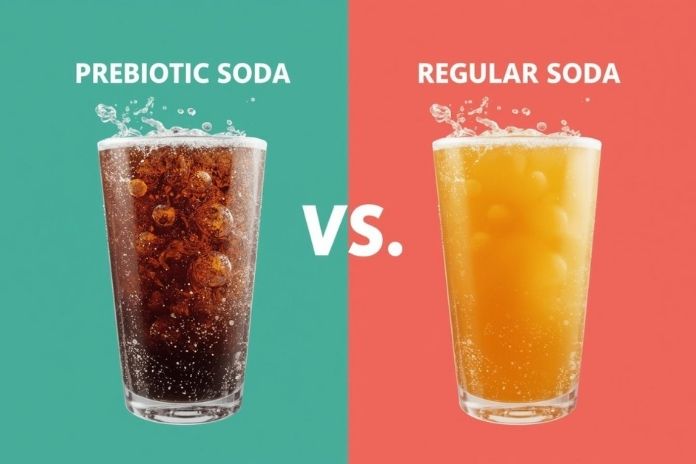
Slapping the healthy label on something and simply jacking up the price? That’s old news in the wellness world. Before you go tossing everything in your fridge and stocking up on prebiotic stuff, let’s see what’s actually legit and what’s just hype.
A regular 12-ounce Coke has around 39 g of sugar, which is almost 10 tsp of sugar going straight into your blood! Your body reacts with a big insulin rush, which then drops, making you want more. It’s a cycle that keeps you hooked.
The CDC says these sugary drinks, such as normal sodas, are a top source of extra sugar for most Americans’ diets. Numerous chronic illnesses, like weight gain, heart disease, renal disease, non-alcoholic liver disease, cavities, tooth decay, and gout, are all linked to the consumption of these sugar-sweetened beverages.
Many customers want a traditional type of Coke flavor but would like to prefer a healthier option. Prebiotic sodas contain the dietary fibers from plant-based sources, like inulin, chicory root, sunchokes, or guar gum, and they offer a lower sugar and calorie count than full-sugar drinks.
Frequent intake of prebiotic fiber has been linked to greater nutrient absorption, including calcium and magnesium, less bloating over time, and improved bowel regularity.
Scientific Evidence: Do Prebiotic Sodas Live Up to the Hype?
Adults should consume around 25-38 g of fiber per day, with some of that amount coming from prebiotics, according to many health experts. Prebiotic sodas can help support this intake, but just consuming soda alone cannot provide the levels that are needed for optimal gut health.
But to ensure adequate fiber intake, we advise including a variety of foods high in prebiotics in your diet, such as whole grains, garlic, onions, and bananas. If gut health is your goal, you might also think about functional foods or some evidence-based supplements.
Who Should and Shouldn’t Drink Prebiotic Soda?
Although prebiotic sodas are safe to ingest, the Food and Drug Administration (FDA) has not approved the claims made by prebiotic soda producers, such as “no fake stuff” and “supports digestive health.”
Don’t trust all of the claims made by specific brands. Make sure you’re getting what the items say by reading the nutrition labels. Not everyone can benefit from everything healthy. Here’s how to determine your position on that line.
This Is Probably Your Drink:
Prebiotic soda is one of the best, least complicated substitutions you can make if your current relationship with soda consists of daily cans of anything that contains 40g of sugar. The biochemical results are very different, but the ritual and fizz are identical.
If you drink a lot of soda, prebiotic sodas with stevia or monk fruit could be a better choice. If you’re concerned about artificial sweeteners in regular soda, these could be a cleaner option.
Reduce Your Speed:
Prebiotic soda should not be consumed by pregnant women, children, those with weakened immune systems, or those with digestive disorders. Members of these groups should obtain their prebiotics from food.
Each person may experience IBS symptoms and causes differently. Furthermore, not all prebiotic sodas are created equal, and some include a lot of sugar, which can exacerbate the symptoms of IBS. Prebiotic sodas may have varying effects on various persons due to these reasons.
Read More: Is Fruit Sugar Bad for You? Experts Explain the Real Difference
Conclusion
Prebiotic soda isn’t just some kind of trendy drink. It’s actually a clever swap if you want something bubbly without all the sugar. Ditching regular sodas for these means you’re not only skipping empty calories, but you’re also giving your gut a little love.
And honestly, your gut does a lot for you. It plays into everything from your immune system to your mood and how much energy you’ve got. So yeah, even just changing up what you drink can make a noticeable difference.
References
- Callahan, A., & Blum, D. (2024, June 11). Are prebiotic sodas good for gut health?
- INTEGRIS Health. (13 February, 2024). Is Prebiotic Soda Good for You?.:
- Texas Health Resources. (2023, March 24). Are prebiotic and probiotic sodas worth the hype?
- Tara Schmidt, M.Ed., RDN, L.D. (March 18, 2024). Superior to standard soda? Trying prebiotic pop
- Vanessa Villafuerte. (May 13, 2024). Are prebiotic sodas a healthier alternative for kids?
- Northlake Gastroenterology Associates. How do probiotics and prebiotics impact your digestive system?
- Centers for Disease Control and Prevention. Sugar-sweetened beverages and consumption
- Amy Quinton. (November 19, 2024). Probiotics and Prebiotics: Hype or Health?
In this Article