



















For many women in their 40s to 60s, weight seems to cling in places it never did before, especially around the middle part of the body. That’s where the confusion starts: is it menopause belly fat, or thyroid weight increase?
Both menopause-related weight gain and thyroid issues can show up with similar signs. These can show up as fatigue, a sluggish metabolism, stubborn belly fat, and mood swings. Since hormonal weight changes can come from falling estrogen levels or a slower thyroid, this complicates the diagnosis.
This article breaks down the differences, the overlaps, and how to read your body’s signals so you can pinpoint what’s really driving your weight gain, and in detailed information about thyroid weight gain symptoms.

Read More: Postmenopause Explained: What Happens to Your Body After Periods Stop
Understanding Hormonal Changes in Menopause (Why Belly Fat Increases)

With menopause, reduced estrogen levels lead to belly fat. As estrogen declines, fat shifts from the hips and thighs to the abdomen. This is why women might suddenly notice weight around the waist.
Here are a few reasons for metabolic changes in menopause:
- Estrogen decline reduces insulin sensitivity and increases visceral fat. This form of fat around the abdomen is firm and deep, not soft and pinchable.
- Muscle mass naturally decreases, slowing calorie burn and contributing to weight gain after 40.
- Cortisol, or the stress hormone, becomes more reactive and promotes central belly fat, especially with poor sleep or high stress.
Together, they result in menopause belly fat. These things can lead to a wider waist and a heavier midsection. You might experience trouble losing weight even with a healthy diet. These changes are normal and manageable once you are aware of the symptoms.
Understanding Thyroid Problems and Weight Gain: Hypothyroidism Basics

The thyroid is your metabolic engine. When it slows down, almost everything else does too, right from digestion to fat burning to energy.
An underactive thyroid can cause:
- Slower metabolism, leading to a gradual and persistent increase in belly fat and overall weight.
- Water retention around the face, legs, and abdomen.
- Low-energy symptoms, sluggish digestion, and intolerance to cold.
Unlike menopause belly fat, weight gain related to an underactive thyroid isn’t limited to the midsection. The gain is usually mild to moderate but can be hard to get rid of. Women over 40 are most at risk, since menopause and a malfunctioning thyroid often occur simultaneously.
Since hypothyroidism symptoms can resemble those of menopause, which are fatigue, mood swings, irregular cycles, it’s often difficult to differentiate.
Read More: 8 Period Symptoms That Might Actually Be a Thyroid Issue
How Menopause Belly Fat Looks and Feels-Common Signs
Menopause belly fat follows a clear pattern tied to falling estrogen. Watch for signs like:
- Fat primarily accumulates in the lower abdomen and waist.
- Visceral fat is harder to lose, and the belly feels firmer.
- Unchanged diets and activity fail to prevent weight gain.
- Bloating, slight water retention, and sugar or salt cravings.
- Hot flashes, night sweats, irregular or absent periods.
- Sleep disruptions that increase cortisol and route fat to the midsection.
These signs indicate estrogen-related belly fat rather than thyroid dysfunction.
How Thyroid-Related Weight Gain Looks and Feels- Hypothyroidism Signs
Thyroid-related weight gain may look different from menopause shifts. Weight is more generalized, not just the belly. You may also notice:
- Puffiness or swelling of the face, legs, hands, and abdomen.
- Feeling colder than usual because of a slow metabolism.
Other common signs of an underactive thyroid include:
- Fatigue and low energy
- Thinning or loss of hair
- Dry and flaky skin
- Constipation and sluggish digestion
- Brain fog and poor concentration
- Low mood or depression
- Irregular or heavier periods
- Slowed heart rate
- Cold intolerance
If these occur together, it’s more likely to be thyroid-related weight gain rather than menopause.
Key Differences Between Menopause Belly Fat vs. Thyroid Weight Gain
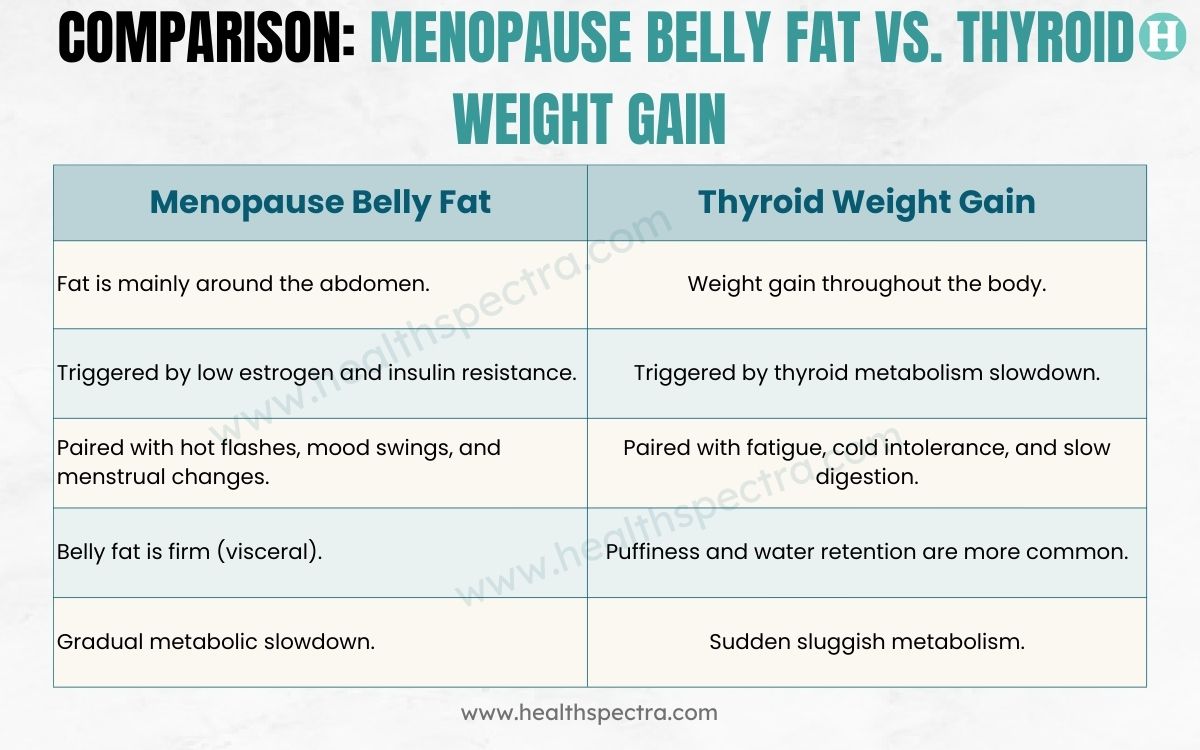 Here is a clear comparison between menopause and thyroid weight gain to help you understand the differences better:
If your symptoms lean heavily toward changes in periods, hot flashes, or stress-driven belly fat, menopause is likely the cause. If they lean toward fatigue, cold intolerance, or swelling, the thyroid is a stronger suspect.
When Both Are Happening at the Same Time (Very Common)

It is possible and extremely common for menopause and thyroid weight gain to occur in tandem.
- Perimenopause can trigger or worsen autoimmune thyroid disease, also known as Hashimoto’s.
- Menopause changes affect the transportation and utilization of thyroid hormones.
Some symptoms apply to both. These include brain fog, weight gain, fatigue, low energy, and mood changes.
When both are present:
- Belly fat can increase rapidly.
- Energy remains low.
- Changes in diet do not cause typical weight loss.
- Symptoms wax and wane from month to month.
Treating both thyroid disorder and menopause symptoms is the key to real progress.
How To Deal with Menopause and Thyroid Weight Gain
The method that works most effectively for women with both menopausal weight gain and a thyroid condition incorporates both.
- This includes thyroid hormone replacement if needed or lifestyle changes concerning menopause.
- You may opt for a whole-food, high-protein diet and resistance and cardio exercises to maintain muscle and boost metabolism.
- Yoga or meditation can also reduce stress levels and help keep cortisol in check, thereby reducing the menopause midsection bulge.
- Optimizing sleep for approximately 7 to 8 hours. Preventing night sweats or insomnia is important, since poor sleep aggravates thyroid slowing and belly fat.
- Watching weight, symptoms, and thyroid levels regularly ensures everything is managed correctly.
Addressing both factors together makes weight control after 40 more realistic and sustainable.
When to get a Thyroid Test
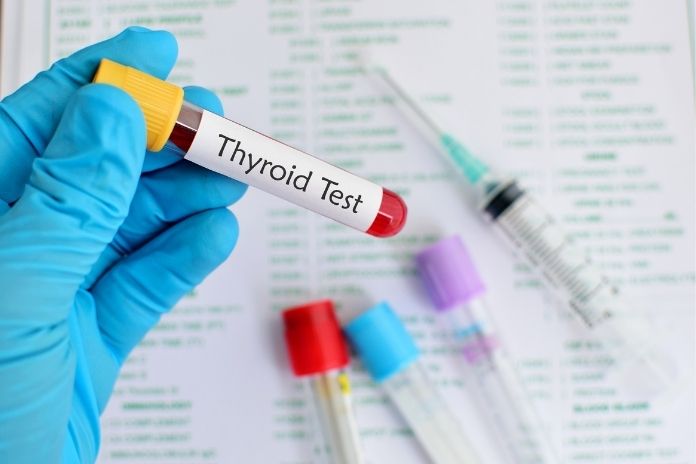
If weight gain is more than menopause, you should get a thyroid test done. Thyroid dysfunction is common in midlife. It can also worsen belly fat and slow metabolism.
Consider testing if you notice:
- Persistent fatigue not relieved by sleep
- Sudden or unexplained weight gain despite a stable diet and exercise
- Feeling cold when others don’t
- Hair thinning or shedding
- Dry and flaky skin or brittle nails
- Constipation or slowed digestion
- Swelling of the hands, legs, or face
- Low mood, depression, or brain fog
Key thyroid tests to request:
- TSH (Thyroid Stimulating Hormone), which is the most sensitive indicator of thyroid function.
- Free T4 and Free T3 are the active thyroid hormones.
- Thyroid antibodies, such as anti-TPO (Thyroid Peroxidase) and anti-TG (Thyroglobulin), help diagnose Hashimoto’s thyroiditis.
Early testing can confirm whether the thyroid slowdown is contributing to belly fat, allowing targeted treatment before complications develop.
When to See a Doctor (Red Flags)

Some symptoms cannot be left unaddressed. The normal, gradual belly fat that forms during menopause is common, but sudden or extreme changes require visits to the doctor.
Consult a physician if you observe:
- Rapid belly fat or total-body weight gain
- Extreme fatigue that impacts life
- Significant thinning or falling hair
- Severe changes in mood, depression, or anxiety
- Sudden changes in the menstrual cycle or absence of menstruation.
- Persistent cold intolerance
- Swelling of the legs, hands, or face
- Family history of thyroid disease, diabetes, or other autoimmune disorders
Early evaluation will help to identify menopause versus thyroid weight gain, allowing prompt lifestyle or medical intervention.
Read More: Best Diet for Postmenopausal Women: Foods That Support Hormones, Bones, and Heart
Conclusion — Understanding the Root Cause Leads to Better Solutions.
Whereas both menopause and a thyroid problem can cause weight gain, the symptoms, causes, nature, and treatment of the weight gain are different. Menopausal belly fat is usually firm, centered around the abdomen, and linked with estrogen decline. However, weight gain due to the thyroid is usually dispersed throughout the body, with puffiness, fatigue, and cold intolerance.
Knowing which factor or combination is at play helps in tailoring diet, exercise, and lifestyle as well as medical strategies. With proper testing, guidance, and a targeted plan, belly fat accumulation in midlife can be managed.
Understanding your body is the first step toward regaining control. This will help you feel healthier, lighter, and more energetic for years to come.
References
- PMC Article (2022)
Understanding the immunopathogenesis of Hashimoto’s thyroiditis. (2022). PubMed Central. - American Thyroid Association – Hashimoto’s Thyroiditis
Hashimoto’s thyroiditis. (n.d.). American Thyroid Association. - Prosperity Health – Thyroid Disease Overview
Thyroid disease. (n.d.). Prosperity Health MI. - NCBI Bookshelf – Hypothyroidism
Hypothyroidism. (n.d.). NCBI Bookshelf. - iCliniq – Menopause & Thyroid Disorders
Relation between menopause and thyroid disorders. (n.d.). iCliniq. - NHS – Underactive Thyroid
Underactive thyroid (hypothyroidism). (n.d.). NHS. - PMC Article (2021)
Menopause and thyroid dysfunction. (2021). PubMed Central. - ResearchGate – Cortisol, Weight Gain & Stress
The cortisol connection: Weight gain and stress hormones. (2024). ResearchGate.
In this Article