















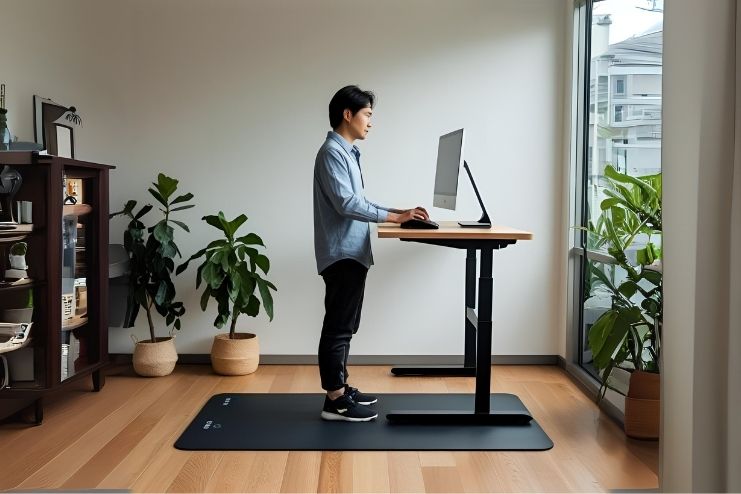
If you’d like an active work style with a standing desk, you may find that standing for long periods of time can lead to discomfort, foot pain, and poor posture. Using an anti-fatigue mat can help.
Anti-fatigue mats provide cushioning and support, making it much easier to stand for long periods without excruciating discomfort and strain. The size, shape, and thickness of the mat make a big difference in your everyday comfort level and overall health.
In this blog, we will discuss some of the top anti-fatigue mats available today, some of their benefits, and expert tips to help you find the right mat for yourself.
Whether you want to reduce back pain or knee pain, improve your posture, or simply want to work in comfort, you will find here helpful information and some of the best products to consider.
Read More: Best Acupressure Mats for Migraine Relief
What Are Anti-Fatigue Mats?

Anti-fatigue standing desk mats are a must-have for anyone who spends all day on their feet. They’re not just comforting, they actually assist posture, ease pain, and help you work more comfortably and longer without fatigue.
Whether you require a posture support mat for home or a standing desk mat for back pain at the workplace, the proper mat can make a real impact on your day.
What They Are and How They Work
Anti-fatigue mats are floor mats that are designed to minimize the discomfort of standing for extended periods, particularly on hard floors. Used in conjunction with standing desks, these anti-fatigue standing desk mats stimulate small movements in your leg muscles or micro-movements.
This enhances blood flow, avoids stiffness, and relieves pressure from your joints and lower back. Manufactured using materials such as rubber, foam, or gel, these mats are more shock-absorbing than traditional mats and best suited for both home and office applications.
Standard Mats vs. Ergonomic Anti-Fatigue Mats
In contrast to basic mats that only lie on the floor, ergonomic or posture support mats are designed to keep your comfort and well-being in mind. Basic mats usually offer flat and minimal cushioning. Anti-fatigue mats, on the other hand, are thicker, textured, and specifically intended to aid in supporting your natural body alignment.
Some even include contoured tops or raised edges that facilitate small weight shifts, which keep your muscles active and alleviate fatigue. These properties make them a great option as a standing desk mat for back pain relief.
Why Ergonomics Experts Recommend Them
As per office ergonomics studies, standing too long without support leads to backaches, foot pain, and poor posture. Using anti-fatigue mats can prevent these conditions. Research has indicated that a reduction in discomfort, a boost in energy levels, and better overall work performance are all achieved by using these mats.
Ergonomic specialists suggest the use of anti-fatigue mats in situations where prolonged standing is unavoidable. They’re particularly useful if used in conjunction with standing desks or workstations, providing both protection and comfort.
Chiropractors and physical therapists have widely praised anti-fatigue mats for the support and cushioning they provide to the joints.
According to Dr. Randi Jaffe, a chiropractor, the aches and pains commonly experienced during extended periods of standing at a desk can be reduced when proper cushioning is used. It is believed that the use of these mats contributes to better joint comfort and less fatigue over time.
Read More: Acupressure Mats Improves Your Sleep
Key Benefits of Anti-Fatigue Mats

Anti-fatigue mats serve as one of the best office fatigue solutions. Whether you’re looking to relieve leg pain at desk, improve posture, or get foot pain relief at desk, these mats are a smart and simple addition to any standing workspace.
1. Reduces Joint and Muscle Fatigue
One of the most effective office fatigue solutions, anti-fatigue mats cushion your feet and legs, reducing the pressure on joints and muscles caused by standing on hard floors. This helps prevent soreness, stiffness, and tiredness after long hours.
- Can reduce physical fatigue by up to 50% (based onergonomic studies)
- Ideal for those who spend long hours standing on hard surfaces such as tile, wood, or concrete
2. Promotes Better Posture
These mats help your body maintain proper alignment while standing. By supporting subtle movements and evenly distributing your weight, they reduce stress on the spine and help avoid slouching or knee-locking.
- Encourages upright posture
- Helps prevent long-term back and neck strain
3. Increases Standing Tolerance
If you find it hard to stand at your desk for long periods, an anti-fatigue mat can help. It makes standing more comfortable, allowing you to work longer without discomfort.
- Ideal for users of standing desks
- Helps relieve leg pain at the desk and reduces overall fatigue
4. Encourages Active Movement
Unlike flat mats, anti-fatigue mats are slightly responsive. They encourage your feet and leg muscles to make small, automatic adjustments, known as micro-movements, which improve blood flow and reduce stiffness.
- Stimulates circulation
- Helps relieve foot pain while standing at a desk by reducing pressure on the soles
5. Complements Ergonomic Setups
For a fully ergonomic workspace, pairing your standing desk with a quality anti-fatigue mat is key. These mats add lower-body support, making your setup more effective at preventing pain and promoting wellness.
- Fits well in both home offices and corporate setups
- Low-cost addition with long-term health benefits
Read More: Top 10 Cardio Toning Mats
Buyer’s Guide: What to Look For in a Standing Desk Mat
Selecting the appropriate anti-fatigue mat for a standing desk can make a big difference in comfort, support, and posture while working long hours. Here’s how to select the best for your purpose:
1. Thickness and Material
The material and thickness of a mat determine its ability to cushion your feet and joints.
- Ideal thickness: 0.75 to 1 inch
- Materials to look at:
- Memory foam – soft but can quickly wear out
- Rubber or polyurethane – supportive and long-lasting for extended use
For long-term standing, use a floor mat made of high-density rubber that is cushioned.
2. Size and Shape Based on Desk Setup
Opt for a mat that matches the size and configuration of your desk.
- For small setups, opt for rectangular mats
- For corner or large desks, opt for curved or contoured shapes
Select a long-standing mat with full movement that covers your work area.
3. Terrain Surface vs. Flat Mat
Mats have flat or terrain (raised/textured) surfaces.
- Terrain mats promote more foot movement, enhanced circulation
- Flat mats provide uncomplicated, stable support
Employ a terrain-style anti-fatigue mat for standing desks if you prefer active movement during work.
4. Slip-Resistance and Safety Features
Safety first, particularly in high-traffic areas or shared environments.
- Look for non-slip backing
- Beveled edges prevent tripping
A standing desk posture mat that remains in place and minimizes slipping is essential.
5. Ease of Cleaning and Durability
Good mats are easy to clean and long-lasting.
- Select materials that are waterproof and simple to wipe
- Rubber and polyurethane provide greater durability than soft foam
A standing desk posture mat must be easy to clean and one that can withstand daily use.
Standing Desk Mat Buying Checklist
 The right cushioned floor mat not only reduces fatigue but also helps improve standing desk posture and overall productivity.
Read More: Best Yoga Mats for Carpets that Don’t Slip
Top Anti-Fatigue Mats for Standing Desks (Expert Picks)
Here are 5 top-rated anti-fatigue mats for standing desks, recommended by experts and backed by Amazon ratings, covering a range of styles and budgets:
1) Gorilla Grip Anti‑Fatigue Mat
(Amazon.com – 4.4 rating)
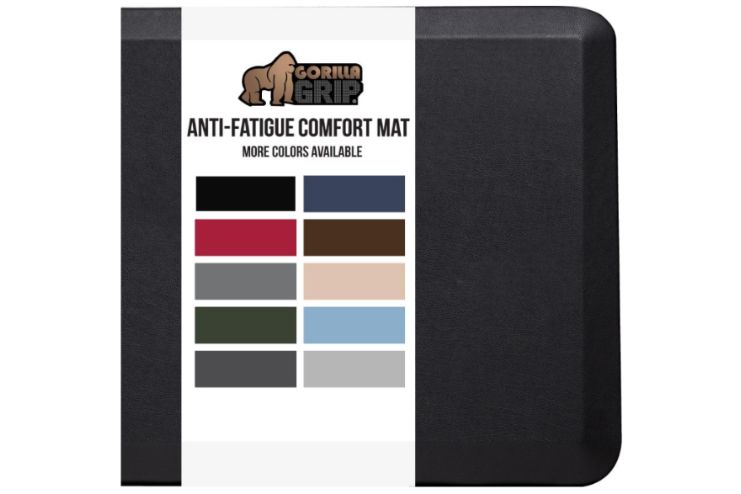
Material and Thickness: ¾″ high-density foam with waterproof, pebbled surface and beveled edges.
Ideal For: Office, kitchen, shared workstations
Pros: Cushiony support, easy to clean, several sizes/colors
Cons: Slightly slippery on some hard floors
2) ComfiLife Anti‑Fatigue Floor Mat
(Amazon.com – 4.8 rating)
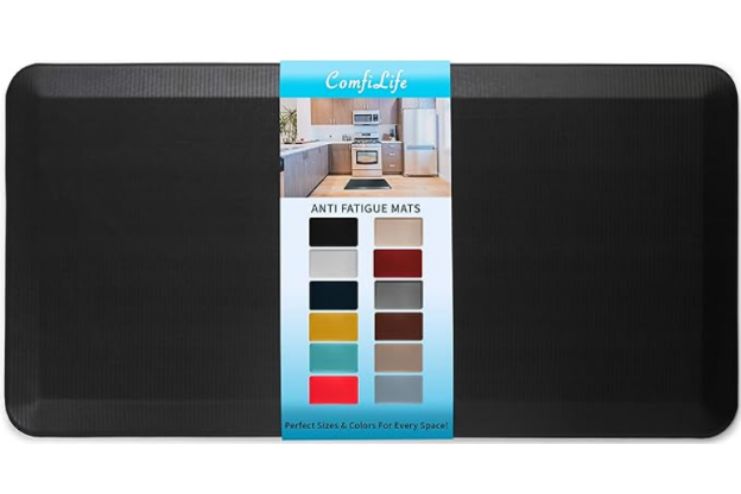
Material and Thickness: ¾″ high-density memory foam; non-slip, stain-resistant
Ideal For: Long-standing home office or kitchen use
Pros: Durable, thick cushioning, excellent back/foot relief
Cons: Limited size range
3) 1″ Extra‑Thick Anti‑Fatigue Mat
(Amazon.com – 4.3 rating)
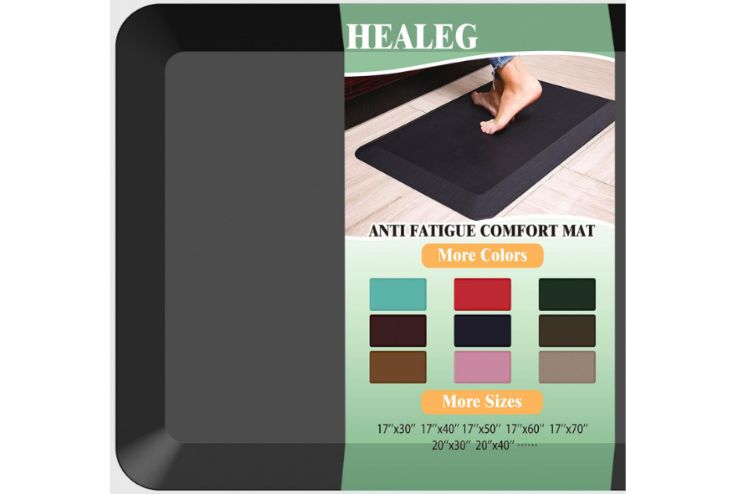
Material and Thickness: Full 1″ dense foam; maximum comfort
Ideal For: Heavy-duty or industrial-style setups
Pros: Premium support for long use
Cons: Bulky and premium-priced
4) FEATOL Anti-Fatigue Mats for standing
(Amazon.com – 4.6 rating)
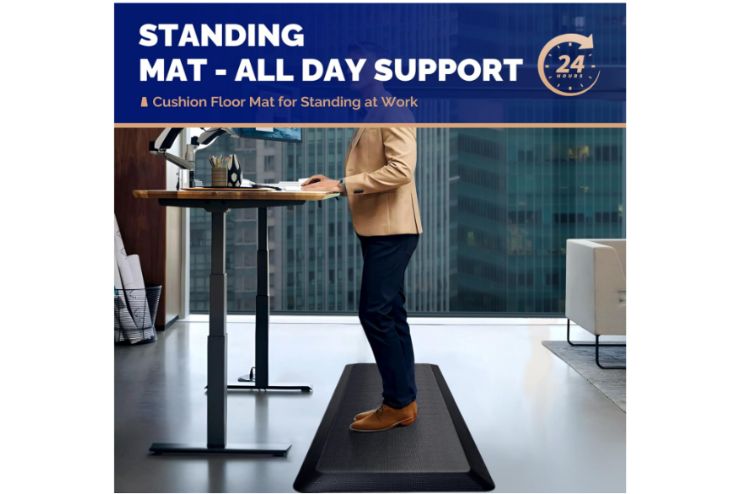
Material and Thickness: 0.4″ high-density foam, waterproof PVC leather surface, non-slip bottom, phthalate-free
Ideal For: Kitchens, home offices, standing desks, laundry areas
Pros: Soft yet firm support, stain-resistant, durable, budget-friendly, available in multiple sizes and colors
Cons: Thinner than premium mats; may not provide enough support for very long standing sessions
5) KitchenClouds Cushioned Anti-Fatigue Mat
(Amazon.com – 4.4 rating)
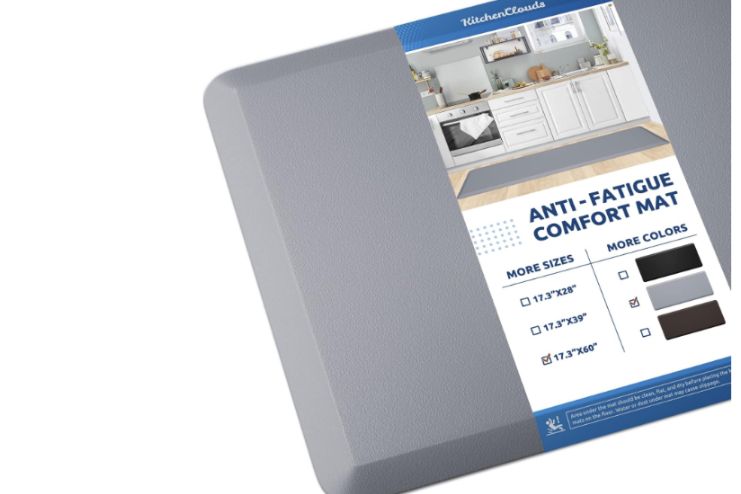
Material and Thickness: Soft PVC and foam blend, 0.47″ thick; waterproof and slip-resistant
Ideal For: Kitchens, compact home office desks, and standing workstations
Pros: Highly durable, easy to clean, non-slip surface, available in multiple sizes and colors
Cons: May be too thin for users needing extra cushioning for extended standing hours
Read More: 7 Relaxation Aids To Calm Your Body and Mind
How to Use Anti-Fatigue Mats Effectively
Having an anti-fatigue mat for your standing desk can make your work day much more comfortable, but only if properly used. Here’s how to maximize the benefit of your cushioned floor mat arrangement:
1. How Long Should You Stand on a Mat?
Although anti-fatigue mats reduce pain, standing the entire day is not advisable. Specialists recommend taking turns sitting and standing throughout the day.
- Optimal standing duration: 15–30 minutes per hour
- Begin with shorter intervals and progress as your body becomes accustomed
Overuse, even on a mat for prolonged standing, can contribute to exhaustion.
2. Best Footwear for Standing
What you put on your feet is as important as the mat.
- Opt for shoes that have good arch support and cushioning
- Steer clear of high heels or extremely flat shoes
- Compression socks can be beneficial if you get swelling
Comforting shoes enhance the value of a standing desk posture mat.
3. When to Alternate Between Sitting and Standing
Even on a mat, standing for too long can strain your joints.
- Employ a sit-stand routine: switch every 30–60 minutes
- Employ a height-adjustable workstation or sit-stand converter
- Listen to the pain and discomfort, and switch positions if you feel sore
A balanced schedule fosters productivity and avoids overuse injuries.
4. Simple Movements to Do While Standing
Standing in place for long hours is not good. Light movement improves circulation and lowers stiffness. Try these while standing on your mat:
- Shift your weight from one leg to the other
- Roll your feet back and forth
- Perform calf raises or stretch your legs lightly
- Flex your knees slightly every few minutes
These micro-movements keep your body active and lower fatigue.
Using an anti-fatigue mat for standing desks is one of the most effective office fatigue solutions, but it works best with the right habits. Use a quality cushioned floor mat, wear the right shoes, move regularly, and switch between sitting and standing.
With this approach, you’ll experience relief from foot pain while standing at your desk, enabling long-term health.
Anti-fatigue mats are described by Dr. Austin Sumner, an Occupational Medicine MD, as spongy surfaces that require consistent corrective foot movement. Their use is associated with improved circulation and reduced discomfort.
Dr. Sumner often prescribes these mats to individuals who are required to stand for extended periods on hard surfaces, as they are believed to help alleviate strain and support overall physical well-being.
Read More: Yoga Nidra: The Choice of Athletes for Faster Recovery
Common Mistakes to Avoid

Properly utilizing an anti-fatigue mat under a standing desk can significantly enhance your comfort and posture.
Below are some of the most common mistakes people commit that minimize the effectiveness of the mat and, worse, might even cause more harm than good.
Using Too-Thin or Slippery Mats
A thin or poorly made mat may be inexpensive, but it won’t provide you with adequate support. Thin mats deteriorate quickly and do not cushion your feet adequately, particularly over extended working hours.
Slippery mats are also hazardous; they can move out from under your feet and result in falls. Always use a high-quality ergonomic floor mat for office or domestic use with a minimum of 0.75-inch thickness and a non-slip bottom for stability. Long-lasting materials such as high-density foam or rubber provide superior long-term comfort.
Standing Too Long Without Breaks
Even the most comfortable cushioned floor mat can’t cut the necessity for movement. Many people fall into the trap of believing that just because you have a mat, you can stand all day. However, this can still lead to stiffness, fatigue, or lower back pain from standing.
What you should do instead is adopt a routine where you alternate between sitting and standing every 30–60 minutes. A sit-stand desk and planned breaks are integral components of any intelligent home office setup essentials list.
Ignoring Foot Discomfort Signs
If your body is complaining of foot pain, numbness, or swelling while on your mat, don’t ignore it. It could be a case of the mat being too firm or too soft, or even not the right one for your purpose.
Do not wear unsupportive shoes, such as flats or heels, when standing. Always use comfortable shoes with arch support and change positions frequently. For chronic discomfort sufferers, changing to a more supportive mat for extended standing or seeking advice from an ergonomics specialist might be beneficial.
By not making these errors, you can get the most out of your ergonomic floor mat for the office or home, eliminate lower back pain caused by standing, and have a more efficient and comfortable home office environment.
Read More: Top 10 Products Every Fitness Enthusiast Should Own
FAQs

An anti-fatigue mat is the most useful standing workstation accessory that you should spend money on. It not only provides comfort and support but also improves posture, alleviates fatigue, and easily integrates into any contemporary workspace, be it home or office.
These are some of the FAQs about anti-fatigue mats.
Do I need a mat if I already have cushioned shoes?
Yes, even if you are wearing cushioned or supportive shoes, an anti-fatigue mat for standing desks provides extra comfort and health benefits. Although good shoes absorb some shock, a good mat relieves pressure on your feet, knees, and back with a soft, responsive surface.
A mat also promotes subtle movement, which enhances circulation and decreases fatigue. For utmost comfort and to facilitate an ergonomic standing posture, use both cushioned shoes and a quality cushioned floor mat.
Can I use the same mat in the kitchen and office?
You can, but it is contingent upon the design of the mat. Kitchen mats are generally spill-resistant and easy to clean, whereas office mats are designed for long-term use and provide better support for long-standing hours.
If you need flexibility, select a heavy-duty, waterproof mat that suits both environments. Ensure it has a non-slip bottom and sufficient cushioning to support your standing workstation accessories and movement requirements in both settings.
How often should I replace it?
A well-made ergonomic floor mat for home or office use will last between 1 to 3 years, depending on usage. Replace your mat when it loses its spring, becomes too flat, curls up at the edges, or starts sliding.
These indicators show that it’s no longer providing the support your body requires. If you start to feel lower back pain from standing, it might be time for a new mat. Taking care of your mat is important in maintaining a healthy ergonomic standing position as part of your home office equipment necessities.
Read More: 10 Best Posture Support Products for Work
Final Takeaway
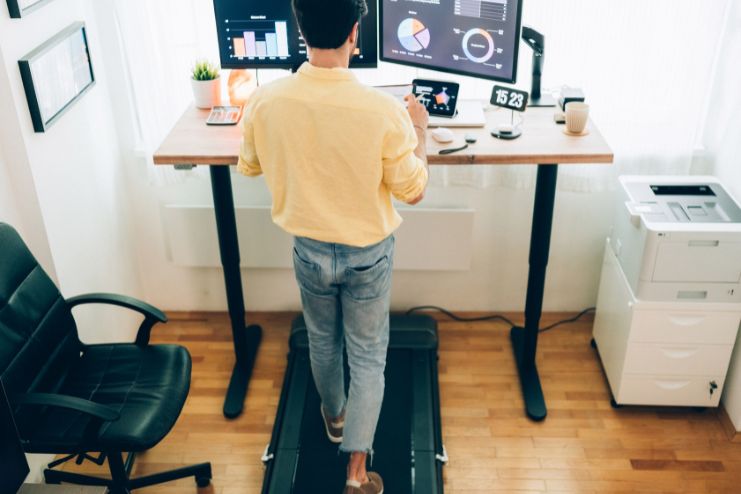
A high-quality anti-fatigue mat for your standing desk will greatly improve daily comfort, health, and productivity. Anti-fatigue mats decrease reported symptoms of pressure or strain on the feet, knees, and lower back, help facilitate an ergonomic standing posture, and allow for natural movement while working.
There are many known benefits to standing well and standing more, especially when compared to prolonged sedentary behavior, which leads to negative health issues. While an anti-fatigue mat provides comfort at the moment, it is truly the offsetting of fatigue, stance support, and promotion of long-term posture that makes the anti-fatigue mat a must-have if you plan to bring any of the standing desk benefits into your workspace.
With a growing industry of anti-fatigue mats, it is essential to consider the mat thickness, construction material, size, and grip to avoid common mistakes and support long-term value before spending money on an anti-fatigue mat.
This is a great time to look critically at some of the other essential components of your workspace and home office setup. Is your mat doing enough for your comfort and long-term posture? If not, now is the time to consider other options and pick a mat that fits your needs. Small upgrades like the one presented in this article can lead to sizable health benefits.
References
- https://www.rifeindia.com/blogs/news/the-best-anti-fatigue-mats-for-office-use
- https://www.nytimes.com/wirecutter/reviews/best-standing-desk-mat/
- https://postureupshop.com/blogs/ergonomics/what-are-standing-anti-fatigue-mats-and-how-are-they-good-for-overall-health-and-posture
- https://www.vikasrubbermats.com/products/anti-fatigue-mats
- https://fluidstance.com/collections/best-anti-fatigue-mat-for-standing-desk
- https://www.ajproducts.co.uk/blog/buying-guides/why-use-anti-fatigue-matting
- https://www.coba.com/buying-guides/what-is-anti-fatigue-matting
- https://www.wearwell.com/blog/post/importance-of-anti-fatigue-mats
- https://www.amco.au/a-comprehensive-guide-to-ergonomic-mats-in-the-workplace/
- https://ultimatemats.com/blog/do-anti-fatigue-mats-help-with-back-pain
- https://www.flexispot.com/spine-care-center/yes-you-should-use-a-standing-desk-mat-heres-why
- https://www.chairoffice.co.uk/blog/what-does-an-anti-fatigue-mat-do/
- https://ultimatemats.com/blog/do-anti-fatigue-mats-keep-you-slightly-off-balance
- https://acromat.com/blogs/acromat-blog/7-common-mistakes-when-buying-anti-fatigue-mats
- https://fluidstance.com/blogs/news/best-anti-fatigue-mat
- https://docs.rs-online.com/91e3/0900766b8164e2ae.pdf
In this Article