













One of the most significant and early warning indicators in contemporary metabolic health is prediabetes. Although it frequently goes unnoticed, it indicates that the blood sugar control is already beginning to deteriorate.
The good news is that lifestyle modifications can still reverse it in many circumstances. Intermittent fasting is one tactic that has garnered significant scientific and public interest.
In this article, we will explore what prediabetes is, how intermittent fasting works, whether it can truly reverse blood sugar dysfunction, what the latest 2024-2026 research shows, and who may or may not benefit from it. We will also break down safety considerations and practical steps for applying fasting in real life.
- Intermittent fasting can improve insulin sensitivity and help stabilize blood sugar levels.
- Even modest weight loss (5-7%) significantly lowers the risk of developing type 2 diabetes.
- It works best when combined with healthy eating, regular exercise, and medical guidance.
Read More: Intermittent Fasting vs Calorie Deficit: Which One Actually Drives Fat Loss?
What Is Prediabetes—and Can It Be Reversed?
Diabetes, a chronic illness that affects how your body controls blood sugar (glucose), has been diagnosed in over 37 million Americans. Although there are other forms of diabetes, type 2, a metabolic disease that typically manifests in adulthood, affects the majority of Americans.
Most people experience a time when their blood glucose levels are dangerously high but not high enough to “qualify” as diabetes before they develop type 2 diabetes. For most people, this stage, known as prediabetes, offers an opportunity to improve their health and avoid “full-blown” diabetes.
The CDC estimates that 96 million Americans have prediabetes, which is even more common than the large number of persons with diabetes. The issue is that roughly 80% of those individuals are unaware of it.
This is because prediabetes typically has no symptoms. Seeing your doctor for a glucose test is the only method to determine whether you have prediabetes. Understanding the risk factors for prediabetes is also beneficial. Numerous endocrinologists believe that sustained efforts, such as better nutrition and exercise, can successfully treat prediabetes.
“Data has shown that with intensive lifestyle changes, with as little as seven percent weight loss, you are able to reverse diabetes and return your blood sugars to normal,” shares endocrinologist Dr. Lucy Esteve.
What Is Intermittent Fasting?
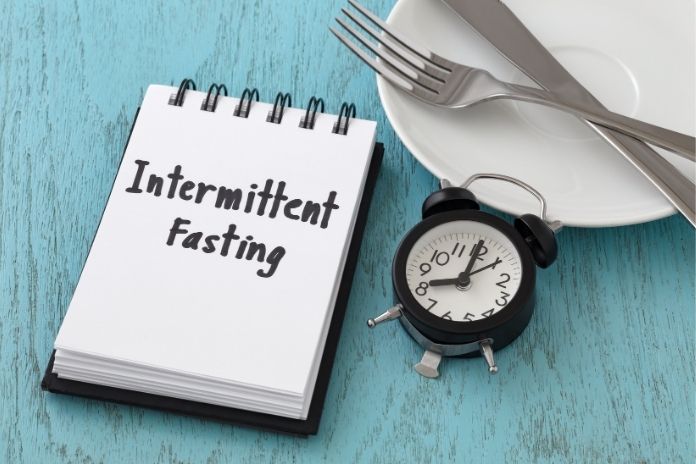
Cycling between periods of eating and fasting is a key component of intermittent fasting prediabetes therapies. Intermittent fasting focuses on when you eat, whereas other diets concentrate on what you consume. To put it another way, it’s any eating pattern in which you deliberately split your time between eating and not eating.
Intermittent fasting, once used for religious and cultural purposes, has gained popularity as a low-cost, often successful weight-loss strategy. It is how it works: Your body receives signals to clean up, recuperate, and heal whenever digestion is interrupted, such as when you’re sleeping.
How long should you fast, then? A regimen that suits your lifestyle is typically the most successful, although this depends on the individual and their health issues. Here are some typical schedules for intermittent fasting:
Alternate Day Fasting: It involves fasting every other day, consuming roughly 25% of your regular caloric intake on fasting days, and eating whatever you want on the other days.
Time-Restricted Fasting: Eating during the remaining hours while fasting for at least 12 hours each day. The 16-8 technique, which consists of an 8-hour eating window and a daily 16-hour fast, is a well-known example.
The 5:2 Fasting Diet: It involves eating a low-calorie diet for 2 days a week and a regular diet on the other days.
How Intermittent Fasting Affects Blood Sugar and Insulin
Intermittent fasting has gradually gained popularity as a diet in recent years. Longer meal intervals are a common strategy for managing weight. Many are shocked to discover that it is far less restrictive and far more maintainable than conventional diets like calorie counting, keto, and many others.
Studies demonstrate that intermittent fasting promotes fat burning by balancing hormone levels and initiating the body’s repair of vital cells. More generally, the body’s insulin levels and metabolic health are also greatly impacted by intermittent fasting.
A minimum of 16 hrs of fasting allows the body to recover and significantly lowers blood insulin levels. It can reduce your risk of disease, especially diabetes and pre-diabetes, and aid fat burning.
In addition to the (voluntary) calorie restriction, the theory is that while you fast, your insulin levels decrease, allowing your fat cells to release stored sugar for energy and helping maintain stable blood sugar levels. Your body switches a metabolic switch, if you will.
Your body can respond to insulin release more effectively due to increased insulin sensitivity. Your body requires less insulin to transport the glucose from your blood to your cells, where it is used as energy. You can lose weight by lowering your insulin. An excess of insulin can impede fat burning, making weight loss more challenging.
Read More: 4:3 Intermittent Fasting: How This Flexible Schedule Can Help You Burn Fat Without Burnout
What the Latest Evidence (2024-2026) Shows

Over the course of a fasting-feeding cycle, intermittent fasting initiates a series of bodily changes that start in the stomach and spread to the immune system, hormones, and metabolism. Our bodies reset their internal clocks when we stop eating. Additionally, the migrating motor complex, a natural “clean-up” mechanism, is triggered by the stomach.
Leftover food and germs are moved from the small intestine into the colon by a series of mild contractions. It could help prevent small intestinal bacterial overgrowth (SIBO), a condition in which the bacteria grow in the small intestine where they shouldn’t. Fasting allows the intestines to heal.
When less food passes through, the body strengthens the immune system, reduces inflammation, and allows gastrointestinal cells more time to heal. When Crohn’s disease (a type of IBD) is present as a comorbidity, these effects may help people maintain their weight.
However, fasting should be done carefully to prevent malnutrition or symptom flare-ups. Microbial diversity, or the variety of microorganisms, is frequently increased by intermittent fasting and is also associated with improved metabolism and decreased body fat.
Additionally, it also reduces infections and promotes beneficial bacteria such as Akkermansia muciniphila and Faecalibacterium prausnitzii. Short-chain fatty acids (SCFAs), which are good for the gut, are produced by gut bacteria fermenting leftovers that survived digestion when food eventually enters the colon.
Can Intermittent Fasting Actually Reverse Prediabetes?
Research suggests that IF may be a useful strategy for controlling blood sugar levels. Here’s how it can be especially beneficial:
Enhanced Insulin Sensitivity: IF lowers baseline insulin levels by providing your body with prolonged respite from digesting. This decrease can help fight insulin resistance, which is a major contributing factor to the onset of type 2 diabetes and prediabetes.
Weight Management: Many people find that IF reduces their total caloric intake, leading to weight loss. Losing even a small amount of body weight can considerably decrease the risk of prediabetes progressing into diabetes.
Reduced Blood Sugar: Research has shown that some types of fasting can directly reduce key indicators, such as hemoglobin A1c (HbA1c), which reflects your average blood sugar over several months.
Who Might Benefit Most From Intermittent Fasting?

Individuals with the following conditions are most likely to benefit from intermittent fasting prediabetes approaches:
- Excess weight
- Insulin resistance in its early stages
- Irregular eating habits
- The capacity to adhere to set routines
Improvements in metabolic health and insulin sensitivity are more likely in these situations.
Who Should Be Cautious or Avoid It?
Fasting is not appropriate for everyone, even though it can be beneficial. Those who ought to exercise caution include:
- Those using drugs that reduce blood sugar (risk of hypoglycemia)
- People who have already experienced eating issues
- Ladies who are nursing or pregnant
- People who are underweight or who are malnourished
Practical Tips for Trying Intermittent Fasting Safely
Start Slowly: Before moving on to more complex time-restricted eating prediabetes programs, start with a 12-hour fasting window.
Emphasis on Food Quality: Diet quality is important even when fasting. Lean proteins, healthy fats, low-glycemic carbohydrates, and fiber-rich vegetables make up the best diet for prediabetes reversal.
Align Eating with Circadian Rhythm: Circadian rhythm influences metabolism, which in turn significantly affects blood sugar management. Eating earlier in the day may enhance the insulin response and glucose tolerance.
Track Your Reaction: Keep tabs on your hunger, energy, and, if you can, your HbA1c levels over time. It makes it easier to assess the effectiveness of your fasting glucose improvement and diet plan.
When to Talk to a Doctor Before Starting IF

Before beginning intermittent fasting insulin resistance regimens, medical advice is crucial, particularly if you use medication or have pre-existing medical issues. Before beginning intermittent fasting, many experts advise talking to your doctor.
Before attempting intermittent fasting, you should definitely consult a physician if you have a condition like diabetes that makes going without eating risky. If you take blood pressure or heart disease medications that make you more vulnerable to electrolyte problems from fasting, you should follow the same advice.
Read More: Cheat Days While Intermittent Fasting: Should You or Shouldn’t You?
Conclusion
As a promising tactic for raising blood sugar levels and improving overall metabolic health, intermittent fasting shows great promise. While research suggests that intermittent fasting prediabetes approaches can enhance insulin sensitivity and also aid in weight management, it is not a guaranteed or standalone cure.
Long-term consistency in lifestyle, frequent exercise, and a nutritious diet are all necessary for sustainable outcomes. When combined with a healthy diet and medical advice, fasting can be a useful tool for many people.
In the end, people who are unsure if intermittent fasting can reverse prediabetes should see it as a component of a more comprehensive, individualized strategy rather than a temporary solution.
References
- Texas Diabetes. (January 2, 2025). Can you reverse prediabetes?
- Taylor Hisey Pierson. What Is Intermittent Fasting?
- Mayo Clinic. (March 08, 2025). What is intermittent fasting? Does it have health benefits?
- Carr, E. (2019, May 8). A beginner’s guide to intermittent fasting.
- Sarah Miller. (May 27, 2022). Intermittent Fasting and Insulin Resistance: Benefits Beyond Weight Loss.
- CCS. (July 3, 2025). Intermittent fasting and diabetes: What you need to know.
- Doral Health & Wellness. Can intermittent fasting cure prediabetes? Expert insights.
- Oliero, M. (2026, April 15). What are the benefits and risks of intermittent fasting for gut health?
- uclahealth. (December 16, 2021). Health benefits of intermittent fasting (and tips for making it work).
- Factor 75. How to Intermittent Fast – 7 Tips to Get Started.
In this Article