















- New research shows the shingles vaccine may reduce heart disease risk by 23–46%.
- The virus directly infects blood vessels and increases clotting, and the vaccine helps stop this process.
- Shingles vaccine benefits are strongest in high-risk patients but are seen across all groups.
Most people still think the shingles vaccine is only for preventing a painful skin rash. That idea is now outdated. New research from 2025–2026 is quietly changing how doctors look at it. The shingles vaccine-heart disease connection is no longer a theory; three large studies are showing it may actually reduce cardiovascular risk in a meaningful way.
We are not talking small numbers. One study with more than 1.2 million people shows a 23% lower risk of heart disease. Another meta-analysis confirms similar benefits across countries. And the newest study in high-risk patients shows an almost fifty percent reduction in major cardiac events.
Even more surprisingly, cardiology experts have now started calling vaccination the “fourth pillar” of heart disease prevention, along with medicines like statins and blood pressure drugs.
So this is no longer just about shingles. This is about arteries, blood clots, and long-term risk. Let’s break down the shingles vaccine’s cardiovascular risk: what is actually happening, who benefits most, and what it means for vaccines like Shingrix.
Read More: Challenges of Aging with HIV: What Every Person Over 50 Living with HIV Should Know
What the Research Shows: Three Studies, One Converging Story

Study 1: 1.27 Million People, Eight Years of Protection
This is the biggest and most important dataset so far. A South Korean cohort study followed 1,271,922 adults aged 50+ for up to 12 years. People who got the shingles vaccine had:
- 23% lower overall cardiovascular disease risk
- 26% lower major adverse cardiac events (heart attack, stroke, death)
- 26% lower heart failure risk
- 22% lower coronary heart disease
Protection was strongest in the first 2–3 years but continued up to 8 years. The benefit was higher in:
- Men
- People under 60
- Those with an unhealthy lifestyle (smoking, alcohol, inactivity)
Even people with no known risk factors still showed reduced risk. However, this study used the older live vaccine (Zostavax) and was done in the Korean population.
“Since we don’t have information on how long the vaccine will last, it’s difficult to know at what age it makes most sense to get the Zostavax vaccination, where you’re best able to balance its effectiveness against its cost,” Dr. Deepali Kumar, an associate professor of medicine in transplant infectious diseases, says.
Study 2: Global Meta-Analysis Confirms
A global analysis presented at a major cardiology congress pooled data from nine studies. Results showed:
- 18% reduction in cardiovascular events in younger adults (18–49)
- 16% reduction in those 50+
- Around 1.2 to 2.2 fewer heart events per 1,000 people each year
This is important because it is not just one country or one dataset. Different populations, same pattern.
Study 3: Near-Halving of Events in High-Risk Patients
This is the most recent and maybe most shocking study (2026). It looked at 246,822 adults who already had atherosclerotic cardiovascular disease. Findings:
- 46% reduction in major cardiac events
- 66% lower risk of death within one year
That is a very large effect. Researchers even said it is comparable to quitting smoking in terms of impact. Important note: follow-up was only 1 year. Also, observational bias cannot be fully removed. But still, the signal is strong.
How Shingles Damages the Heart: the Mechanism Every News Article Skipped
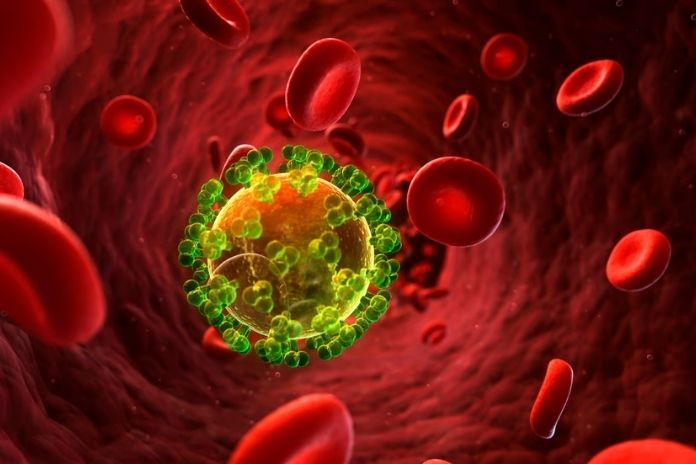
Most articles just say “inflammation.” That is incomplete. The real mechanism is much more direct and frankly more concerning. The virus behind shingles, varicella zoster virus (VZV), is not just sitting in nerves. It can actually infect blood vessels.
Here is what happens:
- After reactivation, the virus travels from the nerve ganglia
- It moves along nerve fibers
- Reaches the outer layer of arteries (adventitia)
- Then spreads through the entire vessel wall
This is called VZV vasculopathy. Inside the artery, it causes:
- Thickening of the inner lining (intima)
- Damage to the elastic layer
- Loss of smooth muscle cells
Narrowing (stenosis), blockage, and sometimes weakening increase the risk of dissection. But there is another layer. After a shingles infection, the body releases small particles called exosomes. These carry clotting proteins, up to 9 times higher than normal. And this state can last for months even after the rash is gone.
That explains why heart attacks and strokes often happen weeks after shingles. So the answer is not just “infection causes inflammation.” The culprit is a virus that infects the arteries, and the blood becomes more prone to clotting. Now the vaccine logic becomes clear. If you stop the virus from reactivating, you stop this entire cascade.
Who Benefits Most, and What the Subgroup Data Shows
Not everyone gets equal benefit. The studies give some clear patterns about the shingles vaccine and who should get it.
- People with existing heart disease: This group showed the biggest benefit. Almost 46% reduction in major events. Likely because plaques are already present, and infection acts as a trigger.
- People under 60: A stronger immune response means better long-term protection against the virus.
- Men: Some differences seen, possibly due to higher baseline cardiovascular risk or immune variation.
- Unhealthy lifestyle group: Smokers, drinkers, and inactive individuals saw more benefit. It does not replace lifestyle changes, but it adds another layer of protection.
- People with no risk factors still got a benefit. This is important; it is not only for high-risk patients.
So overall, the shingles vaccine’s cardiovascular risk reduction is broad but especially strong in certain groups.
Why Cardiologists Are Rethinking Vaccination: The “Fourth Pillar” Moment

In 2025, a major cardiology guideline made a strong statement. Vaccination is now considered the fourth pillar of cardiovascular prevention. Earlier, prevention mainly focused on:
- Blood pressure control
- Cholesterol-lowering
- Diabetes management
Now one more is added: preventing infections. The reason is simple. Infections can destabilize plaques, trigger clotting, and cause acute events. Shingles is one example. Influenza also shows a similar pattern.
This is a shift in thinking. Heart disease is not just about lifestyle and metabolism. It also has an infection-triggered component. So if a cardiologist is not discussing vaccines, that gap is now becoming visible.
What About Shingrix?
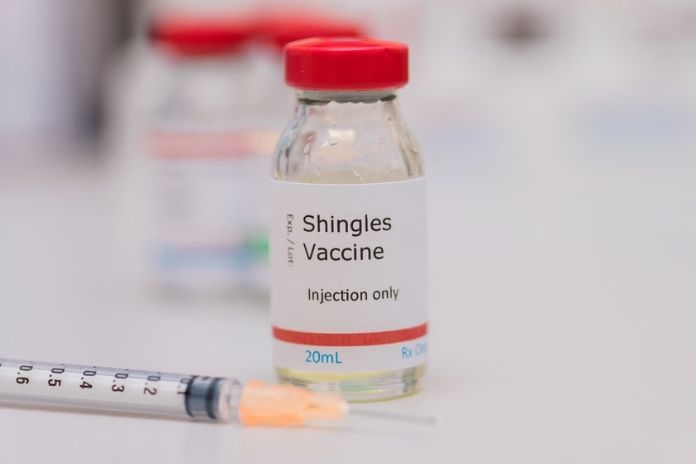
Most of the early data used Zostavax, which is no longer commonly used. Today, Shingrix is the main vaccine.
“You can give Shingrix to a larger range of patients, including some who are immunocompromised,” says Dr. Rachel M. Bartash, an infectious disease specialist.
Differences:
- Shingrix effectiveness > 90%
- Zostavax around 50%
- Shingrix works in immunocompromised patients
- Requires 2 doses
Now the key question about Shingrix and cardiovascular benefits: Does Shingrix also protect the heart? Some early real-world data says yes. A large healthcare dataset showed:
- 28% reduction in hospitalized heart attacks
- 43% reduction in hospitalized strokes
Also, the 2026 study included people who received Shingrix. Since Shingrix is more effective at preventing shingles, it may provide equal or even better cardiovascular benefits. But long-term data is still being collected. So right now, we can say evidence is promising but still evolving.
Beyond the Heart
The effects may not stop at heart disease. Some studies are showing reduced dementia risk after shingles vaccination. Around 20% reduction has been seen in certain populations.
Other findings about shingles vaccine stroke prevention:
- Lower risk of blood clots
- Reduced stroke rates
- Lower overall mortality
One large dataset showed an even reduction in vascular dementia by around 50%. Again, the same mechanism may explain this; the virus affects blood vessels in the brain as well. There is also discussion about immune system modulation and even slower biological aging, but this area still needs more research.
Read More: 13 Common Vaccination Myths Debunked
What This Means Practically
Current recommendations are simple: Adults 50+ should get the shingles vaccine. Immunocompromised adults 18+ are also recommended. Who should consider it strongly:
- People with heart disease
- Those with multiple risk factors
- Those who had the old vaccine earlier
Individuals with severe allergies to vaccine components, active shingles infections, and pregnancy (consult a doctor) should avoid the vaccine. Important reality check:
- Most studies are observational
- Healthy vaccine bias may exist
- Long-term Shingrix cardiovascular data is still coming
But when multiple large studies show the same direction of effect, it is not random.
Read More: What Vaccines Do You Need as an Adult? A Complete Guide by Age and risk
Final Thoughts
We are at a point where one vaccine is being seen in a completely new way. Shingles is not just a skin condition. It is a vascular event waiting to happen. The virus can directly damage arteries and increase clotting risk.
So a vaccine that prevents this is not just preventing a rash; it is acting like a cardiovascular intervention. With three major studies pointing in the same direction and cardiology guidelines evolving, this topic is no longer small. The shingles vaccine-heart disease link is becoming one of the most interesting shifts in preventive medicine right now.
- The idea that shingles, heart disease risk, and infection can directly damage arteries is still not widely discussed in general health content: a big gap.
- VZV is possibly the only common human virus with the proven ability to replicate inside arterial walls.
- Cardiovascular prevention is expanding beyond lifestyle and drugs into immune-based strategies.
- Most consumer articles miss the difference between inflammation vs. direct vascular infection, an important distinction.
- Long-term Shingrix-specific cardiovascular data are still limited; this is where future research will focus.
FAQs
1. Does the shingles vaccine prevent heart attacks?
It does not directly “prevent” in an absolute sense, but studies about the shingles vaccine and heart disease show a significant reduction in risk, especially in people with existing heart disease.
2. How long does protection last?
Some data suggests up to 8 years, with the strongest benefit in the first 2–3 years.
3. Is Shingrix better than Zostavax for heart protection?
Likely yes, because it prevents shingles very effectively. But long-term cardiovascular data about Shingrix vs Zostavax is still developing.
4. Should healthy people also take the shingles vaccine for heart protection?
Yes, even people without risk factors showed a reduced risk of cardiovascular events in studies.
5. My doc never mentioned the shingles vaccine’s cardiovascular risk. Why?
Many focus on statins first. ESC’s “fourth pillar” changes that. Bring it up.
References
- Lee, S., Lee, K., Oh, J., Kim, H. J., Son, Y., Kim, S., Park, J., Kang, J., Pizzol, D., Lee, J., Woo, H. G., Lee, H., & Yon, D. K. (2025). Live zoster vaccination and cardiovascular outcomes: a nationwide, South Korean study. European Heart Journal.
- Schnier, C., Janbek, J., Lathe, R., & Haas, J. (2022). Reduced dementia incidence after varicella zoster vaccination in Wales 2013–2020. Alzheimer’s & Dementia: Translational Research & Clinical Interventions, 8(1).
- Shingles Vaccine Drastically Cuts Risk of Serious Cardiac Events – American College of Cardiology. (2026). American College of Cardiology.
- Shingles Vaccine Lowers Risk of Dementia, Major Cardiovascular Events. (2025). Idsociety.org.
- Williams, C., Bhatt, D. L., Aguiar, C., Nguyen, T. Y. C., Antoniou, E., & Parikh, R. (2025). Herpes zoster vaccine effectiveness against cardiovascular events – a systematic literature review and meta-analysis. European Heart Journal, 46(Supplement_1).
In this Article