

















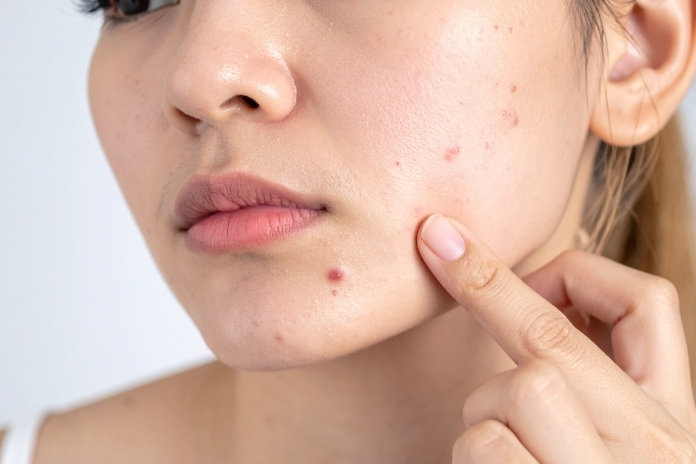
- Hormonal patterns matter: Jawline acne often links to androgen activity, menstrual cycles, PCOS, or stress.
- Deep, painful pimples: Look for cysts and nodules that last longer than regular breakouts.
- Targeted care works best: Use tretinoin, azelaic acid, topical spironolactone, and gentle cleansers for lasting improvement.
Compared to normal acne, breakouts along the jawline and chin might feel rather different. These pimples frequently heal more slowly, are deeper, and cause more discomfort. Many people observe that even with a regular skincare regimen, they still show up at the same time every month. This pattern is frequently associated with hormonal fluctuations that impact lower facial inflammation and oil production.
This article will discuss the causes of jawline acne, hormonal patterns, the characteristics of painful jawline pimples, common triggers such as the menstrual cycle and polycystic ovary syndrome (PCOS), how to recognize hormonal acne on the chin and jawline, and the best, scientifically supported skincare techniques.
Read More: How to Fade Dark Spots From Pimples: Dermatologist-Approved Treatments
Why Hormonal Acne Often Appears on the Jawline and Chin
The Role of Androgen Hormones in Oil Production
The action of androgen hormones, such as testosterone, is a primary cause of hormonal acne on the lower face. These hormones stimulate the sebaceous (oil) gland in your skin, increasing sebaceous gland activity.
Sebum, dead skin cells, and germs are more likely to clog pores as oil production rises. It creates the perfect environment for inflammatory acne and deeper lesions, such as cystic acne, which often involve the jawline.
Why the Lower Face Is More Sensitive to Hormonal Changes
If you’re not sure if hormones cause your breakouts, the places where they happen can tell you a lot. Hormonal acne usually appears on the neck, chin, jawline, and lower cheeks, all areas with many hormone-sensitive oil glands. These spots often get worse when your hormones change because androgens make your oil glands work harder, which leads to clogged pores and stubborn pimples.
A breakout can occur on your chest, upper back, or hairline, but it usually happens on your face.
But acne caused by bacteria or other external factors works differently. It seems to show up randomly on the nose, forehead, or in small patches on the cheeks. Regular cleansers and topical treatments usually help it go away faster.
Acne is more common around the jawline than anywhere else because skin tone varies from person to person.
The lower part of the face – neck, chin, and jawline – has the following:
- Greater sensitivity to hormonal signals
- A distinct oil gland distribution
- Increased activity of the androgen receptor
How Hormones Increase Inflammation in Acne-Prone Areas
Hormones not only increase oil production, but they also affect inflammation. A lot of androgens can:
- Worsen the skin’s inflammatory reactions
- Help microorganisms grow
- Causes redness and swelling
It is why painful pimples on the jawline often feel sore and swollen.
“Adult-onset acne is more common in women and often appears along the jawline rather than the T-zone of the forehead, nose, and chin,” said Clarissa Yang, MD, Chief of Dermatology at Tufts Medical Center. She adds, “Jawline acne in women can suggest a hormonal imbalance.”
What Makes Jawline Pimples More Painful
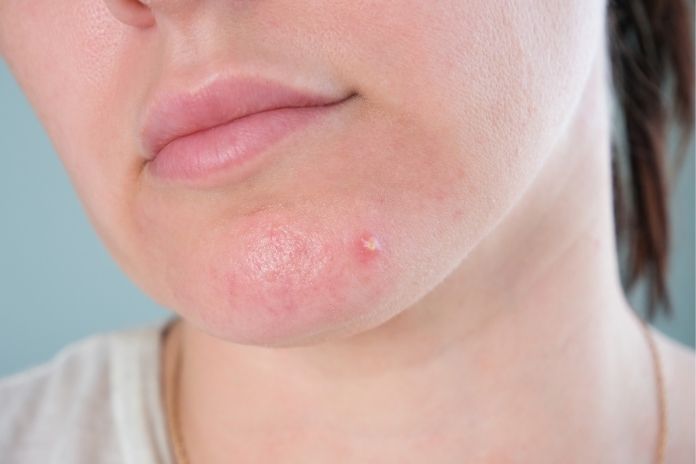
It is why pimples on the jawline hurt more:
Deep Cystic Structure: Acne on the jawline often appears as deep, nodulocystic lesions, caused by excess sebum clogging pores and triggering severe inflammation rather than a surface breakout.
Hormonal Triggers: Androgens, stress/cortisol, or PCOS can cause hormonal acne, which is most common on the jaw and chin. It causes deep, painful cysts that often take a long time to heal.
Sensitive Skin and Nerve Density: The jawline has many sensitive hair follicles and sweat glands. When they get inflamed, they make pain worse.
Dirty Razor/Skincare Habits: Heavy creams that clog pores, or shaving with a dirty razor, can clog pores and cause inflammation.
Common Hormonal Triggers for Jawline Acne
Hormonal imbalances, dietary choices, stress, and some medications are just a few of the many things that can cause acne on the jawline. To manage and prevent these problems, you need to know what causes them.
Androgen Levels: High levels of androgens can cause acne, clogged pores, and overworked oil glands.
Menstrual Periods: Hormonal changes that happen during a woman’s menstrual period often cause acne on her jawline.
Menopause and Pregnancy: Hormonal changes that happen during menopause and pregnancy may be a cause of breakouts.
Polycystic Ovary Syndrome (PCOS): Hormonal problems caused by Polycystic Ovary Syndrome (PCOS) often lead to acne.
Dairy Products: Skim milk and other dairy products may contain hormones similar to human hormones, which may cause the body to produce more oil.
Medicines: Some medicines can make acne worse or cause it.
Cosmetics: Non-comedogenic makeup or applying too much can clog pores and cause breakouts.
Read More: 9 Home Remedies for Acne and Pimples
Signs Your Jawline Acne May Be Hormonal
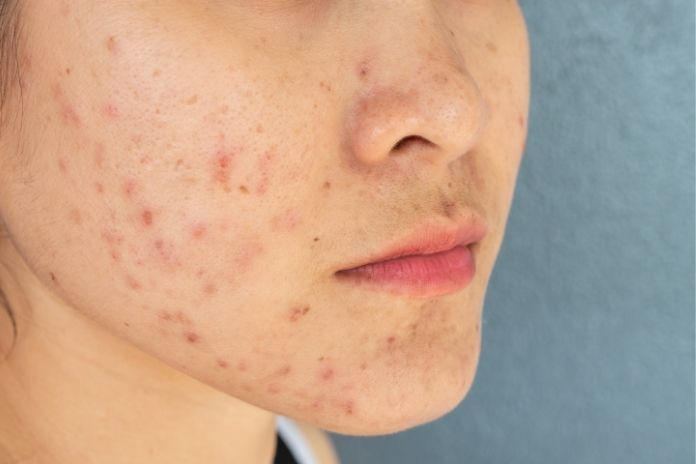
Doctors often look for a few signs to help them tell hormonal acne apart from other types, even though it can be hard to do so.
One of the most important clues is the time. If your acne gets worse around your period, usually a week to ten days before it starts, and then gets better after that, it’s a good sign that hormones may be involved. Acne caused by bacteria or other external factors is usually less predictable.
Location is another sign. Hormonal acne often appears on the neck and lower face, where there are many oil glands sensitive to hormones. Acne caused by bacteria or clogged pores usually appears in different areas of the face at different times. If you have persistent breakouts in certain areas, it may be due to hormonal factors.
The way the pimples look is also important. Hormonal acne usually causes cysts or nodules to form under the skin that are deeper and sometimes painful. Also, these breakouts may last longer than blackheads or whiteheads, which are only on the surface and are caused by other types of acne.
Adult acne is another sign that something is wrong. Hormones are often more important if you’re having breakouts for the first time in your 20s, 30s, or later. It is different from teen acne, which usually follows a different pattern.
Keep in mind that over-the-counter treatments don’t usually work for hormonal acne. If you’ve tried a lot of things and your breakouts don’t go away, you might have hormonal acne.
Other Factors That Can Worsen Jawline Breakouts
Friction From Masks, Phones, or Hands: Mechanical irritation can worsen hormonal patterns in the jawline. Constant touching or pressure traps bacteria and oil, aggravating inflammatory acne.
Stress: The body responds to stress by releasing more cortisol. Sebum glands then go into overdrive. Stress hormones can cause acne on the jawline and other parts of the body, much like hormonal acne caused by fluctuating reproductive hormones.
Lifestyle Factors: Using skin or hair products that irritate your skin, touching your face, and not changing your pillowcase often enough are a few ways that acne might worsen.
Read More: If Popping Pimples Is So Bad, Why Do Estheticians Still Do It? A Dermatologist Explains
Evidence-Based Treatments for Hormonal Jawline Acne
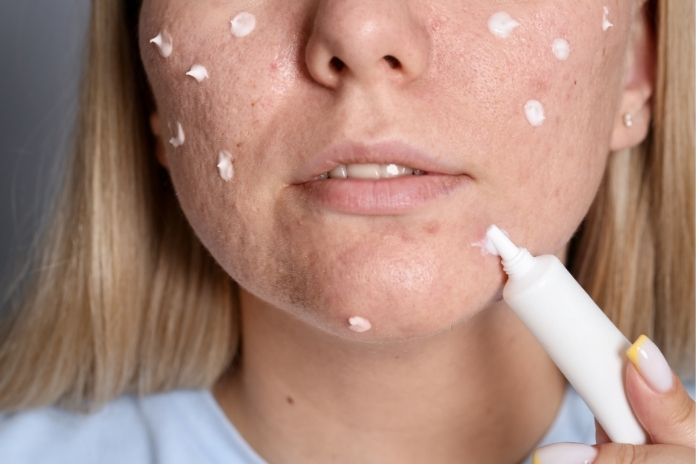
Let’s take a look at some of the most effective treatments.
Tretinoin: This vitamin A derivative promotes cell turnover and keeps pores from clogging. Clinicians often use it alongside other hormonal treatments to effectively target both inflammatory and non-inflammatory acne.
Additionally, tretinoin lessens post-inflammatory hyperpigmentation and acne scars.
Topical Spironolactone: This drug helps lessen oil production and inflammatory acne by focusing on androgen activity in the skin. Topical spironolactone reduces the excess sebum, which frequently contributes to the hormonal acne, particularly around the jawline and chin, by inhibiting androgen receptors in sebaceous glands.
Both men and women can benefit from topical spironolactone since it reduces systemic absorption, unlike oral spironolactone.
Azelaic Acid: This topical medication reduces inflammation, keeps the pores from clogging, and, to some extent, inhibits androgen-related skin activity. Doctors frequently use it to treat mild to moderate acne, including cases caused by hormonal fluctuations.
In addition to having antibacterial properties that reduce the acne-causing bacterium C. acnes on the skin, azelaic acid also reduces the formation of keratin, a protein that can block pores.
Skincare Tips for Managing Painful Jawline Pimples
There are many ways to reduce the acne on your jawline, which is good news.
Cleanser: To remove the excess oil, dead skin cells, dirt, and makeup on the skin’s surface, use a gentle cleanser containing salicylic acid. Cleaners are the first step you should take to keep your skin clear of breakouts, as they remove dirt and other impurities that can clog pores.
AHAs, or Alpha Hydroxy Acids: These topical agents help remove dead skin cells and make pores look less clogged. Some examples of AHAs are mandelic acid, lactic acid, and glycolic acid. Toners and other skincare products often contain these chemicals. They work well to clear breakouts around the jawline and improve skin tone.
Retinoids: Vitamin A is the main source of retinoids. They could be prescription drugs like retinol or isotretinoin, or mild antioxidants like retinyl palmitate. They are often used to treat acne vulgaris because they help remove dead skin cells. A doctor or skin care expert can help you figure out what the best course of action is.
Read More: Adapalene vs. Tretinoin for Acne: Which Retinoid Works Better for Your Skin?
When to Seek Medical Evaluation for Jawline Acne
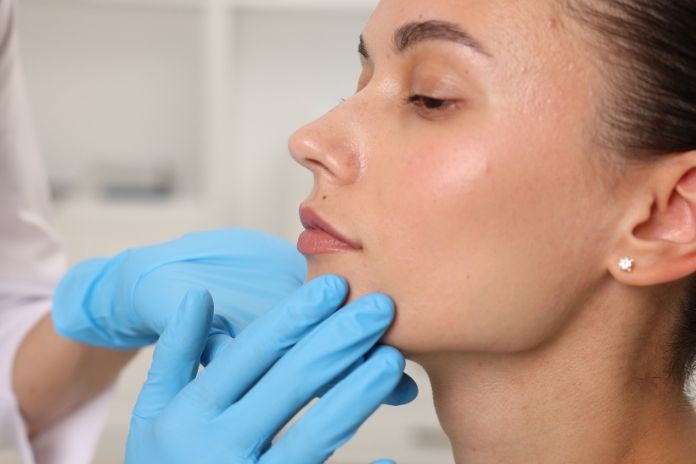
Many over-the-counter medicines can help you keep your acne under control when it’s not too severe. But acne can come and go, and it can last a long time. You should see a dermatologist to find out what is causing your acne. When you go to a qualified medical skin specialist instead of treating acne at home, you usually see a big difference or even clear up.
Here are some tips that can help you decide when to see a dermatologist for acne:
- Over-the-counter drugs don’t work
- Acne that is bad or won’t go away
- Infection or other health problems
- Self-esteem issues
- Acne and period problems
Read More: 6 Skincare and Hormone Mistakes We Make Trying to Fix Acne
Conclusion
Painful jawline pimples are often more than just a surface-level skin concern; they usually reflect deeper hormonal acne and chin and jawline patterns driven by internal changes. These breakouts usually last a long time and take a long time to heal because of factors such as hormonal changes, increased oil production, and inflammation.
Recognizing when hormones are involved helps you choose the right approach, whether that’s medical care or targeted skincare
With the right treatments, regular care, and lifestyle changes, you can effectively manage and reduce these persistent outbreaks.
References
- Allura Skin. (January 27, 2026 ). What is the connection between hormones and sudden skin changes?
- Schweiger Dermatology Group. Signs your acne is hormonal.
- Dexeryl. Hormonal acne: Causes, symptoms, and treatments.
- Dermatology San Antonio. How hormones affect your skin: A deep dive into hormonal acne.
- Dr. Siri Nallapu. (16th March, 2026). Understanding and Managing Jawline Acne.
- Lisa DeSantis. (December 20, 2022). The Top Causes of Jawline Acne and How to Get Rid of It.
- Miiskin. Jawline acne: What causes it and how to get rid of it?
In this Article