




















- Low progesterone affects your cycle and mood, causing spotting, heavy periods, anxiety, and poor sleep.
- Timing matters. Signs like pre-period spotting and short cycles point to a deficiency, and testing should be done 7 days before your period, not on day 21.
- Fix the root cause. Stress, nutrition, and ovulation support are key, and bioidentical progesterone works better for mood and sleep than synthetic options..
Progesterone is often misunderstood as just a pregnancy hormone, but its role extends far beyond fertility. It governs the second half of your menstrual cycle and directly influences mood, sleep, and how your body responds to stress.
Many women experiencing low progesterone symptoms are told they simply have PMS or irregular cycles, without recognizing the underlying hormonal pattern. This imbalance is extremely common and often misdiagnosed.
Subtle changes in your cycle, bleeding patterns, and emotional state often point to low progesterone and period disruption long before lab tests are done. This article breaks down exactly how to recognize signs of low progesterone, understand cycle-specific symptoms, test accurately, and choose solutions that actually address the root cause.
Read More: Bleeding Between Periods: Common Causes, What’s Normal, and When to See a Doctor
What Progesterone Does—and When It Should Be High
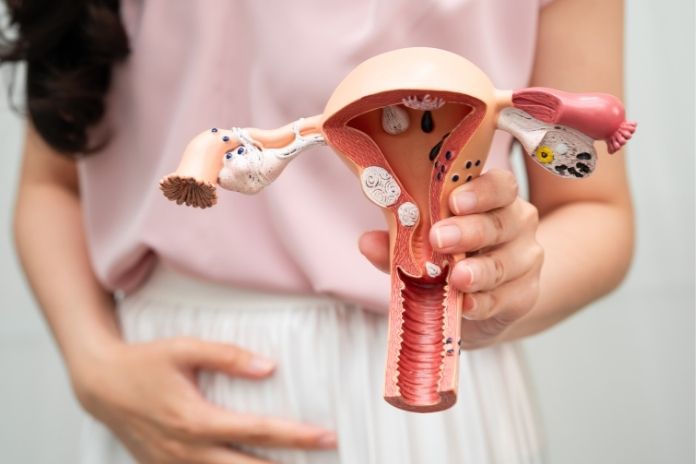
Progesterone is only produced after ovulation, when the follicle transforms into the corpus luteum. This makes it a marker of ovulation, as without ovulation, progesterone remains low. During the follicular phase, progesterone is minimal.
After ovulation, it rises and peaks about 6–8 days later in the mid-luteal phase. If pregnancy does not occur, progesterone drops, triggering menstruation. A normal mid-luteal progesterone level is typically 10 ng/mL or higher.
Levels between 5 and 10 ng/mL suggest reduced luteal function, while levels less than 5 ng/mL often indicate anovulation. Progesterone has three essential roles. It stabilizes the uterine lining, transforms it into a supportive environment, and counterbalances estrogen. It also plays a neurological role by supporting calming brain pathways.
When progesterone is insufficient or declines too early, the uterine lining becomes unstable, leading to early shedding and a cascade of hormonal symptoms.
How Low Progesterone Affects Your Period
Cycle Timing Changes
One of the most specific low progesterone period symptoms is a short luteal phase, often resulting in cycles shorter than 24 days. This is a sign of luteal phase defect symptoms, where progesterone is not sustained long enough after ovulation.
Irregular or missed periods may reflect anovulation. In these cases, no corpus luteum forms, so progesterone is never produced. Bleeding may still occur, but it is hormonally different and often unpredictable.
Spotting before your period is one of the most important diagnostic clues. If you consistently notice light bleeding 1–3 days before your actual period, this reflects the premature breakdown of the corpus luteum. This is not random but a clear sign of inadequate progesterone support and luteal phase instability.
Bleeding Pattern Changes
Low progesterone also changes how your period shows. Heavy periods are common because progesterone is not sufficient to oppose estrogen’s effect. This leads to a thicker uterine lining and heavier shedding, often described alongside estrogen dominance symptoms, which are better understood as an imbalance between progesterone and estrogen rather than excess estrogen alone.
Prolonged periods occur when the lining sheds unevenly due to a lack of structural stability. Mid-cycle spotting may happen around ovulation, when estrogen peaks before progesterone rises enough to stabilize the lining.
Read More: Can Heavy Periods Be a Sign of Something Serious?
Why Low Progesterone Affects Your Mood and Sleep — The GABA Connection

Progesterone has a direct and measurable effect on the brain. It is converted into allopregnanolone, which activates GABA-A receptors. GABA is the brain’s primary calming neurotransmitter, responsible for reducing anxiety and promoting sleep. During the mid-luteal phase, when progesterone is highest, this pathway creates a natural calming effect.
Many women feel more relaxed and sleep better during this time. As progesterone drops before menstruation, this calming signal is withdrawn. This explains why anxiety, irritability, and insomnia appear in the late luteal phase. PMS is not random, but it closely tracks the fall in progesterone and the resulting drop in GABA activity.
In chronic low progesterone states, this calming effect is never fully established. This can lead to persistent anxiety, poor sleep resilience, and increased stress sensitivity throughout the cycle. This mechanism also explains why treatment type matters. Bioidentical progesterone supports this pathway, while synthetic progestins do not.
What Causes Low Progesterone?
Understanding what causes low progesterone requires looking at ovulation, stress physiology, and endocrine balance. Anovulation is the most direct cause. Without ovulation, progesterone is not produced.
Chronic stress contributes through the cortisol pathway. Progesterone and cortisol share a precursor hormone, pregnenolone. Under stress, the body prioritizes cortisol production, reducing progesterone availability and often shortening the luteal phase.
Conditions like PCOS disrupt regular ovulation, leading to inconsistent progesterone levels.
Thyroid dysfunction can impair ovulation and corpus luteum function, reducing progesterone output.
Higher prolactin levels suppress LH signaling, which is necessary to maintain progesterone production. Energy deficiency from excessive exercise or inadequate nutrition suppresses reproductive signaling, leading to anovulation. In perimenopause, progesterone is often the first hormone to decline, even before cycles become visibly irregular.
How and When to Test Progesterone — The “Day 21” Problem
Why the “progesterone testing day 21” Advice is Often Wrong
The common recommendation to test progesterone on day 21 is only accurate for women with a 28-day cycle, which is a minority. For most women, this leads to falsely low readings and confusion.
The Correct Testing Formula:
Progesterone should be tested 7 days before your expected period to confirm ovulation and not on a fixed cycle day. For example:
35-day cycle: test on day 28
32-day cycle: test on day 25
This ensures testing occurs at the mid-luteal peak.
How To Interpret Results:
A level higher than 10 ng/mL generally confirms ovulation and adequate luteal function.
Levels between 5 and 10 ng/mL suggest suboptimal progesterone production. Levels less than 5 ng/mL indicate anovulation or a significant deficiency. Testing should always be combined with cycle-tracking methods, such as ovulation predictor kits or basal body temperature.
Read More: 18 Effective Home Remedies For Irregular Periods That You Need To Be Aware of
How to Raise Progesterone: Lifestyle, Supplements, and Prescription Options

Lifestyle Interventions
Lifestyle factors strongly influence progesterone production. Here’s how:
- Reducing stress helps shift hormone production away from cortisol and back toward progesterone.
- Moderate exercise supports hormonal balance, while excessive high-intensity training can suppress ovulation.
- Adequate caloric intake is essential. Even moderate deficits can disrupt hypothalamic signaling and prevent ovulation.
- Sleep is critical for maintaining hormonal rhythms. Poor sleep increases cortisol and disrupts LH signaling needed for progesterone production.
Supplements with Evidence
Certain supplements support progesterone production or its upstream pathways. Here are a few that actually help promote progesterone production:
- Vitamin Chas been shown to improve progesterone levels in women with luteal phase deficiency by supporting corpus luteum function.
- Magnesiumsupports stress regulation and enhances GABA activity.
- Zinc plays a role in ovulation and hormone signaling.
- Vitex agnus-castussupports LH production, helping stimulate progesterone over time. Effects typically appear after 2–3 months.
Important Note: Popular trends like seed cycling lack strong clinical evidence and should be approached with realistic expectations.
Prescription Options—and Why Type Matters
Prescription treatment depends mainly on the type of hormone used. Bioidentical micronized progesterone is similar to the body’s natural hormone and supports the allopregnanolone–GABA pathway. It is often taken at night due to its calming effects.
Synthetic progestins are structurally different and do not activate the same neurological pathways. While they may regulate bleeding, they may not provide the same mood and sleep benefits.
Over-the-counter progesterone creams have inconsistent absorption and are not reliable for correcting true deficiencies. Treatment should always follow proper diagnosis, as unnecessary hormone use can disrupt natural cycles.
When to See a Doctor

Medical evaluation is recommended if you experience consistent signs of hormonal imbalance. Consult a doctor immediately if:
- Cycles shorter than 24 days or a short luteal phase suggest progesterone deficiency
- Repeated spotting before your period across multiple cycles is a key diagnostic signal
- Heavy or prolonged periods that worsen over time should be evaluated
- Difficulty conceiving after 6–12 months, or sooner if over 35, warrants assessment
- Severe PMS or PMDD symptoms affecting daily functioning may indicate underlying progesterone issues
Symptoms suggestive of thyroid dysfunction, PCOS, or increased prolactin should also be checked.
Read More: Can You Ovulate Without Having Periods? Here’s What to Know
Conclusion
Progesterone plays a central role not just in reproduction but also in regulating your cycle, mood, and sleep. Many low progesterone symptoms are overlooked because they are common, but their timing within the menstrual cycle reveals a clear hormonal pattern.
To address this imbalance effectively, track when symptoms occur, test progesterone at the correct time rather than relying on “day 21,” and explore treatments that support your body’s natural physiology. This content is for educational purposes only and should not replace professional medical advice.
Always consult a qualified healthcare provider for diagnosis and treatment.
References
- Nutrichem. (n.d.). The calming hormone: How progesterone can transform your mood and sleep.
- Celik, O., Hascalik, S., Elter, K., Tagluk, M. E., Gurates, B., & Aydin, N. E. (2003). Ascorbic acid supplementation improves luteal phase defect. Fertility and Sterility, 80(Suppl. 2), 121–126.
- Schmidt, P. J., Martinez, P. E., Nieman, L. K., Koziol, D. E., Thompson, K. D., & Rubinow, D. R. (2017). Premenstrual dysphoric disorder symptoms following ovarian suppression: The role of progesterone. Biological Psychiatry, 81(4), 339–347.
- Ecochard, R., Gougeon, A., Sidebottom, A., & Vialard, F. (2015). Characterization of luteal phase deficiency: A systematic review. Human Reproduction, 30(6), 1239–1248.
- Beshay, V. E., & Carr, B. R. (2020). Luteal phase defect. In StatPearls. StatPearls Publishing.
- Reddy, D. S. (2018). Role of progesterone and its metabolites in mood disorders. Neuroscience, 343, 1–18.
- Narayana Health. (n.d.). Progesterone: Natural function, levels, and side effects.
- Practice Committee of the American Society for Reproductive Medicine. (2021). Luteal phase deficiency: A committee opinion. Fertility and Sterility.
In this Article