





















You feel it coming on. A scratchy throat. A little congestion. That tired, heavy feeling behind the eyes. Before you even think about a pharmacy run, someone suggests the same thing people have suggested for generations: garlic and honey.
It’s easy to see why this remedy sticks around. Both ingredients are cheap, familiar, and already available in most kitchens. Across cultures, garlic and honey are often the first line of defense against a cold.
Let’s break down what actually happens when you catch a cold, what garlic and honey do in the body, and what the science really says about this popular combination.
Why Garlic and Honey Are Commonly Used for Colds

Garlic and honey aren’t just old kitchen staples; they’re ingredients that appear in traditional medicine systems worldwide. From Ayurveda in India to folk remedies across Europe, the Middle East, and East Asia, these practices have spanned centuries. Their popularity isn’t random; it’s rooted in experience, accessibility, and perceived benefits.
There are three main reasons people reach for garlic and honey at the first sign of a cold. First, they’re accessible and familiar. Most people already have them at home, making them an easy first response to that scratchy throat or mild congestion.
Second, they are perceived as “natural,” which gives a sense of safety, especially for mild, self-limiting illnesses. Finally, they target discomfort rather than disease itself.
That last point is key. People don’t usually reach for garlic and honey expecting them to kill a virus. They’re looking for relief, something to soothe a sore throat, calm a persistent cough, or make the early stages of a cold a little more tolerable.
Modern medicine takes a similar approach. Treatment focuses on symptom management rather than the eradication of the virus itself. Garlic and honey fit into this framework naturally: they are not antiviral cures, but they can ease the discomfort that comes with the illness.
How the Common Cold Actually Works
The common cold is caused by viruses, most commonly rhinoviruses, though coronaviruses, adenoviruses, and other viruses can also be responsible. Understanding this helps explain why garlic and honey, and most other remedies, are aimed at symptom relief rather than “curing” the cold.
Here are the key facts that shape treatment strategies. First, antibiotics do not work because colds are viral, not bacterial. Second, your immune system is capable of clearing the virus on its own. Third, symptoms typically peak within 2 to 4 days and resolve within 7 to 10 days.
Most of the discomfort you feel isn’t caused directly by the virus itself, but by your body’s immune response. According to the Centers for Disease Control and Prevention, inflammation, increased mucus production, and irritation in the throat and nasal passages are what drive the typical cold symptoms.
That’s why treatments, whether conventional or natural, focus on managing the body’s response rather than attacking the virus. Common goals include reducing throat irritation, calming cough reflexes, and managing inflammation and discomfort. Within this context, garlic and honey are used as tools to soothe symptoms, making the cold more bearable while your immune system does its work.
What Garlic Does in the Body During a Cold
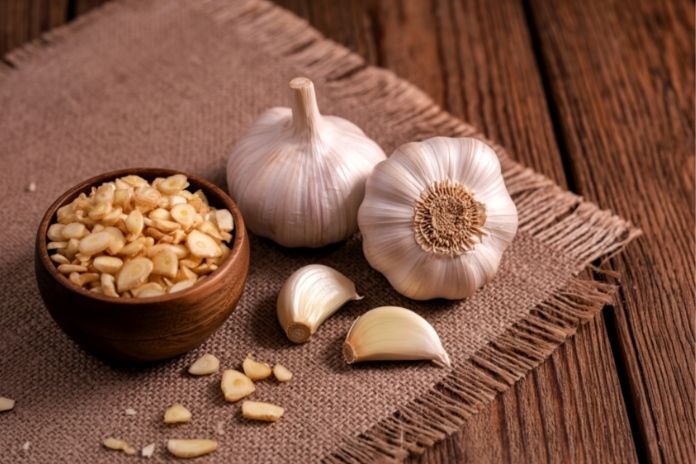
What Garlic Does in the Body During a Cold
Garlic contains sulfur-based compounds that can influence how the body responds to illness. The most notable is allicin, which forms when raw garlic is chopped or crushed and is responsible for both its pungent aroma and many of its studied biological effects.
Immune Response and Inflammation
Garlic compounds may influence immune function by affecting cytokine production and supporting the activity of certain immune cells, including natural killer cells and macrophages. A review in The Journal of Immunology Research suggests that garlic can modulate immune signaling, potentially helping the body respond to pathogens more efficiently.
It’s important to distinguish this type of immune regulation from the popular idea of an “immune boost.” As Gary Linkov, MD, notes, while some laboratory studies show that garlic extracts can partially inhibit viral activity in cells, there is little comprehensive evidence that garlic prevents viral infections in humans.
In practical terms, garlic appears to play a subtle, regulatory role in immune and inflammatory processes rather than dramatically amplifying immune defenses.
Limits of Garlic’s Antiviral Action
When it comes specifically to the common cold, clinical evidence remains limited and mixed. A small randomized study published in Advances in Therapy found that participants taking garlic supplements reported fewer colds than those taking a placebo. However, the study relied on self-reported symptoms, involved a small sample size, and did not measure objective viral outcomes.
For this reason, major health organizations do not consider garlic a proven antiviral treatment. While its antimicrobial and anti-inflammatory properties are well documented in laboratory settings, these effects do not reliably translate into strong antiviral action in the human body.
Overall, garlic may offer mild, supportive benefits during a cold—potentially helping with symptom tolerance or immune balance—but it does not stop viral infection or replace core recovery strategies such as rest, hydration, and standard symptom management.
Read More: Can Garlic Really Boost Your Immunity or Is It Just Hype?
What Honey Does for Cold Symptoms

Of the two ingredients, honey has the stronger and more consistent evidence of symptom relief, particularly for cough and sore throat. While garlic plays a subtle, supportive role in immune modulation, honey works more directly on the tissues and nerves that trigger irritation and coughing.
Soothing Irritated Throat Tissue
One of honey’s simplest but most effective actions is mechanical. Honey coats the mucous membranes of the throat, forming a protective layer that reduces dryness and irritation. This coating helps calm the nerve endings that trigger the urge to cough, providing almost immediate relief. Even without any biochemical activity, this simple barrier effect can make a scratchy throat feel noticeably better.
Cough Suppression Evidence
Multiple clinical trials back honey’s effectiveness in reducing cough frequency. This effect is particularly well documented in children over one year old, who are prone to frequent nighttime coughing.
A landmark study published in Pediatrics found that honey reduced nighttime cough and improved sleep more effectively than either dextromethorphan or no treatment at all in children with upper respiratory infections.
Because of this, the World Health Organization recognizes honey as a demulcent, a substance that soothes irritated mucous membranes. Its role is largely palliative: it doesn’t attack the virus, but it makes symptoms easier to tolerate.
Antioxidant and Antimicrobial Properties
Honey also contains biologically active compounds, including polyphenols and flavonoids, which have antioxidant activity. These molecules can help protect irritated tissues from oxidative stress caused by inflammation. Additionally, honey has mild antimicrobial effects thanks to its low pH, high osmolarity, and, in some varieties, hydrogen peroxide production.
These properties may help create a local environment that’s less favorable for bacterial growth on irritated tissues. However, it’s important to note that this does not mean honey can eliminate cold viruses or prevent infection. Its effects are localized and supportive, not curative.
“Honey has long been known as a traditional treatment for upper respiratory symptoms, such as coughs and sore throats,” said Dr. Joseph Lee, a researcher specializing in respiratory remedies. “Its use is supported for symptom relief, but it should not be considered a cure for viral infections; the evidence does not support that honey eliminates viruses.”
Why Honey Helps Throat Symptoms More Than Congestion
Honey’s benefits are mostly limited to the throat. It does not shrink nasal blood vessels, reduce mucus production, or clear sinus passages. That’s why many people notice relief from coughing and throat irritation, but little change in congestion or runny nose. Honey is best viewed as a targeted comfort measure for sore throat and cough, rather than a systemic treatment for the entire cold.
Read More: Raw Honey For Sore Throat – All You Need To Know
Does Combining Garlic and Honey Make It More Effective?

Tradition often runs ahead of evidence when it comes to combining garlic and honey. The logic is simple: garlic may help support immune function and regulate inflammation, while honey soothes the throat and calms a cough.
From a physiological standpoint, these actions complement each other, but they are not synergistic in a pharmaceutical sense; the combination does not magically boost antiviral effects.
No high-quality clinical trials have tested garlic and honey together for treating colds. Most claims about their combined use are based on extrapolation from studies of each ingredient alone, rather than direct evidence.
Still, there are practical reasons why people may feel better using both. Honey masks the pungency of raw garlic, making it easier to consume. The combination often encourages hydration, which helps ease symptoms. And there’s a strong comfort and placebo effect: feeling like you’re doing something proactive can reduce the perception of discomfort.
Importantly, feeling better does not mean the virus is gone; it simply means symptoms are more manageable.
What the Science Really Says About Garlic and Honey for Colds
When you strip away folklore and marketing hype, the evidence points to a narrow but meaningful conclusion. Honey has strong support for relieving cough and soothing sore throats. Garlic has limited evidence for modulating immune activity. Neither ingredient has been shown to shorten the duration of a cold or prevent infection.
According to the Mayo Clinic, no food or supplement can cure the common cold, though some may help relieve symptoms. Results vary between individuals based on factors like immune response, timing of use (early versus late in illness), and the type of symptoms experienced, such as throat irritation, cough, nasal congestion, or systemic discomfort.
In practice, garlic and honey are most likely to help when throat irritation and cough are the dominant symptoms, offering a mild, supportive effect rather than a cure. They’re tools to ease discomfort, not eliminate the virus.
How Garlic and Honey Are Commonly Used
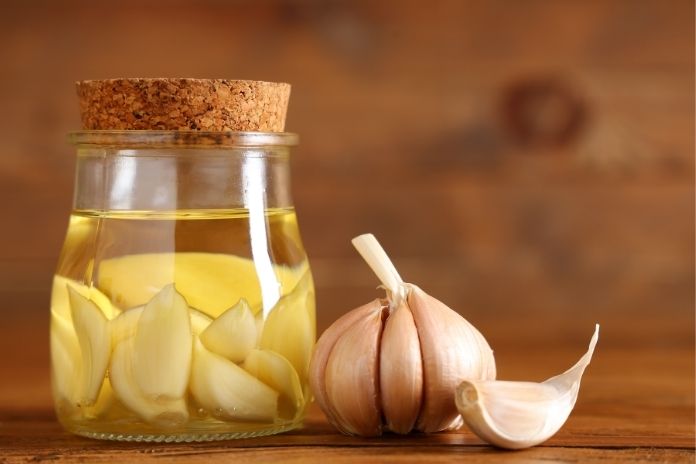
This isn’t about recipes, but about using garlic and honey effectively and safely. Raw garlic contains the highest levels of allicin, a sulfur compound that forms when garlic is chopped or crushed. Cooking deactivates the enzyme responsible for this reaction, reducing allicin content.
Because of this, raw garlic delivers more active compounds but is also more likely to irritate the stomach, worsen acid reflux, or cause nausea. Cooked garlic is easier to tolerate but provides milder effects, making it a better option for people with sensitive digestion.
Honey serves a complementary role. It softens the sharp flavor of raw garlic and helps soothe the throat by coating irritated tissue, which may ease coughing and soreness.
Garlic and honey are most often used early in a cold, typically once or twice daily, as a supportive measure rather than a primary treatment. Higher doses do not improve results and may increase digestive discomfort, so moderation is key.
Potential Downsides and Safety Considerations
Natural remedies are not risk-free. Raw garlic can cause stomach pain, heartburn, and nausea, particularly in individuals with pre-existing gastrointestinal issues such as gastritis, ulcers, or reflux.
Garlic may also interact with certain medications. For example, it can increase bleeding risk in people taking blood thinners and may interfere with drugs metabolized by the liver. Anyone on these medications or with underlying health concerns should consult a healthcare provider before using garlic regularly.
Honey, while generally safe for adults and older children, should never be given to infants under one year due to the risk of infant botulism, a potentially life-threatening condition.
Being aware of these risks ensures that the remedy remains helpful rather than harmful.
Who May Benefit Most From This Remedy
Garlic and honey are most likely to benefit adults experiencing mild, early cold symptoms, particularly when a sore throat or cough is the main complaint. The combination is not a cure, but a supportive tool that can help make symptoms more manageable.
Its effects are greatest when used alongside other measures such as adequate rest, hydration, and sufficient sleep. While it may reduce irritation, soothe coughing, and make the early stages of a cold more tolerable, it works best as part of a broader symptom management strategy rather than as a standalone treatment.
Those with more severe symptoms, chronic conditions, or complications should rely on conventional medical care in addition to supportive home remedies.
Read More: Home Remedies to Manage Common Cold Symptoms
When Garlic and Honey Are Not Enough

Garlic and honey can soothe a cough and sore throat, but they are not a replacement for medical care when a cold worsens or complications arise. Knowing when to escalate is crucial.
- Seek care for a high or persistent fever
- Symptoms that worsen after 5–7 days
- Shortness of breath, chest pain, or difficulty breathing
- Signs of secondary infection, like sinus pain, ear pain, or thick, discolored mucus
Home remedies are for comfort, not for managing complications. If symptoms cross these thresholds, professional evaluation is necessary to ensure safety and recovery.
How This Remedy Fits Into Overall Cold Care
Garlic and honey work best as part of a layered approach to cold management rather than as standalone treatments.
- Hydration helps thin mucus and keep the throat moist.
- Sleep supports immune function.
- Pain relievers manage aches and discomfort when needed.
- Honey soothes cough and throat irritation.
- Garlic may offer mild immune support.
No single remedy replaces the basics. When used alongside rest, fluids, and symptom management, garlic and honey provide comfort and help make cold symptoms more manageable.
The Practical Takeaway
Garlic and honey can provide modest relief for cold symptoms, particularly sore throat and coughing, but it’s important to keep expectations realistic. They do not cure the common cold, reduce the viral load, or reliably shorten the duration of illness. Their value lies in comfort, soothing irritated throat tissue, calming coughs, and making the early days of a cold more manageable.
When used safely and in moderation, garlic and honey can be a helpful addition to a broader, evidence-based approach to cold care. They work best alongside rest, hydration, and symptom management strategies like pain relief and warm fluids. Overreliance on these remedies or expecting them to act as a cure often leads to disappointment.
Ultimately, the “treatment” for a cold remains time and supportive care. Garlic and honey do not fight the virus directly, but they can make that period of recovery more tolerable, easing discomfort and helping you feel slightly better while your body does the work of healing. They are allies in comfort, not replacements for the basics of cold care.
References
- Cleveland Clinic. (n.d.). Garlic and honey: Benefits and uses.
- Vinmec International Hospital. (n.d.). Garlic and honey: Benefits and uses.
- Sánchez-Sánchez, E., et al. (2019). Biological properties and therapeutic effects of honey. Oxidative Medicine and Cellular Longevity.
- Times of India. (n.d.). Unlocking the secrets of garlic honey: Your ultimate immunity booster.
- Health.com Editorial Team. (n.d.). Garlic and honey benefits: What science says. Health.
- Berg, E. (n.d.). Amazing benefits of garlic through the winter. Dr. Berg.
- NDTV Health Desk. (n.d.). Should you have garlic with honey daily? NDTV.
- Biovie. (n.d.). Fermented garlic in honey: Recipe and benefits.
- Healthshots. (n.d.). Honey and garlic for cold: Does it work?
- PharmEasy Editorial Team. (n.d.). Top 10 health benefits of garlic.
- Ecocolmena. (n.d.). Eat garlic and honey on an empty stomach for 7 days.
- Mayo Clinic. (n.d.). Cold remedies: What works, what doesn’t, what can’t hurt.
- University of Oxford, Primary Care Health Sciences. (2020). Honey better than usual care for easing respiratory symptoms, especially cough.
- Paul, I. M., Beiler, J. S., McMonagle, A., Shaffer, M. L., Duda, L., & Berlin, C. M. (2007). Effect of honey, dextromethorphan, and no treatment on nocturnal cough and sleep quality for coughing children and their parents. Pediatrics.
- Josling, P. (2001). Preventing the common cold with a garlic supplement: A double-blind, placebo-controlled survey. Advances in Therapy, 18(4), 189–193.
- Linkov, G. (n.d.). Immune-boosting myths that must be busted. Ba-BaMail.
- Arreola, R., Quintero-Fabián, S., López-Rocha, R. I., et al. (2015). Immunomodulation and anti-inflammatory effects of garlic compounds. Journal of Immunology Research.
- Centers for Disease Control and Prevention. (n.d.). About the common cold.
In this Article