




















If you think stretching is only necessary before exercise or in the morning, think again. Bedtime stretches can significantly improve your sleep quality by enhancing blood circulation and releasing muscle tension that accumulates throughout the day. While recent research shows mixed results regarding stretching’s direct impact on sleep disorders, many people find gentle stretching routines helpful for relaxation and preparing the body for rest.
These simple stretches help release physical tension that can interfere with sleep, particularly beneficial for those who spend long hours at desks or engage in physically demanding activities. The key is performing gentle, restorative movements that activate your parasympathetic nervous system – your body’s natural relaxation response.
“Sleep is the one time your body is at complete rest, when you’re not using any muscles or joints to support yourself,” says Sheena Alva, PT, DPT, OCS, an orthopedic clinical specialist at HSS. “Stretching before bed helps your body rejuvenate itself during sleep.”
Read More: Flexibility Training: 8 Stretches to Improve Range of Motion and Prevent Injury
Why Stretch Before Bed?
Bedtime stretching serves multiple purposes:
- Relieves muscle tension accumulated during the day
- Improves circulation and reduces inflammation
- Activates the relaxation response
- Creates a consistent pre-sleep routine
- Helps transition your mind and body toward rest
Research indicates that while evidence for stretching’s direct sleep benefits is still emerging, gentle movement and mindful breathing can support better sleep hygiene when combined with other healthy sleep practices.
“Stretching is going to help you relieve tension that you’ve built up during the day,” says Andy Gallardo, a certified personal trainer and director of employee wellness at Kaiser Permanente. “It will not only help you fall asleep quicker, but will help you wake up a lot more rested.”
10 Effective Bedtime Stretches
1. Standing Forward Fold (Uttanasana)
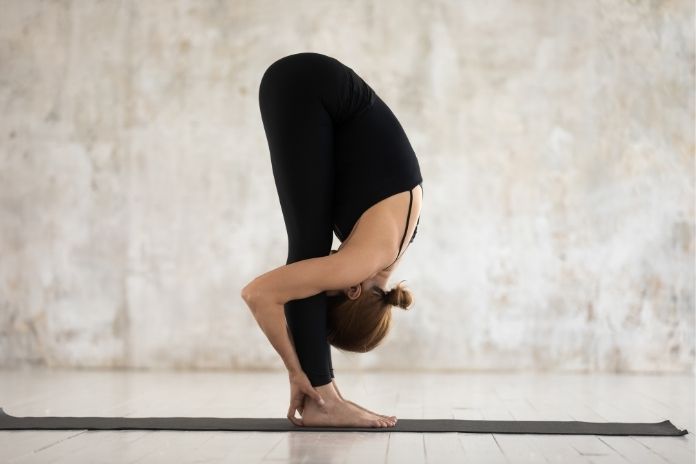
This classic yoga pose releases tension in the spine, hips, and hamstrings while promoting relaxation through gentle inversion.
How to do it:
- Stand with feet hip-width apart on a yoga mat
- Hinge at the hips and fold forward, letting your arms hang naturally
- Allow your head to hang heavy, releasing neck tension
- Hold for 15-30 seconds, breathing deeply
- Rise slowly to avoid dizziness
2. Legs Up the Wall (Viparita Karani)
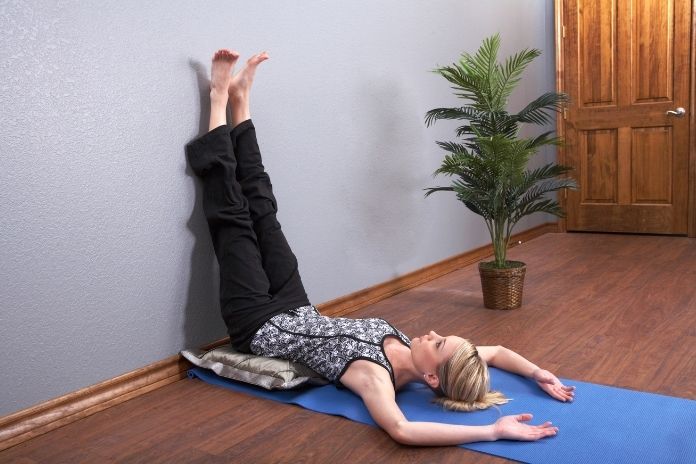
This restorative pose is excellent for reducing leg swelling, relieving lower back tension, and promoting circulation. It’s particularly beneficial for those with desk jobs.
How to do it:
- Lie on your back near a wall
- Scoot your buttocks as close to the wall as comfortable
- Extend your legs up the wall, creating an L-shape with your body
- Rest your arms at your sides, palms facing up
- Hold for 5-15 minutes, focusing on deep breathing
Read More: 10 Stretches For Tailbone Pain – Get Rid Of The Coccyx Discomfort!
3. Happy Baby Pose (Ananda Balasana)
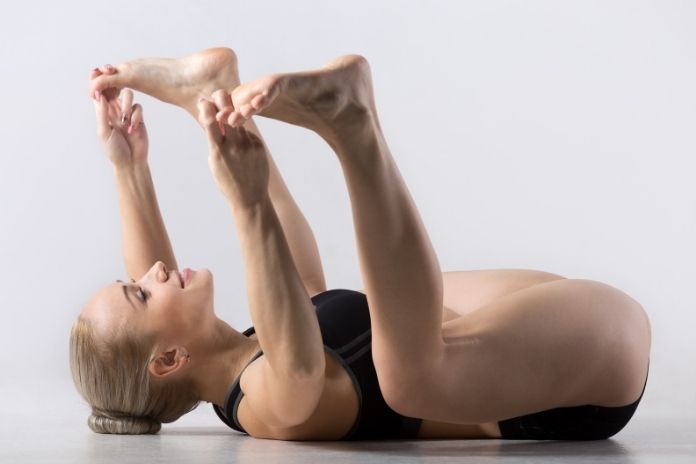
This gentle hip opener helps release tension in the lower back and inner groin while promoting a sense of calm and playfulness.
How to do it:
- Lie on your back and draw your knees toward your chest
- Grab the outside edges of your feet with your hands
- Gently pull your knees toward your armpits
- Rock gently side to side if comfortable
- Hold for 30 seconds to 1 minute
4. Lizard Pose (Utthan Pristhasana)
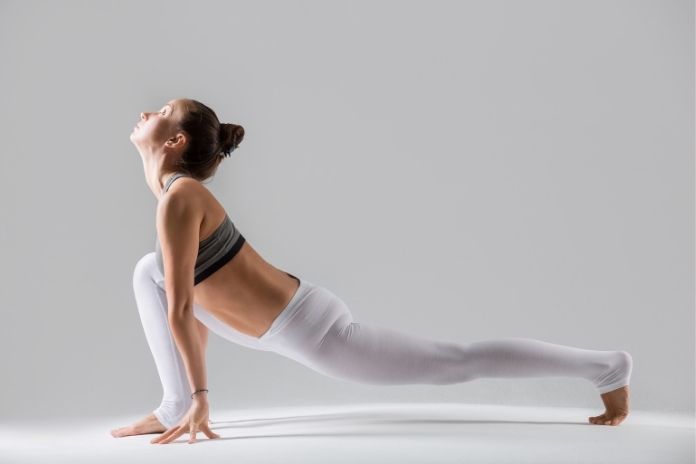
This deep hip flexor stretch is excellent for counteracting the effects of prolonged sitting and releasing tension in the hips and thighs.
How to do it:
- Start in a low lunge with your right foot forward
- Place both hands inside your right foot
- Lower your forearms to the ground or rest on blocks
- Keep your back leg straight and strong
- Hold for 30 seconds, then repeat on the other side
5. Gentle Neck Stretches

Neck stretches before bed can relieve tension from computer work and poor posture, reducing potential sleep disruptions from neck discomfort.
How to do it:
- Sit comfortably with your spine straight
- Gently drop your right ear toward your right shoulder
- Hold for 15 seconds, feeling the stretch along the left side of your neck
- Return to center and repeat on the left side
- Slowly lower your chin toward your chest, holding for 15 seconds
Read More: Best Stretches To Do Before Bedtime
6. Bear Hug (Shoulder Stretch)

This stretch targets the muscles between your shoulder blades (rhomboids and trapezius), which often become tight from poor posture.
How to do it:
- Stand tall and wrap your arms around yourself
- Place your right hand on your left shoulder and left hand on your right shoulder
- Hug yourself firmly while taking deep breaths
- Hold for 30 seconds, feeling the stretch between your shoulder blades
7. Seated Forward Bend (Paschimottanasana)
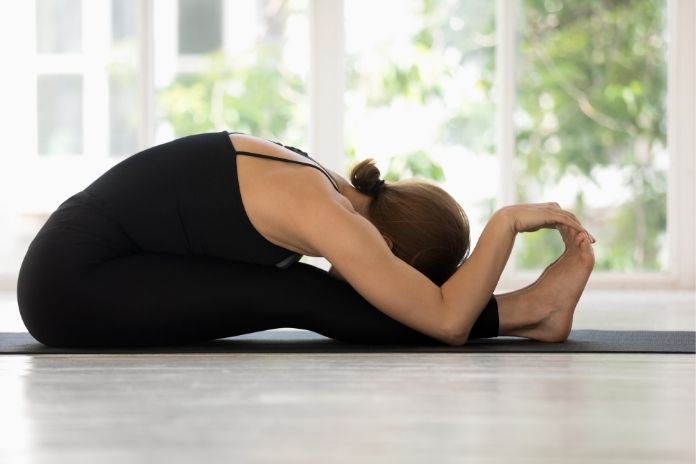
This calming pose stretches the entire back of your body, from your calves to your spine, promoting introspection and relaxation.
How to do it:
- Sit with your legs extended in front of you
- Slowly hinge forward from your hips, keeping your spine long
- Reach for your feet, ankles, or shins – wherever you can comfortably reach
- Hold for 30 seconds to 1 minute, breathing deeply
8. Lying Figure-4 Stretch (Piriformis Stretch)
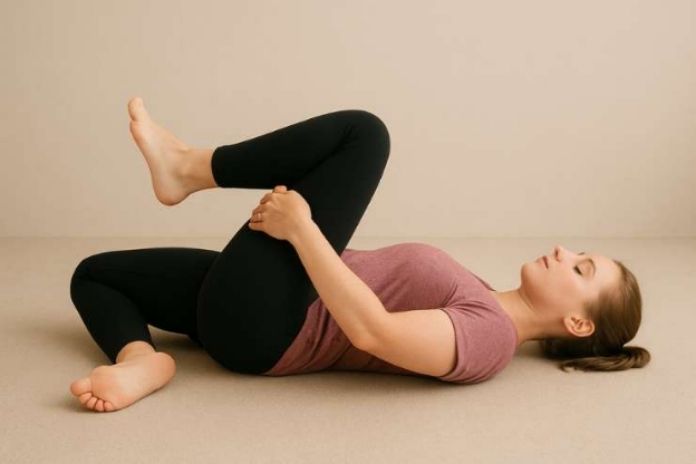
This stretch targets the deep hip muscles and can help alleviate lower back tension and sciatica symptoms.
How to do it:
- Lie on your back with your knees bent
- Cross your right ankle over your left thigh
- Thread your hands behind your left thigh and gently pull toward your chest
- Hold for 30 seconds, then switch sides
Read More: 4 Essential Stretches to Wake Up Your Body and Boost Flexibility
9. Side Body Stretch
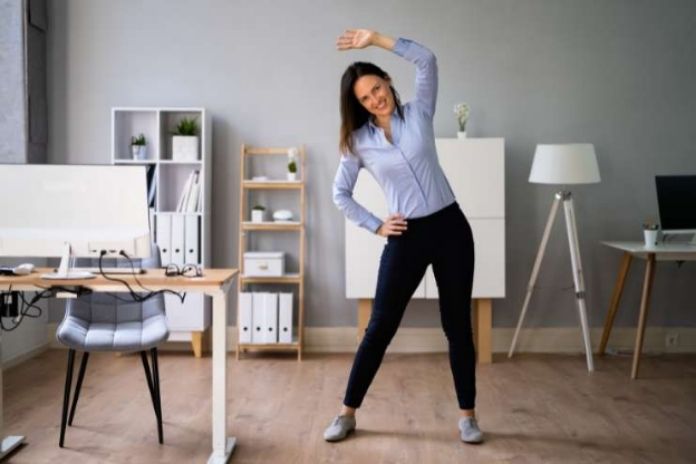
This gentle stretch lengthens the muscles along your sides and can help release tension from the ribs to the hips.
How to do it:
- Stand with your feet hip-width apart
- Reach both arms overhead and clasp your hands
- Lean gently to the right, feeling a stretch along your left side
- Hold for 15 seconds, then repeat on the other side
- Keep both feet grounded and avoid twisting
10. Corpse Pose (Savasana)
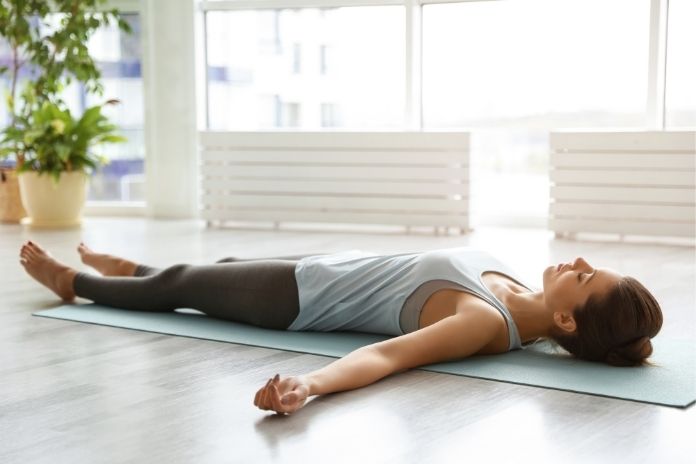
Research suggests that Savasana can reduce heart rate variability and improve sleep quality by activating the parasympathetic nervous system.
How to do it:
- Lie on your back with your legs slightly apart
- Let your arms rest at your sides, palms facing up
- Close your eyes and consciously relax each part of your body
- Focus on your breath and stay present
- Remain in this pose for 5-10 minutes
Tips for Effective Bedtime Stretching
- Timing: Begin your stretching routine30 minutes to an hour before bedtime to allow your body time to relax
- Environment: Create a calm, dimly lit space for your practice
- Breathing: Focus on slow, deep breaths to enhance the relaxation response
- Consistency: Establish a regular routine to signal to your body that it’s time to wind down
- Listen to your body: Never force a stretch or push through pain
- Duration: Hold each stretch for 15-30 seconds, or longer for restorative poses
Read More: How To Offset Sitting All Day? 13 Stretches And Exercises To Practice
Important Considerations
While many people find bedtime stretching helpful for relaxation, recent scientific reviews indicate that more research is needed to definitively establish stretching’s direct impact on sleep quality. However, the combination of gentle movement, mindful breathing, and consistent routine can contribute to better sleep hygiene.
If you have chronic sleep issues, consider consulting with a healthcare provider or sleep specialist. Stretching should complement, not replace, other evidence-based sleep improvement strategies such as maintaining consistent sleep schedules, creating an optimal sleep environment, and practicing good sleep hygiene.
Conclusion
Incorporating gentle stretches into your bedtime routine can be a valuable tool for promoting relaxation and preparing your body for sleep. While the direct scientific evidence for stretching’s impact on sleep quality continues to evolve, the practice offers numerous benefits including stress reduction, improved flexibility, and enhanced body awareness.
Start with just a few stretches and gradually build a routine that feels sustainable and enjoyable. Remember, the goal isn’t perfect form but rather creating a peaceful transition from the activity of your day to the rest of your night.
References
- https://link.springer.com/article/10.1007/s00421-024-05541-z
- https://pmc.ncbi.nlm.nih.gov/articles/PMC6781703/
- https://pubmed.ncbi.nlm.nih.gov/38918221/
- https://www.frontiersin.org/journals/psychology/articles/10.3389/fpsyg.2024.1466277/full
- https://pmc.ncbi.nlm.nih.gov/articles/PMC11365825/
- https://www.sleepfoundation.org/sleep-hygiene/stretching-before-bed
- https://www.researchgate.net/publication/286575353_Effect_of_low-intensity_stretching_exercises_on_sleep_and_stress_in_people_with_mild_sleep_disorders
- https://www.hss.edu/health-library/move-better/stretches-before-bed
- https://www.boxrox.com/the-best-5-yoga-poses-for-better-sleep-and-faster-muscle-recovery/
- https://indivyoga.com/the-scientific-benefits-of-savasana/
- https://www.mindtalk.in/blogs/benefits-of-yoga-in-treating-sleep-disorder
- https://pmc.ncbi.nlm.nih.gov/articles/PMC9033521/
- https://neurolaunch.com/yoga-poses-for-sleep/
- https://www.vively.com.au/post/science-behind-yoga-for-insomnia
- https://www.wakefit.co/blog/viparita-karani-yoga-sleep/
- https://www.hopkinsmedicine.org/health/wellness-and-prevention/9-benefits-of-yoga
- https://casper.com/blogs/article/yoga-for-sleep
- https://www.yogajournal.com/blog/5-ways-yoga-can-help-sleep?scope=anon
- https://www.medicalnewstoday.com/articles/stretching-before-bed
- https://healthy.kaiserpermanente.org/health-wellness/healtharticle.5-simple-stretches-for-a-better-nights-rest
- https://x.com/kpgetfit
- https://oneyogahouse.com/forward-fold/
- https://www.hingehealth.com/resources/articles/happy-baby/
- https://theyogatique.com/paschimmottanasana-seated-forward-bend/
- https://home.pliability.com/stories/side-stretches
In this Article