














Waking up with a stiff neck, feeling tight muscles after a long walk, or dealing with a sore lower back from sitting at your desk all day. Most of us know exactly what that feels like. When muscles stay in one position for too long, they begin to tighten, restrict circulation, and become sore.
The good news is that a short routine of stretching exercises for muscle relaxation can help loosen tight muscles, build flexibility, and make your body feel noticeably lighter in just minutes.
In this article, you will learn when to stretch, how often to stretch, and a complete daily stretching routine with step-by-step instructions designed for all fitness levels.
- Stretch regularly for muscle relaxation. Hold each stretch 20–30 seconds, repeat 2–4 times, and aim for at least 2–3 days per week to reduce tight muscles and improve flexibility.
- Time it right. Do light dynamic movement before workouts, save static stretching for post-workout when muscles are warm, and take 5-minute stretch breaks if you sit for long hours.
- Keep it simple and consistent. A short daily stretching routine (Cat-Cow, Child’s Pose, Hamstring, Hip Flexor, Chest, and Neck stretches) can ease back pain, improve posture, and boost circulation over time.
Should You Stretch Before or After Exercise?
Morning stretching helps loosen muscles after a night of sleep, when circulation has been low for hours. Gentle static stretches in the morning wake the body up and ease stiffness, making them a solid part of any daily stretching routine for general wellness, though they are not ideal as a pre-workout warm-up.
Pre-workout stretching should skip static holds. Instead, do five minutes of light dynamic movement, arm circles, leg swings, or a brisk walk, to raise muscle temperature and prepare joints for exercise. Dynamic stretching involves moving a body part through its full range of motion and is the right choice before physical activity.
Post-workout stretching is the best time for the static flexibility exercises in this article. Muscles are warm and pliable, which means you get more out of each stretch and reduce the chance of delayed onset muscle soreness (DOMS). Research published in Frontiers in Physiology confirms that post-exercise stretching can enhance local blood flow and support recovery.
If you sit for long periods at work, a five-minute stretch break every 90 minutes can significantly reduce stiffness and relieve lower back tension. No gym required.
Why Stretching Helps Muscle Relaxation and Flexibility
When muscles stay contracted for long periods, at a desk, in a car, or after a tough workout, they can develop sustained tension similar to isometric contractions, where force is produced without movement. Stretching releases that tension, restores range of motion, and gets blood moving again.
As blood flow increases after a stretch, more oxygen and nutrients reach muscle tissue while metabolic waste products are flushed out. A 2018 study in The Journal of Physiology found that daily muscle stretching meaningfully increased blood flow and endothelial function in skeletal muscle, suggesting that even passive stretching carries real cardiovascular benefit.
Stretching also activates the body’s relaxation response. Deep breathing during a stretch lowers stress hormones, slows the heart rate, and helps muscles release residual tension. Over time, regular stretching for muscle tension relief improves posture, lowers injury risk, and eases common pain areas like the neck and lower back.
Stretching is especially valuable for older adults and people who spend most of the day sitting. Loss of flexibility accelerates with age, and Mayo Clinic notes that regular stretching can help older adults improve balance and reduce the risk of falls, two major concerns as we age.
If you are new to stretching, the moves in this article are suitable starting points for sedentary adults of any age.
Read More: From Desk to Dream: 5 Stretches to Undo the Damage of Sitting All Day

Expert Choice: Best At-Home Yoga Studio
Experience over 2,400 world-class yoga classes from the comfort of your home. YogaDownload offers expert-led programs and flexible membership options for every fitness level.
*Purchases through this link support our research at no extra cost to you.
How Often Should You Stretch?
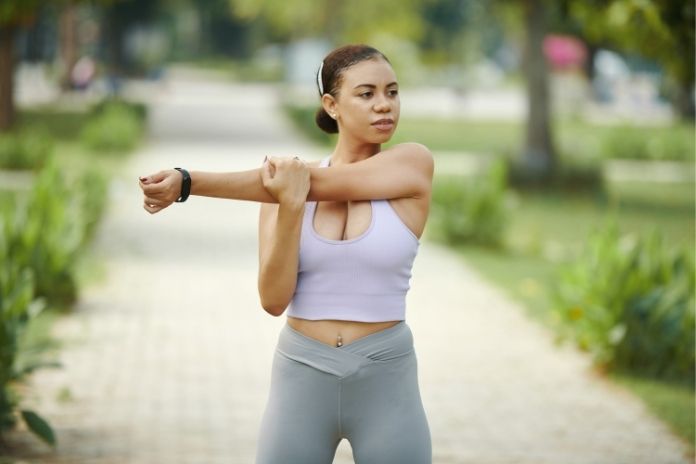
Health experts, including the British Heart Foundation, recommend holding each stretch for 30 seconds, repeating it two to four times, and practicing flexibility exercises at least two to three days per week to improve joint health and reduce muscle tension.
If you deal with tight muscles from desk work, long commutes, or intense workouts, gentle stretching can be done daily for better results.
Focus on consistency rather than intensity. Move slowly, breathe steadily, and stop well before you feel pain. Mild pulling is normal, but sharp discomfort means you should ease off. Over time, a daily stretching routine helps muscles lengthen safely, supports circulation, and makes everyday movement feel easier.
A quick note on breathing: the way you breathe during a stretch changes how much your muscles actually release. Inhale before you enter the stretch, then exhale slowly as you deepen it. This activates the parasympathetic nervous system, which signals the body to lower its guard and let the muscle lengthen. Think of each exhale as the moment the muscle agrees to let go.
Detailed Full‑Body Stretching Routine
These stretches for beginners target the whole body and work as a daily stretching routine for muscle tension relief. Warm up for five minutes first. A light walk or some arm circles is enough. Then move through each stretch slowly, matching movement to breath.
Top Stretching Exercises
11. Cat‑Cow Stretch – Spine Mobility and Back Pain Relief
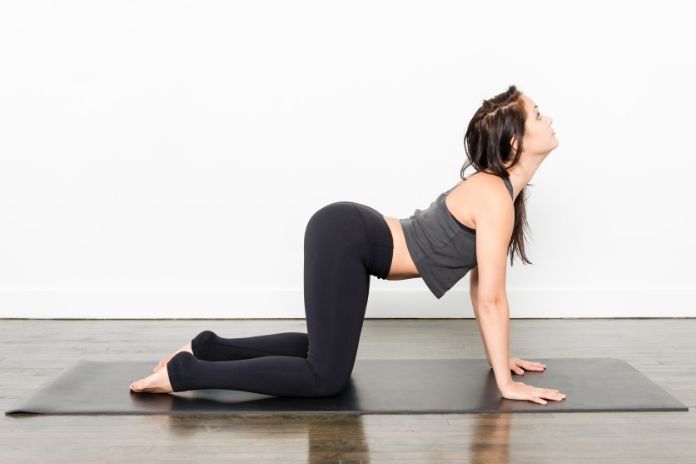
Why It Helps: The cat-cow stretch enhances spinal circulation and reduces stiffness from prolonged sitting, making it one of the most effective stretches for alleviating back pain caused by poor posture.
Start on hands and knees with your wrists under your shoulders and your knees under your hips. As you inhale, drop your belly, lift your chest, and gently look forward.
As you exhale, round your spine, tuck your chin, and draw your belly inward. Move slowly through 10 repetitions, matching each movement to your breath. Keep your shoulders relaxed and avoid collapsing your lower back.
This stretch loosens tight muscles around the spine and prepares the body for deeper flexibility exercises.
22. Child’s Pose – Deep Relaxation for Lower Back and Hips
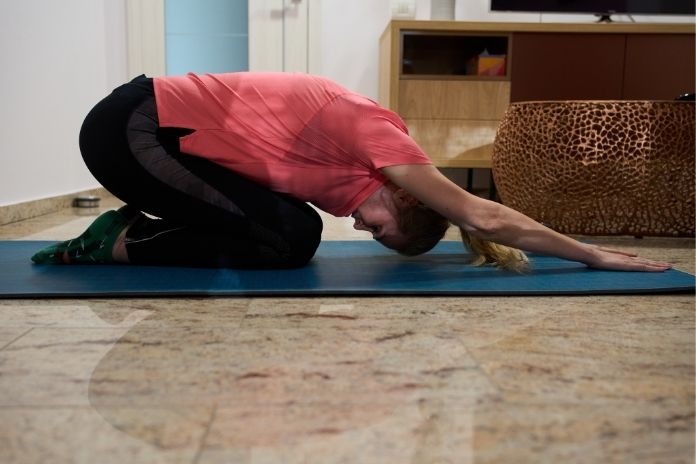
Why It Helps: Child’s Pose releases pressure in the lower back and hips after standing or walking all day and calms the nervous system through deep breathing.
From kneeling, sit back on your heels and extend your arms forward while lowering your forehead toward the floor. Breathe deeply into your back ribs for 45 to 60 seconds. If your hips feel tight, place a folded pillow between your thighs and calves for support.
Child’s Pose works especially well before sleep because it slows breathing and promotes a full-body relaxation response.
33. Standing Hamstring Stretch – Posterior Chain Flexibility
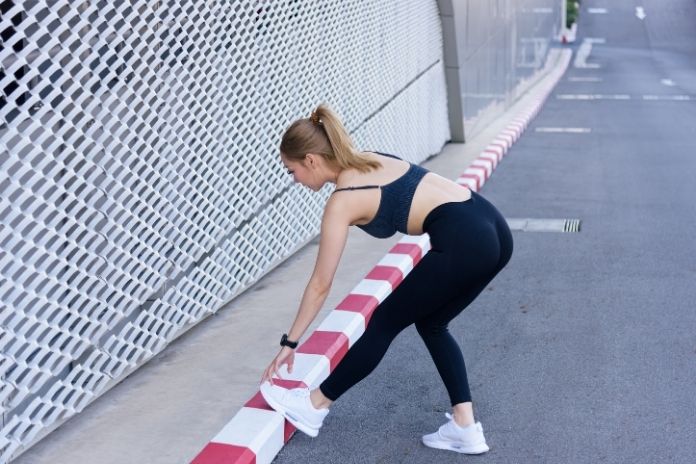
Why It Helps: Tight hamstrings pull on the pelvis and cause lower-back strain. This standing hamstring stretch improves posture, eases back pain, and boosts walking comfort.
Stand tall and step one foot forward. Hinge at the hips while keeping your spine straight. Rest your hands on your thigh or shin and hold for 30 seconds per leg. Keep the front knee firm but not locked, and avoid rounding your back.
Slow, steady breathing helps the muscle release gradually. This is one of the best post-workout flexibility exercises for the lower body.
Read More: Stretches for Shin Splints: Effective Moves to Relieve Pain and Prevent Injury
Expert Choice: Best At-Home Yoga Studio
Experience over 2,400 world-class yoga classes from the comfort of your home. YogaDownload offers expert-led programs and flexible membership options for every fitness level.
*Purchases through this link support our research at no extra cost to you.
44. Hip Flexor Lunge Stretch – Relief from Sitting All Day
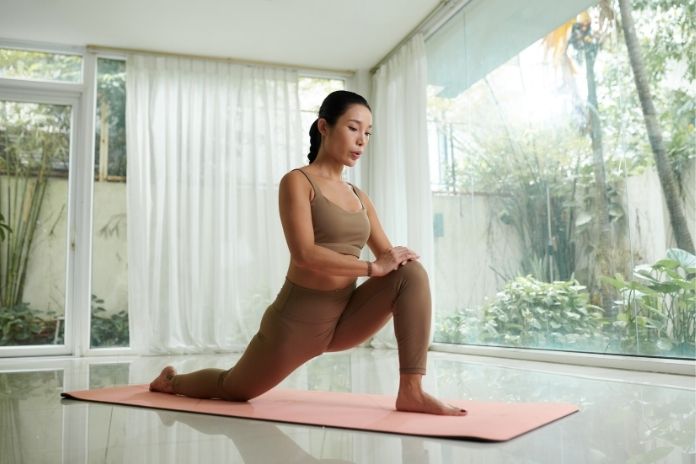
Why It Helps: Sitting for hours causes hip flexors to contract and pull on the lower back, which throws off posture and can cause chronic discomfort. This hip flexor stretch helps fix that imbalance.
Step one foot forward into a lunge with the opposite knee resting on the ground. Slowly shift your hips forward until you feel a stretch through the front of the lowered hip. Hold for 30 to 40 seconds on each side. Do not arch your lower back.
This move is for anyone whose job involves extended sitting.
55. Seated Butterfly Stretch – Inner Thigh and Hip Release
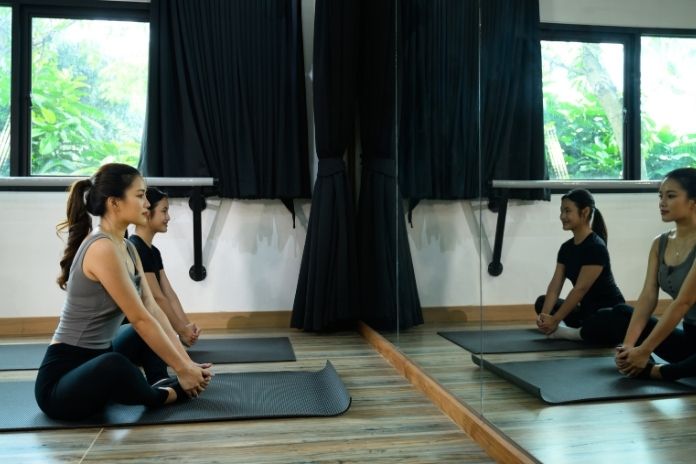
Why It Helps: Contracted inner thighs restrict hip motion and can contribute to knee pain. The seated butterfly stretch promotes flexibility in the groin and hip area.
Sit with the soles of your feet together and your knees pointing outward. Hold your ankles and gently press your knees toward the floor. Hold for 40 seconds, breathing deeply throughout. Sit tall, and avoid rounding your spine.
66. Chest and Shoulder Opener – Upper‑Body Muscle Tension Relief
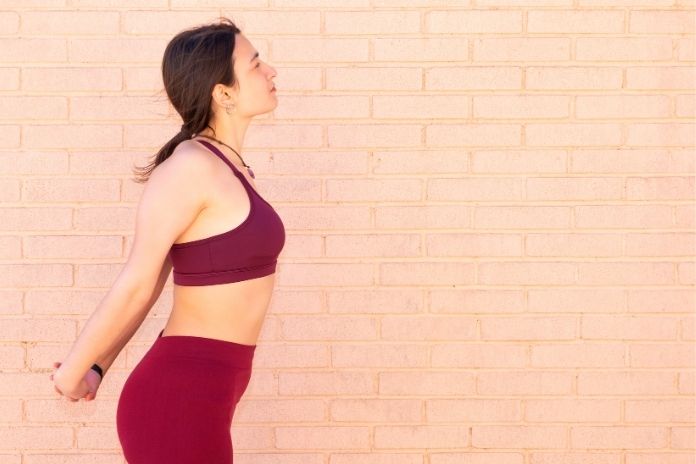
Why It Helps: Extended phone and computer use pulls the shoulders forward and compresses the chest. This opener stretches the pectorals, counteracts poor posture, and creates more room to breathe deeply.
Stand tall and clasp your hands behind your back with arms straight. Slowly lift your hands while pressing your chest forward and keeping your shoulders relaxed. Hold for 30 seconds.
This is one of the top desk-break moves for upper-body muscle tension relief.
77. Seated Forward Fold – Full Back Relaxation
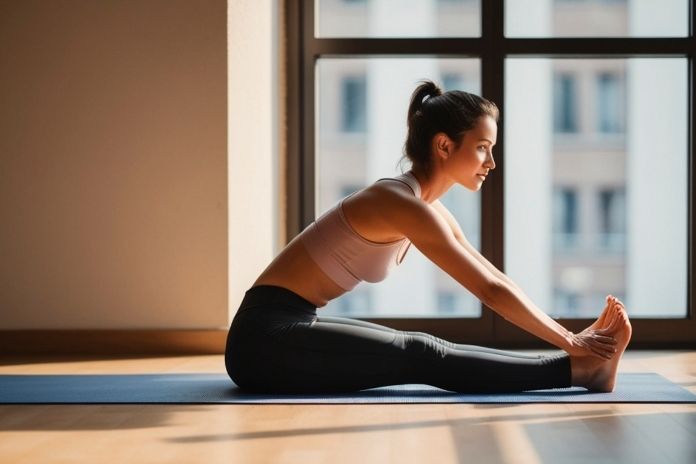
Why It Helps: The seated forward fold lengthens the entire back chain and pairs deep breathing with a gentle stretch that calms the nervous system.
Sit with legs extended. Inhale to lengthen your spine, then bend forward from the hips. Reach toward your feet without forcing the movement. Hold for 45 seconds and let your shoulders relax downward. Tummee yoga resources suggest looping a towel around your feet if flexibility is limited. A good option for beginner stretches.
88. Standing Calf Stretch – Lower‑Leg Flexibility
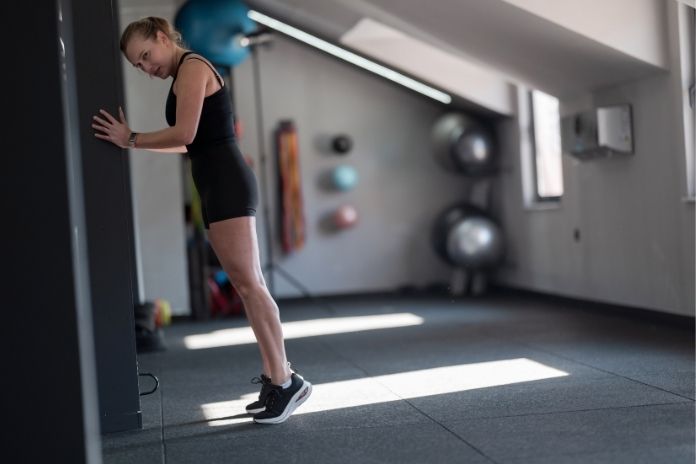
Why It Helps: Tight calves cause foot pain and add stress to the knees. The standing calf stretch improves walking comfort and overall lower-leg flexibility.
Place your hands on a wall and step one foot back with the heel flat on the floor. Keep your back leg straight and hips square. Hold for 30 seconds, then switch sides.
This stretch is especially useful after long walks or standing work.
99. Neck Side Stretch – Stress and Headache Relief
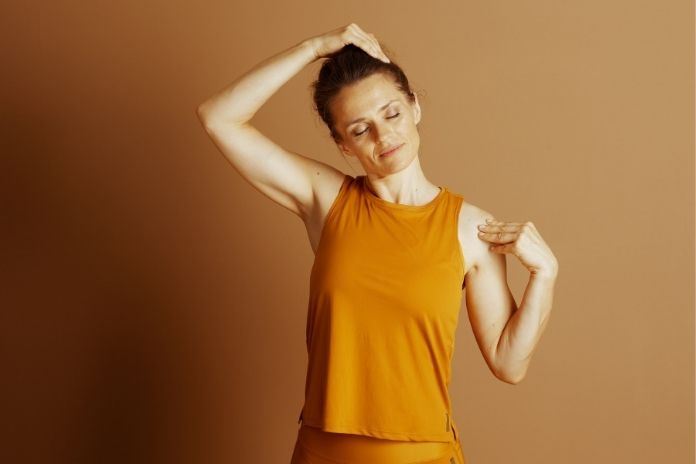
Why It Helps: Neck tension from screen use causes headaches and radiating shoulder tightness. This neck side stretch relieves muscle tension in the upper trapezius and helps restore focus.
A 2016 RCT showed neck/shoulder stretching exercises twice daily for 4 weeks reduced neck pain intensity and improved function in office workers more than ergonomics advice alone.
Sit tall and gently tilt your head toward one shoulder. Use your hand to apply very light pressure, but do not pull hard. Hold for 20 seconds on each side, then repeat with your chin slowly lowered toward your chest.
Move slowly and avoid any sharp pulling sensation.
1010. Pigeon Pose – Deep Hip Muscle Release
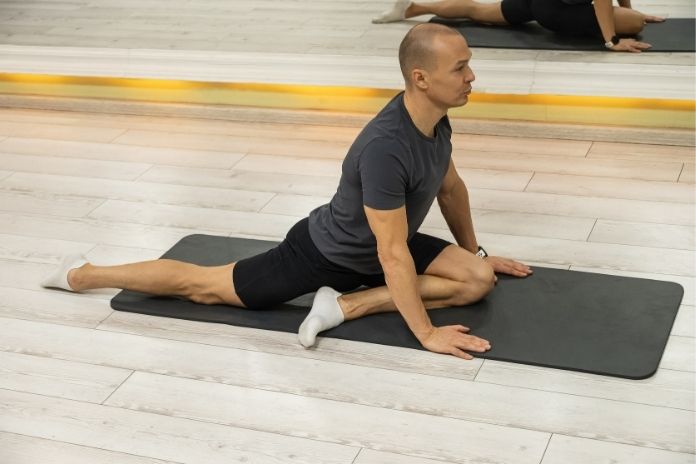
Why It Helps: The hips store significant tension from sitting. Pigeon Pose provides a deep stretch for the glutes and piriformis, reduces sciatic discomfort, and improves hip mobility.
Begin in a high plank position with hands under shoulders, body in a straight line. Bring one knee forward and place it behind the same-side wrist. Slide the opposite leg straight back, resting the top of that foot on the floor. Lower your torso toward the floor and hold for 45 seconds. Place a folded blanket or cushion under the front hip if needed for support.
This move also offers sciatic pain relief. Keep your hips as level as possible and skip this pose if you have active knee pain.
Read More: Best Stretches for Tired or Swollen Feet After Work
Stretch Comparison Table
Body Maintenance
Top 10 Daily Stretches
| Stretch Name | Muscles Targeted | Difficulty | Best Time |
|---|---|---|---|
| 🐈 Cat-Cow Spine movement |
Spine, core | Beginner | Morning / Warm-up |
| 🦵 Hamstring Stretch Leg extension |
Hamstrings | Beginner | Post-walk/workout |
| 🍄 Pigeon Pose Deep hip opener |
Hips, glutes | Intermediate | Post-workout |
| 👟 Calf Stretch Lower leg release |
Calves | Beginner | After walking |
| 🧍 Neck Stretch Tension relief |
Neck muscles | Beginner | At desk |
| 🙌 Chest Opener Posture correction |
Chest, shoulders | Beginner | After desk work |
| 🧘 Hip Flexor Lunge Counter-sitting |
Hip flexors | Beginner | After sitting too long |
| 🦋 Butterfly Groin stretch |
Inner thighs | Beginner | Anytime |
| ⤵ Forward Fold Full back chain |
Back chain | Intermediate | Evening |
| 👶 Child’s Pose Relaxation |
Lower back, hips | Beginner | Evening / Stress relief |
Safety Tips and Who Should Be Careful
Anyone with a recent surgery, severe osteoporosis, herniated disc, active knee injury, or significant balance problems should check with a doctor or physical therapist before starting a new stretching program.
The knee-to-chest stretch can increase fracture risk in people with osteoporosis, and similar care applies to deep forward folds with disc injuries.
As a general rule, skip pigeon pose if you have knee pain, avoid strong neck stretches with cervical spine conditions, and always warm muscles up for at least five minutes before static stretching. If you feel sharp or shooting pain at any point, stop immediately.
Simple 10‑Minute Daily Stretching Routine
You do not need a lot of time to get results from these stretching exercises for muscle relaxation. Here is a simple sequence you can follow every day:
- Start with Cat-Cow for one minute to mobilize the spine.
- Move into Child’s Pose for another minute to decompress the lower back.
- Stand up for the Hamstring Stretch and Calf Stretch, holding 30 seconds per leg.
- Return to the floor for the Butterfly Stretch and Hip Flexor Lunge, holding each side for 40 seconds.
- Finish standing with the Chest Opener and Neck Stretch to release upper-body tension.
Short on time at work? Move through the Neck Stretch, Chest Opener, Hamstring Stretch, and Calf Stretch in five minutes. This desk-break circuit loosens tight muscles and sharpens focus.
For a wind-down routine before bed, ease into Child’s Pose, a gentle Seated Forward Fold, and Pigeon Pose. These three moves together promote the parasympathetic relaxation response and support better sleep.
Consistency is what matters most. A daily stretching routine, even a short one, gradually lengthens muscles, supports joint health, and reduces the everyday aches that come from modern life.
11Conclusion
Stretching is more than a warm-up. It is a daily habit that protects the body from stiffness, injury, and chronic tension. Understanding when to use dynamic versus static stretching, how often to practice, and which moves target your specific problem areas gives you everything you need to build a safe and effective routine.
Start with five minutes a day, listen to your body, and gradually add more as your flexibility grows. These straightforward stretching exercises for muscle relaxation and flexibility will help you move better, feel less sore, and carry less tension throughout the day.

12References
- Garber, C. E., Blissmer, B., Deschenes, M. R., Franklin, B. A., Lamonte, M. J., Lee, I. M., … & Swain, D. P. (2011). Quantity and quality of exercise for developing and maintaining cardiorespiratory, musculoskeletal, and neuromotor fitness in apparently healthy adults: Guidance for prescribing exercise. Medicine & Science in Sports & Exercise, 43(7), 1334–1359.
- Hotta, K., & Muller-Delp, J. (2018). Daily muscle stretching enhances blood flow, endothelial function, capillarity, vascular volume and connectivity in aged skeletal muscle. The Journal of Physiology, 596(10), 1903–1917.
- Matsuo, H., Kubota, M., Shimada, S., & colleagues. (2022). The effect of static stretching duration on muscle blood volume and oxygenation. Journal of Strength and Conditioning Research, 36(2), 379–385.
- Wang, H., Dong, Q., Zhang, L., & colleagues. (2025). Effects of post-exercise stretching versus no stretching on lower limb muscle recovery and performance: A meta-analysis. Frontiers in Physiology.
- Brookbush Institute. (n.d.). Isometric contraction.
- GoodRx. (n.d.). Stretches for sciatica.
- GoodRx. (n.d.). Stretches for calves.
- More Life Health. (n.d.). Chest posture stretch.
- Tummee. (n.d.). Seated forward bend pose.
- FlexifyMe. (n.d.). Benefits of cat-cow pose and how to do it.
- WebMD. (n.d.). Hip flexor stretches.
- Mayo Clinic. (n.d.). Stretching: Focus on flexibility.
- British Heart Foundation. (n.d.). Stretching exercises to improve your flexibility in 10 minutes.
- Tunwattanapong P, Kongkasuwan R, Kuptniratsaikul V. The effectiveness of a neck and shoulder stretching exercise program among office workers with neck pain: a randomized controlled trial. Clin Rehabil. 2016 Jan;30(1):64-72.
In this Article