














Most people are unsure how often they should use body lotion because there is no single rule that works for everyone. The right frequency depends on your skin type, daily habits, and even the weather.
In this article, we will break down how often to use body lotion for different skin types, the best time to apply it, and how to adjust your routine to keep your skin consistently hydrated and comfortable.
- Most people should use body lotion once daily, ideally right after showering, while the skin is still slightly damp to lock in moisture.
- The right frequency depends on your skin type: dry and sensitive skin needs more frequent use, and oily skin needs less, but don’t skip it completely.
- Consistency, correct timing, and choosing the right formula matter more than how often you apply lotion.
Read More: Why Your Moisturizer Isn’t Working (And How to Layer Skincare the Right Way)
The General Rule — Once Daily for Most People

For most people, body lotion works best when it is used consistently rather than occasionally. Dermatology guidance supports daily use as the baseline, even if your skin does not feel dry every day. The goal is to maintain hydration, not just fix dryness after it appears.
The most important application is right after bathing. When you shower, your skin absorbs some water, but it starts to lose that moisture almost immediately once you step out. Applying lotion within three to five minutes helps trap that water in the outer layer of the skin. This is what makes moisturizing effective.
If you wait until your skin is completely dry, the lotion still softens and smooths the surface, but it does not lock in moisture as well. Over time, daily post-shower application helps strengthen the skin barrier and reduces the chances of dryness developing in the first place.
Frequency by Skin Type — the Specific Recommendations

Dry Skin—At least Twice Daily
Dry skin usually needs more than a once-daily routine. Applying body lotion at least twice a day helps keep hydration levels steady and prevents the skin from reaching the point of flaking or cracking. A simple routine of once after showering and once before bed works well for most people.
Night-time application is especially helpful because the product stays on the skin longer without interruption. Choosing a thicker, cream-based formula makes a difference here. Ingredients like hyaluronic acid draw moisture into the skin, while shea butter and ceramides help keep it there.
During colder months or in dry indoor environments, even this may not be enough. In those situations, adding a third application to areas like hands, elbows, and shins can help prevent dryness before it starts.
Normal Skin — Once Daily
Normal skin tends to maintain its moisture balance more easily, so once-daily application is usually enough. Using lotion after a shower helps maintain hydration and keeps the skin barrier functioning well.
However, this is not fixed year-round. Environmental changes such as cold weather or low humidity can increase moisture loss, even in normal skin. In those periods, increasing to twice daily can help maintain comfort and prevent subtle dryness that may otherwise go unnoticed.
Oily Skin—Every Other Day Or Once Daily (Lightweight Formula)
Oily skin still benefits from moisturizing, even though it may not seem necessary. Skipping lotion can actually increase oil production, as the skin tries to compensate for a lack of water. The key is choosing the right type of product. Lightweight, oil-free, non-comedogenic lotions provide hydration without adding heaviness or clogging pores.
For many people, once-daily use is enough. Others may find that every other day works, as long as the skin feels comfortable and not tight or irritated. The focus should be on maintaining balance rather than avoiding moisturizer altogether.
Sensitive Or Eczema-Prone Skin—Twice Daily Minimum
Sensitive or eczema-prone skin requires more consistent care because the skin barrier is more easily disrupted. Moisture is lost faster, which makes dryness and irritation more likely. Applying lotion at least twice daily helps maintain the skin barrier and reduces the risk of flare-ups.
Even when the skin appears calm, regular use is important. During active eczema, more frequent application or thicker ointments may be needed. Fragrance-free formulas are important in this case, as added fragrance can trigger irritation. Ingredients like ceramides help restore the skin barrier, while colloidal oatmeal can soothe discomfort.
Read More: Best Hyaluronic Acid Moisturizers: Hydrate and Plump Your Skin for a Youthful Glow
The Best Time to Apply — Timing Matters More Than You Think
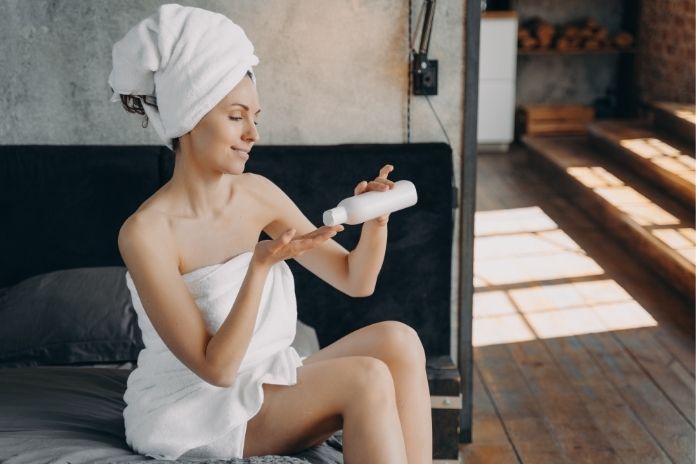
When you apply body lotion can be just as important as how often you use it. The most effective time is immediately after showering, when the skin is still slightly damp. This allows the lotion to seal in existing moisture rather than simply sitting on dry skin.
Another useful time is before bed. The skin naturally goes through repair processes during sleep, and applying a slightly richer lotion at night allows it to remain on the skin longer. This is especially helpful for areas that tend to be drier, such as the feet, knees, and elbows.
Applying lotion before going out in cold or windy conditions can also help. It forms a protective layer that slows down moisture loss and keeps the skin from becoming dry as quickly.
Seasonal and Situational Adjustments
A fixed routine does not always work because your skin’s needs change with your environment. During winter, indoor heating reduces humidity, which causes the skin to lose moisture more quickly. Many people find that they need to increase how often they use lotion during this time.
After swimming, the skin often feels dry because of chlorine or salt exposure. Applying lotion right after rinsing helps restore lost moisture. Frequent hand washing is another common cause of dryness, especially for the hands, which lose natural oils quickly. Using hand lotion after washing helps prevent this.
Air travel can also affect the skin. Cabin air is very dry, and applying lotion before and during long flights helps reduce dehydration and keeps the skin more comfortable.
Signs You Are Not Moisturising Often Enough — and Signs of Overdoing It

When your routine is not right, your skin usually shows clear signs. It may feel tight after showering, develop a rough texture during the day, or show visible flaking. Itching without a rash is also a common sign of dryness. In more severe cases, cracks can appear on areas like the heels, elbows, or knuckles.
Using lotion too often is less common, but it can happen if the formula is too heavy for your skin type. This may show up as breakouts on areas like the back or chest. If your skin still feels uncomfortable despite frequent application, it may not be a frequency issue. In some cases, it can indicate a skin barrier problem that needs a different approach.
What Ingredients to Look For Based on Frequency Needs
The type of lotion you use affects how well your routine works. For frequent use, lightweight formulas with humectants like glycerin or hyaluronic acid are easier to apply regularly and absorb quickly into the skin.
If you are using moisturizer once daily but have dry skin, richer formulas are more effective. Ingredients like shea butter, squalane, petrolatum, and dimethicone help lock in moisture for longer periods.
For sensitive skin, ceramide-based and fragrance-free products are the safest choice because they help repair the skin barrier without irritating. For nighttime use, thicker creams or body butters are often more suitable because they remain on the skin longer and provide deeper hydration.
Read More: It’s Not Just Aging—It’s Lipid Depletion: How to Restore “Young” Moisture to 50+ Skin
Conclusion
There is no single rule for how often to use body lotion, but most people do well with once daily, especially right after showering. From there, it depends on your skin type and how your skin feels. Dry and sensitive skin usually needs it more often, while oily skin may need it less, but should not skip it completely.
The key is to be consistent. Applying at the right time, using the right type of lotion, and adjusting your routine with the seasons will keep your skin comfortable and well hydrated.
References
- Mawazi, S. M., Ann, J., Othman, N., Khan, J., Alolayan, S. O., Al thagfan, S. S., & Kaleemullah, M. (2022). A review of moisturizers: History, preparation, characterization and applications. Cosmetics, 9(3), 61.
- mCaffeine. (n.d.). Daily body lotion uses and benefits.
- National Center for Biotechnology Information. (2024). [PMC article].
- The Body Shop. (n.d.). Smart tips for applying body lotion the right way.
In this Article