















When people search for “kidney stones vs kidney cancer,” they are mostly scared. Because kidney stones or kidney cancer symptoms sometimes look the same: pain in the side, blood in the urine.
It becomes confusing what is serious and what is not. But inside the body, both conditions are very different. A kidney stone is like a blockage problem. Kidney cancer is a growth problem. So symptoms behave differently also.
This difference between kidney stones and kidney cancer is important. Because one problem may pass on its own, but the other needs early diagnosis. This article explains in a simple way how to notice differences, not for self-treatment, but to understand what should not be ignored.
- Kidney stones cause sudden, severe, shifting pain with blood, usually during pain episodes.
- Kidney cancer is often silent early, with dull pain later and painless blood in the urine. Any blood in the urine needs a medical check.
- If symptoms feel different from previous stone episodes, do not assume; get imaging done.
Read More: Kidney Stones in Women: Why They’re Often Misdiagnosed as UTIs
What Each Condition Is: A Brief Baseline
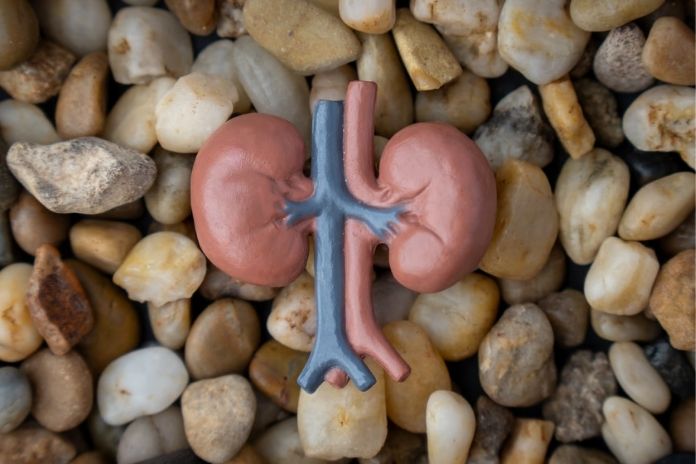
Kidney stones are hard deposits made from minerals like calcium, oxalate, or uric acid. They form slowly in the kidneys. “They are literally little, tiny rocks that form on the inside of your kidney,” Dr. Ryan L. Steinberg, a urologist, said, noting “there are some that are harder than others.”
Many people have stones but no symptoms. The problem starts only when the stone moves. When it goes into the ureter, it blocks urine flow. That blockage creates severe pain. Without movement, many stones remain silent.
Kidney cancer, most commonly renal cell carcinoma, develops from kidney tissue itself. It does not depend on movement or obstruction in the early stages. That is why many cases are “silent kidney cancer”: no pain, no warning, only found accidentally during scans.
One more important point often missed: people with repeated kidney stones have shown a higher risk of kidney cancer in studies. Not a cause directly, but the association is strong enough to matter clinically. So the history of stones should not make someone careless about new symptoms.
Symptom Comparison: Side by Side

Pain, the Most Important Distinguishing Feature
Kidney cancer vs. kidney stone pain is very different. Kidney stone pain is very characteristic. It starts suddenly. Many patients can tell the exact minute it began. Pain rises quickly and becomes severe, almost unbearable.
It does not stay steady; it comes in waves (colicky). The person keeps moving, cannot sit still, and is trying to find relief. Pain usually begins in the flank and then moves downward toward the lower abdomen, groin, or even inner thigh. This movement of pain is because the stone itself is moving.
Kidney cancer pain is the opposite type. When present, it is dull, heavy, and constant. It does not come in waves. It does not shift location. It sits there, in the same area, with the same discomfort. But an important point: many kidney cancers give no pain at all in the beginning. So, no pain does mean no problem.
Blood in Urine (Hematuria)
Blood in the urine can be there in both kidney stones and cancer, but the pattern matters more than the presence. In kidney stones, blood usually comes with pain. Stone irritates the urinary lining, causing bleeding along with severe discomfort.
In kidney cancer, hematuria is often painless. This is a major red flag. Someone sees red or cola-colored urine but no pain; this situation should not be ignored even once. Even a small amount of visible blood matters.
Nausea and Vomiting
Kidney stones commonly cause vomiting. Pain is so strong that it affects the stomach also. This is not because of a stomach problem but due to the nerve connection between the kidney and the gut. Severe pain triggers this response.
Kidney cancer usually does not cause vomiting, unless the disease is advanced or affecting overall metabolism.
Symptoms That Point Specifically Toward Kidney Cancer

Some renal cell carcinoma symptoms are not seen in kidney stones. These should make a person more alert:
- Palpable Mass: Feeling a lump in the abdomen or side. Stones cannot form a mass. A tumor can form a kidney cancer’s abdominal mass.
- Unexplained Weight Loss: Losing weight without trying is not part of kidney stone disease.
- Persistent Fatigue: Not just tiredness after pain, but ongoing weakness.
- Anemia: Kidney cancer can affect blood production, leading to low hemoglobin.
- Fever without Infection: Some tumors cause immune reactions leading to unexplained fever.
- Left-sided Varicocele in Men: Sudden appearance, not reducing when lying down; this can indicate pressure on the renal vein.
These kidney cancer symptoms are not subtle signals. They show systemic involvement, not just urinary blockage.
Symptoms That Point Specifically Toward Kidney Stones

Kidney stone symptoms have a very physical, mechanical behavior:
- Sudden Severe Pain: No slow build-up. It starts abruptly.
- Pain Migration: From the flank to the groin, the moving pattern is the key clue.
- Pain Stops Suddenly: When the stone passes into the bladder, relief is immediate.
- Urinary Urgency and Burning: Especially when the stone reaches the lower tract.
- Passing Gravel: Tiny particles or visible stone confirm the diagnosis directly.
This moving and changing pattern is a very typical, dynamic symptom pattern.
Read More: Kidney Stones: Types, Causes, Symptoms, and Diet
The Link Between Kidney Stones and Kidney Cancer: What 2025 Research Shows
Recent research has added one more layer to this discussion. A large analysis combining multiple studies found that people with a history had about 2 times the risk of developing kidney cancer compared to those without stones. Another long-term cohort study showed increased risk, particularly for certain subtypes of kidney cancer.
Why this happens is still not fully clear. Maybe long-term irritation. Maybe the same lifestyle factors, like obesity, blood pressure, and sugar. Maybe urine flow changes. This does not mean kidney stones turn into cancer. But it means repeated stones should not be taken as something casual. New symptoms should be checked properly.
Diagnosis: How Each Is Identified
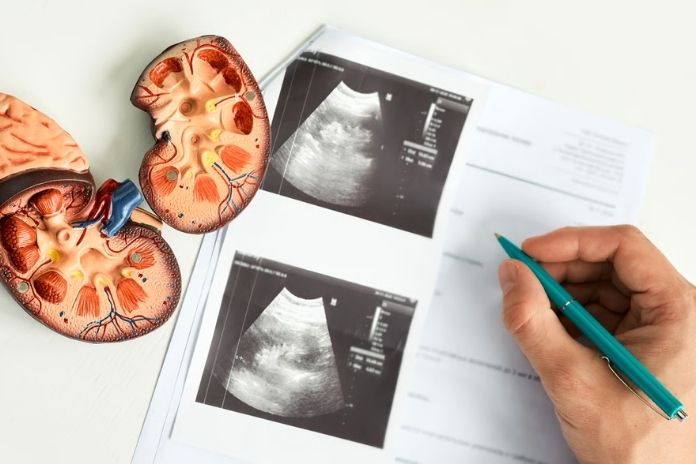
For kidney stones, a CT scan without contrast is most commonly used. It can detect even very small stones. Ultrasound is used in specific cases but may miss tiny stones. A urine test often shows blood, sometimes crystals.
“The testing we’d do would be a urinalysis—because we want to see if there’s blood in the urine, make sure there’s no infection in the urinary system, and do some kind of imaging,” explains Dr. Walter P. Mutter, a nephrologist.
For kidney cancer diagnosis, imaging with contrast CT or MRI is used. Many times, cancer is found accidentally during a scan for another reason. That is why the early stage is often silent. A biopsy is not always needed before treatment; imaging itself can be enough in many cases.
Important Note: Stone scans look for obstruction and density; cancer scans look for mass, blood supply, and tissue pattern.
Read More: Kidney Stones: Why They Happen and How to Prevent Them
When to Seek Medical Care: Red Flag Summary

Go to emergency or same-day care if:
- Sudden severe flank pain
- Fever with pain
- Cannot pass urine
- Continuous vomiting
See a doctor within one week if:
- Any blood in urine, even once
- Dull flank pain lasting more than 2 weeks
- Lump in the abdomen or side
- Unexplained weight loss
If you have already had kidney stones before, do not assume every pain is a stone again. Especially, painless blood in urine can be a kidney cancer red flag; this needs proper investigation.
Read More: Calcium Oxalate Defense: Can Grapefruit’s Citric Acid Really Help Prevent Kidney Stones?
Final Thoughts
Kidney stones vs. kidney cancer may look similar at the surface level, but internally, they are completely different problems. Stones behave suddenly and dramatically. Cancer behaves quietly and steadily.
The biggest clinical rule remains simple but important: painless blood in urine should never be ignored or assumed harmless. Also, new research linking stone history with higher cancer risk means repeat stone patients need more careful attention, not less. Early checking is always better than late regret.
- Pain pattern matters more than pain presence: sudden and shifting vs dull and constant.
- Painless blood in urine is one of the strongest warning signs for possible cancer.
- Kidney cancer often has no symptoms in the early stage; silence itself is a clue.
- Stone history does not rule out cancer risk.
- Research gap: the exact reason why stones increase cancer risk is still not fully understood.
References
- Bhojani, N., Miller, L. E., Bhattacharyya, S., Chen, K. W., Kallidonis, P., Contreras, P. S., Somani, B. K., Gauhar, V., & Chew, B. H. (2025). Association between kidney stones and future risk of kidney cancer. Canadian Urological Association Journal, 20(4).
- van de Pol, J. A. A., van den Brandt, P. A., & Schouten, L. J. (2019). Kidney stones and the risk of renal cell carcinoma and upper tract urothelial carcinoma: the Netherlands Cohort Study. British Journal of Cancer, 120(3), 368–374.
- Zhong, J., Cheng, J., Zhao, Z., Yang, H., Liu, Y., Duan, X., & Zeng, G. (2025). Association between kidney stones and urological cancers: results from the NHANES 2007–2020 and Mendelian randomization study. Discover Oncology, 16(1).
In this Article