














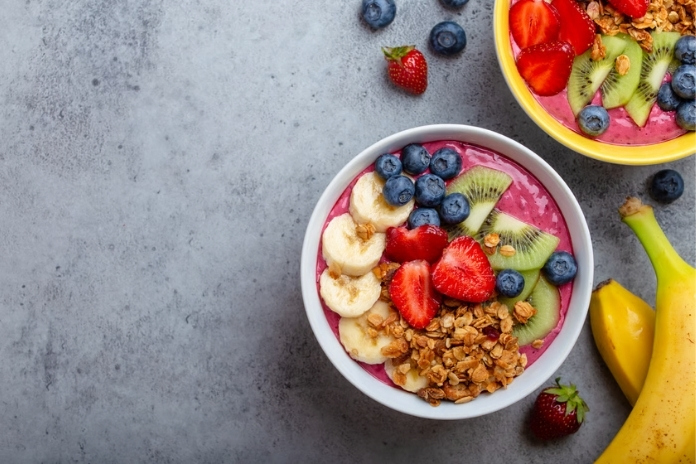
You order an açaí bowl because you’re trying to eat well. It feels like the right call: it’s colorful, fruit-forward, and practically synonymous with clean eating.
But here’s what most people don’t realize. Açaí bowls can contain over 600 calories and 75g of sugar in a single serving. That exceeds what most adults should consume in added sugar for an entire day, yet the meal reads as health food.
Açaí itself is nutritionally legitimate: ~70 calories per serving, minimal sugar, high in anthocyanins (anti-inflammatory polyphenols), monounsaturated fats, and fiber. The mistake happens when toppings and extras get added around it.
- The problem: Açaí bowls can contain up to 75g of sugar and 600+ calories, depending entirely on how they’re built. The berry itself is nutritious, but the additions are not always.
- The science: High added sugar intake is linked to increased risk of type 2 diabetes, cardiovascular disease, and obesity. The AHA caps daily added sugar at 25g for women and 36g for men.
- Fix it fast: Start with unsweetened açaí puree, blend in plain Greek yogurt, top with whole fruit, and 1–2 tbsp nut butter. You’ll land around 400 calories and 20g protein, without the added sugars.
The Health Halo Problem

A health halo is the cognitive bias that causes people to underestimate calories and skip label-checking on foods they’ve pre-categorized as healthy. Açaí bowls carry one of the strongest health halos in the food industry. People who would scrutinize a candy bar’s label order a 24-oz juice bar smoothie bowl without a second thought.
The result: sweetened bases, calorie-dense toppings, and oversized portions pass unexamined. Each mistake below exploits exactly this dynamic.
Mistake 1: Starting With a Sweetened Blend
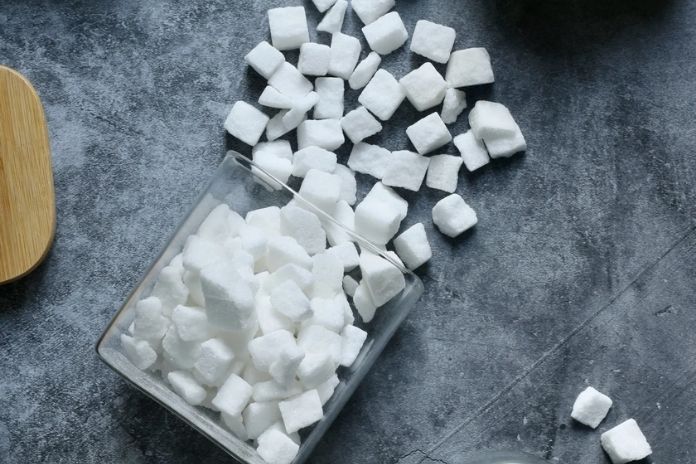
The damage: 20–30g of added sugar before a single topping is added.
Commercial açaí blends, including most of what juice bars use, contain added cane sugar, syrups, or sweetened plant milks to mask açaí’s naturally tart, earthy taste. The American Heart Association (AHA) caps daily added sugar at 25g for women and 36g for men. A sweetened base alone can hit or exceed that ceiling.
The fix: Use 100% unsweetened frozen açaí puree packets (Sambazon unsweetened is widely available). Blend with half a frozen banana or a handful of frozen mango for natural sweetness, no added sugar, and a measurably creamier texture.
Mistake 2: Treating a Commercial Portion as One Serving
The damage: A bowl labeled 250 calories per serving that contains three servings delivers 750 calories consumed in one sitting.
Juice bar and supermarket açaí bowls typically contain 16–24 oz. Standard nutrition label serving sizes reference 6 oz. Portion distortion is a documented driver of excess caloric intake, and the health halo makes people less likely to check total container calories rather than per-serving figures.
The fix: For commercial bowls, always calculate total container calories. For home preparation, 100–150g of frozen açaí base is a sufficient portion that retains the antioxidant and fiber benefits without the caloric load of a commercial bowl.
Mistake 3: Loading Too Much Granola
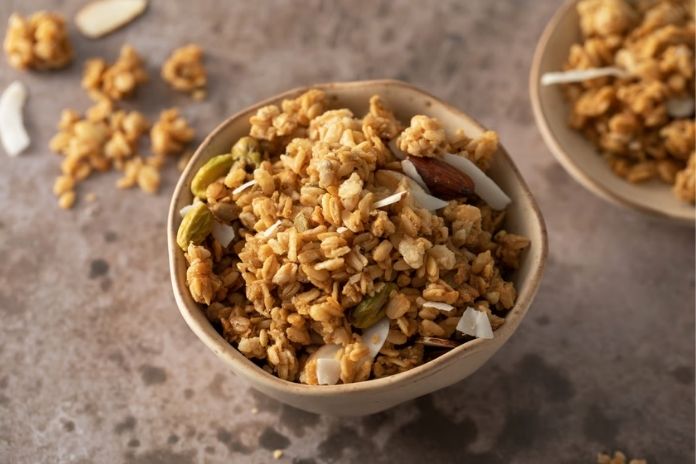
The damage: A half cup of commercial granola adds 200–250 calories and 15–20 g of sugar.
Granola goes on açai bowls in generous, unmeasured handfuls, and most juice bar granola contains honey coatings, chocolate chips, or sweetened clusters. The word “granola” signals health. The label frequently does not support that signal.
The fix: Cap granola at 2–3 tablespoons. Replace the remainder with rolled oats, puffed quinoa, hemp seeds, or chia seeds. Texture is preserved, and sugar contribution drops significantly.
Mistake 4: Skipping Protein
The damage: Most commercial açaí bowls provide 6–10 g of protein, insufficient for a meal, and the primary reason for hunger and energy crashes within 90 minutes.
This is the most consequential nutritional error in typical açaí bowl construction. Protein and dietary fat are the macronutrients that slow gastric emptying and blunt the postprandial (post-meal) glucose response.
Without them, a 35–55 g carbohydrate load, even one with adequate fiber, produces a rapid blood sugar rise followed by a sharp drop. Fiber alone cannot compensate for absent protein at these carbohydrate volumes.
The fix: Add protein deliberately.
- Plain Greek yogurt blended into the base: ~15g protein, improves texture
- One scoop unflavored or vanilla protein powder: 20–25g protein
- Two tablespoons natural nut butter: ~8g protein plus fat that further slows glucose absorption
Any one of these changes extends satiety from 90 minutes to 3–4 hours.
Mistake 5: Adding Liquid Sweeteners
The damage: One tablespoon of honey = 17g of sugar. That’s more than half the AHA’s entire daily added sugar limit for women, on top of everything already in the bowl.
Honey, agave, coconut nectar, and date syrup are applied liberally at juice bars because they read as “natural.” Metabolically, natural sugar at equivalent doses produces the same outcomes as refined sugar. The source does not change the physiological response.
The fix: Eliminate all liquid sweeteners. If the bowl tastes too tart without them, the base is the problem. Return to Mistake 1. A ripe frozen banana blended into the açaí adds sweetness and creaminess with zero added sugar.
Mistake 6: Using Sweetened Nut Butters or Flavored Toppings
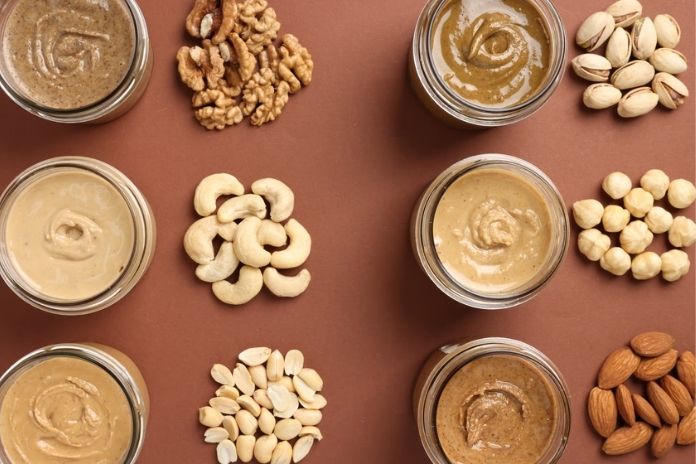
The damage: 10–20g of added sugar per serving, with little of the nutritional value plain nuts provide.
Plain nut butter is one of the best açaí bowl additions: protein, healthy monounsaturated fat, and meaningful glycemic buffering. Sweetened versions of chocolate-hazelnut spreads, honey-roasted nut butters, and flavored almond butters, as well as toppings like sweetened coconut flakes or chocolate chips, carry the sugar load without the benefit.
The fix: Use plain unsweetened almond butter, peanut butter, or tahini 1 to 2 tablespoons. For crunch and flavor without sugar: unsweetened coconut flakes, raw cacao nibs, or a small handful of mixed raw nuts.
Read More: What Is the Healthiest Type of Butter? Nutrition, Benefits & Best Options Explained
Mistake 7: Eating It as a Fruit Dish Instead of a Balanced Meal
The damage: A large carbohydrate load on an empty stomach produces a significant blood sugar spike, regardless of whether the carbohydrates come from fruit or processed food.
Açaí has a relatively low glycemic index (GI) of approximately 45. But GI measures the blood sugar impact per gram of carbohydrate in a standardized portion, not the real-world impact of a full bowl.
Glycemic load (GL), which accounts for total carbohydrate quantity, is the clinically relevant metric. A large bowl of low-GI fruit still produces a substantial glucose response when the total carbohydrate volume reaches 35 – 55 g, particularly without protein or fat to buffer it.
The fix: Structure the bowl as a macronutrient-balanced meal.
- Protein:≥20g (Greek yogurt or protein powder)
- Fat:≥10g (nut butter, chia seeds, hemp seeds)
- Carbohydrate: moderate whole fruit, not maximum fruit
This combination measurably blunts the glycaemic response and sustains stable energy for 3–4 hours.
Compare that to a typical commercial bowl: 600+ calories, 6–10g protein, 35–75g sugar.
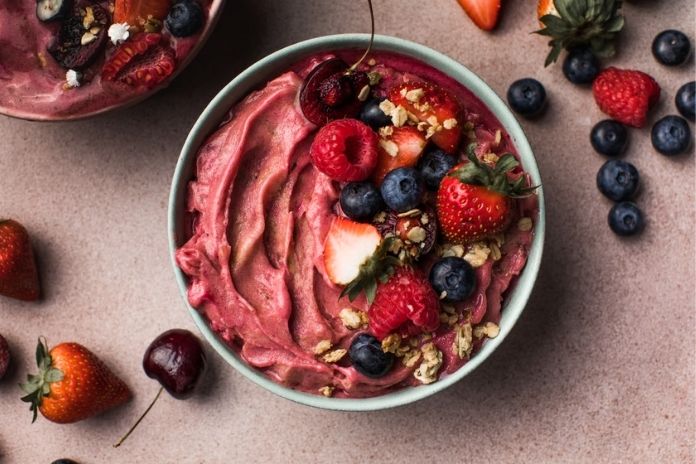
Corrected Açai Bowl
What It Looks Like
| Component | Choice | Approximate Contribution |
|---|---|---|
| 🍓 Base | 100g unsweetened açaí puree + ½ frozen banana | ~150 cal, 2g added sugar |
| 🥣 Protein | 100g plain Greek yogurt blended in | ~60 cal, 10g protein |
| 🥜 Fat | 1 tbsp natural almond butter | ~95 cal, 3.5g protein, 8g fat |
| 🫐 Toppings | 2 tbsp rolled oats, 1 tbsp chia seeds, ½ cup mixed berries | ~120 cal, 5g fiber |
| 🍯 Sweetener | None | 0g added sugar |
| ✅ Total | Balanced high-protein smoothie bowl | ~425 cal, ~18g protein, ~2g added sugar |
Read More: 10 Superfoods Smoothies to Start Your Day Right
Bottom Line
Three changes eliminate most of the nutritional damage in a typical açaí bowl:
- Switch to unsweetened puree: Removes 20–30g of added sugar from the base
- Add Greek yogurt: Brings protein to a meal-appropriate level and stabilizes blood sugar
- Audit the granola: Measure 2–3 tablespoons instead of pouring freely
The açaí bowl you thought you were eating is achievable. It just requires building it correctly.
Read More: 8 Superfoods You Haven’t Tried Yet (But Totally Should!)
Final Word
You didn’t start eating açaí bowls because you wanted a sugar bomb for breakfast. You started because you wanted something genuinely good for you. The good news is that açaí itself absolutely qualifies.
The seven mistakes above are not character flaws. They’re the predictable result of a food industry that knows health halos sell, and of genuinely confusing nutritional labeling that obscures what’s actually in a serving. Now you know exactly where the problems are and precisely how to fix them.
Build it right. The bowl you thought you were eating is completely achievable.
- What the evidence shows: Açaí berries are genuinely nutritious. Commercial açaí bowls regularly contain 600+ calories and 75g of sugar — not because of the berry, but because of the build.
- The real issue: Sweetened bases, oversized portions, minimal protein, and liquid sweeteners transform a nutrient-dense ingredient into a high-sugar meal that produces blood sugar spikes and poor satiety.
- Start here: Switch to unsweetened açaí puree, blend in Greek yogurt for protein, and audit your granola amount. Those three changes alone eliminate most of the damage.
References
- American Heart Association. (2021). Added sugars.
- Barreca, D., Nabavi, S. M., Sureda, A., Rasekhian, M., Raciti, R., Silva, A. S., & Annunziata, G. (2021). Almonds (Prunus dulcis Mill. D. A. Webb): A source of nutrients and health-promoting compounds. Nutrients, 12(3), 672.
- Buyken, A. E., Mela, D. J., Dussort, P., Johnson, I. T., Macdonald, I. A., Stowell, J. D., & Brouns, F. J. P. H. (2018). Dietary carbohydrates: A review of international recommendations and the methods used to derive them. European Journal of Clinical Nutrition, 72, 1625–1643.
- Faruque, S., Tong, J., Lacmanovic, V., Agbonghae, C., Minaya, D. M., & Czaja, K. (2019). The dose makes the poison: Sugar and obesity in the United States — a review. Polish Journal of Food and Nutrition Sciences, 69(3), 219–233.
- Rolls, B. J. (2014). What is the role of portion control in weight management? International Journal of Obesity, 38(S1), S1–S8.
- Schwingshackl, L., Neuenschwander, M., Hoffmann, G., Pleskó, A., Schwedhelm, C., Iqbal, K., & Boeing, H. (2019). Food groups and intermediate disease markers: A systematic review and network meta-analysis of randomized trials. American Journal of Clinical Nutrition, 108(5), 925–940.
- Srour, B., Fezeu, L. K., Kesse-Guyot, E., Allès, B., Méjean, C., Andrianasolo, R. M., & Touvier, M. (2020). Ultra-processed food intake and risk of cardiovascular disease: Prospective cohort study. BMJ, 365, l1451.
- Viguiliouk, E., Kendall, C. W., Blanco Mejia, S., Cozma, A. I., Ha, V., Mirrahimi, A., & Sievenpiper, J. L. (2019). Effect of replacing animal protein with plant protein on glycaemic control in diabetes: A systematic review and meta-analysis of randomised controlled trials. Nutrients, 7(11), 9804–9816.
- World Health Organization. (2023). Guideline: Sugars intake for adults and children.
In this Article