


















- Daylight saving time disrupts your body clock. Losing an hour causes circadian misalignment and mild jet lag.
- Sleep loss raises short-term risks. The spring shift is linked to spikes in heart attacks and car accidents.
- Mood and focus temporarily decline. Changes in melatonin and serotonin can cause fatigue and irritability.
It’s just one hour. So why does daylight saving time feel like it’s destroying you? Millions of people adjust their clocks by one hour each year. The adjustment may seem insignificant. However, the transition to daylight saving time subtly affects the biological rhythms of more than 300 million people in the United States.
Sleep surveys conducted by the American Academy of Sleep Medicine (AASM) reveal the extent to which the effects of daylight saving time can be felt. About 55% of Americans report feeling tired after the time change. Furthermore, 63% of Americans would prefer to abolish daylight saving time entirely, a position strongly supported by advocates of AASM standard time.
The reason for this is quite obvious. The clock on the wall can be adjusted instantly. But the human body cannot. Research on the health effects of daylight saving time has revealed that even a one-hour adjustment can temporarily affect sleep patterns, hormone cycles, cardiovascular activity, and cognitive function.
This is why many people ask questions like “Why does daylight saving time make me feel sick?” and “Is daylight saving time bad for your health?” In a 2025 systematic review published in the European Journal of Epidemiology, 157 studies from 36 countries found that the effects of daylight saving time transitions may not be as clear-cut as commonly believed.
But one thing was certain: The transition to daylight saving time in the spring, or “spring forward,” has the strongest evidence of short-term spring forward health risks. In this article, we will understand what happens to your body during daylight saving time, your body’s circadian rhythm, and ways to ease the ‘spring forward’ transition.
Read More: What Is Sleep Chronotype—and How It Affects Your Energy, Productivity & Weight
Your Circadian Rhythm Takes the First Hit
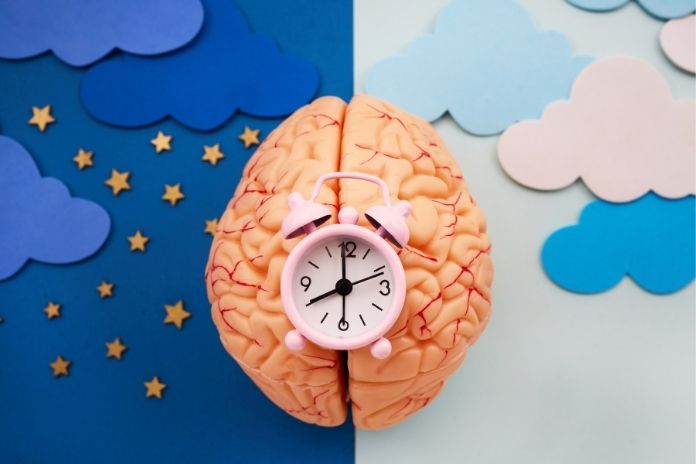
The Body Clock Doesn’t Move With the Clock on the Wall
Human physiology has an internal 24-hour cycle called the circadian rhythm. The internal clock controls the timing of sleep and wakefulness, the release of hormones, metabolism, body temperature, and brain alertness.
At the heart of it all is a small part of the brain called the suprachiasmatic nucleus. This nucleus coordinates the body’s internal clocks based on exposure to light. Natural morning light tells the brain that it’s time to wake up because the day has arrived. The absence of light triggers the production of melatonin, a sleep hormone.
Daylight saving time, however, interferes with the internal clock in a subtle but profound way. When we set the clocks forward, people wake up an hour earlier than they normally would based on their internal biological clocks.
The timing of morning exposure to natural light has not changed. The timing of exposure to natural light in the evening has also not changed. The morning gets darker earlier than it would otherwise, and the evening gets brighter for a longer period.
The net effect of these two phenomena on the internal clock is to make it run a little slower. This phenomenon is called circadian misalignment DST. The internal clock runs slower than the external clock. The net effect of these phenomena is to leave people in a mild state of jet lag, often described as social jet lag.
What makes this phenomenon important is that the circadian rhythm occurs not only in the brain but in virtually every organ of the body. The heart, liver, pancreas, and immune system have internal clocks that control the metabolic activity of these organs.
How Long Does Adjustment Actually Take?
Most people think the body snaps back after the change within a day or two. However, the reality is that the process takes much longer. A study published in the scientific journal Scientific Reports in 2024 indicates that the average person takes about nine to seventeen days to fully adapt and get used to the change in the DST.
This helps answer the question many people search for online: “How long does it take to adjust to daylight saving time?” However, for some people, the adaptation never takes place. People with a night owl personality, who prefer going to bed in the evening, are at higher risk of experiencing social jet lag due to their chronotype and the daylight saving time mismatch.
This is because the DST change will mean that they will be even further removed from waking up in the mornings. Unlike jet lag, which people experience when traveling, social jet lag can last for months. This is because the environment and the other factors that help us stay in sync have remained the same.
It has been evident that the body takes between nine and seventeen days to adapt to the change in DST.
Your Sleep Suffers — And the Consequences Are Immediate

The Sleep Loss Is Real and Measurable
The first and most obvious effect of the clocks springing forward is the loss of sleep associated with the time change. Research has shown that people actually lose sleep on the night the clocks jump forward. Adults lose an average of 40 minutes of sleep. This widespread sleep disruption is commonly referred to as DST sleep loss.
While losing 40 minutes of sleep might not seem like much, it is a universal amount. While people are at work or school, there is no opportunity to make up for the lost sleep by sleeping in the next morning. This creates a sleep debt.
Sleep experts say that even small amounts of sleep deprivation cause measurable changes in the body. This includes changes in the expression of our internal clock genes, inflammatory chemicals, and changes in our autonomic nervous system that affect heart rate and blood pressure.
Hormone levels can even get out of whack. For example, the normal surge in our body’s main stress hormone, cortisol, can get out of whack, contributing to cortisol sleep deprivation patterns.
Who Is Hit Hardest
However, not all individuals react the same way to changes over time. Certain groups feel a greater impact of the time change, which affects their sleep, increases health risks, and causes other problems.
Teenagers are among the groups who feel the effects of the time change. Due to their late bedtimes, the time change leaves them even later than usual, since many schools require early starts. Research has revealed that teenagers tend to be slower in reacting to situations in the days following the time change.
Individuals who work in shifts also feel the impact of the time change. Their work hours are already irregular, so when the time changes, it affects their sleep even more. Geography is another factor that affects individuals. People who live in the western part of a time zone tend to wake up later than others, as it is already late in the day.
Read More: How to “Rewire” Your Sleep Schedule in Just One Weekend
Your Heart and The Brain Face Elevated Short-Term Risk
Heart Attack and Stroke Risk in the First Week

One of the most popular topics that arises while discussing daylight saving time is its impact on heart health, particularly the question, “Does daylight saving time increase heart attack risk?”
Several studies have indicated an increased risk of heart attacks in the days immediately following the time change. Studies indicate an increased risk of heart attack events in the first week after the start of daylight saving time.
It is believed that there are various reasons behind this. Firstly, the loss of an additional hour of sleep puts additional pressure on the heart. Additionally, the shift in our internal clocks may affect our blood pressure and inflammation levels.
However, not all studies have shown an increased risk of heart attacks. A 2025 study by Duke University, with an impressive sample size of nearly 170,000 participants, found no increased risk of heart attacks in the weeks surrounding the time change.
The mixed findings suggest that, while some studies have shown an increased risk, the magnitude of this risk remains uncertain. The relationship between daylight saving time and heart attack risk remains an area of scientific exploration.
Traffic Accidents Rise in the Days That Follow
Evidence linking daylight saving time to traffic accidents is somewhat more consistent. Several studies have found that fatal motor vehicle crashes increase in the days immediately after the spring transition. Researchers estimate that fatal crashes may rise by up to 6% across the United States during this period, highlighting the risk of spring forward car accidents.
Sleep deprivation appears to be the primary factor. Even moderate sleep loss can slow reaction times, impair attention, and reduce decision-making ability, which are particularly dangerous during early morning commutes.
Circadian disruption may also reduce alertness during the hours when people typically drive to work or school. Looking beyond the immediate transition, scientists have also explored the potential long-term health implications of daylight saving time.
A 2025 study suggested that adopting a permanent AASM standard time could theoretically prevent hundreds of thousands of strokes and millions of cases of obesity by better aligning daily schedules with natural light cycles. Fatal traffic accidents increase by as much as 6% in the days following the spring daylight saving time transition.
“We found that staying in standard time or staying in daylight saving time is definitely better than switching twice a year,” said Dr. Jamie Zeitzer, PhD, professor of psychiatry and behavioral sciences.
Your Mood and Mental Health Feel the Shift Too
Serotonin, Melatonin, and the Morning Darkness Problem
The switch in Daylight Saving Time even impacts our brain chemistry. Our exposure to morning sun is a major contributor to serotonin, the chemical that regulates our moods and keeps our emotions in balance. However, when we switch to DST, many of us wake up before dawn. This reduces our exposure to the sun.
On the other hand, the sun stays up later in the day, which slows down the release of the hormone that induces sleep. So, we have a mismatch in our bodies. We feel fatigued during the day but find ourselves unable to sleep at night.
Scientists studying this interaction often refer to the melatonin-serotonin DST relationship. Research has also linked circadian disruption to an increased risk of DST mood disorders.
Cognitive Performance Dips Too
The mind’s clarity depends on our inner clock. When our inner clock is out of whack, such as during the time change from daylight saving time, research has shown a significant impact on our attention span, our capacity to learn, and how our memories are stored.
Experiments have shown that disruptions in our circadian clock genes, such as the gene known as “CLOCK,” have an impact on our cognitive functions, such as decision-making and our emotional state.
The good news is that this is a temporary effect on our minds and bodies. As our bodies slowly adjust to the time change, our minds and bodies return to normal.
How to Recover Faster — Evidence-Based Strategies

What Sleep Medicine Experts Actually Recommend
According to sleep researchers, the transition to daylight saving time can disrupt sleep. However, a few adjustments can help ease the transition. The most common advice is to start adjusting your sleep pattern a couple of days before the transition.
The adjustment to your sleep pattern should be 15 to 20 minutes earlier each day. This will ease the transition for your internal clock. The best way to ease the transition to daylight saving time is to get a lot of morning sunlight. A small time spent in the morning sunshine can ease the transition for your internal clock.
The following steps can be followed to ease the transition to daylight saving time:
- Avoid caffeine and alcohol consumption during the transition
- Avoid late-night workouts
- Stick to a regular sleep schedule
Read More: Circadian Rhythms: Unlocking the Secrets of Your Body’s Internal Clock
The Bottom Line
“Springing forward” into daylight saving time is not exactly an earth-shattering event, but our biology has a surprisingly intricate reaction. Giving our bodies an hour less sleep can affect our circadian rhythms, sleep, heart rate regulation, moods, and cognitive abilities.
But the science is not simple. While the daylight saving time health effects of “springing forward” are real, they are generally temporary as our bodies realign over the course of one to two weeks.
There is an ongoing debate over whether we should stay on standard time or stay on daylight saving time. This indicates that people are becoming more aware that our biology has adapted to the natural world.
Understanding what happens to your body during daylight saving time can help you adjust more easily. Several simple steps can help our bodies adjust more easily to the time change. For example, gradually adjusting our bodies to the time change by getting bright light in the morning can help our circadian rhythms adjust more easily.
References
- American Academy of Sleep Medicine. (2025). Survey results: U.S. adults feel tired after the spring daylight saving time transition.
- Khan, M., et al. (2025). [Article on daylight saving time and health outcomes]. Annals of Medicine.
- Stanford Medicine. (2025). Daylight saving time affects sleep and health.
- Nemours KidsHealth. (n.d.). Sleep.
- Sleep Foundation. (n.d.). How sleep deprivation affects your heart.
- Sundelin, T., et al. (2026). Daylight saving time transitions and adverse outcomes: A systematic review and meta-analysis. European Journal of Epidemiology.
- Kecklund, G., & Axelsson, J. (2021). Health consequences of shift work and insufficient sleep. Sleep Medicine Reviews.
In this Article