














Featured Answer:
PCOS hair loss is a form of female pattern hair loss caused by androgen excess. Higher androgen levels can increase the effect of dihydrotestosterone (DHT), leading to hair follicle miniaturization. Around 20% to 30% of women with PCOS experience scalp hair thinning.
According to the American Academy of Dermatology (AAD), the Endocrine Society, and ACOG, treatments such as minoxidil, spironolactone, and hormonal therapy can slow hair loss and promote hair regrowth in PCOS when started early.
PCOS hair loss is one of the most distressing symptoms of polycystic ovary syndrome, affecting a significant number of women with PCOS. Unlike temporary shedding, hair loss from PCOS is usually driven by androgen excess and can gradually worsen if left untreated.
This article explains whether PCOS causes hair loss, why it happens, how it is diagnosed, and the treatments and lifestyle changes supported by current clinical evidence.
- PCOS-related hair loss is caused by excess androgens and DHT. A significant number of women with PCOS experience hair thinning.
- Early treatment can slow hair loss and support regrowth. Most women see results within 6–12 months.
- Healthy eating, regular exercise, and correcting nutrient deficiencies help support hair growth.
Read More: Understanding Insulin Resistance in the Context of PCOS (Polycystic Ovary Syndrome)
What Is PCOS Hair Loss?
PCOS hair loss is a specific form of androgenetic alopecia, also known as female pattern hair loss, in which elevated androgen levels cause gradual thinning on the crown and on top of the scalp. At the same time, women may develop excess hair growth on the face, chest, or abdomen, a condition called hirsutism.
Unlike telogen effluvium, which causes temporary, widespread hair shedding after stress or illness, PCOS hair thinning develops gradually because hormones change the way hair follicles function. Many people confuse these conditions, but they have different causes and treatment approaches.
Scalp follicles are highly sensitive to DHT, causing them to shrink over time, while facial and body follicles are stimulated by the same hormones and produce thicker hair.
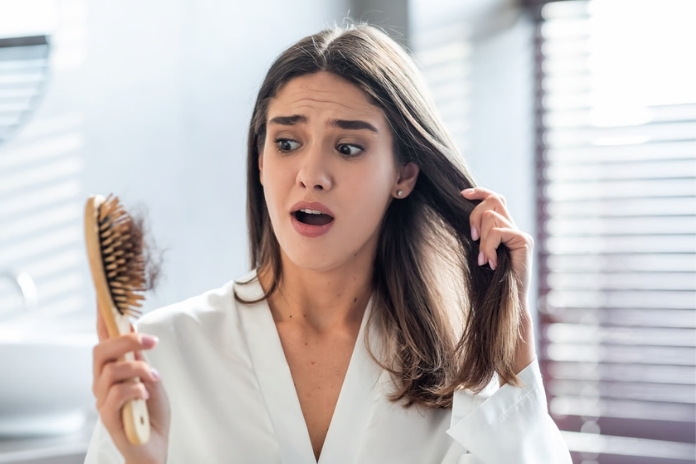
Women with PCOS rarely develop complete bald patches like men. Instead, they usually notice diffuse thinning, a widening part line, and reduced hair volume.
Why Does PCOS Cause Hair Loss?
Hair loss from PCOS develops through a complex hormonal cascade involving insulin resistance, hyperandrogenism, and increased DHT activity.
Many women with PCOS have insulin resistance, meaning the body’s cells become less responsive to insulin. To compensate, the pancreas produces more insulin. High insulin levels stimulate the ovaries to produce excess testosterone and other androgens, worsening the hormonal imbalance.
Testosterone is converted by the enzyme 5-alpha-reductase into dihydrotestosterone (DHT). DHT binds to genetically susceptible scalp follicles, triggering hair follicle miniaturization. With each growth cycle, hairs become finer, shorter, and weaker until the follicles produce only tiny, barely visible hairs.
This explains why PCOS hair thinning usually affects the crown, center part, and top of the scalp rather than the back or sides.
Chronic low-grade inflammation and metabolic dysfunction associated with PCOS may also contribute by disrupting the normal hair growth cycle and increasing oxidative stress around hair follicles.
Signs and Symptoms of PCOS Hair Loss
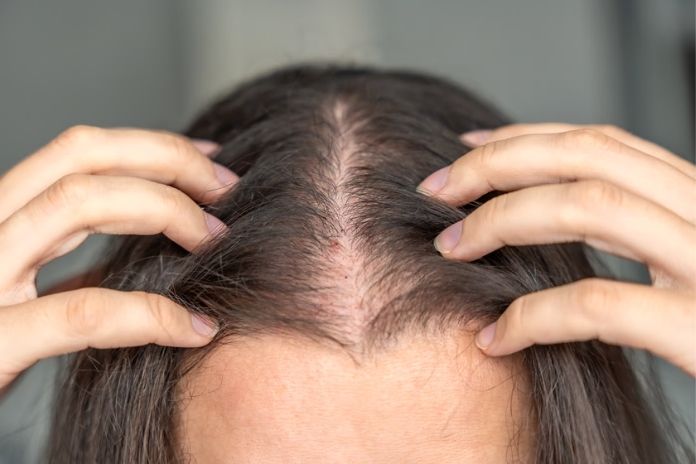
PCOS hair loss typically presents as diffuse thinning on the crown and top of the scalp, while the frontal hairline usually remains intact.
Common symptoms include:
- A widening center part line
- Reduced hair density on the crown
- Increased daily hair shedding
- Finer, shorter, and weaker hair strands
- Reduced hair volume and increased breakage
- Changes in hair texture
Dermatologists often describe the pattern using the Ludwig Scale, which grades progressive thinning across the top of the scalp.
Because hyperandrogenism affects multiple body systems, scalp hair loss often occurs alongside acne, hirsutism, irregular menstrual cycles, weight gain, and infertility.
How PCOS Hair Loss Is Diagnosed
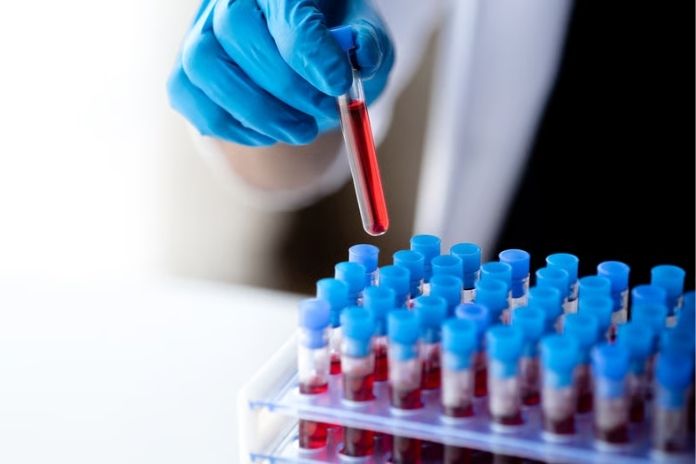
Diagnosing PCOS hair loss requires evaluating both scalp changes and the hormonal imbalances associated with PCOS.
Your healthcare provider will review your medical history, menstrual cycle, family history of hair loss, and symptoms of androgen excess.
Blood tests commonly include:
- Total and free testosterone
- DHEA-S
- LH and FSH levels
- Fasting glucose and fasting insulin
- Thyroid function (TSH)
- Ferritin and iron studies
A dermatologist may perform scalp dermoscopy to identify hair follicle miniaturization, assess the degree of female pattern hair loss, and perform a hair pull test if excessive shedding is present.
Pelvic ultrasound and the Rotterdam diagnostic criteria are commonly used to confirm PCOS.
It is equally important to rule out thyroid disease, iron deficiency, vitamin deficiencies, autoimmune conditions, and telogen effluvium, since these can also contribute to hair loss.
Read More: Androgenetic Alopecia in Women: What You Need to Know About Female Pattern Hair Loss
Evidence-Based Treatments for PCOS Hair Loss
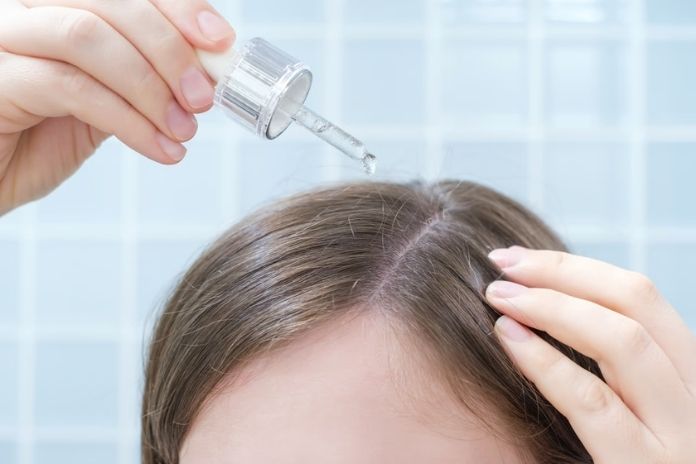
Several evidence-based therapies can slow PCOS hair loss and improve PCOS hair regrowth by targeting hormones, DHT activity, and scalp follicles.
Minoxidil
Topical minoxidil is the only FDA-approved treatment for female pattern hair loss. It increases blood flow around follicles, prolongs the hair growth phase, and stimulates thicker hair production. Most women begin noticing improvement after three to six months, with maximum results often taking up to one year.
Spironolactone
Spironolactone is an anti-androgen medication that blocks androgen receptors and reduces DHT’s effects on hair follicles.
It is commonly prescribed for women with PCOS who have both hair thinning and acne or hirsutism. Because it can affect fetal development, reliable contraception is recommended during treatment, and periodic blood tests may be required.
Combined Oral Contraceptives
Combined oral contraceptives reduce ovarian androgen production and increase sex hormone-binding globulin, lowering free testosterone levels. Women generally notice a gradual improvement in hair loss after six to twelve months of consistent treatment.
Metformin
Although metformin is not a direct hair-loss medication, it improves insulin resistance, lowers androgen production, and may indirectly reduce hair thinning in some women with PCOS.
Finasteride and Dutasteride
These medications block the enzyme responsible for converting testosterone into DHT. They are sometimes prescribed when other treatments are ineffective, but are generally reserved for carefully selected patients because of pregnancy-related safety concerns.
Low-Level Laser Therapy
Low-Level Laser Therapy (LLLT) uses light energy to stimulate follicle activity and may improve hair density when combined with medical treatment. It works best as an adjunct rather than a replacement for medications.
Can PCOS Hair Loss Grow Back?
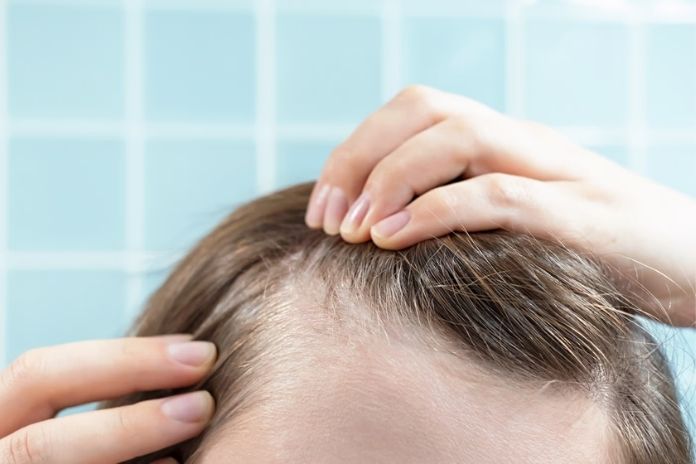
PCOS hair regrowth is possible, especially when treatment begins before follicles become permanently damaged.
Miniaturized follicles can often recover if androgen levels are reduced and healthy hair cycles resume. However, follicles that remain inactive for many years may not fully regenerate.
Most women require at least six to twelve months before noticeable regrowth occurs. Recovery depends on age, genetics, the severity of hyperandrogenism, insulin control, and treatment adherence.
Medications, improved insulin sensitivity, nutritional support, and consistent scalp care all contribute to better outcomes.
Lifestyle and Nutrition Strategies That Support Hair Growth
Lifestyle changes can support PCOS treatment for hair loss by improving insulin sensitivity, reducing androgen levels, and correcting nutrient deficiencies.
A low-glycemic eating pattern rich in vegetables, legumes, whole grains, lean protein, and healthy fats helps stabilize blood sugar and reduce insulin spikes. These changes complement medical treatment rather than replace it.
Key nutrients that support healthy hair include iron, zinc, vitamin D, omega-3 fatty acids, and adequate protein. Deficiencies should be corrected under medical supervision after appropriate testing.
Some women may also benefit from myo-inositol supplements for PCOS hormone balance, which have shown promise for improving insulin sensitivity.
Regular aerobic exercise and resistance training improve metabolic health, reduce insulin resistance, and support hormone regulation.
Chronic stress may worsen telogen effluvium and indirectly affect hormonal balance. Mindfulness, yoga, and other stress management techniques can help reduce cortisol levels.
Sleep also plays an important role. Most adults should aim for seven to nine hours of quality sleep each night to support metabolic and hormonal health.
Finally, understand the nutritional and lifestyle factors in female hair loss, and be aware that intermittent fasting may affect hair growth in PCOS, since restrictive eating patterns may not be appropriate for everyone.
When to See a Doctor

Seek medical evaluation as soon as noticeable PCOS hair thinning develops because early treatment offers the best chance of preserving existing hair.
Prompt assessment is especially important if hair loss is sudden, patchy, or accompanied by fatigue, unexplained weight changes, irregular periods, severe acne, or excess facial hair.
An OB-GYN, endocrinologist, or dermatologist can evaluate hormonal causes and recommend appropriate testing, including testosterone, DHEA-S, fasting insulin, TSH, and ferritin.
Discuss evidence-based options such as minoxidil, spironolactone, hormonal therapy, or other medications based on your individual health history and pregnancy plans.
Read More: 5 Best Shampoos for Menopausal Hair Loss & Thinning
Conclusion
PCOS hair loss is primarily driven by androgen excess, insulin resistance, and DHT-related hair follicle miniaturization. Fortunately, early diagnosis and evidence-based treatment can slow progression and improve hair regrowth in many women with PCOS.
If you notice persistent scalp thinning together with other PCOS symptoms, seek medical evaluation promptly so treatment can begin before permanent follicle damage occurs.
References
- Mount Elizabeth Hospitals. (n.d.). Common signs of hormonal imbalance in women.
- The Root Functional Medicine. (n.d.). Cortisol and hair loss: What is the connection?
- Alghamdi, A. A., Aljohani, N. J., Alqahtani, S. A., et al. (2025). The impact of hormonal imbalance on hair loss and available treatment options: A comprehensive review. Journal of Population Therapeutics and Clinical Pharmacology.
- Stenn, K. S., & Paus, R. (2001). Controls of hair follicle cycling. Physiological Reviews, 81(1), 449–494.
- Shapiro, J., Mesinkovska, N. A., Bergfeld, W. F., et al. (2025). Guidelines of care for the management of androgenetic alopecia. Journal of the American Academy of Dermatology.
- Peters, E. M. J., Arck, P. C., & Paus, R. (2006). Hair growth inhibition by psychoemotional stress: A mouse model for neural mechanisms in hair growth control. Experimental Dermatology, 15(1), 1–13.
In this Article