












Tea is one of my favourite beverages. And once I read about certain health benefits of drinking white tea and green tea, I started loving the drink even more.
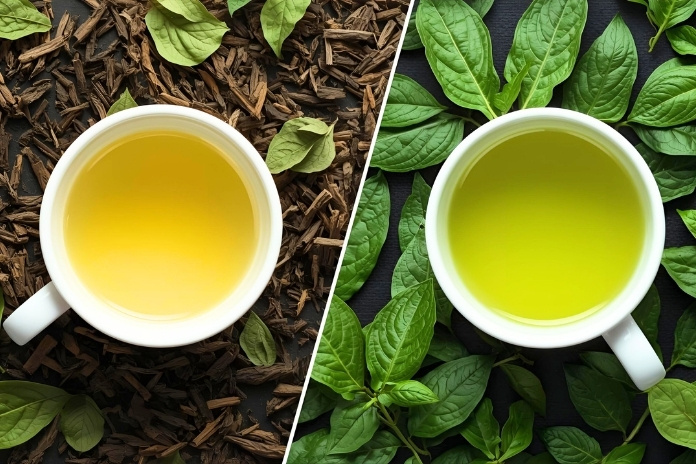
However, many tea lovers have just one question: which tea is better? Green tea or white?
In the last decade, white tea and green tea have moved from specialty drinks for fitness lovers to household names across the globe. Originally, these teas were primarily consumed in East Asia, but now, due to their reputation as natural sources of antioxidants and their potential benefits for overall health, they are gaining popularity in the Western world as well.
While both teas come from the Camellia sinensis plant, their processing, flavor, and even health benefits can differ in subtle but important ways.
Green tea has been the subject of hundreds of clinical studies, while white tea remains less researched but no less promising. Some even argue that white tea’s delicate processing may allow it to retain a higher concentration of certain antioxidants.
So, what are the differences between these teas, really? What are they actually going to do for you, and how much of the buzz stands up to science? In this guide, we’re going to outline the various types of teas, discuss the health benefits of white and green tea, and help you determine which one might be the better addition to your daily routine.
What Are the Different Types of Teas?
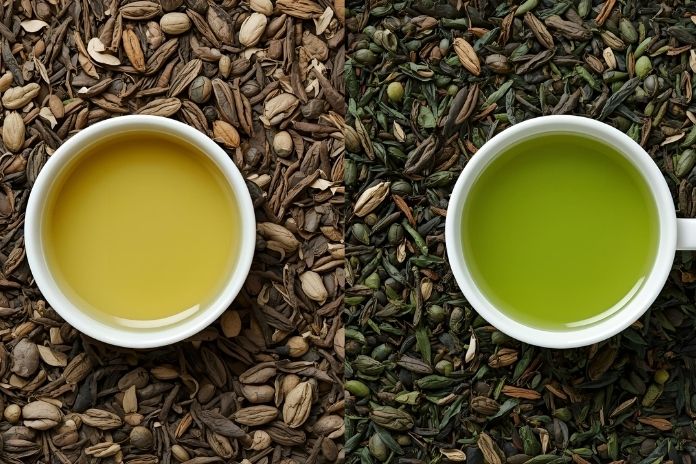
While the tea section of most supermarkets is seemingly endless, all “true” teas are derived from one plant: Camellia sinensis. The variation we experience, white, green, black, oolong, yellow, and fermented teas, lies in the way the leaves are harvested and processed.
Oxidation (exposure to oxygen), fermentation, and even the local climate give rise to a vast array of flavor, color, and health attributes.
Here is a closer examination of the six main categories:
-
Green Tea:
Green tea is one of the least oxidized types of tea. The leaves are rapidly steamed or pan-fried after picking, inhibiting enzymatic oxidation and maintaining an unoxidized, grassy taste.
Minimal processing allows green tea to have a high catechin content, highly active antioxidants that contain epigallocatechin gallate (EGCG), extensively researched for its anti-inflammatory and heart-protective effects.
Developed in China but also grown in Japan, Korea, and other places, green tea holds cultural value in conventional tea ceremonies and is also utilized in supplements, skincare, and foods with functional benefits.
Japanese Matcha, Chinese Longjing (Dragon Well), and Sencha are some popular varieties.
-
Black Tea
Black tea is fully oxidized, making it richer in taste and color. Black tea is strong, malty, and has more caffeine than white or green tea. There are two main production methods:
- Orthodox Process: Manually rolled or machine-rolled, resulting in better-quality leaves.
- CTC (Crush, Tear, Curl): This is a quicker industrial process that creates small pellets with a strong flavor, perfect for use in tea bags.
In contrast to green tea, which needs to be drunk relatively freshly, black tea may last for years.
Examples include Assam, Darjeeling, Earl Grey, and English Breakfast tea.
-
White Tea
White tea is the most fragile of all teas. It is processed from the youngest buds and sometimes the first leaves, which are covered in fine silvery hairs. In contrast to green or black tea, white tea is processed very little, typically only by withering and drying. It has a light, slightly sweet taste and a pale yellow brew.
Traditionally cultivated in China’s Fujian province, white tea is also cultivated in India, Nepal, Sri Lanka, and Thailand. Well-known varieties include Silver Needle (Baihao Yinzhen) and White Peony (Bai Mudan). Due to its minimal processing, some research indicates white tea may preserve distinctive antioxidant compounds not present in more oxidized teas.
A few other varieties of popular tea include:
-
Oolong Tea:
Oolong tea is midway between green tea and black tea in terms of oxidation. The leaves are oxidized halfway between 8% and 85%, and then curled or twisted into characteristic shapes. This creates a broad spectrum of flavors that range from floral and creamy to roasted and earthy. Well-known oolongs are Tieguanyin and Da Hong Pao.
-
Yellow Tea:
Yellow tea is rare and pricey, and it has a special “sealed yellowing” process. The moist leaves are left to soak before they dry, resulting in a smoother flavor than green tea. This type is valued in China but is less exported throughout the world.
-
Fermented (Post-Fermented) Tea:
Fermented teas, such as Pu-erh, are fermented for months or years using microbial fermentation. It gives them an earthy, mellow flavor and changes the chemical composition of the tea, adding probiotic-like qualities sometimes. The teas are prized for their digestive health benefits and are said to be an acquired taste.
What Are the Health Benefits of White Tea and Green Tea?
White and green tea both contain high levels of polyphenols, antioxidants, anti-inflammatories, and cardiovascular-healthy plant compounds found naturally in plants. Both share numerous health characteristics, but the minute differences in their makeup may influence the body slightly differently. Let’s consider what scientists have to say regarding each benefit.
1. Reverses Aging

Green Tea:
Green tea is extensively researched for its impact on the well-being of the skin. Green tea’s catechins, especially EGCG, fight off free radicals that contribute to skin aging.
Green tea might shield collagen, the protein responsible for holding skin tight, reducing wrinkles and sagging signs, according to some research. Green tea extracts are commonly applied in skincare products because of this.
White Tea:
White tea has unique skin-protective actions. Kingston University, UK, conducted a study and discovered that extracts of white tea can potentially inhibit the enzymes responsible for breaking down collagen and elastin, the proteins essential to skin elasticity.
Although these findings are encouraging, they’re largely based on lab tests and not large-scale human trials.
Both teas benefit the skin, but green tea has more human evidence. White tea is promising to be a mild, skin-safe drink.
2. Offers Protection against UV Rays

Green Tea:
UV ray exposure is a major cause of premature aging and skin cancer. In lab and animal studies, green tea polyphenols are found to inhibit UV-induced DNA damage, inflammation, and immune suppression. Topical products with green tea are being researched as natural sun-protection enhancers.
White Tea:
White tea, while less researched, also seems to contain similar antioxidant substances that potentially offer parallel advantages. Drinking tea, however, cannot substitute for sunscreen, but frequent intake could offer a second line of cellular protection from sun damage.
Read More: Worst Time to Drink Green Tea: When to Avoid for Better Health
3. Can Help in Inflammation and Joint Protection

Green tea:
Inflammation leads to chronic conditions such as arthritis. Research on mice indicates green tea polyphenols lower inflammatory indicators and safeguard against cartilage breakdown in joints.
White Tea:
White tea also has polyphenols, which can slow down enzymes involved in collagen and cartilage breakdown. This has generated interest in its ability to prevent joint stiffness and pain. Nonetheless, human studies are not available, so tea must be regarded as adjunctive, rather than therapeutic.
4. Maintains Heart Health and Cholesterol Homeostasis

This is one of the best-documented benefits of tea drinking.
Green Tea:
Several clinical trials indicate that green tea consumption may reduce LDL (“bad”) cholesterol, triglycerides, and blood pressure. Regular consumers tend to exhibit enhanced arterial flexibility and decreased markers of oxidative stress. Such effects reduce the risk of atherosclerosis and coronary heart disease.
White Tea:
Little human research has been done, but laboratory studies show that white tea antioxidants can also enhance cholesterol metabolism. In one study, white tea extract was found to potentially prevent the oxidation of LDL cholesterol, which is a major contributor to plaque formation.
Takeaway: Green tea has the best evidence of its heart benefits. White tea may have similar benefits, but further study is necessary.
5. May Offer Cancer-Protective Effects

This is perhaps the most contentious field of tea research.
Green Tea:
EGCG has demonstrated anti-cancer effects in numerous laboratory studies, including the inhibition of tumor growth and the induction of apoptosis (programmed cell death) in cancer cells. In human epidemiological studies, results are mixed; some indicate decreased breast, prostate, and colorectal cancer risk, while others detect no significant impact.
White Tea:
Lab studies indicate white tea extracts may be even more effective than green tea in preventing DNA damage in cells. However, the lack of human trials makes it impossible to draw strong conclusions.
Takeaway: Tea polyphenols are promising in cancer prevention research, but drinking tea should not be seen as a cure or guaranteed protection.
Read More: Best Teas to Drink After Meals for Better Digestion & Slimming
6. Energy and Mood Boost

Green and white tea both have caffeine and L-theanine, an amino acid that induces calm alertness. Together, they produce an even energy lift. You’ll have better focus without the jitters of coffee.
The amount of caffeine differs:
- Green tea: generally 30–50 mg per cup
- White tea: generally 15–30 mg per cup
Interestingly, some white teas are as caffeinated as green tea, so the myth that white tea is always lighter isn’t quite true.
According to TV medic Dr Michael Mosley, green tea can promote metabolism. “It certainly does seem to have an impact on metabolic rate,” Michael said.
“In one Thai study, overweight volunteers who took a small dose of green tea extract before each meal saw the amount of energy they burned at rest go up by about 60 calories a day. “That’s roughly the same as walking for 20 minutes, without leaving the sofa,” he added.
The inclusion of L-theanine in both teas also aids in relaxation and mental performance, making them great options for morning concentration and afternoon clarity.
Read More: Best Teas to Drink After Meals for Better Digestion & Slimming
Conclusion

Both white and green tea are great drinks to include in your daily regimen. They are low in calories, high in antioxidants, and associated with a broad variety of possible health benefits.
Green tea has the most robust body of evidence, especially for cardiovascular health, cholesterol control, and anti-aging.
White tea is less studied but has potential for protecting skin, anti-aging, and antioxidant activity.
Rather than having to choose between one and the other, you might gain benefits from experiencing both and alternating them each week for changing flavor and nutritional content.
Ultimately, the healthiest tea is one you can commit to drinking regularly. If you like the grassy kick of green or the sweet delicacy of white, both can be potent weapons for long-term health.
-
Aug 2017Written by Prajakt K
-
Sep 2025Edited by Vaishnavi
In this Article