














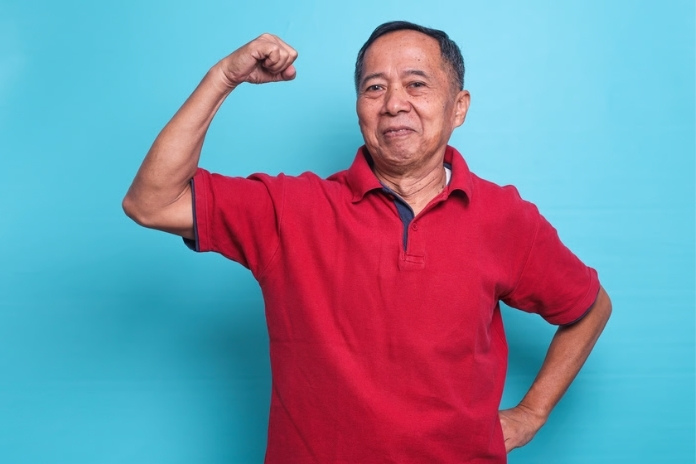
Feeling weak after 50 does not mean strength is gone for good. Research continues to show that muscle can be rebuilt at any age with the right approach. A 2024 study published in the International Journal of Epidemiology found that any amount of weight training was associated with a 6% lower all-cause mortality in adults with an average age of 70.
The most evidence-supported exercises to rebuild strength after 50 are compound resistance movements such as squats, deadlifts, rows, and presses, combined with balance training and regular walking. Consistent progressive resistance training remains the most effective strategy for rebuilding strength and muscle.
If you have been searching for exercises to rebuild strength after 50, there is some good news. Feeling weaker, less energetic, or more easily fatigued after age 50 is not a fixed state for most people. Both personal experience and scientific research show that people can build muscle and improve strength in their 50s and beyond.
While age-related muscle loss is real, studies consistently show that much of it can be prevented or reversed through exercise. Understanding what causes strength loss and which exercises work best can help you regain confidence, energy, and physical capability.
- Strength loss after 50 is common, but research shows muscle and strength can be rebuilt at any age through consistent resistance training.
- Focus on compound exercises like squats, deadlifts, rows, presses, and step-ups, while also including balance, mobility, and regular walking.
- Just 2–3 strength-training sessions per week, combined with adequate protein and gradual progression, can improve strength, mobility, and long-term health.
Read More: Beyond the 60-Second Myth: Realistic Plank Benchmarks for Every Decade
Why Strength Declines After 50 — and Why It Is Reversible

Starting around age 30, adults lose approximately 3-8% of their muscle mass each year if no action is taken. After age 50, this process often speeds up. Strength tends to decline even faster than muscle size because of changes in the nervous system, reduced motor unit recruitment, and shrinking fast-twitch muscle fibers.
This age-related loss of muscle and strength is known as sarcopenia. The good news is that sarcopenia is not inevitable. Research shows that regular strength training can preserve muscle mass and help rebuild muscle that has already been lost. Even older adults who begin exercising later in life can experience significant improvements.
Muscle memory also plays a role. People who were physically active in earlier years often regain strength faster when they return to training. Beyond muscle gains, a 2025 study published in Archives of Gerontology and Geriatrics found that resistance training can help lower blood pressure in adults over 60.
The Four Training Types You Need After 50 — and Why Each Matters
The best fitness plan after 50 includes more than strength training alone. Experts recommend focusing on four key areas: strength, cardiovascular fitness, balance, and flexibility. Strength training helps prevent sarcopenia, supports healthy muscle mass, and improves bone density.
Cardiovascular exercise supports heart health and helps reduce the risk of conditions such as high blood pressure, diabetes, stroke, and heart disease. Activities like brisk walking, cycling, and swimming are excellent options. Balance training becomes increasingly important because falls are a major cause of injury among older adults.
Better balance improves confidence and mobility while reducing fall risk. Flexibility and mobility exercises help maintain the range of motion needed for everyday tasks such as bending, reaching, and turning.
Activities like yoga and tai chi may also improve posture and reduce arthritis-related discomfort. Together, these four training types help maintain independence, function, and quality of life.
The Compound Exercises With the Strongest Evidence
Squat Variations
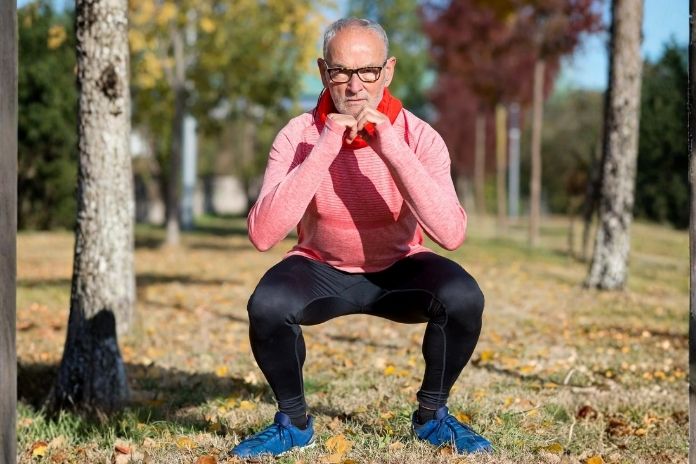
Squats are among the best exercises for over-50s because they train the body’s largest lower-body muscles, including the quadriceps, hamstrings, and glutes. They closely mimic everyday movements such as sitting down and standing up.
For beginners, chair squats are an excellent starting point. Simply standing from a chair and sitting back down builds foundational strength. As fitness improves, box squats and goblet squats with a dumbbell can provide additional challenge.
Hip Hinge and Deadlift Variations
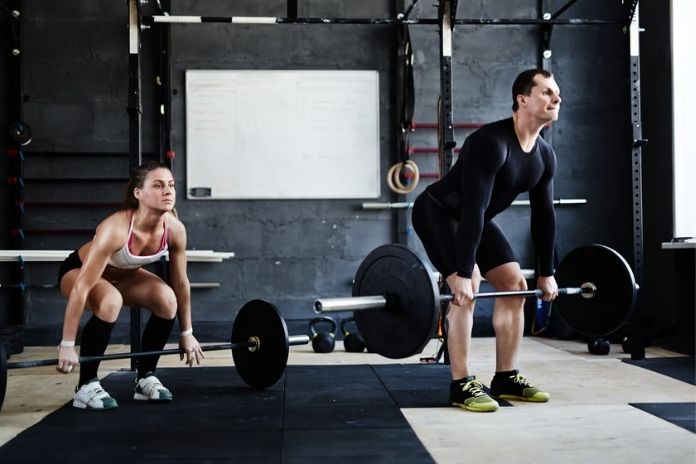
The hip hinge movement pattern strengthens the posterior chain, including the glutes, hamstrings, and lower back. These muscles are critical for power, posture, and fall prevention. Romanian deadlifts and trap bar deadlifts are particularly effective.
The trap bar variation is often recommended for older adults because it places less stress on the lower back while still providing significant strength benefits.
Horizontal and Vertical Pushing Exercises
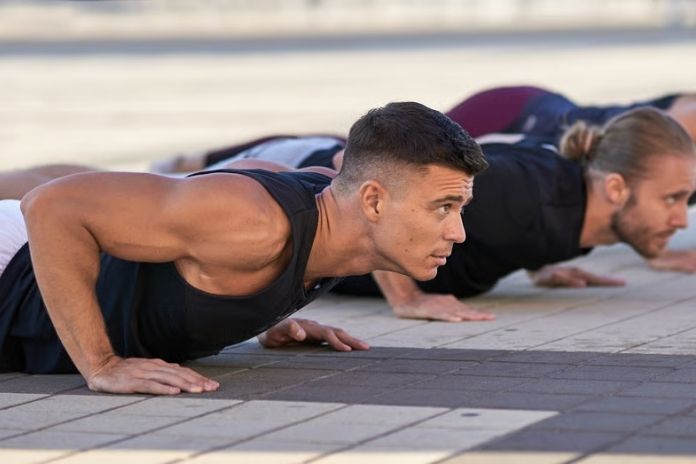
Upper-body pushing strength is essential for many daily activities. Exercises such as wall push-ups, incline push-ups, dumbbell presses, and overhead presses train the chest, shoulders, and triceps.
Wall push-ups offer an accessible starting point for people returning to exercise. As strength improves, progressing to incline push-ups or dumbbell presses can provide greater stimulus for muscle growth and strength development.
Horizontal Pulling Exercises
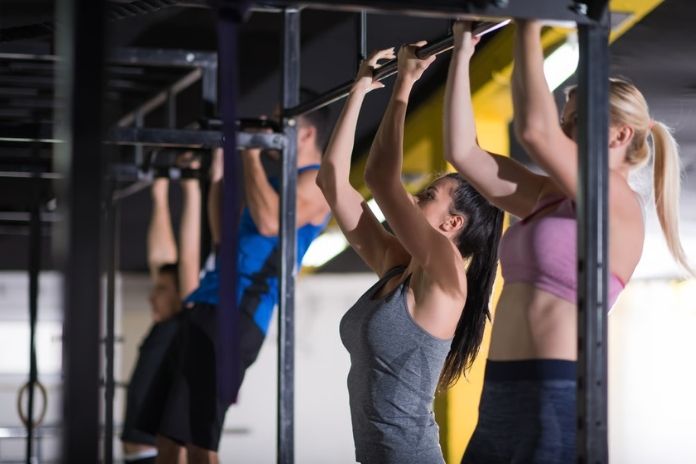
Rows are one of the most valuable yet overlooked exercises for rebuilding muscle after 50. Seated rows, resistance band rows, and dumbbell rows strengthen the upper back, rhomboids, and rear shoulder muscles.
These exercises help counteract the rounded posture that often develops with aging and prolonged sitting. Strong pulling muscles support better posture, shoulder health, and overall functional strength.
For longevity-focused programming, experts recommend using weights that are challenging relative to current ability, incorporating controlled power movements when appropriate, and training through a full range of motion while maintaining spinal stability.
Step-Up With Balance Hold
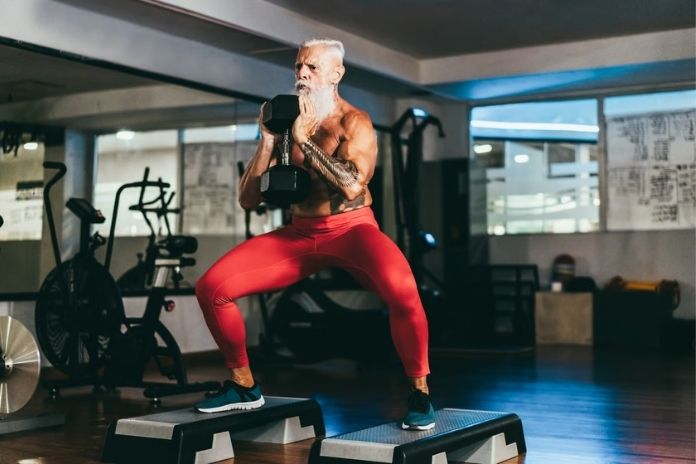
The step-up is unique because it combines lower-body strength and balance training in a single movement. Stepping onto a platform about 15 to 20 centimeters high and pausing for three seconds at the top challenges both muscular strength and coordination.
Because falls often occur during single-leg activities such as climbing stairs or stepping over obstacles, this exercise has strong real benefits.
Balance and Stability Work — the Most Undervalued Component
Falls are the leading cause of injury-related death among adults over 65. Balance often declines with age because of reduced proprioception, changes in the vestibular system, and lower-body weakness. Fortunately, targeted training can improve all three.
Simple balance exercises include standing on one leg, tandem walking along a straight line, and controlled bodyweight lunges. Beginners may start near a wall or sturdy support before progressing to more challenging variations.
Research found that adults who maintained higher levels of physical activity during midlife and later life had a 30 to 45% lower risk of dementia compared with those who were least active. Balance training and aerobic exercise both contribute to long-term brain health.
How to Structure Training After 50 — Practical Guidelines
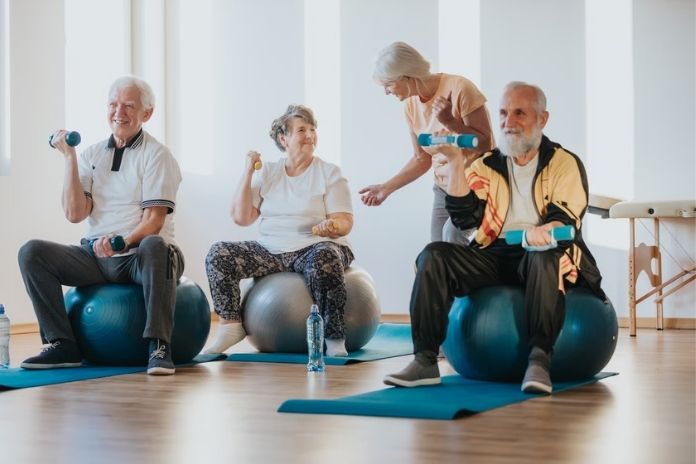
Many people focus on exercises but overlook programming. How you train matters just as much as what you do.
Frequency: Aim for two to three resistance-training sessions per week. Full-body workouts work especially well and allow enough recovery between sessions.
Intensity: Research suggests that training to complete failure is not necessary after age 50. Most people can gain strength and muscle by stopping a few repetitions before failure. Working at roughly 60% to 80% of maximum effort for sets of 8 to 15 repetitions is highly effective.
Progressive Overload: To continue getting stronger, gradually increase resistance, repetitions, or exercise difficulty over time. Progressive overload is the foundation of long-term improvement.
Recovery: Leave at least 48 hours between sessions that target the same muscle groups. Recovery becomes increasingly important because muscle protein synthesis takes longer with age.
Protein Intake: Adequate protein helps overcome anabolic resistance, the reduced responsiveness of muscle tissue to dietary protein. Most research suggests aiming for approximately 1.6 to 2.0 grams of protein per kilogram of body weight each day, spread across three to four meals.
Muscle Memory — Why Starting Later Is Not Starting From Zero
One of the most encouraging discoveries in exercise science is the concept of muscle memory. Research suggests that muscle cells retain nuclei gained during previous training periods, even after long breaks from exercise. As a result, people who were active or athletic earlier in life often regain strength and muscle faster when they resume training.
This does not mean progress is impossible for beginners. Rather, it shows that previous effort continues to provide benefits years later. For many adults over 50, restarting exercise is not beginning from scratch. It is rebuilding from a foundation that already exists.
Read More: 5 Exercises Experts Recommend Most After 50 (Backed by Research)
Conclusion
The science is clear. Much of the weakness that many adults over 50 assume is simply part of aging is actually reversible. Research shows that even small amounts of resistance training can lower all-cause, cardiovascular, and cancer mortality in older adults.
The best exercises for over 50 do not require expensive equipment, athletic experience, or hours in the gym. They require consistency, progressive challenge, and patience. With those ingredients, rebuilding muscle after 50 is not only possible but also easier. It is supported by some of the strongest evidence in exercise science.
FAQs
Q. Can you rebuild muscle after 50?
Yes. Both anecdotal and scientific evidence show that people can build muscle and gain strength after 50, 60, 70, and beyond. Aging may slow the rate of muscle growth and increase recovery needs, but it does not prevent progress. Consistent resistance training, progressive overload, and sufficient protein intake remain the most important factors for success.
Q. How many times a week should someone over 50 lift weights?
Two to three resistance-training sessions per week is the most commonly recommended frequency for adults over 50. This schedule provides enough training stimulus for muscle and strength gains while allowing adequate recovery. At least one rest day between sessions is recommended, and training to complete failure every workout is generally unnecessary.
Q. What is the best exercise to regain strength after 50?
Compound movements such as squats, deadlifts, rows, and presses provide the greatest return on training time because they work multiple muscle groups simultaneously. Step-ups are also highly valuable because they improve both strength and balance. Starting with bodyweight exercises over 50 and gradually adding resistance helps reduce injury risk while building strength safely.
References
- UCLA Health. (n.d.). How much protein do you really need? UCLA Health.
- Rotel Project. (n.d.). Chapter 6: Muscular strength and endurance. In Health and Fitness. Pressbooks.
- Boston University School of Public Health. (2025, April 17). Mid- and late-life physical activity may reduce dementia risk by up to 45%.
- López, P., Taaffe, D. R., Galvão, D. A., Newton, R. U., & Pinto, R. S. (2022). Resistance training effectiveness on strength and physical function in older adults: A systematic review and meta-analysis. Experimental Gerontology, 167, 111971.
- WebMD. (n.d.). Exercises to avoid after 50. WebMD.
- McGrath, R., Loprinzi, P. D., & colleagues. (2025). Resistance training and mortality outcomes among older adults. Archives of Gerontology and Geriatrics, 130, 106018.
In this Article