



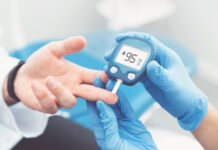










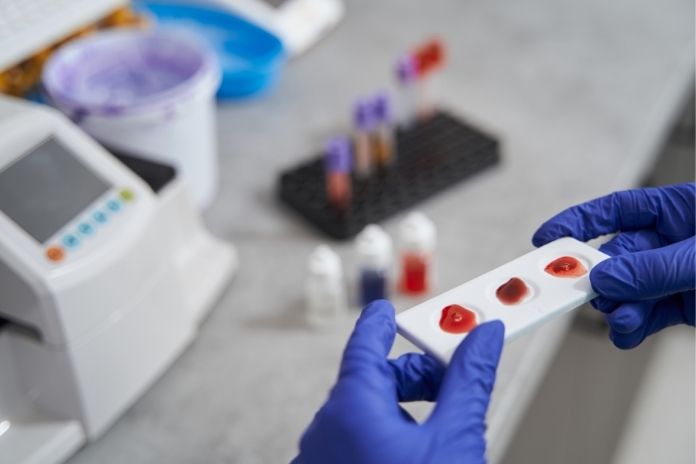
Many people believe one simple blood test can “catch everything early.” It sounds logical; blood goes everywhere in the body, so cancer should show up there also. But the real situation is more complicated. Doctors use routine blood tests every day, but they are not cancer detectors.
Now there is a new type of testing coming, more advanced, looking at DNA fragments in blood. It is getting attention; big studies are happening. But still, confusion exists: can a blood test detect cancer? What works today? What is the future, and what is a misunderstanding? This article makes it clear in a practical way, without overpromising.
- Regular blood tests are not designed to find cancer early.
- They may show indirect warning signs, but most early cancers go unnoticed.
- New multi-cancer blood tests look promising, but still not perfect and not yet routine.
Read More: Just 10 Minutes of Hard Exercise Can Trigger Powerful Anti-Cancer Effects
What a Routine Blood Test Actually Checks, and What It Misses
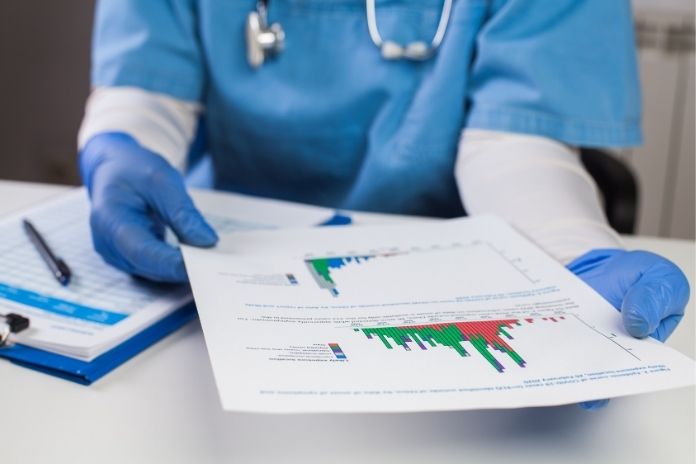
A normal health check blood panel usually includes full blood count (FBC), liver function, kidney function, and sometimes sugar and cholesterol. These tests are made to see how body systems are working, not to search for cancer. They measure things like red blood cells, white cells, enzymes, and waste products.
If something abnormal comes up, the doctor may suspect a problem. But this is indirect. “There is no one blood test that can say with certainty, ‘You have cancer,’” Dr. Adriana Maria Knopfelmacher Couchonal, a specialist in laboratory medicine, says. “You can only confirm it by examining cells or tissue under a microscope.”
For example:
- Low hemoglobin (anemia) can sometimes lead to the discovery of bowel cancer
- High white cells may point toward blood cancers like leukemia
- A liver enzyme rise might trigger a scan that shows a tumor
But here is an important point: these are side signals, not detection. Most early cancers grow quietly. They don’t change blood values much at the start. So a normal blood report does not mean “no cancer.” Many people misunderstand this. Routine tests are not screening tools for cancer. They were never designed for that purpose.
Blood Tests Specifically Designed for Cancer Detection: Tumor Markers
Some blood tests are actually linked to cancer. These are called tumor markers. They measure specific proteins made by cancer cells or sometimes normal cells reacting to cancer. Common ones include:
- PSA (Prostate-Specific Antigen), used in prostate cancer screening
- CA-125, linked with ovarian cancer
- CEA (Carcinoembryonic Antigen), used in colorectal cancer follow-up
- AFP (Alpha-fetoprotein) is associated with liver cancer
These tests sound useful, but reality is limited:
First Problem: They are organ-specific. One test cannot detect multiple cancers.
Second Problem: False positives in cancer blood tests. Levels can increase even without cancer, infection, or inflammation, even in normal conditions.
“If the scans are stable but the tumor markers bounce around, I’ll know they’re not useful,” a breast cancer oncologist and researcher, Dr. Natasha Hunter, said. “But if they only rise when the cancer starts growing, that gives me a sense they’re useful in that person.”
The third problem with this blood test for early cancer detection is poor early detection. Many cancers don’t raise these markers in the early stage. Because of this, doctors rarely use these tests alone for screening. They are more useful after diagnosis to monitor treatment or recurrence.
So even though these tests have existed for many years, they have never solved the “early detection for everyone” problem.
The New Frontier: Multi-Cancer Early Detection Blood Tests
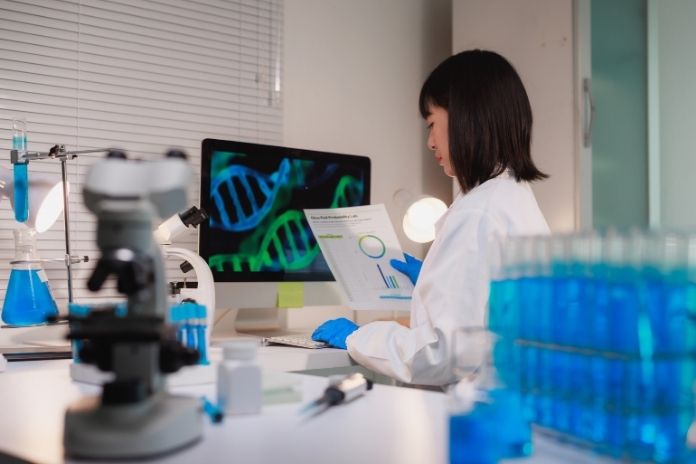
Now comes the new category: multi-cancer early detection (MCED) tests. This is where real scientific progress is happening. Instead of looking for proteins, these tests analyze circulating tumor DNA (ctDNA). Cancer cells release tiny DNA fragments into the bloodstream. These fragments carry abnormal patterns, especially something called DNA methylation.
MCED tests try to read these patterns and identify if a cancer signal is present, and sometimes even where it started. This is a different way of thinking. Not organ-specific. One test, many cancers.
Some studies are already showing strong results. One large study found detection of around 79% of early-stage cancers across multiple types. Also, false positives were relatively low, which is important.
The PATHFINDER 2 study, which included more than 35,000 adults, looked at how this works in real screening settings. It showed these tests can detect cancers that current screening methods miss, like pancreatic or ovarian cancers. But it also showed limitations. Many cancers were still missed.
Another interesting finding: when combined with standard screening (like mammography or colon screening), these tests found more cancers than screening alone. Not a replacement, but an addition.
There is also a REACH trial going on, a very large study with around 140,000 participants. Results expected soon. That will give a clearer answer about the real-world benefit. Still, these tests are not routine yet. Availability is limited. The cost is also high. And doctors are still cautious, because detecting a signal is not the same as diagnosing cancer.
How Accurate Are Cancer Blood Tests? The Honest Limitations
Accuracy in testing is not a simple “yes or no.” It has two parts:
- Sensitivity:How often the test finds cancer when it is present
- Specificity:How often the test avoids false alarms
MCED tests are good in specificity, meaning fewer false alarms compared to older tumor markers. That is a positive development. But sensitivity is uneven. Early cancers release less DNA into the blood. So detection becomes difficult. Some cancers show clearly; some are almost invisible. This leads to two major concerns:
False Negatives: The test says no cancer, but cancer exists. This is risky if a person feels safe and ignores symptoms.
False Positives: The test shows a cancer signal, but no tumor is found. This creates anxiety, extra scans, and sometimes invasive procedures. In trials, managing patient anxiety has become a real issue. People get results saying “signal detected,” but with no clear tumor location.
Then multiple tests follow. So, current understanding: MCED tests are helpful but not definitive. They add information, not a final answer to cancer blood test accuracy.
What Does a Positive Cancer Blood Test Result Mean?
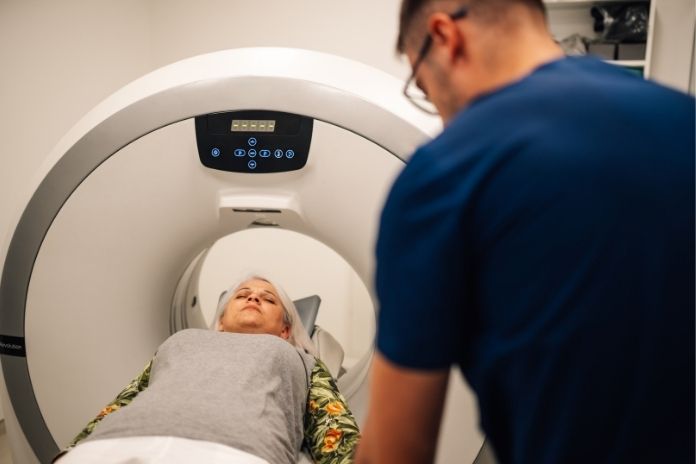
A positive result does not mean “you have cancer.” It means a signal is detected that needs further investigation. Next steps usually include imaging, CT scan, MRI, and sometimes a PET scan. If something suspicious appears, then a biopsy is done to confirm.
There was a study where early cancers detected through blood testing were treated successfully, and patients remained cancer-free for years. That shows a potential benefit: catching a disease earlier can improve outcomes.
But there is also another scenario. The test shows a signal, but the imaging shows nothing. This is a confusing situation. It does not always mean the test is wrong. Sometimes a tumor is too small to be seen.
In such cases, doctors may suggest monitoring and repeat testing after some time. So, the interpretation of the result needs careful clinical judgment. It is not a simple positive-negative situation.
When to Ask Your Doctor About Cancer Blood Testing

Right now, these tests are not a standard recommendation for the general population. But some people may consider discussing it with a doctor. Situations where it may come up:
- Age above 50 and interested in additional screening
- Strong family history of cancer, but no specific genetic mutation found
- Concern about cancers that have no routine screening options
But one important rule: these tests should not replace standard screening methods. Mammography, colon screening, cervical screening, and lung CT for high-risk individuals: these are proven tools. They have strong evidence behind them. Blood-based tests are still evolving. They may become routine in the future, but not yet.
Read More: ‘Liquid Biopsy’ for Early Detection of Cancer, New Study Suggests
Final Thoughts
The idea of “one blood test to detect cancer early” is very attractive. Science is slowly moving in that direction, but is not fully there. Routine blood tests are not cancer detectors. They are general health tools. Tumor marker tests exist but have limitations.
MCED tests are promising, maybe the biggest shift in cancer screening in decades. But still incomplete. They detect some cancers early, miss others, and sometimes create uncertainty. So, the current reality is mixed.
Progress is real, but expectations should be realistic. Early detection still depends on a combination of awareness of symptoms, proper screening, and, now slowly, advanced blood testing as an added layer.
- Routine blood tests are not designed for cancer detection and miss most early-stage cancers.
- Tumor marker tests are limited by false positives and poor early sensitivity.
- MCED blood tests for cancer screening represent a major shift but are not yet reliable enough for standalone screening.
- A negative cancer blood test cannot show cancer; symptoms still matter.
- Research gap remains in improving early-stage sensitivity and reducing diagnostic uncertainty after positive signals.
References
- Buchanan, A. H., Lennon, A. M., Choudhry, O. A., Elias, P. Z., Rego, S. P., Sadler, J. R., Roberta, J., Zhang, Y., Flake, D. D., Salvati, Z. M., Wagner, E. S., Fishman, E. K., Papadopoulos, N., & Beer, T. M. (2024). Multi-year clinical outcomes of cancers diagnosed following detection by a blood-based multi-cancer early detection (MCED) test. Cancer Prevention Research, 17(8), 349–353.
- Cohen, J. D., Li, L., Wang, Y., Thoburn, C., Afsari, B., Danilova, L., Douville, C., Javed, A. A., Wong, F., Mattox, A., Hruban, R. H., Wolfgang, C. L., Goggins, M. G., Dal Molin, M., Wang, T.-L., Roden, R., Klein, A. P., Ptak, J., Dobbyn, L., & Schaefer, J. (2018). Detection and localization of surgically resectable cancers with a multi-analyte blood test. Science, 359(6378), 926–930.
- Neal, R. D., Johnson, P., Clarke, C. A., Hamilton, S. A., Zhang, N., Kumar, H., Swanton, C., & Sasieni, P. (2022). Cell-Free DNA–Based Multi-Cancer Early Detection Test in an Asymptomatic Screening Population (NHS-Galleri): Design of a Pragmatic, Prospective Randomised Controlled Trial. Cancers, 14(19), 4818.
- Vittone, J., Gill, D., Goldsmith, A., Klein, E. A., & Karlitz, J. J. (2024). A multi-cancer early detection blood test using machine learning detects early-stage cancers lacking USPSTF-recommended screening. Npj Precision Oncology, 8(1), 1–6.
In this Article