















One of the best strategies to promote long-term heart health is regular exercise. However, many people continue to wonder how much exercise for a healthy heart is actually enough. Do you require strenuous exercise, or is strolling enough? How do you strike a balance between effort and overdoing it?
In this article, we’ll break down how much exercise you need, explore the weekly exercise guidelines adults should follow, explain the difference between moderate and vigorous activity, and show you how to build a realistic weekly routine.
You’ll also learn about the best exercise for heart health, how movement affects blood pressure, cholesterol, and overall cardiovascular fitness, and how to get started safely.
- Aim for 150 minutes of moderate exercise weekly or 75 minutes of vigorous activity.
- Combine cardio + strength training for the best heart benefits.
- Even brisk walking daily can improve blood pressure, cholesterol, and stamina.
Read More: Heart-Healthy Exercise Gear: 6 Essential Equipment for Exercising for Heart Health
How Much Exercise Is Recommended for a Healthy Heart?
One of the most crucial things you can do to strengthen your heart and lower your risk of developing certain conditions, such as diabetes, heart disease, and stroke, is to engage in physical exercise.
Regular exercise greatly enhances your physical and emotional well-being. Exercise’s immediate advantages can increase brain activity and lessen anxiety’s transient sensations. A minimum of 150 mins of moderate-intensity aerobic activity, 75 mins of vigorous-intensity aerobic activity, or a mix of the two is recommended by the American Heart Association (AHA).
Anything that raises your heart rate, like cycling, swimming, or walking, is considered an aerobic activity. It’s not necessary to work out for 150 mins in a single day. You are welcome to split your exercise however you see fit.
For instance, you might find that 30 minutes a day, five times a week, is sufficient. Make sure you’re getting at least the suggested levels of physical activity, regardless of how many days or minutes you choose to fit in your workout. Daily exercise is beneficial for the heart, and achieving 300 mins of physical activity per week can provide even greater benefits.
What Types of Exercise Help the Heart Most?
A comprehensive exercise regimen incorporates various forms of movement, all of which are critical for heart and general health.
Aerobic Workout
The largest muscles in your body, such as those in your arms and legs, are worked during aerobic exercise, which makes you feel warm and a little breathless. By improving the function of your heart and circulatory system, aerobic exercise increases your capacity to perform daily chores without experiencing fatigue or dyspnea.
Additionally, it might enhance your emotional health and sleep quality. Your heart rate increases with these exercises. Your heart’s endurance increases with walking, swimming, or cycling at a comfortable pace. You can gradually increase the duration or the intensity of these activities as they become simpler.
Strength Training, or Resistance Training
The impact of resistance training on body composition is more focused. It can help people lose fat and gain leaner muscle mass if they have a lot of body fat, notably a large belly, which is a risk factor for heart disease.
According to research, combining weight training with aerobic exercise may help lower LDL (bad) cholesterol and increase HDL (good) cholesterol. Do strength training for at least 2 or 3 days a week, ideally spacing sessions so you have at least 1 day to recover between them.
Balance, Flexibility, and Stretching
Stretching and other flexibility exercises don’t immediately improve heart health. They improve musculoskeletal health, allowing you to maintain flexibility and avoid joint pain, cramping, and other muscular problems. Maintaining resistance training and aerobic activity needs this flexibility.
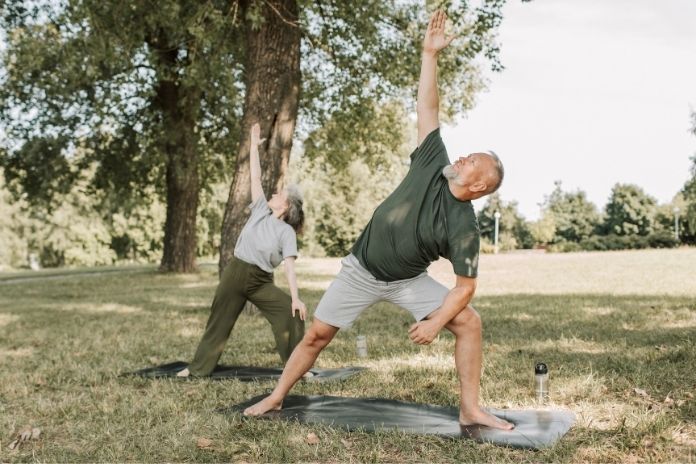
Incorporate balance and stretching exercises into your regimen. These exercises help you stay mobile as you age, improve circulation, and reduce your risk of injury. Stretching after your workout, practicing tai chi, or holding basic yoga positions is beneficial for heart health.
What Counts as Moderate vs Vigorous Exercise?

Understanding intensity helps you achieve your weekly goals.
Moderate Intensity Signs
Moderate-intensity exercise includes activities where:
- You can still speak, but your breathing quickens
- You’re a little warm
- You might sweat a little
For instance:
- Walking fast
- Cycling at night
- Swimming casually
Vigorous Intensity Signs
Exercise at a high intensity strains your body:
- Breathing quickens
- Talking is restricted to brief sentences
- The heart rate rises dramatically
For instance:
- Jogging
- High-intensity cycling
- Quick swimming
Read More: Why Swimming May Be the Best Exercise for Your Heart, According to Research
How Exercise Helps Your Heart Over Time
One of the most important aspects of living a long and healthy life is maintaining heart health. The body as a whole benefits when the heart is healthy, as it pumps blood and oxygen to vital organs.
One of the best strategies to promote and enhance cardiovascular health is regular exercise. Regular physical activity has very significant benefits for heart health, whether you are just beginning your fitness journey or looking to improve your routine.
Exercise to Lower Blood Pressure: One of the main risk factors for heart disease is high blood pressure, or hypertension. One of the best and most natural ways to lower blood pressure is through regular exercise. Brisk walking and cycling are examples of aerobic exercise that can dramatically reduce systolic and diastolic blood pressure, thereby lowering the risk of heart attack and stroke.
Exercise’s Contribution to Cholesterol Management: A healthy heart is largely dependent on cholesterol levels. Heart disease results from the buildup of plaque in arteries, caused by high LDL (bad cholesterol) and low HDL (good cholesterol). Regular exercise increases HDL cholesterol, lowers LDL cholesterol, and improves triglyceride levels, all of which help maintain cardiovascular health.
Enhancement of Blood Flow and Circulation: Exercise helps the heart pump blood more effectively, improving circulation to deliver oxygen and nutrients to essential organs and tissues. Maintaining a regular exercise regimen also helps the blood vessels become more flexible, reducing the effort the heart must exert to pump blood.
Weight Management and Prevention from Obesity: One of the primary causes of heart disease is obesity. High blood pressure, high cholesterol, and type 2 diabetes are all consequences of excess body fat that raise the risk of cardiovascular problems. The secret to controlling weight and avoiding obesity is regular exercise.
Reducing Stress and Inflammation: Oxidative stress and inflammation are the primary drivers of most cases of heart disease. Prolonged inflammation damages blood vessels and can cause atherosclerosis by forming plaque in the arteries. By increasing antioxidant synthesis, which helps shield the heart from cellular damage, exercise lowers oxidative stress and inflammation.
Is Walking Enough for a Healthy Heart?

One easy strategy to preserve or enhance your cardiovascular health is to walk. It’s cost-free. You don’t require any specialized knowledge or tools. It offers numerous extra psychological and physical advantages and is among the safest forms of physical activity.
“Walking has been essential to human health and survival. But we’ve been living a sedentary lifestyle for the past 100 years, and it’s led to higher rates of heart disease, stroke, heart attacks, high blood pressure or hypertension, and high cholesterol,” says Hicham Skali, MD, MSc, a Mass General Brigham cardiologist who treats patients at Brigham and Women’s Hospital.
“Walking is one of the necessary functions of our bodies, and it can help prevent those conditions,” he adds.
Walking quickly is sometimes overlooked as exercise, yet it can improve your heart health, increase your stamina, and burn extra calories. Walking for hours is not necessary. The physical activity guidelines for persons aged 19 to 64 recommend 150 minutes of exercise each week, and a brisk 10-minute daily stroll provides many health benefits.
How to Start Safely If You’re Currently Inactive
Begin With Manageable Goals
If you haven’t done anything:
- Start with ten minutes every day
- Every week, progressively increase
- Pay attention to uniformity
Choose Activities You’ll Actually Continue
Consistency is mostly dependent on enjoyment. Select:
- Things you enjoy doing
- Easy routines
- Reasonable schedules
Use Progress Markers Beyond Weight
Monitor advancements in:
- Levels of energy
- Endurance
- Mood
- Blood pressure variations
Read More: 8 Heart Warning Signs During Exercise You Should Never Ignore, According to Cardiologists
Can You Exercise Too Much?

When you work out too hard and for too long without getting enough rest, you are overexercising. Injury is more likely as a result. Exercises that put too much strain on your body can lead to overuse injuries. You are pushing yourself beyond your limits by exercising in a method that does not increase muscle strength.
It puts the body at risk for injuries that complicate healing. Additionally, it may result in pain and soreness, which could cause harm. Exercise is essential for both adults and children, according to the U.S. Department of Health and Human Services’ Physical Activity Guidelines for Americans.
According to these recommendations, you should aim to engage in some level of physical activity each day. Depending on your age and general health, the intensity at which you perform this should fall between moderate and high.
The U.S. Centers for Disease Control and Prevention estimates that healthy individuals need 150 minutes of moderate physical activity per week. Tailor your workout routine to fitness goals and athletic ability. Make sure to pace yourself if you are beginning to exercise or if you already have a health problem.
When to Talk With a Healthcare Professional Before Starting
If you already have heart disease or notice symptoms like a racing heart, dizziness, sudden shortness of breath, or chest pain, talk to your doctor before you start any new workout routine. If you’re dealing with a chronic condition like diabetes, high blood pressure, kidney disease, or arthritis, you’ll probably need a plan tailored to you that still fits the recommended activity guidelines.
If you’ve been inactive for a while, it’s safer to ease in and get some supervision at first. That way, you can make steady progress without putting yourself at risk.
Simple 7-Day Heart-Healthy Exercise Plan

Beginner Example
- Walking for heart health for five days (20–30 minutes)
- 2 days of light resistance training
- Every day breaks for movement
This plan aligns with the weekly exercise guidelines for adults
Intermediate Example
- Three days of vigorous cycling or walking
- Strength exercise for two days
- Interval training for one day
- One day of active recuperation
This combination enhances both cardiovascular fitness and endurance.
Read More: How to Exercise Safely After a Heart Attack, and Why Your Life May Depend On It
Conclusion
Developing a heart-supporting regimen doesn’t involve strenuous exercise or intricate schedules. Knowing how much exercise for a healthy heart and maintaining consistency over time are very crucial. Every type of exercise, whether it’s weight training, cycling, or walking, improves circulation, boosts energy, and promotes long-term well-being.
Start small if you need to, and take your time building up. Focus on activities you actually enjoy you’re much more likely to stick with them that way. Heart-healthy exercise isn’t about being perfect; it’s about building habits you can keep up for the long haul.
References
- Jennifer Illig, PA-C. (February 19, 2025). Physical activity for better heart health.
- National Heart, Lung, and Blood Institute. Heart-healthy living: Get regular physical activity.
- Helen Alexander. (6 March 2026). Best exercises for heart health.
- Johns Hopkins Medicine. 3 kinds of exercise that boost heart health.
- Julie Corliss. (January 1, 2023). The many ways exercise helps your heart.
- Hicham Skali. (Febuary 21, 2025). Walking for Heart Health.
- National Health Service. (2022, December 15). Walking for health.
- UPMC HealthBeat. (2024, February 5). Can you exercise too much? What excessive exercise does to your body.
- Orlando Health. (September 01, 2021). How much exercise is too much?
In this Article