



















Psoriasis can be much more than just a skin problem, despite what many people believe. Your body may be alerting you to something more if you’ve been noticing scaly areas and have recently had tight joints or painful knees. In some cases, this combination suggests psoriatic arthritis, a condition in which immune-mediated inflammation affects both the skin and joints.
This article will discuss the psoriasis and arthritis connection, the causes of psoriasis joint pain, how to recognize psoriatic arthritis symptoms, and what your knee discomfort might be telling you. Additionally, we’ll discuss diagnosis, available treatments, and when to seek medical attention.
- Psoriasis can affect joints, leading to psoriatic arthritis with pain, stiffness, and swelling, especially in the knees.
- Early signs include nail changes, fatigue, swollen joints, and morning stiffness lasting over 30 minutes.
- Early diagnosis and treatment help prevent joint damage and improve long-term mobility.
Read More: When Should You Change Your Psoriasis Treatment? Signs It’s Not Working Anymore
How Psoriasis Affects More Than the Skin
Although psoriasis is often perceived as a skin disease, it is actually a chronic autoimmune disease that affects many parts of the body. Raised, red areas coated in silvery scales are the hallmark of psoriasis. These areas may cause pain, discomfort, and itching.
Although they can appear anywhere on the body, they are most common on the scalp, elbows, knees, and lower back, as well as the nails. These skin alterations are the most obvious symptoms, but they don’t provide a complete picture.
A hyperactive immune system accelerates cell turnover, which leads to skin accumulation and psoriasis. However, inflammation can cause psoriasis to spread beyond the skin and affect both the cardiovascular system and the joints.
Psoriatic arthritis, which causes joint pain, stiffness, and swelling, can develop in up to one-third of people living with psoriasis. Psoriatic arthritis can cause long-term joint damage if left untreated.
To maintain mobility and lessen discomfort, early detection and treatment are crucial. So if you’re wondering, does psoriasis affect joints? The answer is yes, in some individuals, it absolutely can.
What Is Psoriatic Arthritis?
Psoriatic arthritis (PsA) is an immune system-related chronic (long-lasting or recurrent) condition. Your joints and entheses, the locations where tendons and ligaments attach to bones, become swollen, painful, and stiff as a result. Psoriatic arthritis can appear at any age. The likelihood of getting psoriatic arthritis is independent of the severity of your psoriasis (mild, moderate, or severe).
Psoriasis usually precedes psoriatic arthritis, and about one in three people with psoriasis also have psoriatic arthritis. Although psoriatic arthritis affects up to 2.4 million Americans, over 15% of people living with psoriasis may also have undiagnosed psoriatic arthritis.
Why Knee Pain Is Common in Psoriatic Arthritis

People who already have psoriasis, a disorder that creates red, scaly skin patches, are more likely to develop psoriatic arthritis, a kind of inflammatory arthritis. The joints are the primary sites of inflammation in PsA, leading to pain, stiffness, edema, and decreased function. It might be difficult to walk, bend, or perform everyday tasks when the knees are affected.
The pain can vary from very minor discomfort to crippling. The inflammation of the synovium, the lining of the joints, is the root cause of knee discomfort in PsA. Chronic inflammation can worsen pain and limit movement by causing bone erosion and cartilage loss. A more permanent loss of function may result from the joint becoming distorted over time.
Signs Your Knee Pain May Be Linked to Psoriasis
The symptoms of psoriatic arthritis are not universally defined. The illness usually manifests as a range of symptoms that differ from person to person. Keep an eye out for these potential early indicators of psoriatic arthritis if you have psoriasis or other psoriatic arthritis risk factors, especially if you have many symptoms:
- Scaly areas of silvery white skin or a thick, red rash
- Warm, swollen, painful, and stiff joints (either small ones in your fingers or big ones like your knees)
- Fatigue
- Eye inflammation, which results in redness and blurry vision
- Alterations to your nails, such as nails that separate from the nail bed or pitting, which are tiny dents on the surface
- Enlargement of the entire finger or toe, not just the joint, that resembles a sausage
- Swelling of the tendons and ligaments in the foot and heel is the cause of foot discomfort
Read More: What Is Nail Psoriasis? Symptoms, Causes, and Treatment Explained
Other Clues That Suggest Psoriatic Arthritis
Here’s a closer look at certain PsA symptoms that could go unnoticed and what you should know about them:
Nail Problems: It’s worthwhile to examine your nails if you have psoriasis but have not yet received a diagnosis of psoriatic arthritis (PsA) or if you have any unexplained joint pain without skin problems. About 80% of persons with psoriasis have nail pitting, which is one of the most prevalent and early symptoms of PsA.
Eye Problems: Red eyes, changes in vision, and especially painful eyes are concerning in PsA. These are signs of uveitis, or inflammation of the uvea, the central layer of the eye.
Breathlessness: Sadly, atherosclerosis, heart attacks, and strokes are more common in patients with PsA. One explanation is that PsA is more prevalent in those with metabolic syndrome, a group of disorders that includes obesity, high blood pressure, and high cholesterol.
Swollen Digits: PsA can cause fingers or toes to swell so much that they resemble sausages, even before doctors identify any joint issues. About half of PsA patients develop dactylitis at some point during the illness, which is often an indication of joint injury.
Back Pain: PsA is known to cause inflammation and stiffness in the hand, wrists, feet, knees, and ankles, but it can also affect other parts of the body.
Psoriasis vs. Wear-and-Tear Knee Pain: Key Differences

Psoriatic knee pain is sometimes mistaken for common knee conditions, such as osteoarthritis. The inflammatory nature of psoriatic arthritis is the primary indicator. It indicates that you frequently experience severe stiffness that lasts more than 30 minutes, particularly in the morning.
Inflammatory vs. Mechanical Pattern:
- Psoriatic knee pain is sometimes mistaken for osteoarthritis, but its inflammatory nature is a key indicator; it often causes severe stiffness lasting more than 30 minutes, especially in the morning.
- Osteoarthritis-related joint discomfort also causes stiffness, but it usually improves with activity.
Enthesitis & Dactylitis Pattern:
- Enthesitis, or inflammation where tendons or ligaments attach to bone, can cause pain in areas like the bottom of the foot (plantar fasciitis) or the back of the heel (Achilles tendon).
- Dactylitis may occur, where an entire finger or toe swells and looks like a small sausage.
Skin and Nail Changes:
- Psoriasis may appear as red, swollen skin covered with silvery scales, commonly on the lower back, elbows, knees, and scalp.
- Psoriatic arthritis may also affect nails, leading to pitting, discoloration, or detachment from the nail bed.
Systemic Symptoms:
- Psoriatic arthritis can sometimes cause systemic symptoms such as fatigue, fever, and general malaise.
- These symptoms are less common compared to typical joint aches but may still occur alongside joint issues.
Read More: Top 8 Psoriasis Creams: Soothing Skincare Solutions for Flare-Ups
When Joint Symptoms Can Appear
The onset of joint complaints varies greatly:
- Years after experiencing skin complaints, many patients develop joint problems.
- Some people go through both at the same time.
- A lower percentage of people experience joint pain before any obvious psoriasis.
Why Early Evaluation Matters
Early detection of psoriatic arthritis symptoms can significantly improve outcomes:
Preventing Joint Damage: Irreversible joint damage and deformity can result from untreated inflammation.
Enhancing Symptom Control: Early treatment reduces psoriasis-related joint pain and improves mobility.
Increasing Treatment Alternatives: There are more options for managing chronic inflammation when treatment starts earlier.
Improved Long-Term Mobility: Early inflammation management helps maintain joint health and quality of life.
How Doctors Diagnose Psoriatic Arthritis
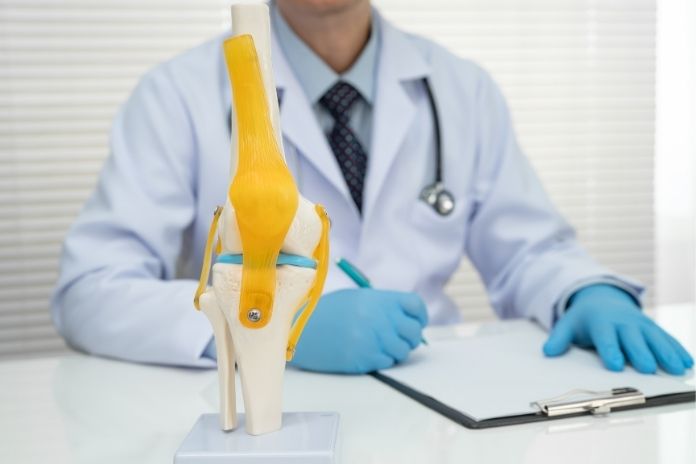
Your healthcare provider will probably begin with a physical examination to determine whether you have psoriatic arthritis. Your healthcare provider may do the following during the visit:
- Check for soreness or swelling in your joints.
- Look for peeling or pitting in your fingernails.
- Check for uncomfortable places by applying pressure to the undersides of your feet and the area surrounding your heels.
Psoriatic arthritis cannot be diagnosed with a single test. However, other conditions, such as gout or rheumatoid arthritis, can be ruled out with various tests.
Imaging Examinations:
- X-rays can reveal joint abnormalities that are typical of psoriatic arthritis but not of other forms of the disease.
- MRI scans produce finely detailed images of soft tissue, joints, and bones. These scan are very particular in useful for examining the tendons and ligaments in the lower back and feet.
Tests in the Lab:
- The rheumatoid factor (RF) test looks for an antibody that is present in patients with rheumatoid arthritis. Your doctor may be able to confirm psoriatic arthritis if the antibody is absent.
- In a joint fluid test, a tiny sample of fluid is collected from a swollen joint, usually the knee, using a needle. You may develop gout if uric acid crystals are present in the fluid. Gout and psoriatic arthritis can coexist in certain individuals.
Read More: 15 Stress Management Tips For Psoriasis – Know The Details
Treatment Approaches That Address Skin and Joints
The following are typical therapies for PsA knee pain:
Nonsteroidal anti-inflammatory drugs (NSAIDs): These may not treat the underlying problem, but they can help control pain and reduce inflammation.
Disease-Modifying Antirheumatic Drugs (DMARDs): Drugs such as methotrexate help reduce inflammation and slow disease progression.
Biologic Agents: These medications target specific components of the immune system that drive inflammation.
Physical Therapy: Targeted stretches and exercises help lessen stiffness and increase range of motion.
Joint Injections: Steroid injections can temporarily relieve pain.
When to Seek Medical Advice

Don’t disregard joint symptoms if you have psoriasis. Seek medical attention if you encounter:
- Joint stiffness brought on by persistent psoriasis
- Swelling that persists for several days or longer
- Psoriasis and new knee pain
- Decreased function or mobility
Read More: Manage Psoriasis With Essential Oils
Conclusion
Psoriasis is more than just a superficial ailment; it can indicate a more serious health issue, like joint involvement. It’s very critical to identify the early psoriatic arthritis symptoms, particularly if you experience ongoing pain, swelling, or stiffness in your knees or other joints.
Joint pain that appears typical of psoriasis may actually indicate persistent inflammation that requires prompt treatment. You can take proactive measures to support early diagnosis and efficient management by recognizing the relationship between skin and joint health.
In addition to helping manage symptoms, timely medical consultation can help prevent long-term joint damage.
References
- Harvard Health Publishing. (2019, June 20). Psoriasis: More than skin deep.
- National Psoriasis Foundation. (2021, February 3). Psoriatic disease affects more than skin and joints.
- National Psoriasis Foundation. (March 24, 2026). About Psoriatic Arthritis.
- Jessica Brown. (08 January, 2022). Psoriatic Arthritis Symptoms You Can’t Afford to Ignore.
- UCLA Health. (2023, June 9). Early signs and symptoms of psoriatic arthritis.
- National Institute of Arthritis and Musculoskeletal and Skin Diseases. (2024, August). Psoriatic arthritis.
- Maria Lissandrello. (14 April, 2023). The “Other” Symptoms of Psoriatic Arthritis.
- Urban Beat. (January 6, 2026). Psoriatic Arthritis Vs. Joint Pain: What’s The Difference?
- Sarah Winfrey. (February 9, 2024). Psoriatic Arthritis and Osteoarthritis: 6 Differences and 2 Similarities.
- Mayo Clinic. (September 19, 2025). Psoriatic arthritis.
- National Institute of Arthritis and Musculoskeletal and Skin Diseases. (2024, August). Psoriatic arthritis: Diagnosis, treatment, and steps to take.
- ARPwave. Psoriatic arthritis knee pain and how ARPwave can help.
In this Article