
















You leave the house looking put together. By noon, you catch yourself in the office bathroom mirror and wonder what happened. Your skin is dry, your hair is flat or oddly greasy, and your face is dull and on the verge of breaking out.
The office air theory went viral after people started naming this exact experience and realizing how universal it feels. But is it really the air? Or are we misattributing normal daily changes? Scientists and dermatologists say the answer is more nuanced. The environment plays a real role, but it is only part of the picture.
In this article, we break down what the office air theory actually is, the science behind why your skin, hair, and energy shift during the workday, and the role of indoor air quality, humidity, and pollutants. We also look at the opinions of skeptics regarding circadian rhythms and lighting, identify the most affected individuals, and explore ways to mitigate the effects of office environments.
- Office environments can genuinely affect how you look and feel, with symptoms like dry skin, dullness, and fatigue linked to indoor air conditions such as low humidity, poor ventilation, and CO₂ buildup.
- The main environmental triggers are low humidity, increasing moisture loss, recirculated air raising CO₂ levels, and exposure to VOCs from office materials and cleaning products.
- Daily biological changes like circadian rhythms and lighting also influence appearance, but office conditions tend to amplify these effects rather than being the sole cause
Read More: How to Prevent Digital Eye Strain: Tips for Office Workers
What Is the Office Air Theory?
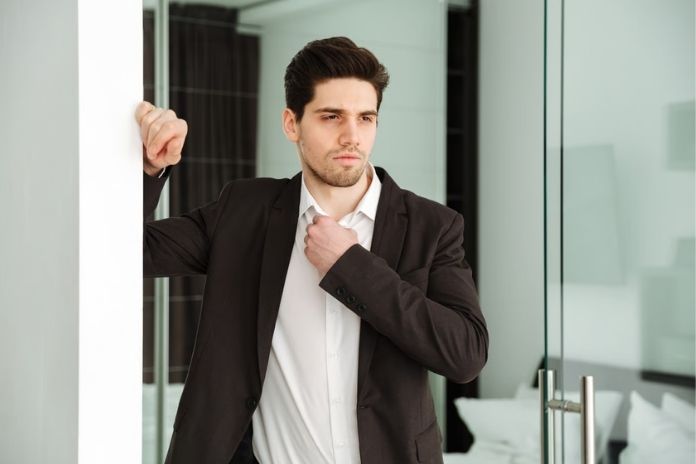
The office air theory started with TikTok creator Noa Donlan in early 2026. She described a pattern she first noticed in college and later in full-time office environments. After spending hours in recirculated indoor air, her appearance seemed to deteriorate by midday.
She described leaving home looking normal and by noon noticing dry skin, flat hair, and a general sense of not looking like herself. The response was immediate and widespread. Thousands of workers shared similar experiences, including chapped lips, sudden breakouts, puffy eyes, and hair falling flat despite being freshly washed.
The central idea is simple. Office air conditioning and ventilation systems are responsible. But while the experience is widely recognized, experts say the explanation is not quite that straightforward.
The Science That Supports It — Sick Building Syndrome Is Real
The experience aligns with Sick Building Syndrome (SBS), recognized by the World Health Organization in 1984. SBS describes a pattern of symptoms, including headaches; eye, nose, and throat irritation; skin dryness; fatigue; and difficulty concentrating, that occur in specific indoor environments and improve after leaving them.
Dr. Primrose Freestone, a microbiologist at the University of Leicester, says, “It’s suspected that one cause of sick building syndrome is malfunctioning air conditioners,” adding, “When an AC unit isn’t working properly, it can release allergens, chemicals, and airborne microorganisms into the air that it would normally have trapped.”
That improvement after leaving is clinically significant. If the cause were purely internal, such as circadian rhythm changes, symptoms would not resolve specifically upon exiting the building.
Experts describe a common three-part issue in offices. Low humidity, insufficient filtration, and increased CO₂ levels often occur together. These combined factors influence not only comfort but also how the skin barrier functions, how hair behaves, and how alert or fatigued a person feels across the day.
The Three Environmental Culprits — What’s Actually in Office Air
Low Humidity And Trans-Epidermal Water Loss
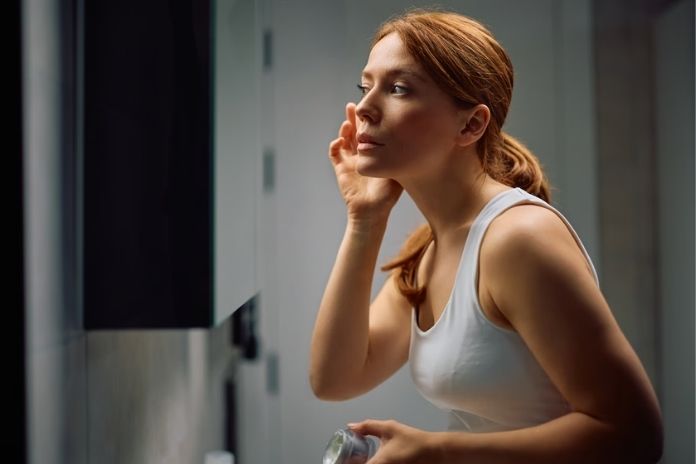
Most offices maintain humidity levels between 20 and 30 percent, which is significantly below the 40 to 60 percent range considered optimal for skin health. When humidity drops, trans-epidermal water loss (TEWL) increases. This means water evaporates more quickly from the skin’s outer layer, weakening the barrier.
As the barrier becomes compromised, skin appears dull, tight, and more reactive. At the same time, the skin may increase its oil production to compensate. This phenomenon explains the commonly reported experience of feeling both dry and greasy at once.
Hair responds similarly. Reduced environmental moisture causes the hair shaft to lose hydration, lifting the cuticle. Depending on hair type, this process can lead to frizz, flatness, or a weighed-down appearance.
Recycled air, CO₂ buildup, and VOCs
Most office HVAC systems recirculate indoor air rather than continuously bringing in fresh outdoor air. Over the course of a workday, CO₂ levels commonly rise around 1000 ppm. At these levels, people often experience cognitive fatigue, reduced alertness, and headaches. These changes affect posture, facial expression, and overall perceived energy.
Volatile organic compounds, or VOCs, are another contributing factor. These are released from materials such as engineered wood furniture, carpets, printers, and cleaning agents. While exposure levels are typically low, prolonged contact can irritate skin and mucous membranes.
Frequent transitions between cold indoor air and warmer outdoor environments add further stress, making it harder for the skin to maintain balance.
What the Skeptics Say—And Where They Have a Point

Not all experts agree that office air is the primary cause. Dr. Zakia Rahman, a clinical professor of dermatology at Stanford University, says, “I don’t think it’s a real phenomenon.” adding, “We look under that harsh lighting after a day of work, and then we think, ‘OK, all of these changes are related to the office air,’ when in fact they’re related to the circadian rhythms that we have and natural things that happen throughout the day.”
Her explanation focuses on circadian rhythms. Throughout the day, sebum production naturally increases, hydration levels shift, and facial features may appear more tired. These changes occur regardless of the environment.
Lighting is another factor. Office lighting, especially fluorescent lighting, can highlight texture and uneven tone in ways that softer morning light does not. However, this perspective does not fully explain why many people notice symptoms worsening the longer they stay indoors and improving after they leave.
The most accurate conclusion is that both sides are correct. Natural daily changes affect appearance, but environmental conditions such as low humidity, CO₂ buildup, and airborne irritants amplify those effects.
Read More: 8 Best Office Chairs for Pregnant Women (A Buyer’s Guide)
Who Is Most Affected — and Why Some Offices Are Worse Than Others
Not all office environments produce the same effects. Older HVAC systems tend to recirculate more air and filter it less effectively, increasing exposure to CO₂ and VOCs. Open plan offices concentrate more people into a shared air volume, accelerating these effects.
Offices with newer engineered furniture or frequent use of strong cleaning products may have higher VOC levels. Buildings in climates with large indoor and outdoor differences create repeated stress on the skin barrier through constant transitions.
Individual factors also matter. People with sensitive skin, eczema, or rosacea are more reactive to low humidity and irritants. Oily skin types may experience more imbalance. Fine or color-treated hair tends to show changes in texture more quickly. If an office feels dry, stuffy, or has a noticeable chemical smell, it is likely to produce stronger symptoms.
What You Can Actually Do About It
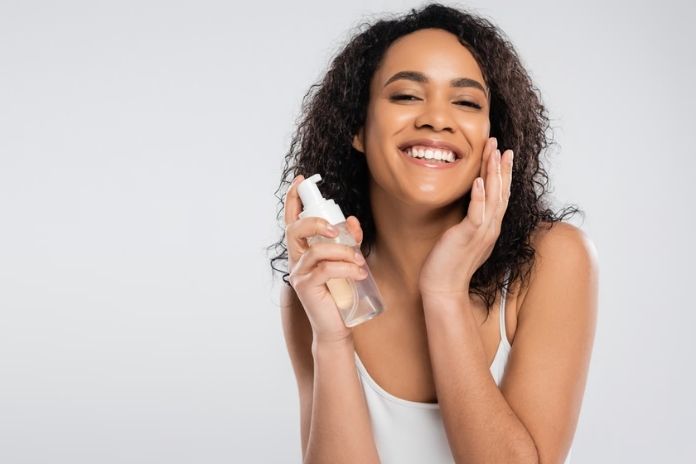
Practical solutions work best when they directly target the underlying causes:
- Using a facial mist followed by a moisturizer helps reduce TEWL by adding hydration and sealing it into the skin. This is especially important in low-humidity environments.
- Drinking more water supports systemic hydration, which dry air and increased CO₂ levels can affect by dulling thirst signals.
- A small desktop humidifier can increase local humidity around your workspace, helping counteract dryness.
- For hair, a light leave-in conditioner or oil helps seal the cuticle and prevent moisture loss in dry, air-conditioned environments.
- Stepping outside for 10 to 15 minutes allows exposure to fresh air, helping reduce fatigue associated with higher indoor CO₂ levels and giving the skin a temporary humidity reset.
Finally, raising concerns with facilities teams can lead to adjustments in humidity and ventilation settings, which modern systems often allow.
Read More: Tech-Neck Eyes: How Blue Light and Screen Strain May Be Aging Your Under-Eye Skin
Conclusion
The office air theory is not purely a social media exaggeration, but it is not the complete explanation either. Low humidity increases moisture loss, recycled air contributes to CO₂ buildup, and VOC exposure adds another layer of stress on the skin and body. At the same time, circadian rhythms and lighting influence how these changes are perceived.
The reality sits in between. The environment is real, and the attribution is sometimes oversimplified. The good news is that the effects are reversible, and small, targeted changes can make a noticeable difference in how you look and feel by the end of the workday.
References
- Calgary Mental Health and Wellness. (n.d.). How movement and exercise benefit mental health. Retrieved April 10, 2026
- Yay for Earth. (n.d.). Facial mist benefits. Retrieved April 10, 2026
- HuffPost. (2026). Office air theory: TikTok says office air is changing how we look. Retrieved April 10, 2026
- Hibou Air. (n.d.). The role of CO₂ monitoring in modern workplace safety programs. Retrieved April 10, 2026
- ResearchGate. (2022). Indoor relative humidity: Relevance for health, comfort and choice of ventilation system. Retrieved April 10, 2026
- Health.com. (2026). What is the office air theory?. Retrieved April 10, 2026
- Facilities Dive. (2026). Legionella just one of many HVAC risks, microbiologist says. Retrieved April 10, 2026
In this Article