
















Walk down any grocery aisle, and you might see liquid aminos sitting right next to soy sauce, often framed as a cleaner or healthier counterpart. The labels sound reassuring, such as “gluten-free,” “lower sodium,” and “amino acids,” while soy sauce has picked up a reputation for being something you should use sparingly, if at all.
But when you’re standing in your kitchen, that decision isn’t about buzzwords. It’s about flavor, sodium, digestion, and whether one option truly supports better health, or just markets itself that way. Liquid aminos and soy sauce both deliver umami, but they’re made in very different ways, and those differences matter more than most labels let on.
In this article, we’ll break down how Liquid Aminos and soy sauce are made, their comparative levels of sodium, what their nutritional claims really mean, and if fermentation really plays a meaningful role in gut or heart health.
We’ll also examine which option makes more sense for diets like gluten-free, low-sodium, and plant-based eating, and how to choose based on taste and cooking style, portion size, and not hype.
Read More: Hidden Salt Sources That Can Damage Your Kidneys
What Are Liquid Aminos?
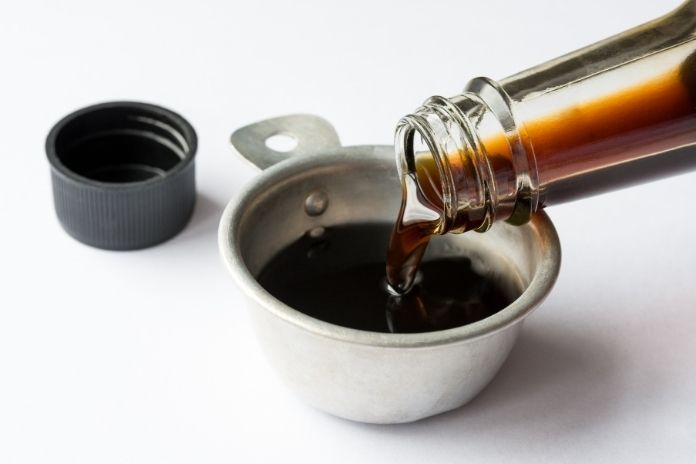
“Liquid aminos” refers to a liquid soy sauce substitute that can be extracted solely from soybeans or from sap from the coconut tree in other brands. It does not belong to the fermented food category because the process of creating liquid aminos also requires a chemical process called acid hydrolysis, which decomposes soy protein into amino acids.
In this process, the soybean is exposed to acid to break protein bonds, neutralized, and further mixed with water and salt. The product is a dark liquid, and in the process, the liquid develops an umami taste but does not involve the fermentation process. It is this process that makes liquid aminos different from soy sauce in their nutritional and functional aspects.
Liquid aminos also benefit from the popularity associated with the gluten-free diet. It is safe to consume for a person with gluten intolerance or celiac disease since wheat is not used in the preparation process. Therefore, people who want a soy seasoning that does not contain gluten prefer this product.
What Is Soy Sauce?
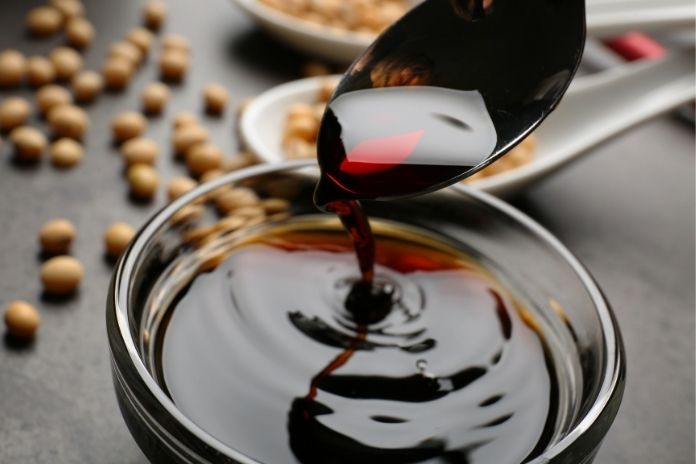
Soy sauce is a fermented food that has been around for many centuries. It is made with ingredients such as wheat or wheat flour (as the main carbohydrate source), salt, water, Aspergillus oryzae or Aspergillus sojae, salt-tolerant yeast, and lactic acid bacteria. These food components are converted by microorganisms and result in the formation of a variety of amino acids, organic acids, and aromatic compounds.
Fermentation: This is what gives soy sauce its distinctive umami taste as well as its color and aroma. The fermentation process has an impact on cooking performance when it comes to soy sauce. It resists high temperatures, develops well when reducing liquids, and combines well with marinades or stir-frying, all attributes that may not be present when using liquid aminos.
There are various kinds of soy sauce. Light soy sauce has the highest salt content and the most flavor. Low-sodium soy sauce usually contains 40%-60% less salt. Nonetheless, it is also very salty. The kind of soy sauce that is naturally wheat-free is called tamari. It is often used by people with gluten intolerance and usually has a robust flavor.
Read More: Salt Alternatives: Flavorful Ways to Reduce Sodium Intake
Liquid Aminos vs Soy Sauce: Key Differences at a Glance
The primary way liquid aminos and soy sauce differ is in their fermentation and processing. Liquid aminos are non-fermented and hydrolyzed in nature, whereas soy sauce is a fermented food item that is naturally concentrated in terms of its umami taste.
Flavor-wise, soy sauce has a more complex and saltier flavor. Soy sauce takes time to develop its flavor, whereas liquid aminos have their flavor developed through chemical reactions.
Liquid aminos are blunter and sweeter. They can be useful for subtle dishes when a mild flavor is needed. Liquid aminos are better for adding as a seasoning before serving. They are more suited for dishes that are to be finished or finished before serving.
Sodium Content: Which Is Better for Blood Pressure?
Sodium is the most considered nutritional factor in the context of liquid aminos and soy sauce. It is believed that liquid aminos have low sodium content, but this is not the case.
In a tablespoon of liquid aminos, a person would find approximately 350 milligrams of sodium. This is much higher in soy sauce, measuring between 900 and 1000 milligrams. In a low-sodium soy sauce, a person would get 500-600 milligrams in a tablespoon.
While liquid aminos contain less sodium than soy sauce, they are not low-sodium foods in their own right. When multiple servings are consumed in a meal, they can lead to sodium levels bordering on or surpassing the dietary daily limit in a surprisingly short span of time.
The size of the portion matters more than the condiment itself. The milder flavor of the liquid aminos may balance out the edge in reduced sodium content. The point here is that a small bit of the soy sauce may carry more taste in a smaller portion size.
Nutritional Value: Do Liquid Aminos Offer Real Benefits?
Liquid aminos are promoted as being rich in amino acids, although this is largely a misconception. The product is rich in amino acids, although the nutritional significance in this matter is minimal.
Neither liquid aminos nor soy sauce should ever be looked upon as a dietary source of protein, vitamins, and minerals. The micronutrients, if any, in both would have negligible effects.
In terms of nutritional value, both are functioning as a nutritional supplement rather than a nutrient-dense food.
Fermentation and Gut Health Considerations
Fermented foods have a reputation for their gut health benefits, but soy sauce is a little exception. Indeed, it is fermented. However, it is usually consumed in such a small quantity and often pasteurized, which limits the probiotic content.
Liquid aminos are not fermented at all and therefore offer no probiotic benefit whatsoever. That said, neither really plays a meaningful role in gut health compared to foods like yogurt, kefir, or fermented vegetables.
In this comparison, fermentation matters more for flavor and culinary performance than for digestive health.
Read More: Healthy Grilling: A Guide to Tasty and Nutritious BBQ Recipes
Liquid Aminos vs Soy Sauce for Specific Diets
For Gluten Sensitivity or Celiac Disease
Those who are gluten sensitive or have celiac disease may find conventional soy sauce problematic because it contains wheat. In such instances, it would be better to opt for either liquid aminos or gluten-free tamari sauce.
For Low-Sodium or Heart-Healthy Diets
When it comes to low-sodium and heart-healthy diets, the use of either of these options ought not to be liberal. Liquid aminos might be somewhat more workable for moderation, though overall sodium level concerns far outweigh the matter of which condiment is selected.
For Plant-Based or Whole-Food Diets
For vegan diets and whole foods, both condiments are derived from plants. Additionally, while soy sauce requires fermentation, liquid aminos are processed using chemicals, which whole food followers may consider an alternative.
Taste and Cooking Performance
Soy sauce delivers stronger umami intensity and performs better under heat, making it ideal for marinades, stir-fries, and sauces that require cooking. Liquid aminos tend to lose subtlety when heated and are better suited for finishing dishes or cold applications.
Choosing between them often comes down to how you cook, not just nutrition.
How to Choose Between Liquid Aminos and Soy Sauce
Liquid aminos can be an option if you have a dietary requirement to be gluten-free, if you want to consume slightly less sodium per tablespoon of seasoning, or if you prefer a less intense umami flavor.
Soy sauce, also known as tamari, would be the better choice in terms of enhancing flavor.
Ultimately, the difference is less in whether you’re using liquid aminos or soy sauce and far more in preference, serving size, and the way the food is eaten.
Final Takeaway
Liquid aminos and soy sauce are condiments, not health foods. Neither one provides significant nutritional value, and neither one should be consumed without consideration of sodium content.
The distinctions are in fermentation, depth of flavor, gluten, and usage in cooking, not in health-related marketing. Use these carefully, and either can be incorporated into a well-balanced diet. The healthier option is the one that is used in moderation.
References
- Vitamix. (n.d.). Liquid aminos: What’s with the hype? Vitamix.
- Today. (2024, April 8). Liquid aminos vs. soy sauce: What’s the difference? Today.
- Tasting Table. (2023, February 15). How much sodium is in soy sauce? Tasting Table.
- NutritionValue.org. (n.d.). Liquid aminos (soy sauce alternative) by Live Food Products, Inc. — Nutritional value. NutritionValue.org.
- ScienceDirect Topics. (n.d.). Soybean. In Agricultural and Biological Sciences. Elsevier.
- EatingWell. (2024, March 5). Liquid aminos vs. soy sauce: What’s the difference? EatingWell.
- Pearl River Bridge. (n.d.). How much sodium is in low-sodium soy sauce? The truth. Pearl River Bridge.
In this Article