












On most mornings, cream cheese feels like an easy win. You swipe a thick layer across a warm bagel, and for a moment, it’s pure comfort. But somewhere between the first bite and the last, a familiar question creeps in: is this actually healthy, or am I just pretending it is?
That quiet doubt isn’t random. Cream cheese shows up everywhere, from breakfast spreads to party dips and indulgent desserts. It tastes great, blends effortlessly into recipes, and feels harmless because it’s dairy.
At the same time, it’s known for being higher in fat and calories than many other spreads, which puts it squarely in that confusing middle ground between everyday staple and occasional treat.
Understanding how it’s made, what nutrients it offers, and where it falls short can take the emotion out of the decision and replace it with clarity.
In this article, we break down the nutritional profile of cream cheese, explore its potential benefits and downsides, look at how it compares to other spreads, and share practical tips on how to enjoy it without overdoing it.
What Is Cream Cheese? A Quick Look at the Basics
Cream cheese is made by combining milk and cream, adding lactic acid bacteria to thicken it, and heating the mixture to create that smooth, spreadable texture.
The U.S. Food and Drug Administration requires traditional cream cheese to contain at least 33 percent milkfat and no more than 55 percent moisture, which is why the final product feels rich and dense.
You’ll find several types on store shelves:
- Regular cream cheese.
- Whipped cream cheese has more air and slightly fewer calories per tablespoon.
- Low-fat or reduced-fat versions (often labeled Neufchâtel).
- Flavored cream cheese, like strawberry or honey walnut.
- Vegan cream cheese made from nuts, soy, or coconut oil.
Even though they all look similar, their nutritional numbers vary a lot. That’s why the next section matters.
Cream Cheese Nutrition: What You Get in One Ounce
Here’s the thing: cream cheese might look light and fluffy, but nutritionally, it’s calorie-dense. The following numbers come from the USDA for a standard 1-ounce (28 g) serving of regular cream cheese.
Cream Cheese (1 oz / 28 g) – USDA Data
- Calories: ~99
- Total fat:8 g
- Saturated fat:5 g
- Protein:8 g
- Carbohydrates:6 g
- Sugar:0 g
- Sodium: 91 mg
- Vitamin A: ~14% DV
- Vitamin B12: small but present
Light or Neufchâtel versions drop the fat to around 6–7 g per ounce, while whipped cream cheese lowers calories simply because there’s more air per spoonful.
Why the Fat Type Matters
Cream cheese is high in saturated fat. According to Harvard Health Publishing, saturated fat isn’t something most people need to eliminate, but intake adds up quickly because the average diet already exceeds recommended limits.
As a result, full-fat dairy products are best treated as occasional foods rather than everyday staples.
That’s the lens we’ll use moving forward: moderation, not elimination.
Is Cream Cheese Healthy? The Short Answer
Cream cheese can be part of a balanced diet, but it’s not a nutrient-dense food. It offers vitamin A, small amounts of protein, and a milder sodium profile than many other cheeses. At the same time, it’s calorie-rich and high in saturated fat, which means portion size matters a lot.
For most people, cream cheese is “healthy enough” when eaten in reasonable amounts, paired with nutrient-dense foods, and not treated as the main source of protein or dairy.
The Potential Health Benefits of Cream Cheese

Before labeling cream cheese as a nutritional villain, it’s worth slowing down and looking at what it actually offers. It’s not meant to be a health food centerpiece, but it isn’t nutritionally empty either. When used in moderation, cream cheese delivers a few benefits that often get ignored in the fat-and-calorie conversation.
1. A Meaningful Source of Vitamin A
Cream cheese provides vitamin A, a fat-soluble nutrient essential for vision, immune support, and skin health. Because it naturally contains fat, the body absorbs this vitamin more efficiently from cream cheese than from low-fat sources.
What matters here:
- One ounce provides about 14 percent of the daily value for vitamin A.
- Supports eye health and immune function.
- Contributes to skin cell repair.
It’s not a primary source of vitamin A, but it adds up when paired with a balanced diet.
According to Dr. Matthew Goldman, MD, a physician at the Cleveland Clinic, fat-soluble vitamins such as vitamin A are absorbed more efficiently when consumed with dietary fat.
He explains that pairing these nutrients with fat helps the body take them up in the small intestine, which means that foods naturally containing fat, like cream cheese, can contribute to vitamin A intake in a way that low-fat sources may not.
This doesn’t make cream cheese a primary vitamin A source, but it does help support vision, immune function, and skin health when included as part of a balanced diet.
2. Lower Sodium Than Many Cheese Spreads
Cream cheese is relatively low in sodium compared to processed cheese spreads, flavored dips, and hard cheeses. That doesn’t make it heart-healthy, but it does make it a quieter option in terms of salt.
Key takeaways:
- Plain cream cheese contains less sodium than most processed cheese products
- Lower sodium supports better blood pressure control
- Plain varieties are consistently better than flavored ones
For people watching salt intake, this can be a small but useful advantage.
3. Provides Satiety Through Fat Content
Fat slows digestion, which helps you feel full longer. Cream cheese’s fat content can contribute to satiety, especially when paired with fiber or protein instead of refined carbs alone.
Why this matters:
- Fat helps stabilize appetite and reduce rapid hunger spikes
- A small amount can feel satisfying when used intentionally
- Works best alongside whole grains, vegetables, or protein
This is where portion control makes or breaks the benefit.
A systematic review also highlights that the combination of dietary fat with fiber may affect satiety mechanisms, suggesting that fat’s impact on how long you feel full is tied to how it’s digested and metabolized alongside other nutrients.
4. Contains Small Amounts of Calcium and Protein
Cream cheese isn’t a protein-rich dairy food, but it still contributes modest amounts of calcium and protein that support bone health and muscle function.
Worth noting:
- Provides calcium for bone maintenance
- Offers a small protein contribution
- Not a replacement for yogurt, milk, or cottage cheese
Think of it as a supporting player, not the foundation.
Downsides of Cream Cheese: What to Keep in Mind

Now for the part most people worry about. The goal here isn’t to scare you or shame a food you enjoy. It’s to lay out the real limitations of cream cheese, so you understand where it fits and where it doesn’t. Once you see the trade-offs clearly, better choices become easier.
1. High in Calories and Easy to Overeat
Cream cheese is calorie-dense, and that’s where many people get tripped up. One ounce contains roughly 100 calories, but most servings at home or cafés are closer to two or three ounces without realizing it.
Why this matters:
- Smooth texture makes portion sizes hard to judge
- Calories add up fast on bagels, toast, or wraps
2. High in Saturated Fat
Saturated fat is the primary nutritional drawback of cream cheese. The American Heart Association recommends keeping saturated fat under 10 percent of daily calories, ideally closer to 5 to 6 percent for heart health.
Here’s the reality:
- One ounce contains about 5.5 grams of saturated fat
- Multiple tablespoons in one sitting can exceed daily targets
- Other high-fat foods eaten the same day compound the issue
A 2020 state-of-the-art review in the Journal of the American College of Cardiology notes that saturated fats tend to raise LDL cholesterol levels in many people, and although the overall health effects of saturated fats depend on the broader dietary pattern, genetics and individual metabolism can influence how strongly LDL responds, which is why moderation still matters for cardiovascular risk management.
3. Limited Nutrient Density Compared to Other Dairy
Cream cheese simply doesn’t deliver the same nutritional return as many other dairy foods. Compared to Greek yogurt, cottage cheese, or kefir, it’s lower in several key nutrients.
Cream cheese falls short in:
- Protein
- Calcium
- Probiotics
4. Added Sugars and Cholesterol Considerations
Flavored cream cheeses introduce another layer of concern. Strawberry, honey walnut, and dessert-style versions often contain added sugars, sometimes 3 to 5 grams per serving, pushing calories even higher with little nutritional benefit.
At the same time, people with elevated LDL cholesterol may need to be more cautious overall. Because cream cheese is high in saturated fat, frequent large portions can work against cholesterol-lowering goals.
Read More: What Happens to Your Blood Pressure When You Eat Cheese Every Day? (Benefits and Risks Explained)
How Cream Cheese Compares to Other Spreads?
Numbers make the trade-offs clearer than opinions ever can.
When you put cream cheese next to other common spreads and look at calories, saturated fat, and protein side by side, the differences become obvious. This comparison helps show where cream cheese makes sense and where another option might be the better call.
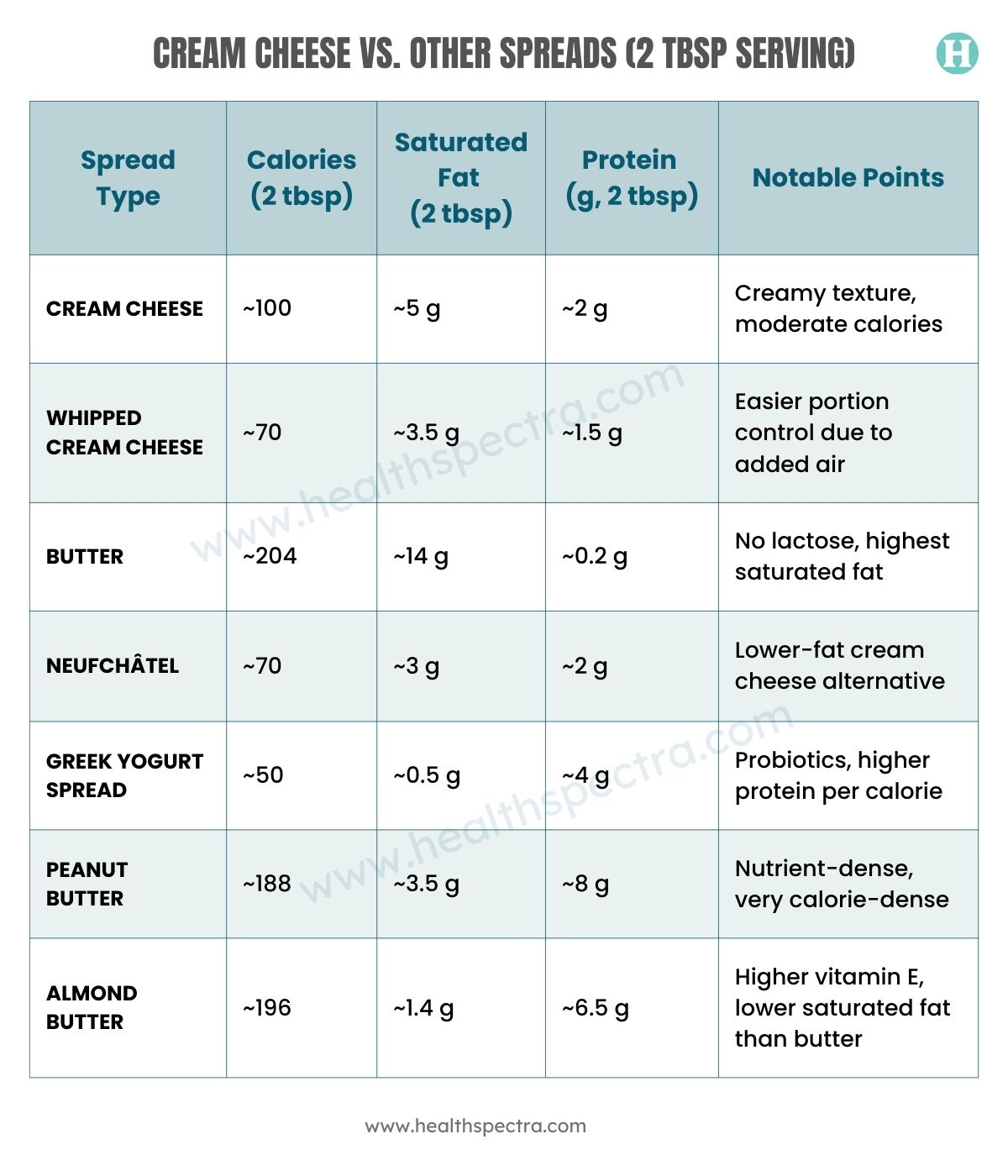 What the table shows is that cream cheese sits somewhere in the middle. It’s lighter than butter, richer than yogurt-based spreads, and less nutrient-dense than high-protein options. If flavor and texture matter, cream cheese can fit.
If nutrition is the priority, some alternatives deliver more for fewer calories. The key isn’t elimination. It’s choosing the spread that matches your goal.
Read More: Is Burrata Cheese Healthy? Nutrition, Benefits, and How It Compares to Other Cheeses
Who Should Limit Cream Cheese?

Cream cheese isn’t a problem for most people, but it isn’t neutral for everyone either. Certain health goals and conditions make portion size and frequency matter more. If any of the following apply to you, cream cheese is best treated as an occasional add-on rather than a daily staple.
1. Individuals With High Cholesterol or Heart Disease
Cream cheese is relatively high in saturated fat, which can raise LDL cholesterol levels in some people. For those already managing heart disease or elevated cholesterol, frequent intake can work against treatment goals.
What to keep in mind:
- Saturated fat intake adds up quickly across the day
- Cream cheese should be portioned carefully, not spread freely
- Lower-fat alternatives may be a better routine choice
This doesn’t mean elimination, but moderation is essential.
Some observational evidence suggests that cheese and other full‑fat dairy may not always be associated with increased heart disease risk, possibly due to the complex matrix of nutrients in dairy foods, but the overall recommendation for individuals with high cholesterol or existing heart disease remains cautious moderation of high‑saturated‑fat foods, so total saturated fat doesn’t exceed recommended limits.
2. People on Heart-Healthy or Lower-Calorie Diets
Cream cheese delivers a lot of calories for a relatively small amount of food. When calories are limited, it can crowd out more nutrient-dense options without providing much protein or fiber.
Why this matters:
- A few tablespoons can use a large share of daily calorie targets
- Limited nutritional payoff compared to other dairy foods
- Easy to overconsume without feeling full
For structured eating plans, it works best as an occasional flavor boost.
3. Those With Lactose Intolerance
Cream cheese contains less lactose than milk, but it isn’t lactose-free. Tolerance varies widely from person to person.
General guidance:
- Mild lactose intolerance may tolerate small amounts
- Moderate to severe intolerance may trigger symptoms
- Lactose-free or plant-based spreads can be safer options
Listening to your own response matters more than general rules here.
4. People With Diabetes When Choosing Sweetened Varieties
Plain cream cheese has minimal impact on blood sugar, but flavored versions are a different story. Added sugars in fruit or dessert-style spreads can lead to unwanted glucose spikes.
Points to consider:
- Some flavored varieties contain 3 to 5 grams of added sugar per serving
- Sugar adds calories without improving satiety
- Plain versions offer better blood sugar control
Reading labels becomes especially important in this case.
According to the American Diabetes Association’s nutrition recommendations, what you eat plays a major role in managing your blood glucose. Foods with added sugars, like many flavored or dessert‑style cream cheeses, can raise blood glucose more quickly than plain, unsweetened choices, so reading labels and limiting added sugar is especially important for people with diabetes managing their glucose levels.
5. Anyone Tracking Sodium Intake
While cream cheese is generally lower in sodium than many cheeses, this varies by brand and flavor. Processed or flavored varieties can contain significantly more salt.
What helps:
- Plain cream cheese is usually the lowest-sodium option
- Flavored and whipped varieties can vary widely
- Label checks prevent surprises
For people managing blood pressure, brand choice makes a real difference.
Read More: How to Reduce Cholesterol Naturally: Diet, Lifestyle, and Science-Backed Tips
Healthy Ways to Enjoy Cream Cheese Without Overdoing It

Cream cheese can fit into a balanced diet when it’s used intentionally rather than automatically. Small adjustments in how you choose, portion, and pair it can make a noticeable difference over time.
- Stick to small portions instead of spreading freely. One tablespoon is enough for most meals, and measuring it once or twice helps reset what a normal serving actually looks like, especially on bagels or toast where overuse is common.
- Choose the type that aligns with your goals. Whipped cream cheese and Neufchâtel offer similar flavor and texture with fewer calories and less fat, while plain versions help you avoid added sugars found in fruit or dessert-style spreads.
- Pay attention to ingredient lists, not just nutrition labels. Products with long ingredient lists, added stabilizers, or hydrogenated oils tend to be more processed and offer no real benefit over simpler versions.
- Pair cream cheese with high-fiber foods to balance its richness. Fiber slows digestion, supports steadier blood sugar, and helps you feel full longer, which makes whole-grain toast, apples, celery sticks, berries, and whole-grain crackers better choices than refined breads.
- Use cream cheese as a flavor enhancer rather than the main ingredient. Mixing it with plain Greek yogurt, fresh herbs, garlic, lemon, or spices lets you keep the creamy texture and taste while lowering calorie density and boosting nutritional value.
- Spread thinner layers and focus on coverage, not thickness. A light, even layer delivers the same flavor satisfaction as a thick swipe without quietly doubling or tripling your calorie intake.
According to Dr. Jack Wolfson, a board-certified cardiologist, eating well isn’t about perfection or eliminating foods you enjoy; it’s about balance and paying attention to portions so you don’t quietly overdo it.” He emphasizes that being mindful of serving sizes, rather than eating straight from the package, helps prevent accidentally tripling your calorie intake.
Final Takeaway
Here’s the real bottom line. Cream cheese isn’t unhealthy by default, but it also isn’t a food that earns a daily, no-questions-asked spot on your plate. It brings a few genuine benefits to the table, including vitamin A, small amounts of protein, and a rich texture that can make simple meals more satisfying. That enjoyment matters, and food doesn’t have to be purely functional to belong in a healthy diet.
At the same time, cream cheese is calorie-dense, high in saturated fat, and relatively low in nutrients compared to many other dairy options. When portions creep up, or it’s paired mostly with refined carbs and sugary spreads, it can quietly crowd out more nourishing foods without offering much in return. This is where most people run into trouble, not because cream cheese is harmful, but because it’s easy to overuse.
Used thoughtfully, though, cream cheese works. Small portions, plain or lighter versions, and pairing it with fiber-rich or protein-rich foods all help keep it in balance. Treating it as a flavor enhancer rather than a main component makes a noticeable difference over time.
So the answer isn’t about cutting cream cheese out or labeling it as “bad.” It’s about perspective. Enjoy it when it adds value to a meal, adjust how often and how much you use it based on your goals, and let more nutrient-dense foods do most of the heavy lifting in your diet. When you approach it that way, cream cheese becomes an occasional pleasure that fits, not a habit you have to justify.
References
- Britannica. (n.d.). Cream cheese. Encyclopedia Britannica.
- ScienceDirect. (n.d.). Cream cheese. In Agricultural and biological sciences.
- Castello Cheese. (n.d.). Cream cheese.
- Taste of Home. (n.d.). What is cream cheese?
- Cheese Professor. (n.d.). Cream cheese 101.
- Schreiber Foods. (n.d.). Cream cheese article.
- Health. (n.d.). Is cream cheese healthy?
- Dr. Axe. (n.d.). Cream cheese nutrition.
- WebMD. (n.d.). Health benefits of cheese.
- Food for Health. (n.d.). Cream cheese.
- The Laughing Cow SEA. (n.d.). Cream cheese vs. cheese spread.
- Lekkerkerker Food. (n.d.). Difference between cream cheese and dairy spread.
- The Farm Chicken. (n.d.). Cream cheese vs. butter: Nutrition comparison and more.
- Harvard Health. (2023). Eat cheese if you please. Harvard Health Publishing.
- Consumer Reports. (2023). Healthy ways to eat cheese.
In this Article